The Visionary of Coastal Emotion
Born in the rugged, salt-sprayed landscape of Arbroath, Angus, on April 25th, 1937, Dennis Thorne Buchanan emerged as a profound voice in British contemporary art. His life and work were inextricably linked to the atmospheric rhythms of the North Sea, a presence that would later define his reputation as a master of evocative seascapes. Buchanan’s artistic journey was not merely one of observation, but of deep emotional translation, where the boundaries between the physical coastline and the internal psyche began to blur through vibrant color and expressive movement.
His formal training at the Dundee College of Art in 1954 served as a pivotal moment in his development. Under the mentorship of the celebrated Alberto Morrocco, Buchanan was introduced to a visual language that prioritized color and abstraction. This period of study instilled in him an enduring passion for the expressive potential of the palette, a trait that would become his hallmark. Following this, his postgraduate studies at Hospitalfield, Arrogath, allowed him to further experiment with established conventions, pushing the limits of how light and texture could represent the ephemeral nature of the Scottish landscape.
A Fusion of Tradition and Modernity
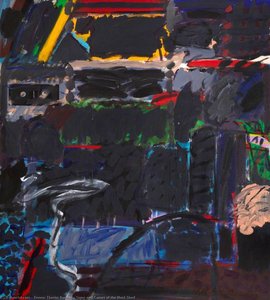
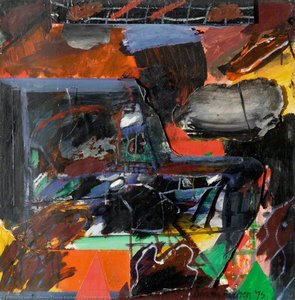
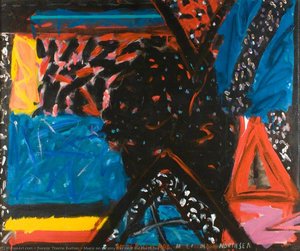
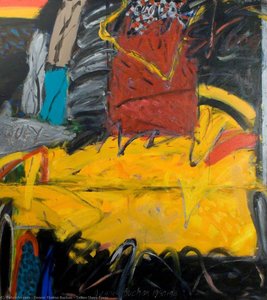
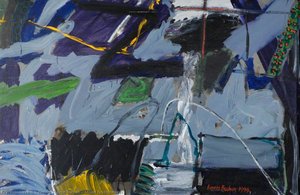
As his career progressed, Buchanan’s style evolved into a sophisticated synthesis of diverse artistic movements. While his roots remained firmly planted in the Scottish Colourist tradition—noted for its bold use of color and light—he fearlessly integrated elements of modern abstract expressionism and even touches of pop art. This unique stylistic blend allowed him to move beyond simple realism, creating works that felt both grounded in the natural world and elevated by a contemporary, rhythmic energy.
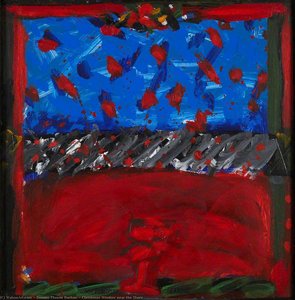
His canvases often functioned as poetic meditations on the environment. Whether capturing the turbulent, stormy moods of the North Sea or the quiet, interlocking shores of a coastal inlet, his technique relied on dynamic brushstrokes and a textured application of oil. In works such as Music on a Rainy Day near the North Sea, one can witness how he used bold colors to translate the sensory experience of weather and wind into a visual symphony. His ability to use everyday objects and natural forms to create striking juxtapositions of form ensured that his work remained perpetually engaging and intellectually stimulating.
Legacy and Artistic Recognition
Beyond the studio, Buchanan was a significant figure in the academic and institutional fabric of Scotland’s art community. His tenure as a lecturer at the Duncan of Jordanstone College of Art from 1965 until his retirement allowed him to shape the perspectives of a new generation of artists, passing on the same reverence for color and experimentation that he had received from Morrocco.
His professional accolades reflected his standing among his peers, most notably through his election as an Associate of the Royal Scottish Academy (RSA) in 1975 and later as a Full Member in 1991. His exhibitions at prestigious venues like the New Charing Cross Gallery and Compass Gallery Glasgow cemented his reputation as a premier painter of atmospheric landscapes. Today, the legacy of Dennis Thorne Buchanan lives on through his ability to capture the soul of the coast, leaving behind a body of work that continues to resonate with anyone moved by the poetic intersection of land, sea, and spirit.