The Cartographic Vision of Herbert Edward Cooper Robinson
In the grand tapestry of Australian history, few figures have captured the essence of the continent’s vast and rugged terrain as precisely as Herbert Edward Cooper Robinson. Born in the historic English city of Winchester in 1858, Robinson’s life was a journey of both physical and intellectual exploration. Though his roots were planted in the fertile soil of Hampshire, his destiny was irrevocably tied to the burgeoning landscapes of Victoria. Arriving in Australia as a young boy, he grew up amidst the pastoral rhythms of Geelong, an experience that instilled in him a profound, lifelong reverence for the land. This early intimacy with the Australian wilderness provided the foundational inspiration for a career that would transcend mere mapmaking, evolving into a monumental effort to document the very soul of a developing nation.
Robinson’s professional evolution was marked by a rare blend of scientific rigor and entrepreneurial spirit. His early years in the public service of Victoria, working as a draughtsman within the Lands Department, served as a rigorous apprenticeship. Here, he mastered the delicate art of the line and the precise measurement of space, skills that would later become the hallmark of his work. However, Robinson was never content with the confines of bureaucracy. Driven by a visionary impulse, he ventured into the competitive world of private enterprise, establishing partnerships such as Higinbotham, Robinson & Harrison in 1882. Even when faced with the turbulent tides of financial hardship and bankruptcy, his resilience remained unshaken. He emerged from these trials not merely as a survivor, but as a refined specialist, eventually founding H.E.C. Robinson Ltd., a name that would become synonymous with cartographic excellence across Australasia.
A Legacy Written in Ink and Scale
The work of Herbert Edward Cooper Robinson was far more than a collection of navigational tools; it was a scientific endeavor that bridged the gap between exploration and established knowledge. His maps were celebrated for their unparalleled accuracy, serving as essential guides for scientists, settlers, and travelers alike. One of his most significant achievements lay in his ability to collaborate with the great minds of his era. As a technical collaborator with Professor Sir Edgeworth David, Robinson played a pivotal role in the production of the monumental large-scale Geological Map of the Commonwealth of Australia in 1932. This feat of precision helped transform the geological understanding of the continent, providing a visual language for the earth's hidden structures.
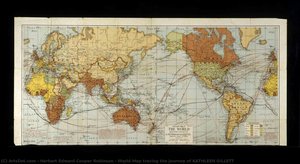
Beyond his technical mastery, Robinson’s influence permeated the very institutions that shaped Australian geography. His commitment to scholarship led him to become a founder of the Royal Geographical Society of Australasia in 1885 and a fellow of the prestigious Royal Geographical Society of London. His maps were not merely local documents; they achieved international renown, with his detailed renderings of the Solomon Islands and various Australasian territories finding their way into the hands of scholars as far away as Russia. Through his publishing house, he provided the essential visual documentation for aerial surveys and pastoral expansions, ensuring that as the nation grew, it did so with a clear and accurate sense of its own boundaries and bounties.
To reflect on the life of H.E.C. Robinson is to witness the intersection of art and science. His legacy remains etched in the archives of history through several key contributions:
- The Precision of the Draughtsman: A mastery of detail that turned topographical data into legible, beautiful landscapes.
- Entrepreneurial Resilience: The successful establishment of H.E.C. Robinson Ltd., which became a cornerstone of Australian travel publishing through its eventual merger with Gregory's Guides.
- Scientific Collaboration: Providing the cartographic foundation for groundbreaking geological and aerial survey projects that defined early 20th-century exploration.
- Global Recognition: Elevating Australian cartography to an international standard, making his works essential references in schools and scientific institutions worldwide.
Ultimately, Robinson was a pioneer who saw the map not just as a representation of territory, but as a vital instrument of progress. His life’s work ensured that the vast, often intimidating expanses of the Australian continent were rendered accessible, understandable, and profoundly beautiful to the eyes of the world.