The Roots of a Visionary: Identity and Heritage
Hock E Aye Vi Edgar Heap of Birds stands as a profound voice within the landscape of contemporary Native American art, a creator whose very name carries the weight of Cheyenne and Arapaho lineage. Born in Wichita, Kansas, in 1954, his artistic consciousness was forged at the intersection of formal academic rigor and the enduring legacies of tribal history. Through his studies at the Tyler School of Art, the University of Kansas, and ultimately earning a Master of Fine Arts from the Royal College of Art, he developed a sophisticated visual vocabulary. Yet, beneath the technical mastery lies a deep-seated commitment to the stories of displacement and resilience that define Indigenous experiences. His work is not merely an aesthetic pursuit but a vital act of remembrance, designed to confront the unacknowledged shadows of history with unflinching clarity.
The Language of Resistance: Text and Monumental Form
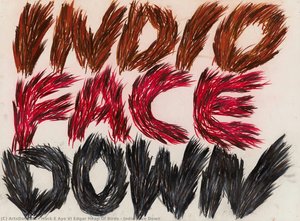
One of the most striking elements of Heap of Birds’ practice is his ability to transform the mundane into the monumental. He often adopts the stark, utilitarian aesthetic of public signage—a technique that allows him to hijack the visual language of the state to deliver messages of social justice. By utilizing bold typography and porcelain enamel on steel, he creates outdoor sculptures like Wheel that demand attention in the public square. This text-based approach is not just about communication; it is a reclamation of space and narrative. In works such as Indio Face Down, the use of striking red lettering serves as a visceral reminder of both ancestral blood and an unyielding life force, pulling the observer into a space where identity and nomenclature are interrogated with raw honesty.
Memory and Reclamation: Navigating Historical Trauma
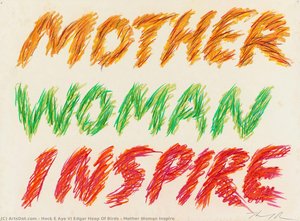
The emotional core of Heap of Birds’ oeuvre lies in his unflinching exploration of historical trauma and the cyclical nature of Indigenous storytelling. His art serves as a bridge between the past and the present, forcing viewers to confront the devastating realities of policies like the Indian Removal Act. In pieces such as Trail of Tears, he utilizes the format of parking signs to evoke the forced marches and the immense loss of human life, turning a common object into a site of profound mourning and political critique. Through the strategic use of color—such as the lush greens and vibrant reds in Mother Woman Inspire—he weaves a tapestry of resilience. His work does not simply document tragedy; it celebrates the enduring strength of a culture that refuses to be erased, using repetition and layering to mirror the complex, ongoing process of cultural preservation and identity formation.