A Legacy of Light and Line: The Life of John Godwin Williams
In the grand tapestry of Victorian portraiture, few threads are as intricately woven as those left by John Godwin Williams. Born around 1793 in the vibrant atmosphere of Madras—modern-day Chennai—Williams embodied a unique cultural synthesis, a bridge between the burgeoning British Empire and its profound colonial landscapes. His early years were marked by an intellectual rigor that would later define his brushwork; as a student at St John’s College, Cambridge, he immersed himself in the study of Classics alongside Fine Arts. This rare combination of scholarly depth and aesthetic sensitivity allowed him to approach the canvas not merely as a surface for depiction, but as a medium for storytelling, where every anatomical detail and drapery fold whispered of historical weight and social prestige.
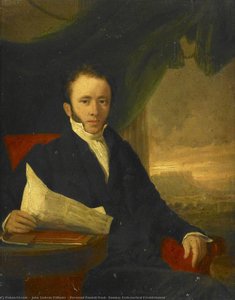
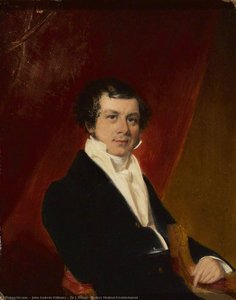
The evolution of Williams' technique is a testament to his dedication to the craft. He began his journey mastering the delicate nuances of watercolour, a medium that demands an exquisite command over subtle tonal variations and the ephemeral qualities of light. This foundational skill in capturing atmospheric effects became the bedrock upon which he built his later mastery of oil painting. When he relocated to Bombay in 1823, his artistry found its true calling. In the bustling heart of India's colonial commerce, Williams emerged as a premier chronicler of an era, attracting commissions from wealthy merchants and high-ranking dignitaries who sought more than just a likeness; they sought a legacy. His portraits were carefully constructed narratives, designed to immortalize the character, status, and lineage of the subjects within the shifting tides of the 19th century.
The Intersection of Classical Idealism and Victorian Observation
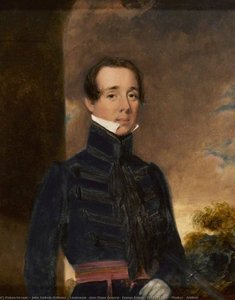
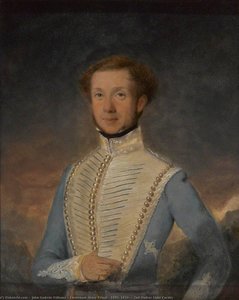
While many of his contemporaries were swept up in the romantic fervor of the Pre-Raphaelite Brotherhood, Williams maintained a more disciplined, restrained approach. He did not seek the overt emotionalism of the movement, but rather drew inspiration from its commitment to meticulous observation. His work reflects a profound reverence for classical ideals, achieved through a rigorous study of antique sculptures and master drawings. This dedication ensured that his subjects possessed an anatomical accuracy and compositional balance that felt both timeless and grounded in reality. In his hands, the heavy silks of a dignitary's attire or the precise uniform of a military officer were rendered with a precision that honored the physical truth of the subject while elevating them to a state of idealized dignity.
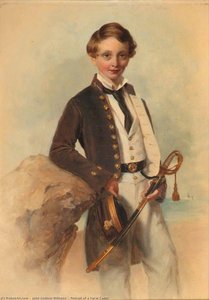
The breadth of his contribution to the art historical record is significant, encompassing a diverse range of subjects that reflect the interconnectedness of the British and Indian worlds. His oeuvre, which includes approximately 150 works, serves as a visual archive of the period's most influential figures. Some notable examples of his subject matter include:
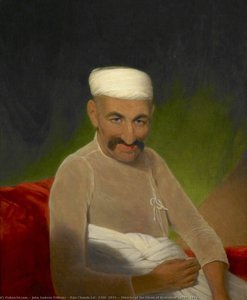
- Raja Chandu Lal, the influential Minister of the Nizam of Hyderabad, captured with the gravity befitting his station.
- Lieutenant Henry Briggs of the Madras Light Cavalry, representing the military presence of the era.
- Major General George Briggs, showcasing Williams' ability to convey command and authority through portraiture.
- Naval Cadets and Officers, whose depictions highlight the maritime connections essential to the age of empire.
Ultimately, the historical significance of John Godwin Williams lies in his ability to transcend the boundaries of mere documentation. Through his disciplined use of light, shadow, and classical form, he captured the soul of a transitional era. His paintings remain vital windows into the Victorian consciousness, offering a glimpse into a world where the scholarly traditions of Cambridge met the vibrant, complex realities of Madras and Bombay, leaving behind a permanent mark on the history of British portraiture.