The Lens of Resilience: The Life and Legacy of Kegham Djeghalian
To look through the lens of Kegham Djeghalian is to witness the heartbeat of a vanishing era. An Armenian-Palestinian photographer whose life was inextricably woven into the turbulent fabric of the Levant, Djeghalian did not merely take photographs; he curated a visual soul for Gaza. His journey began far from the shores of Palestine, born in Anatolia and shaped by the profound trauma of the Armenian Genocide. As a toddler, he fled to Syria, disguised as a girl to evade detection, a harrowing childhood chapter that instilled in him a lifelong sensitivity to the fragility of human existence. After years in Lebanese orphanages and an apprenticeship in the vibrant streets of Jerusalem and Jaffa, Djeghalian arrived in Gaza, where he would eventually establish Photo Kegham—the city’s first photography studio.
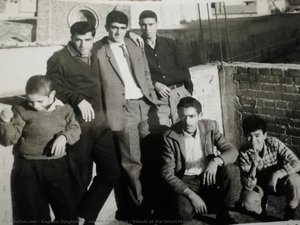
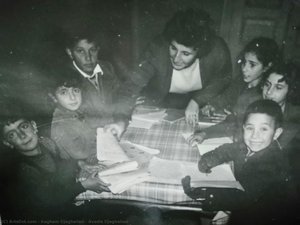
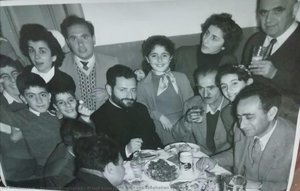
Djeghalian’s work represents a rare, unmediated window into the evolution of Palestinian society. Unlike the photojournalist driven by headlines or political agendas, Djeghalian was moved by an intrinsic, almost spiritual urge to document the ephemeral. His camera captured the quiet dignity of daily life under the British Mandate, the shifting tides of Egyptian rule, and the heavy shadows of Israeli occupation. Through his eyes, we see the bustling marketplaces, the solemnity of religious ceremonies, and the intimate warmth of family gatherings. He possessed a unique ability to find the extraordinary within the ordinary, turning a simple baptism or a moment of camaraderie at the Omari Mosque into timeless monuments of cultural identity.
A Master of Light and Shadow
Technically, Djeghalian’s mastery lay in his command of black-and-white photography, a medium that allowed him to strip away the distractions of color and focus on the raw essence of his subjects. Drawing inspiration from the decisive moment philosophy championed by masters like Henri Cartier-Bresson, he utilized light and shadow to imbue his compositions with profound emotional weight. His images are characterized by a stylistic elegance that transcends mere documentation; they are carefully balanced studies in texture, contrast, and human connection.
The significance of his archive is found not only in its breadth but in its historical depth. His collection preserves the memory of landmarks and infrastructures—such as ancient train stations—that have since been lost to time and conflict. Beyond the local landscape, his lens occasionally captured the intersection of global history and Palestinian soil, documenting visits from monumental figures such as Che Guevara, Yul Brynner, and Indian Prime Minister Jawaharlal Nehru. This juxtaposition of the intimate local life with the grand movements of international politics creates a powerful narrative arc within his body of work.
The Enduring Archive
Though Djeghalian’s life was cut short in 1981, his contribution to the visual history of the Middle East remains an irreplaceable treasure. He left behind more than just photographs; he left a testament to the endurance of the human spirit amidst displacement and change. His work serves as a vital bridge between generations, offering a sense of continuity for a people whose history is often subject to erasure.
The legacy of Kegham Djeghalian can be summarized through several key pillars of his artistic contribution:
- Cultural Preservation: He acted as a visual chronicler of the Armenian-Palestinian community, documenting traditions and religious rites that defined their social fabric.
- Documentary Integrity: His refusal to work for specific publications allowed him to maintain an authentic, unvarnished perspective on the socio-political shifts in Gaza.
- Humanistic Vision: His ability to capture the profound empathy of everyday existence transformed historical record into emotive art.
- Historical Continuity: Through his studio, he provided a visual lineage that connects the pre-Nakba era to the modern complexities of the region.