The Architect of Digital Mythologies
In the vibrant, neon-lit pulse of Seoul, a city where ancient traditions and hyper-modernity exist in a constant state of friction, Kim Ayoung has emerged as a visionary voice capable of navigating the complexities of our digital age. Born in 1977, Kim’s artistic journey is not merely a progression of skill, but an expansive exploration into the very fabric of contemporary existence. Her practice, which seamlessly weaves together video art, performance, and immersive installation, serves as a profound meditation on how memory, identity, and technology intersect to shape the human experience in an increasingly automated world.
Kim’s academic foundation provided the rigorous scaffolding for her later, more speculative endeavors. After honing her technical and conceptual abilities at Seoul National University, she moved to the United States to pursue postgraduate studies at the School of the Art Institute of Chicago. It was during this period of international immersion that her fascination with the boundaries between the real and the virtual began to crystallize. This academic rigor allowed her to develop a unique methodology: one that utilizes cutting-edge tools such as generative AI, videogame engines, and virtual reality to construct narratives that feel both hauntingly familiar and strikingly alien.
Synthesizing Speculative Narratives
To encounter a Kim Ayoung work is to enter a state of beautiful disorientation. Her artistic trajectory is defined by a commitment to speculative narratives—stories that do not simply reflect the world as it is, but project what it might become through the lens of myth and geopolitics. She possesses a singular ability to take the cold, algorithmic logic of modern technology and infuse it with the warmth and chaos of human mythology. In her hands, the digital landscape becomes a site of profound storytelling, where the lines between data and flesh, or history and fiction, begin to blur.
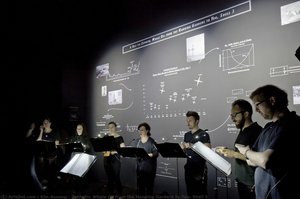
One of her most compelling techniques involves the use of unsettling juxtapositions. She often places the mechanical precision of software against the visceral reality of human labor and environmental change. Her work frequently explores themes of the gig economy, as seen in her acclaimed Delivery Dancer trilogy, where she uses live-action footage alongside digital avatars to interrogate the pressures of self-optimization and global demand. By leveraging the aesthetics of video games and digital simulations, Kim creates immersive environments that challenge our conventional perceptions of time, space, and the permanence of the self.
Global Resonance and Artistic Legacy
The significance of Kim Ayoung’s work extends far beyond the borders of South Korea, resonating within the most prestigious corridors of the international art world. Her presence in global biennials and museums has cemented her status as a pioneer of digital innovation. From the historic halls of Palazzo Tokio in Paris to the high-profile stages of the Venice Biennale and MoMA PS1 in New York, her installations have acted as mirrors reflecting our collective anxieties regarding technology and society.
Her accolades serve as a testament to her impact on contemporary culture. Some of her most notable recognitions include:
- Golden Nica Award at the prestigious Prix Ars Electronica
- The ACC Future Prize from the National Asian Culture Center
- The Terayama Shuji Prize
As she continues to reside and work in Seoul, Kim Ayoung remains at the vanguard of a new generation of artists who do not merely use technology as a tool, but treat it as a fundamental medium for reimagining human history. Her work stands as a vital bridge between the tangible past and an uncertain, digital future, reminding us that even within the most complex algorithms, there remains a profound, searching human spirit.