The Ethereal Journey of Maria Leontina
Born amidst the lush, verdant landscapes of Funchal in 1886, Maria Leontina Mendes Ferreira Cabral Hogan emerged from the prestigious Madeiran bourgeoisie with a destiny far more profound than mere social standing. Her early years were shaped by the comforts of wealth, yet her spirit sought connections far beyond the material realm. As she navigated the complexities of her life and marriages, a transformative shift occurred in 1925 when she embraced Spiritism. This spiritual awakening did not merely change her personal beliefs; it redefined her very essence, turning her into a medium whose voice bridged the gap between the living and the ethereal. Through her profound correspondence with the esteemed poet and writer Alfredo Pimenta, her intellectual and spiritual journey became inextricably intertwined with the literary pulse of Portugal, creating a tapestry of thought that blended the mystical with the deeply human.
A Vanguard for Feminism and Literature
Beyond the veil of the spiritual, Maria Leontina was a formidable force in the social and political landscape of early 20th-century Portugal. She understood that the liberation of the soul was inextricably linked to the empowerment of women. As a dedicated member of the National Council of Portuguese Women, she applied her influence to advocate for gender equality, carving out a vital space for female voices in a society often dominated by patriarchal structures. Her leadership was not limited to activism; it extended into the very heart of the nation's intellectual life. In the twilight of her years, she achieved a significant milestone by serving as the President of the Literature Section from 1942 until her death in 1943, ensuring that the power of the written word remained a cornerstone of Portuguese cultural identity.
An Enduring Legacy in Lisbon
The historical significance of Maria Leontina lies in her unique ability to inhabit multiple spheres of influence—the spiritual, the feminist, and the literary. She was a woman who refused to be confined by the boundaries of her era, moving seamlessly from the private meditations of a medium to the public stages of political activism. Her life remains a testament to the strength of conviction and the pursuit of truth across different planes of existence. Today, her memory is preserved in the quiet dignity of the Alto de São João Cemetery in Lisbon, where she rests in a family tomb. Her legacy continues to resonate with those who find beauty in the intersection of activism and spirituality, reminding us that the most impactful lives are often those lived with an unwavering commitment to both the seen and the unseen worlds.




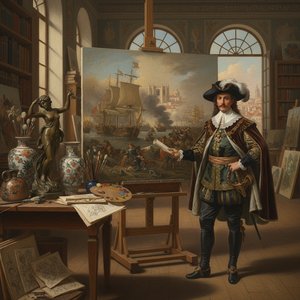

![Sem Título [untitled] — Maria Leontina Mendes Ferreira Cabral Hogan](/media/artworks/images-thumb/fd/3a/fd3acfdc857125a8c62b053bc0bbe056.jpg)