Early Life and Education
- Born: Caracas, Venezuela (July 29, 1921)
- Died: Caracas, Venezuela (March 24, 2005)
- Mercedes Clementina Marta del Carmen Pardo Ponte began her artistic journey at a young age.
- She studied painting and drawing at the Escuela de Artes Plásticas y Visuales de Caracas.
- At age twelve, she took courses at the Academia de Bellas Artes under Antonio Edmundo Monsanto.
- Before turning twenty, she formally enrolled in the Escuela de Arts Plásticas y Aplicadas de Cararas, completing her studies in 1944.
Artistic Style and Influences
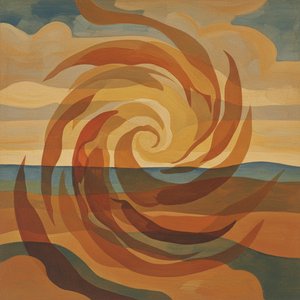
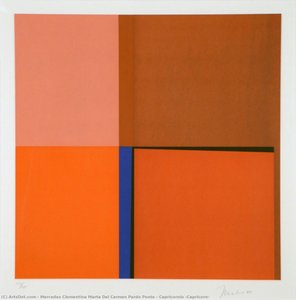
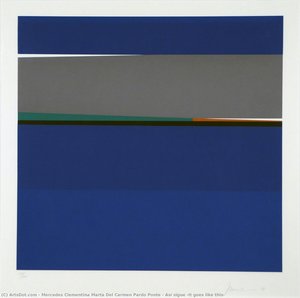
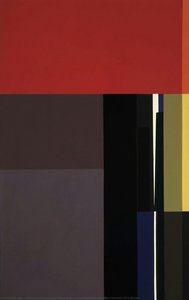
- Mercedes Pardo's artistic style was characterized by vibrant colors and abstract shapes.
- She was influenced by European artists such as El Greco (Domenikos Theotokopoulos).
- Her work reflected elements of nature, inspired by the Venezuelan landscape.
- Early influences included Danish professor Ingeborg Fostberg and her uncle Luis Alfredo López Mendez.
- During her time in Paris, she was influenced by Cohe de la Ferti and Jean Cassou at the École du Louvre.
- Her style evolved from early figurative work to abstractionism, particularly during the 1950s.
Career Development and Major Achievements
- Marriage to Marco Bontá (1945): A brief marriage that led to travel and study in Chile.
- Studies in Paris (1949-1951): Attended the École du Louvre, producing collages and early abstract works.
- Marriage to Alejandro Otero (1951): A significant partnership with another prominent Venezuelan artist.
- International Exhibition of Abstract Art (1952): Participated in this exhibition in Caracas, marking her emergence as an abstract artist.
- Founding Member of San Antonio de Los Altos Cooperative School (1962): Established and taught at the school's craft workshops.
- Architectural Integrations: Created notable works such as a stained-glass window at the La Hoyada station of the Caracas subway, a mosaic mural at the J. M. de los Ríos Children’s Hospital, and the ceiling of La Viña Shopping Center.
- Anthological Exhibition (1991): Held her most important exhibition, "Abodes of Color," at the National Art Gallery.
Historical Significance and Legacy
- Mercedes Pardo is recognized as a prominent figure in Venezuelan abstract art.
- Her work contributed to the development and recognition of abstractionism in Venezuela during the 1950s.
- She was an active arts educator, fostering artistic talent through her teaching at the San Antonio de Los Altos Cooperative School.
- The Fundación Alejandro Otero-Mercedes Pardo (established in 2016) preserves and promotes their shared legacy.
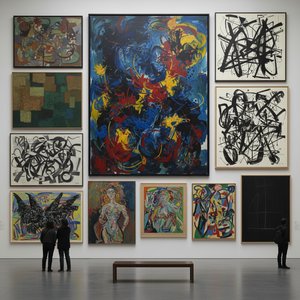
- Her inclusion in the *Action, Gesture, Paint* exhibition at the Whitechapel Gallery in London (2023) highlights her international significance.
Key Characteristics of Her Work
- Abstraction: Pardo's work is primarily abstract, exploring form and color rather than representational imagery.
- Color Exploration: She utilized a rich palette of vibrant colors to create dynamic and expressive compositions.
- Lyrical Brushstrokes: Her watercolors were characterized by lyrical brushstrokes, drips, and blotches.
- Integration of Arts: Pardo demonstrated a commitment to integrating art into various aspects of life through architectural projects and theatrical design.