The Dioramas of a Nation: National Park Service, Eastern Museum Laboratory & the Art of Public Engagement
The story of the National Park Service’s (NPS) early foray into museum work, specifically through the efforts of the Eastern Museum Laboratory and artists like Albert Mcclure and Lee Roland Warthen, is a fascinating chapter in American art history—one often overshadowed by more traditional narratives. It speaks to a deliberate effort during the New Deal era to connect citizens with their national heritage, not through grand monuments alone, but through intimate, meticulously crafted dioramas that brought landscapes and historical scenes directly into the heart of Washington D.C. This wasn’t simply about display; it was about constructing a national identity, fostering appreciation for conservation, and making the vastness of America accessible to all.
The genesis of this initiative lies with Harold L. Ickes, Secretary of the Interior in 1935. Recognizing that the Department's growing responsibilities were poorly understood by the public, he envisioned a museum within the new headquarters building as a tool for “government public relations.” The Eastern Museum Laboratory, established in Morristown, New Jersey, became the workshop where this vision took shape. Ned J. Burns, recruited as superintendent, assembled a team of skilled preparators, carpenters, and curators to translate complex ideas into tangible exhibits. This wasn’t about showcasing existing collections; it was largely about *creating* those collections—building miniature worlds that captured the essence of America's natural and historical treasures.
Crafting Miniature Realities: The Work of Mcclure & Warthen
Albert Mcclure (1903-1986) and Lee Roland Warthen (1893-1949), though their individual biographies remain somewhat elusive, were central figures in this endeavor. Their work wasn’t about personal artistic expression in the traditional sense; it was a collaborative process deeply rooted in documentary precision and pedagogical intent. The dioramas they helped create weren't simply pretty scenes—they were meticulously researched reconstructions of specific environments and moments in time. Warthen, with his experience in museum work, likely played a key role in the initial planning and conceptualization of exhibits. Mcclure’s expertise seems to have focused on the technical execution – bringing these plans to life through detailed modeling, painting backdrops, and incorporating realistic elements.
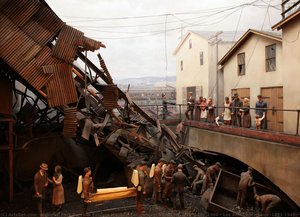
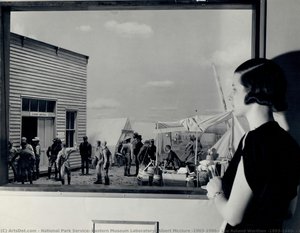
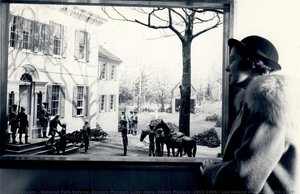
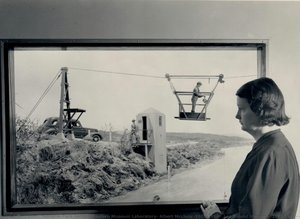
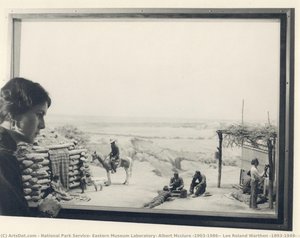
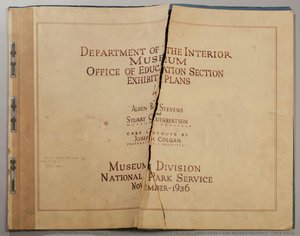
The surviving photographs reveal scenes ranging from military life to domestic interiors, all rendered with a remarkable attention to detail. A 1938 publicity photo showcases Betty Buzzard amidst a formal scene of military & domestic life, capturing a slice of American society during that period. Another exhibit plan details the meticulous assembly of components in November 1936, highlighting the painstaking effort involved. These weren’t just static displays; they were designed to tell stories—to evoke a sense of place and time, and to connect viewers with the people and events that shaped the nation. The use of black and white photography further lends a documentary feel, emphasizing authenticity and historical accuracy.
Influences & Techniques: A Blend of Art Forms
The dioramas produced by the Eastern Museum Laboratory drew upon a diverse range of artistic influences. Traditional landscape painting provided a foundation for creating realistic backdrops and capturing atmospheric effects. The techniques employed in theatrical set design informed the construction of three-dimensional environments, while documentary photography emphasized accuracy and detail. There’s also a clear influence from scientific illustration—a desire to accurately represent natural forms and ecological systems.
- Landscape Painting: The use of perspective, light, and shadow to create depth and realism in the backdrops.
- Theatrical Set Design: Techniques for constructing three-dimensional environments and creating a sense of immersion.
- Documentary Photography: Emphasis on accuracy, detail, and capturing authentic moments in time.
- Scientific Illustration: A desire to accurately represent natural forms and ecological systems.
The materials used were equally important. The dioramas weren’t constructed from expensive or exotic substances; they relied on readily available materials—wood, plaster, paint—reflecting the New Deal's emphasis on utility and economy. This pragmatic approach further underscored the idea that these exhibits were meant to be accessible to all Americans, not just an elite few.
Historical Significance & Legacy
The work of the National Park Service’s Eastern Museum Laboratory represents a unique moment in American art history—a time when artists were actively employed by the government to shape public understanding of national heritage. While the dioramas themselves may not be widely known today, their impact was significant. They helped to establish the NPS as a vital educational resource and fostered a greater appreciation for conservation and historical preservation.
Stories in Miniature, a Google Arts & Culture feature dedicated to these exhibits, offers a glimpse into this fascinating past. The surviving photographs and exhibit plans serve as a testament to the skill and dedication of artists like Mcclure and Warthen—artists who understood that art could be a powerful tool for public engagement and national identity formation. Their legacy lies not in individual masterpieces, but in the collective impact of their work—in the countless Americans who were inspired by these miniature worlds to connect with their nation's past and embrace its future. The dioramas stand as a reminder that even small-scale representations can have a profound effect on how we perceive and understand the world around us.