The Master of Griselda: A Silent Witness to Umbrian Renaissance
The identity of “the Master of Griselda,” as he’s known in art historical circles, remains shrouded in mystery—a deliberate obscurity that lends an aura of enigma to his remarkable oeuvre. Born around 1490 in Umbria, Italy, he emerged during the burgeoning Renaissance, a period marked by fervent artistic experimentation and humanist ideals. Precise biographical details are scarce; records indicate he primarily resided in Siena, though evidence suggests extensive travels throughout Tuscany.
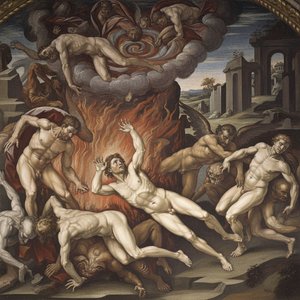
- Early Influences: Pinturicchio’s delicate frescoes and Signorelli’s dramatic depictions of biblical narratives profoundly shaped his stylistic sensibilities. These masters championed a humanist approach to art—celebrating human form and emotion alongside religious themes—a cornerstone of the Umbrian Renaissance.
- Spalliere Technique: He mastered the spalliere technique, an innovative decorative mural painting method prevalent in Siena during the late fifteenth century. This involved applying pigment onto plaster panels, creating textured surfaces that resembled stone or marble – a bold departure from traditional fresco painting.
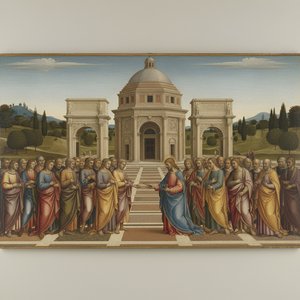
- The Griselda Cycle: His fame rests primarily on his monumental cycle of paintings illustrating Giovanni Boccaccio’s *Decameron*, specifically the tale of Griselda—a story of marital fidelity tested by cruelty and deception. These panels are considered masterpieces of Umbrian art, showcasing meticulous detail and psychological insight.
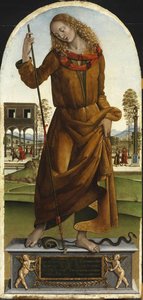
- Notable Works: Among his surviving paintings are depictions of saints and biblical figures, reflecting the piety characteristic of the era. However, it’s the Griselda cycle that secures his place in art history—a testament to his ability to convey complex emotions and narratives with unparalleled artistry.
The attribution to Signorelli is debated among scholars, yet undeniably contributes to the artist's reputation for dramatic composition and expressive color palettes. His work embodies the spirit of Umbrian Renaissance artistic innovation – a fusion of classical ideals and Christian faith that continues to inspire admiration centuries later.
A Legacy Etched in Frescoes and Panels
Though relatively few paintings survive, “the Master’s” influence extends far beyond his own creations. His techniques—particularly the spalliere method—were adopted by other artists across Italy, furthering the dissemination of Renaissance aesthetics. He stands as a symbol of Umbrian artistic excellence during a pivotal moment in European cultural history.
- Umbrian Artistic Tradition: He solidified Umbria’s position as a center for decorative arts and elevated the spalliere technique to new heights—a legacy that persists in contemporary mural painting practices.
His contribution to the visual culture of his time is undeniable, cementing his status as one of the most important figures of the Umbrian Renaissance.