

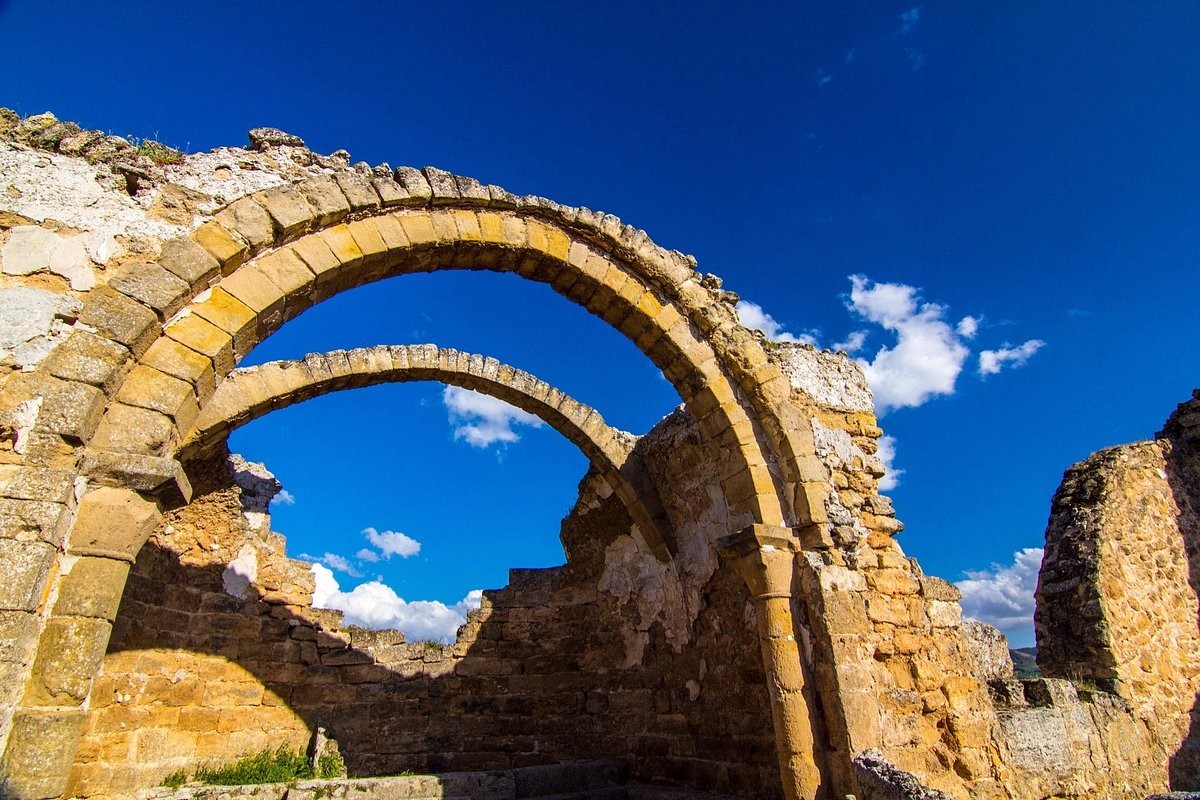
A Whispering Echo of Visigothic Grandeur
To step into the Archaeological Park of Recópolis is to surrender oneself to a profound temporal shift, where the heavy silence of the Spanish landscape speaks volumes of a vanished era. Nestled in the sun-drenched terrain of Zorita de los Canes, this site is far more than a mere collection of ruins; it is a skeletal masterpiece of urban planning, a deliberate monument carved from the very ambition of King Leovigild. Founded in 578 AD, Recópolis was conceived not as an organic settlement, but as a royal statement of power—a planned city designed to solidify the Visigothic Kingdom's grip on the Iberian Peninsula. For the modern observer, the site offers a hauntingly beautiful encounter with the dawn of the Early Middle Ages, where every stone laid by ancient hands serves as a testament to a period of intense cultural consolidation and architectural innovation.
The architectural soul of Recópolis resides in its unique palace-basilicas, structures that defy simple categorization by seamlessly weaving together the sacred and the secular. These grand complexes, which once served as both royal residences and religious sanctuaries, reflect a sophisticated understanding of how architecture can manifest divine and monarchical authority simultaneously. As one wanders through the remnants of these monumental buildings, the eye is drawn to the distinctive Visigothic elements that define the site’s aesthetic identity. The presence of graceful horseshoe arches and intricate stonework provides a rhythmic, visual language that predates the later flourishes of Islamic influence in Spain. These architectural flourishes are not merely decorative; they are the structural echoes of a civilization striving for permanence amidst a shifting political landscape.
Beyond the grand palaces, the park reveals the intimate textures of daily life through its sprawling residential areas and workshops. Here, the narrative shifts from the monumental to the human, as the traces of ancient hearths and artisan spaces allow us to imagine the vibrant pulse that once animated these streets. The defensive walls, tracing a formidable outline against the horizon, remind us of the strategic necessity that governed this landscape, acting as a silent sentinel over the Tagus River. This interplay between the imposing fortifications and the delicate remnants of domesticity creates a compelling tension, making Recópolis a site of immense archaeological depth. It is a place where the strategic importance of a frontier stronghold meets the quiet, enduring traces of a community's everyday existence.
For the connoisseur of history and the lover of ancient aesthetics, Recópolis offers an unparalleled immersive experience. The site’s unique character is further enriched by its proximity to the majestic Castle of Zorita de los Canes, which stands as a later, formidable layer of history atop the Visigothic foundation. To visit this park is to engage in a dialogue with multiple eras—Visigothic, Muslim, and Christian—all layered within the same rugged landscape. It remains a vital destination for those seeking to understand the complex tapestry of Spanish heritage, offering a rare opportunity to touch the very foundations of a kingdom that once sought to unify a peninsula through stone, spirit, and sovereign will.