
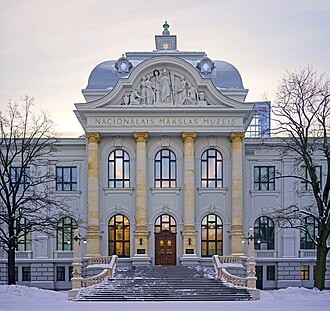
A Sanctuary of Latvian Soul and Spirit
In the heart of Riga, where the cobblestone streets of the historic center whisper tales of a bygone era, stands the Latvian National Museum of Art —a majestic beacon of cultural identity and a profound testament to the resilience of the Baltic spirit. To enter this institution is to step beyond the threshold of a mere gallery and into an immersive voyage through time. It is not simply a repository for objects, but a living chronicle of a nation’s artistic evolution, safeguarding the largest and most precious assemblage of Latvian art. From the mid-18th century to the contemporary moment, the museum captures the very essence of a people, weaving together threads of tradition, struggle, and triumph into a breathtaking visual tapestry.
The architectural grandeur of the museum itself serves as a magnificent prelude to the treasures held within. Conceived between 1903 and 1905 by the visionary Baltic German architect Wilhelm Neumann , the edifice is a masterpiece of historicist architecture. Its facade, an eclectic blend of Baroque splendor and intricate detailing, reflects the opulent and cosmopolitan atmosphere of Riga at the turn of the century. As visitors wander through its halls, they are greeted by an atmosphere infused with Art Nouveau elegance, where sandstone, granite, and delicate plasterwork harmonize to create a space that feels both monumental and intimately poetic. This pioneering structure was specifically designed for artistic pursuits, marking a pivotal moment when Latvia established itself as a burgeoning center of European culture.
Within these hallowed walls, the collection offers a breathtaking panorama of human emotion and technical mastery. One cannot traverse the galleries without being deeply moved by Janis Rozentāls’ iconic masterpiece, ‘Nāve’ . This poignant oil on canvas, a seminal work of Realism and Symbolism, explores the heavy themes of death and maternal love with a haunting, visceral intensity that remains as powerful today as it was in 1897. The museum also celebrates the bold, constructive legacy of artists like Romans Suta , whose still lifes and unique national style continue to resonate with modern sensibilities. Whether through the delicate precision of a print or the commanding presence of a sculpture, the collection serves as an eternal dialogue between the artist's vision and the Latvian landscape.
What truly distinguishes the Latvian National Museum of Art is its role as a dynamic agent of cultural discourse. It does not merely look backward; it actively engages with the complexities of the present through groundbreaking exhibitions such as ‘Dismantling the Wall’ , which provocatively explores historical shifts and diverse perspectives. For the art lover, the collector, or the designer seeking inspiration, the museum offers more than just aesthetic beauty—it provides a profound connection to the layers of history that define the Baltic region. It is a place where the echoes of the past meet the innovations of the future, making every visit an unforgettable encounter with the enduring power of creativity.