
A Renaissance Jewel in the Tuscan Landscape
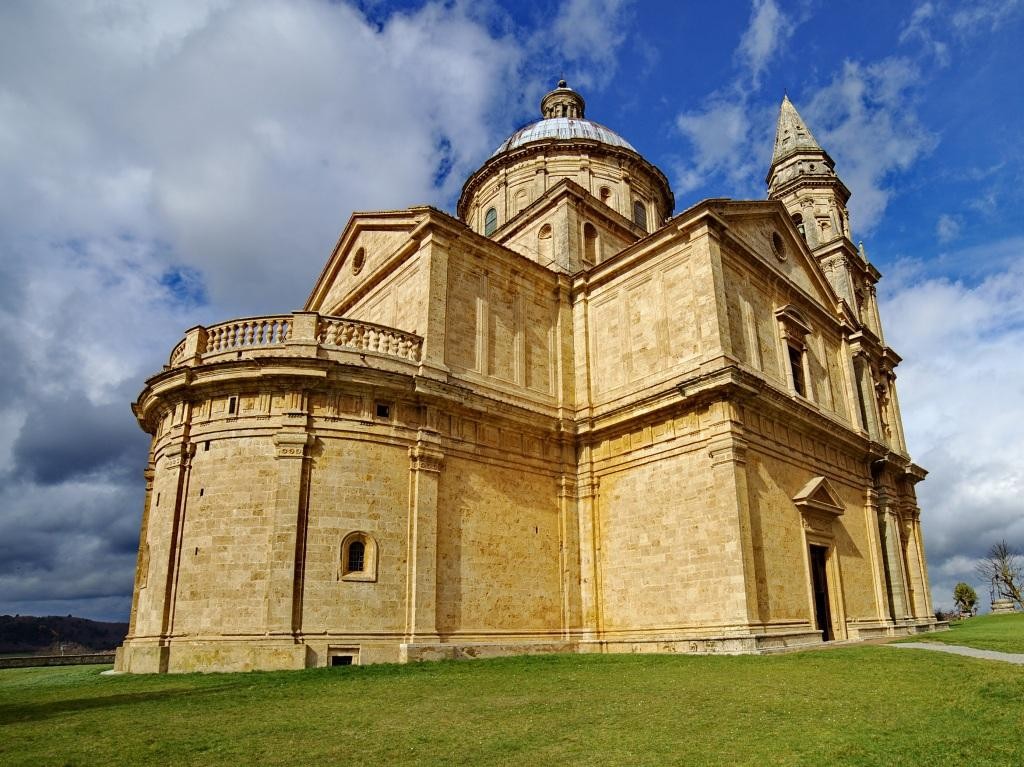
Nestled within a verdant meadow just outside the historic walls of Montepulciano, the Temple of San Biagio emerges from the landscape like a sculptural vision of divine order. This architectural masterpiece, constructed between 1518 and 1548, is far more than a mere place of worship; it is a profound embodiment of the High Renaissance spirit, where mathematical precision meets spiritual fervor. Designed by the legendary Antonio da Sangallo the Elder, the structure serves as a breathtaking testament to an era that sought to find the infinite within the perfect proportions of geometry. The church’s commanding presence in the flat Tuscan plains creates a dramatic contrast with the rolling hills beyond, offering a sense of isolated grandeur that invites both the pilgrim and the art enthusiast into a state of quiet contemplation.
The architectural brilliance of San Biagio lies primarily in its sophisticated Greek-cross plan, a layout that prioritizes central symmetry and a harmonious balance of space. This design choice, heavily influenced by the humanist ideals of the sixteenth century, reflects a departure from the traditional longitudinal churches of the Middle Ages. As one approaches the travertine facade, the eye is drawn to the meticulous classical elements—the rhythmic pilasters, the heavy entablatures, and the monumental pediment that crowns the entrance. This pursuit of equilibrium was not merely aesthetic but deeply symbolic, mirroring the Renaissance preoccupation with cosmic order. The structure’s silhouette, characterized by a central dome supported by a drum and a singular, soaring bell tower, evokes the same architectural lineage that would later inspire the great masters of St. Peter's Basilica.
The Miracle Within: Artistry and Devotion
While the architecture provides a magnificent vessel, the true soul of the temple resides in its sacred narrative, anchored by a miraculous legacy. The very existence of this monumental edifice is rooted in a moment of profound spiritual intervention. Legend tells us that in 1518, two local women and a peasant witnessed the impossible: the eyes of a frescoed Madonna opening and closing, as if the painted figure were breathing with life. This miraculous event, centered around a 14th-century depiction of the Madonna di San Biagio, transformed a simple local devotion into an ambitious architectural undertaking supported by the highest echelons of power, including Pope Leo X.
Inside, the atmosphere shifts from the monumental to the intimate. The interior is bathed in a diffused, ethereal light that dances across the marble surfaces and highlights the intricate decorative elements of the high altar. Here, the focus remains on the sacred imagery that serves as the temple's heartbeat. The wall behind the altar features a magnificent marble ridge, a collaborative triumph by Giannozzo and Lisandro di Pietro Albertini, which frames the central fresco. This masterpiece, attributed to Martino di Bartolommeo di Biagio, bridges the gap between the emotive, symbolic language of Gothic art and the burgeoning naturalism of the Renaissance. For collectors and lovers of fine art, the temple offers a rare opportunity to witness how sacred tradition and innovative technique converged to create an enduring cultural landmark.
For those seeking to immerse themselves in the artistic heritage of Tuscany, San Biagio stands as an essential destination. It is a place where history is not merely studied but felt through the weight of stone and the vibrancy of pigment. Whether one is moved by the architectural genius of Sangallo or the haunting beauty of the medieval frescoes, the temple remains a singular jewel in Montepulciano’s crown—a sanctuary where the terrestrial and the divine continue to exist in perfect, breathtaking harmony.