


A Tripartite Journey Through Time and Texture
In the heart of Oldenburg, where the echoes of Lower Saxony’s ducal past still linger in the cobblestone streets, lies a cultural sanctuary that defies the singular museum experience. The Niedersächsisches Landesmuseum Für Kunst Und Kulturgeschichte is not merely a building, but a living dialogue between three distinct architectural marvels: the regal Schloss Oldenburg, the refined Augusteum, and the elegant Prinzenpalais. To walk through these interconnected halls is to embark on a curated odyssey that spans millennia, moving seamlessly from the primal whispers of ancient terracotta fragments to the bold, geometric provocations of contemporary design. For the art lover, it offers a rare continuity of human expression, where the weight of history meets the lightness of modern innovation.
The architectural soul of the museum begins within the Schloss Oldenburg , a structure that has evolved from a formidable medieval fortress into a masterpiece of Baroque splendor and Classicist grace. Within these walls, the atmosphere is thick with the scent of antiquity and the grandeur of aristocratic life. The Stateroom, with its breathtaking frescoes and gilded ornamentation, serves as a dramatic stage for the museum’s decorative arts collection. Here, one finds the refined tastes of bygone eras preserved in meticulously crafted ivory carvings, medieval manuscripts, and opulent Art Nouveau ensembles. For the interior designer seeking inspiration in period elegance, the castle’s Marble Hall and Green Salon offer an unparalleled study in how light, ornament, and structural majesty can coalesce to create a sense of eternal prestige.
Transitioning from the regal to the sublime, the Augusteum offers a sanctuary dedicated to the pure luminosity of fine art. Built in the mid-19th century with an eye toward Italian Renaissance proportions, this gallery is a temple to the Old Masters. The collection breathes with the technical mastery of titans such as Titian, Raphael, and Michelangelo , whose works continue to define the standards of beauty and anatomical precision. Yet, the museum’s narrative does not rest in the past; the Augusteum also embraces the revolutionary spirit of the Bauhaus movement. This juxtaposition—the ethereal idealism of the Renaissance meeting the functionalist rigor of geometric abstraction—creates a profound tension that challenges the viewer to reconsider the very definition of aesthetic value.
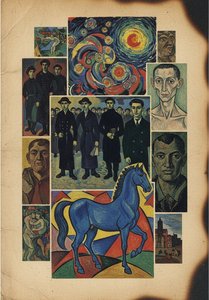
The journey finds its most emotive conclusion in the Prinzenpalais , a palace that once hosted Russian royalty and now serves as a vibrant laboratory for modernism. The architecture here reflects the Romantic era’s aspirations, providing a sophisticated backdrop for the expressive fervor of Art Informel and the psychological depth of 20th-century movements. A particular highlight for collectors of emotive landscapes is the substantial assemblage of works by Franz Radziwill , whose evocative paintings capture the haunting beauty of the era. In this space, the museum transcends its role as a mere repository of objects; it becomes an immersive environment where the raw energy of modernism and the delicate echoes of royal history converge, offering an unforgettable encounter with the transformative power of the human spirit.