

 Предпросмотр
 Поделиться
 Поделиться
 Детали произведения

 Скачать
 Похожие работы
 Рентгенография
 Слайд-шоу
 Статистика
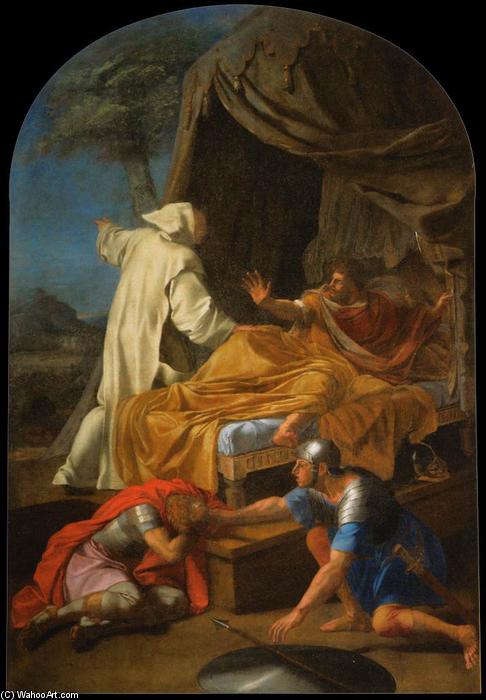
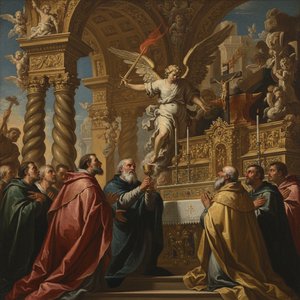
St Bruno Appearing to Comte Roger
 Acrylic On Canvas
- WallArt
- Baroque
 1645
1645 193.0 x 130.0 cm
 Лувр
Лувр
 Читать далее
Масляная репродукция ручной работы
Картина маслом на холсте в выбранном вами размере и раме, написанная на заказ нашими художниками. ( Перейти к печати Перейти к цифровым изображениям)




P118B $10

P118H $10

P118W $10

P438Z $10

P508JH $12

P508YH $12

P805H $10

P805Z $10

P919BZ $10

P919G $10

P919XJ $10

P959ZH $10

P968JZ $12

W106C $8

W218G $10

W218JH $8

W218Y $10

W307PJ $10

W316G $10

W316PJ $8

W316Y $10

W398PJ $8

W4111J $10

W500HY $15

W500JH $15

W692G $12

W849H $8

W940BG $15

W953PJ $8




Выберите один из наших стандартных размеров, соответствующих оригинальным пропорциям произведения искусства.

Вы можете указать собственные размеры, чтобы картина идеально вписалась в выбранную раму или пространство. Если выбранный вами размер не соответствует пропорциям оригинала, мы либо обрежем полотно, либо расширим его за счет дополнительных элементов, написанных вручную. Цифровой макет будет отправлен вам на утверждение перед началом производства.
Обратите внимание, что предварительный просмотр на экране не отражает фактическую обрезку или расширение. Только макет точно покажет окончательную композицию.
Хотя доступны индивидуальные размеры, мы рекомендуем выбирать вариант из предопределенного списка, чтобы сохранить исходные пропорции.
После оформления заказа команда ArtsDot.com свяжется с клиентом по электронной почте для уточнения деталей и предоставит предварительный макет
Доставка по всему миру () за 3–4 недели вместо стандартных 5 недель. (11 Сентябрь). Без компромиссов в качестве.

Бесплатная экспресс-доставка по всему миру

Высококачественный льняной холст

Полное страхование доставки

Гарантия возмещения таможенных пошлин

Гарантия точного соответствия цветов

100-дневная политика возврата (только при обнаружении дефектов)

Гарантия возврата 100% средств

Предложение оптовых скидок
 Вариант со стеклом доступен только для размеров менее 110 см

St Bruno Appearing to Comte Roger
Техника репродукции
Размер репродукции
-


Итоговая стоимость
$ 263
A Singular Visionary: Eustache Le Sueur’s “St Bruno Appearing to Comte Roger”
Eustache Le Sueur (1617 – 1655) stands apart from his contemporaries in the Baroque period—a painter who defied artistic conventions by dedicating himself wholeheartedly to the observation and meticulous representation of the natural world. Where many artists focused on grand mythological narratives or opulent portraits, Le Sueur embarked upon an ambitious project: transforming his studio into a laboratory of sorts, driven by an unwavering commitment to scientific accuracy alongside artistic brilliance. This pioneering approach cemented his legacy as one of France’s foremost zoologists and arguably the father of modern animal painting—a distinction that continues to resonate within the annals of art history. His early life remains somewhat elusive, documented primarily through records indicating he apprenticed under Nicolas Boutet de Valois, a sculptor renowned for his allegorical sculptures commissioned by Louis XIII. This formative experience instilled in Le Sueur not merely technical skill but a profound appreciation for detail and precision—qualities that would become hallmarks of his artistic endeavors. It was this dedication to observation that propelled him beyond the stylistic trends of his time, establishing him as an innovator whose influence extends far beyond the realm of painting itself.The Artwork: A Portrait Steeped in Religious Symbolism
“St Bruno Appearing to Comte Roger,” completed in 1645, exemplifies Le Sueur’s distinctive style—a masterful blend of realism and decorative embellishment characteristic of the Baroque era. Measuring 193 x 130 cm, this monumental canvas depicts St Bruno, a Benedictine monk revered for his piety and scholarship, engaged in conversation with Comte Roger, a noble figure representing the patronage of the arts and intellectual pursuits. The scene unfolds within a tent setting—a deliberate choice that harkens back to biblical narratives depicting divine encounters—underscoring the importance of spiritual contemplation amidst worldly concerns. The painting’s composition is carefully orchestrated, drawing the viewer's eye towards the central figures while incorporating subtle visual cues that enrich its narrative depth. A shield or decorative item positioned prominently near the center serves as a focal point, mirroring the protective symbolism associated with Saint Bruno and reinforcing the overarching theme of faith and nobility. The artist’s meticulous attention to detail—evident in the rendering of St Bruno's robes and Comte Roger’s attire—demonstrates Le Sueur’s unwavering commitment to scientific accuracy, reflecting his broader fascination with capturing the intricacies of animal life.Technique and Artistic Innovation
Le Sueur employed oil paint on canvas, utilizing a technique that allowed for nuanced tonal gradations and luminous effects—a hallmark of Baroque painting. His brushstrokes are deliberate yet fluid, conveying both textural richness and expressive dynamism. Unlike many artists of his time who prioritized idealized representations, Le Sueur opted for a realistic portrayal of human subjects, capturing their expressions and gestures with remarkable sensitivity. This approach distinguishes “St Bruno Appearing to Comte Roger” from conventional portraiture, elevating it to the status of a profound meditation on faith, intellect, and social hierarchy. The painting’s visual impact is undeniably powerful—a testament to Le Sueur's ability to infuse his artwork with emotional resonance. The subdued palette—dominated by earthy tones—creates an atmosphere of solemn contemplation, mirroring the spiritual significance of the depicted scene. Furthermore, the artist skillfully utilizes chiaroscuro—the dramatic interplay between light and shadow—to sculpt the figures’ forms and heighten their expressive intensity. This masterful manipulation of tonal values contributes to the painting's enduring beauty and reinforces its symbolic message.A Legacy Beyond Painting
“St Bruno Appearing to Comte Roger” represents more than just a stunning artistic achievement; it embodies Le Sueur’s groundbreaking contribution to zoological art—a field that would profoundly influence subsequent generations of artists. As documented extensively in online resources like WikiArt and WGA, this painting stands as an exemplar of Baroque artistry infused with scientific rigor. Its meticulous detail and expressive dynamism continue to inspire admiration among collectors and interior designers alike, securing Le Sueur’s place as a visionary artist whose legacy transcends the boundaries of his era.Похожие произведения
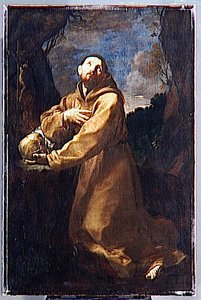
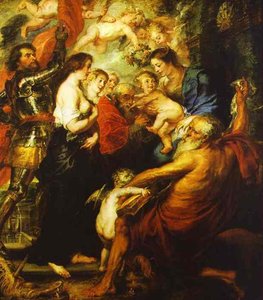
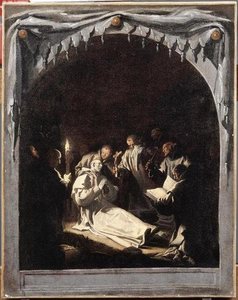
Биография художника
A Pioneer of the Natural World
In the vibrant and often dramatic landscape of the 17th-century French Baroque, few figures stand as uniquely as Brother Lesueur, known to history as Eustache Le Sueur. While his contemporaries were frequently swept up in the grand, sweeping narratives of mythology or the opulent displays of royal portraiture, Le Sueur turned his gaze toward a different kind of majesty: the intricate, often overlooked wonders of the animal kingdom. Born in Paris around 1617, he emerged not merely as a painter, but as a precursor to the scientific illustrators who would later define the Age of Enlightenment. His life’s work represents a profound intersection where the delicate touch of fine art meets the rigorous scrutiny of biological inquiry.
Le Sueur's artistic journey began with a foundation in classical discipline. He underwent an apprenticeship under Nicolas Boutet de Valois, a sculptor renowned for his allegorical works commissioned by the court of Louis XIII. This early exposure to the principles of proportion, anatomy, and classical beauty provided him with the technical vocabulary necessary to render form with absolute precision. However, where his mentor sought to idealize the human figure through stone, Le Suelar sought truth through the living—and sometimes the deceased—specimens of the natural world. This transition from the sculptural ideals of the academy to the empirical observations of a naturalist marked the beginning of a revolutionary artistic evolution.
The Art of Anatomical Precision
What truly distinguishes the work of Le Sueur is his uncompromising commitment to realism, a quality that transformed his studio into a space of scientific discovery. He did not merely paint what he imagined; he painted what he understood through direct observation. To achieve this level of unparalleled detail, Le Sueur engaged in a method that was radical for the 1600s: the study of anatomy via the dissection of carcasses obtained from royal hunts. This painstaking process allowed him to master the complex architecture of musculature, the delicate texture of feathers, and the rugged patterns of scales.
His technique was characterized by an extraordinary ability to capture the essence of life through physical accuracy. In his renderings, one can sense the weight of a limb, the sheen of wet fur, and the tension in a predator's stance. This dedication meant that his paintings functioned as both aesthetic triumphs and vital biological records. By integrating anatomical sketches with finished oil works, he bridged the gap between the artistic impulse and the scientific method, creating a legacy that predated the formal establishment of modern zoological illustration.
A Legacy of Sacred and Natural Splendor
While his contributions to animal painting are his most enduring scientific legacy, Le Sueur's repertoire was not limited to the wild. He possessed a remarkable versatility that allowed him to navigate the sacred themes prevalent in Baroque art. His religious compositions, such as the Presentation of the Virgin, demonstrate how he applied his mastery of detail and light to biblical narratives. In these works, the same meticulous attention to texture and form used for a bird's plumage was applied to the folds of holy drapery and the soft glow of divine light, creating a sense of profound, tangible presence.
The historical significance of Eustache Le Sueur lies in his role as a bridge between eras. He stood at the crossroads of the Baroque's emotional intensity and the burgeoning scientific curiosity of the next century. His ability to find the sublime within the anatomical has left an indelible mark on the history of French art. Through his eyes, the natural world was not just a backdrop for human drama, but a subject worthy of intense, reverent, and scientifically accurate study, cementing his reputation as a true pioneer of zoological art.
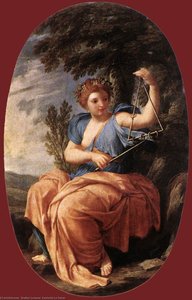
brother lesueur (eustache le sueur)
1616 - 1655 , France
Основные сведения
- Artistic Movement Or Style: Baroque Painting
- Artists Or Movements Influenced By This Artist: ['Rembrandt']
- Artists Who Influenced This Artist: ['Peter Paul Rubens']
- Date Of Birth: November 19, 1617
- Date Of Death: April 30, 1655
- Full Name: Eustache Le Sueur
- Nationality: French
- Notable Artworks:
- The Muses: Melpomene, Erato and Polyhymnia
- The Muses: Clio, Euterpe and Thalia
- Presentation of the Virgin
- Place Of Birth: Paris, France
Похожие статьи

The Dramatic Flourish: Exploring the Baroque Movement's Enduring Legacy in Art History
Explore the dramatic world of Baroque art! Discover iconic artists like Caravaggio & Rubens, defining techniques, and its lasting impact on art history. Expert insights for collectors & enthusiasts at ArtsDot.
The Golden Age Reforged: Dramatic Realism & Religious Zeal in Spanish Baroque Art
Explore the dramatic world of Spanish Baroque art! Discover masters like Zurbarán & the powerful influence of religious zeal on painting techniques – a guide for collectors and enthusiasts.

Theatricality & Triumph: Baroque Drama in Painting & Sculpture
Explore the dramatic world of Baroque art! Discover its history, defining characteristics, & lasting influence on painting & sculpture. Expert insights into Caravaggio, Zurbarán, and Bernini – plus high-quality reproductions at ArtsDot.

The Visceral Stage: Exploring Dramatic Narratives & Emotional Intensity in Baroque Art
Explore the dramatic world of Baroque art! Discover iconic masters like Caravaggio & Rembrandt, their techniques, and the movement's lasting impact. Expert insights for collectors & enthusiasts at ArtsDot.

10 Шедевров Барокко: Искусство, изменившее мир | ArtsDot.com
Погрузитесь в мир барокко! 10 шедевров Караваджо, Рембрандта и других великих художников. Узнайте историю создания культовых картин и найдите идеальную репродукцию для вашего интерьера на ArtsDot.com