

 Предпросмотр
 Перейти к печати
 Поделиться
 Поделиться


 Скачать
 Похожие работы
 Рентгенография
 Слайд-шоу
 Статистика
Le Lieutenance at Honfleur

The Essence of a Moment: Monet’s Honfleur
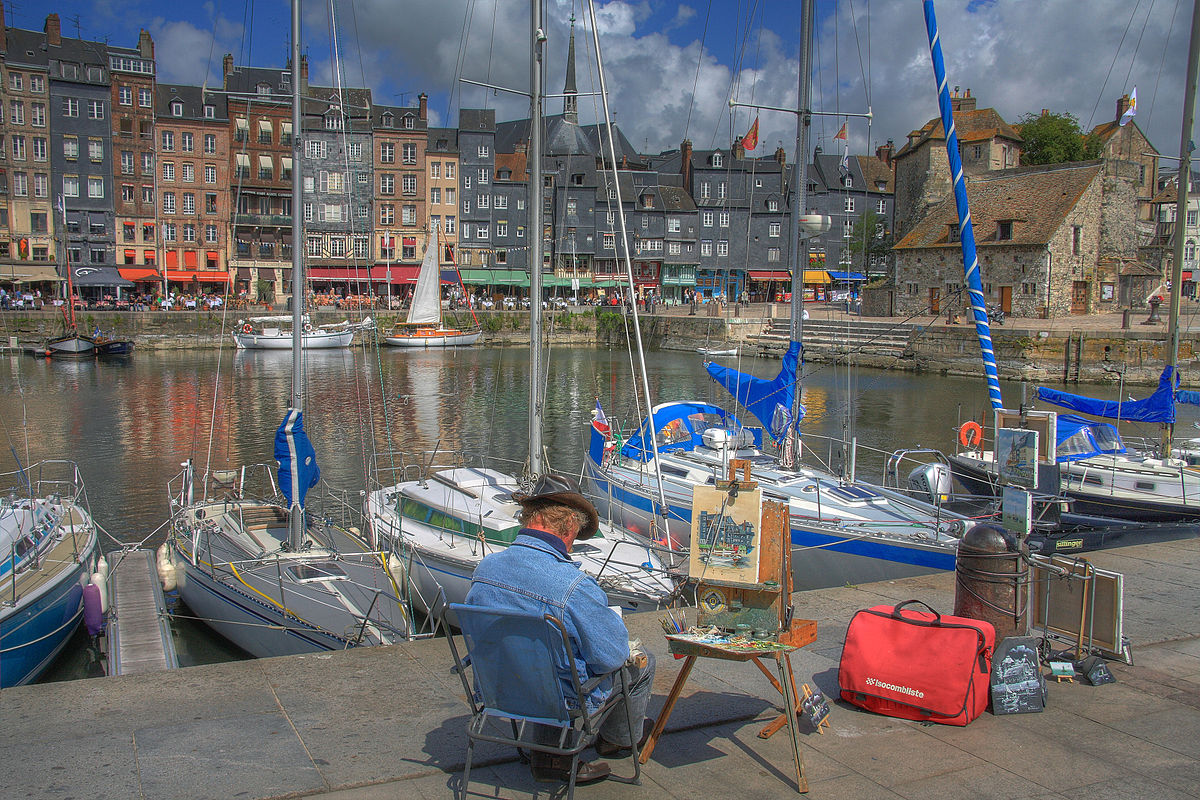
Claude Monet's “Le Lieutenance at Honfleur” isn’t merely a depiction of a coastal town; it’s an exquisite distillation of light, atmosphere, and the fleeting beauty of a summer afternoon. Painted in 1864, this canvas transports us to the charming harbor of Honfleur, Normandy – a place that held particular significance for Monet himself, having spent formative years there and returning repeatedly throughout his life. The scene unfolds with remarkable immediacy, capturing not just the physical appearance of the town but also its vibrant energy and the subtle dance between water, sky, and buildings. It’s a testament to Monet's revolutionary approach – abandoning traditional academic techniques in favor of *plein air* painting, directly from nature, allowing him to capture the ephemeral qualities of light and color with unparalleled sensitivity.
Impressionism in Action: Technique and Vision
Monet’s signature Impressionistic style is powerfully evident here. Notice the broken brushstrokes, applied with a loose, almost haphazard touch – not to create detail, but to capture the *impression* of light reflecting off surfaces. The colors aren't blended smoothly; instead, they are juxtaposed and layered, allowing them to mingle optically in the viewer’s eye. This technique is particularly striking in the rendering of the water, which shimmers with a multitude of blues, greens, and violets, constantly shifting with the changing light. The buildings, too, are rendered with a similar sense of immediacy – their forms suggested rather than precisely defined, contributing to the overall feeling of movement and vibrancy. The artist’s focus isn't on photographic accuracy but on conveying his subjective experience of the scene.
- Color Palette: Dominated by blues, greens, yellows, and violets – capturing the nuances of light and atmosphere.
- Brushwork: Loose, broken strokes that create a sense of movement and immediacy.
- Light & Shadow: Monet masterfully uses light to define form and create depth, emphasizing the transient effects of sunlight on water and buildings.
Honfleur: A Haven for Artists
The choice of Honfleur as the subject matter is deeply significant. The town itself was a magnet for artists throughout the 19th century, drawn by its picturesque harbor, slate-covered houses, and the dramatic interplay of light and water. Monet wasn’t alone; Eugène Boudin, Johan Jongkind, Gustave Courbet, and many others found inspiration in this charming corner of Normandy. The gathering of these artistic figures at La Ferme Saint Siméon – a grand estate overlooking the harbor – is known as “The Honfleur School,” representing a pivotal moment in the development of Impressionism. Monet’s painting captures not just a specific location but also a spirit of artistic camaraderie and a shared fascination with capturing the beauty of the natural world.
Further research reveals that Honfleur was a significant port for the slave trade, adding a layer of historical complexity to the scene. The town’s prosperity was intertwined with this dark chapter in French history, prompting reflection on the broader context of the artwork and its subject matter.
A Window into Monet's Soul
"Le Lieutenance at Honfleur" is more than just a landscape; it’s a glimpse into Monet’s artistic philosophy and his profound connection to nature. The painting evokes a sense of tranquility, joy, and the fleeting beauty of everyday life. It invites us to slow down, observe, and appreciate the subtle wonders that surround us. Reproductions of this iconic work offer a remarkable opportunity to bring this luminous scene into your home, allowing you to experience Monet’s vision firsthand – a testament to his genius and a celebration of light, color, and the enduring charm of Normandy.
Клод Моне (1840 – 1926)
Клод Моне – гений импрессионизма! Его картины «Волжские лилии», «Стога сена» и другие пленэрные шедевры запечатлевают мимолетное сияние света. Погрузитесь в мир его уникального видения!
Об этом произведении
- Название: Le Lieutenance at Honfleur
- Художник: Клод Моне
- Формат: Landscape
- Правовой статус: Общественное достояние
- Динамика: Impressionism
- Техника исполнения: WallArt
- Ключевые слова: france , street , plein air
- Насыщенность цвета: Monochromatic
- Воспринимаемая яркость: balanced
- Тематика: honfleur , monet , boats
Основные сведения
- Year: 1864
- Title: Le Lieutenance at Honfleur
- Artist: Claude Monet
- Influences: Boudin
- Artistic style: En plein air
- Notable elements: Cityscape, bustle
QR-код
