

 Предпросмотр
 Перейти к печати
 Поделиться
 Поделиться


 Скачать
 Похожие работы
 Рентгенография
 Слайд-шоу
 Статистика
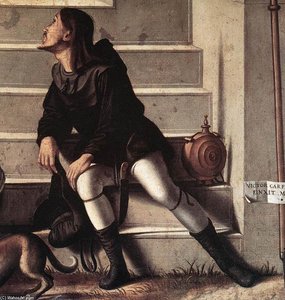
St Stephen is Consecrated Deacon (detail)


Виttore Карпаччо (1465 – 1526)
Витторио Карпаччо был выдающимся итальянским живописцем эпохи раннего венецианского Возрождения (1465-1526). Его славу принесли масштабные циклы картин, такие как «Легенда о Святой Урсуле», где он демонстрирует мастерство повествовательной живописи и влияние нидерландской школы. Карпаччо был вдохновлен творчеством Антонио да Мессина и работал в уникальном стиле, сочетающем элементы итальянского и
Стейтлешские музеи Берлина (Berlin, Germany)
Погрузитесь в историю и искусство Германии! Staatliche Museen zu Berlin: Нефертити, древние артефакты, шедевры на Музейном острове и не только. Откройте для себя 17 музеев!
A Moment of Reflection: Unpacking Carpaccio’s ‘St Stephen is Consecrated Deacon’
Vittore Carpaccio's “St Stephen is Consecrated Deacon” offers a profound glimpse into the heart of early Christian faith and the artist’s distinctive approach to narrative painting. This detail, meticulously rendered in oil on canvas, transcends mere depiction; it’s an invitation into a scene brimming with spiritual intensity and quiet contemplation. Carpaccio, working primarily during the first half of the 16th century in Venice, forged a unique style—a blend of early Netherlandish realism, subtle Italian Renaissance influence, and a distinctly orientalist sensibility – that set him apart from his contemporaries. Unlike the more flamboyant styles emerging at the time, Carpaccio favored a deliberate conservatism, prioritizing meticulous detail, emotional depth, and a profound understanding of human psychology.
The Scene: A Venetian Interior of Faith
The composition immediately draws the viewer in, focusing on a young man seated on a weathered stone ledge within what appears to be a modest monastic chamber. This figure, bathed in diffused light – a hallmark of Carpaccio’s technique – exudes an aura of profound introspection. His gaze is directed upwards, suggesting a moment of prayer or perhaps sorrowful reflection. Adding a touch of unexpected domesticity, a loyal dog rests at his feet, symbolizing companionship and steadfastness amidst spiritual contemplation. The architectural setting itself—a simple window frame and the rough-hewn stone ledge—grounds the scene in a tangible reality while simultaneously amplifying the figure’s inner world.
Technique and Style: A Master of Detail
Carpaccio's mastery lies in his painstaking attention to detail. The brushstrokes, visible across the canvas, create a rich, textured surface that speaks volumes about the artist’s deliberate process. The use of earthy tones—ochres, browns, and muted greens—evokes a sense of solemnity and realism, mirroring the gravity of the occasion depicted. Notice how he employs linear perspective to subtly define the figures and architectural elements, creating a shallow depth that fosters intimacy and draws us into this private moment. The anatomical accuracy, influenced by early Netherlandish art, is remarkable, particularly in the rendering of the monk’s face – a study in quiet intensity.
Symbolism and Spiritual Resonance
Beyond its visual beauty, “St Stephen is Consecrated Deacon” resonates with profound symbolic meaning. The monk's attire—a simple robe signifying piety and devotion—contrasts sharply with the dog’s presence, representing loyalty and unwavering companionship. The act of consecration itself – Stephen being ordained a deacon – marks a pivotal moment in Christian history, symbolizing his transition into service and his role as a witness to Christ. The scene invites us to contemplate themes of faith, sacrifice, and the enduring power of spiritual reflection. It’s a poignant reminder that even within moments of solemnity, there can be found a quiet beauty and an invitation to inner peace.
Об этом произведении
- Название: St Stephen is Consecrated Deacon (detail)
- Художник: Виttore Карпаччо
- Формат: Square
- Правовой статус: Общественное достояние
- Местонахождение: Стейтлешские музеи Берлина
- Динамика: Renaissance
- Техника исполнения: WallArt
- Цветовая палитра: Earthy
- Основной цвет: Phthalo Green
- Предназначение: Reflective
Основные сведения
- Artistic style: Realism, Renaissance influence
- Notable elements: Contemplative monk, dog
- Subject or theme: Religious reflection
- Movement: Venetian Renaissance
- Influences:
- Carpaccio
- Early Netherlandish
- Year: 1511-1526
- Medium: Oil on canvas
QR-код
