

 Предпросмотр
 Перейти к печати
 Поделиться
 Поделиться


 Скачать
 Похожие работы
 Рентгенография
 Слайд-шоу
 Статистика
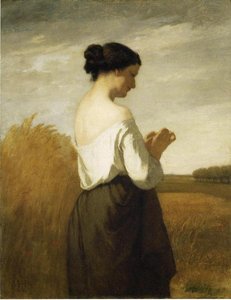
La Marguerite


Уильям Моррис Хант (1824 – 1879)
Уильям Моррис Хант (1824-1879): американский художник школы Барбизон, известный светящимися пейзажами и портретами. Вдохновленный Милле, он сформировал искусство Бостона XIX века и продвигал европейские стили.
Музей изящных искусств Бостон (Бостон, Соединенные Штаты Америки)
Музей изящных искусств Бостон – один из крупнейших музеев мира с богатейшей коллекцией искусства разных эпох и стран! Погрузитесь в мир шедевров, архитектуры и истории.
La Marguerite: A Portrait of Resilience and Romantic Idealism
William Morris Hunt’s “La Marguerite,” completed in 1853, transcends mere representation; it embodies the spirit of the Barbizon School—a movement that championed plein air painting and a profound connection to nature—while simultaneously exploring themes of feminine beauty and contemplative introspection. This monumental canvas depicts a woman seated outdoors amidst a grove of trees, her gaze directed towards an unseen horizon.
- Subject Matter: The portrait focuses on a single female figure, rendered with meticulous detail against the backdrop of a tranquil woodland scene. Her posture exudes serenity and suggests a profound engagement with the natural world.
- Style & Technique: Hunt’s masterful brushwork exemplifies the Barbizon aesthetic—characterized by loose, expressive strokes that capture the immediacy of observation. He employs tonal modulation to create depth and atmosphere, skillfully blending colors to evoke the dappled sunlight filtering through the foliage. The palette leans towards muted greens and browns, reflecting the subdued hues of the forest environment.
- Historical Context: Painted during a period of burgeoning Romanticism in America, “La Marguerite” reflects the movement’s fascination with idealized beauty and its yearning for communion with sublime landscapes. Hunt's work aligns with the broader artistic currents of his time, responding to European influences—particularly those of Jean-François Millet and Gustave Courbet—who championed realism and a commitment to portraying rural life authentically.
- Symbolism: The woman’s gaze symbolizes contemplation and aspiration – she seeks something beyond the immediate visual experience, hinting at inner thoughts and emotions. The grove of trees serves as a metaphor for stability, wisdom, and connection to the divine—elements central to Romantic ideals.
- Emotional Impact: “La Marguerite” evokes feelings of tranquility, melancholy, and quiet contemplation. Its luminous quality captures the ethereal beauty of twilight, inviting viewers to immerse themselves in a moment of serene reflection. The painting’s understated grandeur speaks to the enduring power of nature's influence on human consciousness.
Further research into Hunt’s artistic journey reveals his dedication to elevating American art beyond academic conventions. His exploration of Barbizon principles—a deliberate rejection of studio-bound realism—established him as a pioneer in establishing a distinctly American visual language.
Additional Resources
Image Reference
Об этом произведении
- Название: La Marguerite
- Художник: Уильям Моррис Хант
- Год: 1853
- Формат: Portrait
- Правовой статус: Общественное достояние
- Местонахождение: Музей изящных искусств Бостон
- Динамика: Barbizon School
- Контекст корпуса: vermont landscape , european masters
- Цветовая палитра: Earthy
- Предназначение: Accent
Основные сведения
- Movement: Barbizon School
- Title: La Marguerite
- Medium: Oil on canvas
- Year: 1853
- Notable elements or techniques: Portraiture; Landscape background
- Artist: William Morris Hunt
QR-код
