 Предпросмотр
 Поделиться
 Поделиться
 Детали произведения

 Скачать
 Похожие работы
 Рентгенография
 Слайд-шоу
 Статистика
Пrouн 19Д


 Читать далее
Масляная репродукция ручной работы
Картина маслом на холсте в выбранном вами размере и раме, написанная на заказ нашими художниками. ( Перейти к печати Перейти к цифровым изображениям)




P118B $10

P118H $10

P118W $10

P438Z $10

P508JH $12

P508YH $12

P805H $10

P805Z $10

P919BZ $10

P919G $10

P919XJ $10

P959ZH $10

P968JZ $12

W106C $8

W218G $10

W218JH $8

W218Y $10

W307PJ $10

W316G $10

W316PJ $8

W316Y $10

W398PJ $8

W4111J $10

W500HY $15

W500JH $15

W692G $12

W849H $8

W940BG $15

W953PJ $8




Выберите один из наших стандартных размеров, соответствующих оригинальным пропорциям произведения искусства.

Вы можете указать собственные размеры, чтобы картина идеально вписалась в выбранную раму или пространство. Если выбранный вами размер не соответствует пропорциям оригинала, мы либо обрежем полотно, либо расширим его за счет дополнительных элементов, написанных вручную. Цифровой макет будет отправлен вам на утверждение перед началом производства.
Обратите внимание, что предварительный просмотр на экране не отражает фактическую обрезку или расширение. Только макет точно покажет окончательную композицию.
Хотя доступны индивидуальные размеры, мы рекомендуем выбирать вариант из предопределенного списка, чтобы сохранить исходные пропорции.
После оформления заказа команда ArtsDot.com свяжется с клиентом по электронной почте для уточнения деталей и предоставит предварительный макет
Доставка по всему миру () за 3–4 недели вместо стандартных 5 недель. (11 Сентябрь). Без компромиссов в качестве.

Бесплатная экспресс-доставка по всему миру

Высококачественный льняной холст

Полное страхование доставки

Гарантия возмещения таможенных пошлин

Гарантия точного соответствия цветов

100-дневная политика возврата (только при обнаружении дефектов)

Гарантия возврата 100% средств

Предложение оптовых скидок
 Вариант со стеклом доступен только для размеров менее 110 см

Пrouн 19Д
Техника репродукции
Размер репродукции
-


Итоговая стоимость
$ 263
A Vision of Pure Feeling: Deconstructing El Lissitzky’s *Proun 19D*
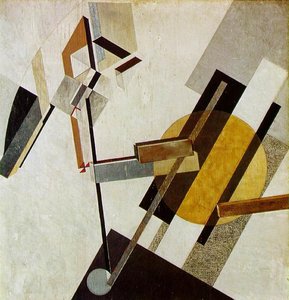
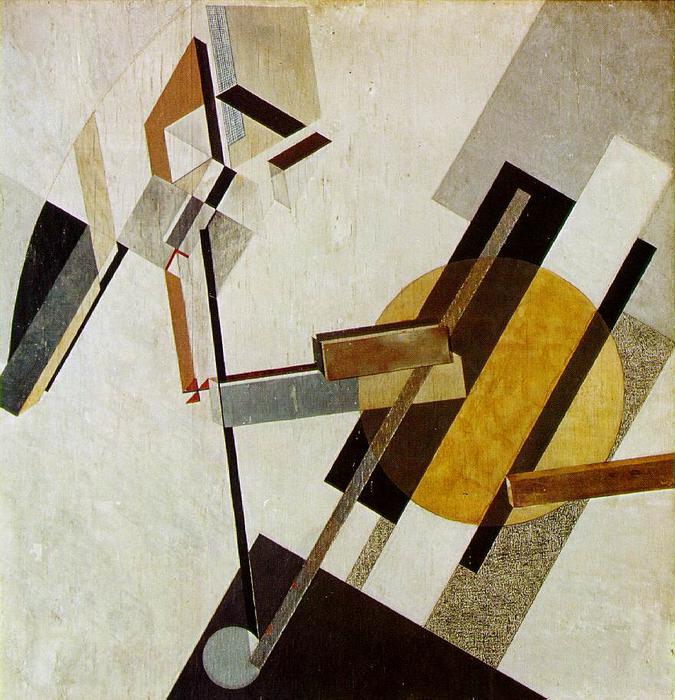
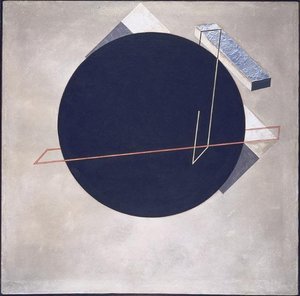
El Lissitzky's *Proun 19D*, created in 1922, is not merely a painting; it’s a fragment of a revolutionary vision. Emerging from the fervor of post-revolutionary Russia, this work embodies the spirit of Constructivism and Suprematism, yet transcends easy categorization. It presents itself as a dynamic interplay of geometric forms—planes, angles, and circles—suspended within a field of ochre yellow. The composition isn’t representational in the traditional sense; rather, it feels like an exploded architectural drawing, a blueprint for a new world order rendered in paint, metal foil, and even sandpaper. Lissitzky deliberately eschewed conventional artistic materials, incorporating textures that disrupt the flatness of the canvas and invite tactile exploration. This deliberate materiality underscores the Constructivist ideal: art should not simply depict reality but actively *construct* it.
- Historical Context: The artwork was born in Vitebsk during the tumultuous years immediately following the Russian Revolution (1917), when Russia wrestled with civil war and sought to forge a new identity. Lissitzky’s artistic endeavors were deeply intertwined with the broader sociopolitical landscape of the era.
- Influence of Malevich: Lissitzky's profound admiration for Kazimir Malevich’s Suprematism profoundly shaped his aesthetic sensibilities, propelling him toward exploring pure geometric forms and spiritual resonance.
- Material Innovation: Lissitzky’s pioneering use of unconventional materials—metal foil, sandpaper, and plywood—was a deliberate rejection of traditional artistic conventions and a testament to the Constructivist commitment to experimentation.
The Birth of ‘Proun’: A Project for a New Art
To understand *Proun 19D*, one must delve into the genesis of its conception. Lissitzky, initially trained as an architect and engineer, recognized the transformative potential of art to catalyze societal change. He envisioned art not merely as imitation but as active participation in shaping a new social order—a conviction that fueled his exploration of innovative visual languages.
- Architectural Roots: Lissitzky’s conceptual framework for *Proun* stemmed from his architectural training, where he sought to translate spatial principles into artistic expression.
- Suprematism's Inspiration: Lissitzky drew inspiration from Malevich’s Suprematism, prioritizing pure geometric forms and spiritual contemplation as guiding aesthetic ideals.
- Constructivist Aim: Lissitzky’s overarching ambition was to contribute to the Constructivist project—a movement dedicated to harnessing art’s capacity for social transformation through a radical reimagining of visual language.
Decoding the Geometry: Symbolism and Emotional Resonance
The seemingly abstract forms within *Proun 19D* are imbued with symbolic significance, reflecting Lissitzky's intellectual engagement with philosophical concepts. The intersecting planes represent multiple perspectives—a bold assertion of multiplicity that challenged prevailing artistic conventions.
- Plane Representation: Lissitzky’s use of intersecting planes symbolizes the multifaceted nature of reality and underscores the Constructivist belief in exploring diverse viewpoints.
- Circular Motif: The recurring circles embody cosmic harmony and spiritual wholeness—a motif that resonates with Malevich's Suprematist exploration of transcendental ideals.
- Texture Contrast: Lissitzky’s juxtaposition of smooth painted surfaces against rough sandpaper creates a visual tension mirroring the societal upheavals of the period, conveying dynamism and emotional intensity.
Ultimately, *Proun 19D* transcends mere visual representation; it invites contemplation and fosters an emotional response—a testament to Lissitzky’s conviction that art possesses the power to inspire and transform.
A Lasting Legacy: Proun’s Influence on Modern Design
El Lissitzky's *Proun 19D* stands as a cornerstone of abstract art history, exerting an enduring influence on subsequent artistic endeavors. Its pioneering geometric abstraction and dynamic compositional principles continue to inspire designers and artists today.
- Graphic Design Impact: Lissitzky’s aesthetic innovations profoundly impacted graphic design, shaping typography and visual communication styles across generations.
- Architectural Applications: The principles of spatial construction championed by Lissitzky found expression in architectural designs—demonstrating the pervasive reach of his artistic vision.
- Contemporary Relevance: *Proun 19D*'s bold forms and striking color palette remain relevant as a source of inspiration for contemporary art and interior design projects.
A reproduction of *Proun 19D* serves not merely as decorative embellishment but as an affirmation of artistic heritage—a statement piece embodying the spirit of experimentation and utopian aspirations.
Похожие произведения
Биография художника
A Revolutionary Vision: The Life and Art of El Lissitzky
El Lissitzky, born Lazar Markovich Lissitzky in 1890 in the small Russian town of Pochinok, emerged as a pivotal figure in the tumultuous landscape of early 20th-century art. His journey was one of constant reinvention, driven by a fervent belief in the power of art to shape society and reflect the dynamism of the modern world. From his initial training as an architect and engineer – pursuits hampered by restrictions placed upon Jewish students – Lissitzky’s path diverged towards artistic expression, initially through illustrations steeped in Jewish folklore. These early works, like his cover for ‘Chad Gadya’, reveal a nascent talent already grappling with narrative and visual storytelling, hinting at the profound cultural roots that would continue to inform his aesthetic. A move to Berlin and Darmstadt broadened his horizons, but it was upon returning to Russia that Lissitzky truly found his artistic voice, becoming inextricably linked with the revolutionary fervor sweeping through the nation.The Embrace of Abstraction: Suprematism and Proun
A defining moment arrived with his encounter with Kazimir Malevich and the embrace of Suprematism. This radical movement, dedicated to pure geometric abstraction, resonated deeply with Lissitzky’s desire to transcend representational art and tap into a universal visual language. He became a key member of UNovis, the Suprematist group established in Vitebsk, actively disseminating its principles through teaching and artistic production. However, Lissitzky didn't simply replicate Malevich’s style; he forged his own distinct path with the development of *Proun*. This unique series, born from a fusion of Suprematism and Constructivism, explored spatial relationships and geometric forms in dynamic compositions that often resembled architectural blueprints or exploded diagrams. Proun wasn't merely painting; it was an investigation into the very structure of space itself, a premonition of future architectural possibilities. These works, with their floating planes and intersecting lines, embodied Lissitzky’s belief in art as a force capable of constructing new realities. The influence of his engineering background is palpable here, lending a structural logic to the abstract forms. He sought to depict not just objects but their spatial relationships, creating a visual language that could be used to organize and understand the world around him.Art as Propaganda and Social Commentary
Lissitzky's artistic vision extended far beyond the canvas. He passionately believed that art should serve a social purpose, actively engaging with political ideologies and seeking ways to integrate design into everyday life. This conviction led him to become deeply involved in Soviet propaganda efforts, creating powerful posters and graphic designs intended to mobilize public support for the Bolshevik regime. His 1941 poster calling for tank construction stands as a testament to this commitment – a stark, impactful image reflecting the urgency of wartime. Beyond propaganda, Lissitzky revolutionized typography, exhibition design, and photomontage. He understood that effective communication required innovative visual strategies, and he fearlessly experimented with new techniques to convey his message. His photomontages, such as ‘The Constructor’ (1924), are particularly striking – self-portraits that blend photography with geometric abstraction, offering a complex commentary on identity and the role of the artist in society. These works demonstrated his ability to synthesize disparate elements into a cohesive and powerful visual statement.A Cultural Ambassador: Spreading Constructivist Ideals
Lissitzky's influence transcended national borders. He served as a crucial cultural ambassador for Soviet art, disseminating Constructivist ideas throughout Western Europe, particularly in Germany. His innovative exhibition designs challenged traditional gallery spaces, creating immersive environments that actively engaged viewers. These exhibitions weren’t simply displays of artwork; they were carefully constructed experiences designed to provoke thought and inspire action. His work had a profound impact on the Bauhaus and De Stijl movements, influencing generations of artists and designers with its emphasis on geometric abstraction, functionalism, and social responsibility. He collaborated with figures like Kurt Schwitters and Theo van Doesburg, fostering a cross-cultural exchange that enriched the artistic landscape of the era. Lissitzky’s ability to articulate and translate complex ideas into visually accessible forms made him a sought-after consultant for numerous Soviet cultural institutions.Legacy and Enduring Influence
El Lissitzky’s life was tragically cut short in 1941 in Moscow, but his legacy continues to resonate today. He bridged the gap between art and architecture, abstraction and social purpose, leaving behind a body of work that is both intellectually stimulating and visually captivating. The establishment of the Lissitzky Foundation in 2014 underscores the ongoing commitment to preserving his artistic heritage and preparing a comprehensive catalogue raisonné of his creations. His innovations in typography, exhibition design, and photomontage continue to inspire contemporary artists and designers, while his unwavering belief in the power of art as a force for social change remains profoundly relevant.- His work is held in numerous international collections
- Museums featuring his works include the Taganrog Art Museum and Novokuznetsk Art Museum.
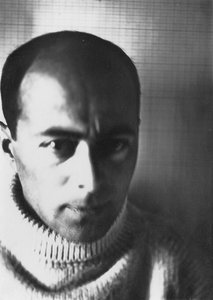
Эль Лисицкий
1890 - 1941 , Россия
Основные сведения
- Artistic Movement Or Style:
- Супрематизм
- Конструктивизм
- Прун
- Artists Or Movements Influenced By This Artist:
- Баухаус
- Де Стиль
- Artists Who Influenced This Artist: ['Казимир Малевич']
- Date Of Birth: 23 нояб 1890
- Date Of Death: 30 дек 1941
- Full Name: Ля́зар Маркови́ч Лиси́цкий
- Nationality: Русский
- Notable Artworks:
- «Конструктор»
- Обложка «Чад Гадя»
- Серия «Прун»
- Place Of Birth: Починок, Россия
Похожие статьи
Beyond Form & Color: Geometric Abstraction's Evolution in 20th/21st Century Art
Explore the evolution of geometric abstraction from Cubism to contemporary art. Discover key artists like Malevich & Mondrian, investment insights, and expert collecting advice at ArtsDot.
Beyond Form & Color: Geometric Abstraction's Enduring Legacy in Art History
Explore the captivating world of geometric abstraction! Discover its origins, key artists like Malevich & Mondrian, and why this movement remains highly valued by art collectors today. Expert insights at ArtsDot.

Геометрическая абстракция: 10 шедевров, изменивших искусство | ArtsDot.com
Погрузитесь в мир геометрической абстракции! От Кандинского до Малевича – 10 шедевров, изменивших искусство. Узнайте историю создания и значение культовых картин. Репродукции музейного качества на ArtsDot.com. Вдохновение для вашего интерьера!
Эль Греко: 25 шедевров гения. Купить картины онлайн | ArtsDot
Погрузитесь в мир Эль Греко! 25 величайших шедевров испанского маньеризма. Узнайте историю создания культовых картин, технику и символизм. Купите репродукции высокого качества для вашего интерьера на ArtsDot.com.
Geometric Design in Art: A Historical Survey & Contemporary Appeal for Collectors
Explore the enduring legacy of geometric abstraction! Discover key artists, historical movements & investment insights for discerning art collectors. Expert guidance from ArtsDot.