
The Post-War Crucible: The Birth of a New Visual Language
 Beyond the Canvas: A Definitive Guide to Abstract Expressionism, Action Painting, and Color Field Masters
The Post-War Crucible: The Birth of Abstract Expressionism Abstract expressionism Abstract expressionism in the United States emerged as a distinct art movement in the aftermath of World War II and gained mainstream acceptance in the 1950s, a shift f...
To truly appreciate the seismic rupture that was Abstract Expressionism, one must first confront the heavy, fractured atmosphere of the mid-twentieth century. The aftermath of World War II left a profound scar on the collective human psyche, creating a world grappling with unprecedented trauma, existential uncertainty, and the shattering of established social norms. In this climate of deep disillusionment, the center of the Western art universe began to migrate from the historic, structured streets of Paris to the burgeoning, electric energy of New York City. This was not merely a change in geography, but a fundamental transformation in how humanity sought to articulate the unspeakable.
Emerging in the 1940s and gaining mainstream dominance in the 1950s, Abstract Expressionism rejected the representational, religious, and classical motifs that had long defined Western aesthetics. It was a movement born from the wreckage of global conflict, moving away from the American social realism of the 1930s—which had been so deeply influenced by the Great Depression and the powerful Mexican muralists—toward a defiant embrace of subjectivity. As the term was first applied to American art in 1946 by critic Robert Coates, it signaled a new era where the canvas became a site for exploring the inner landscape of the human spirit, unburdened by the need to mirror the external world.
The Soul of the Gesture: Understanding Action Painting and Spontaneity
Action painting, sometimes called "gestural abstraction", is a style of painting in which paint is spontaneously dribbled, splashed or smeared onto the canvas, rather than being carefully applied. The resulting work often emphasizes the physical act ...
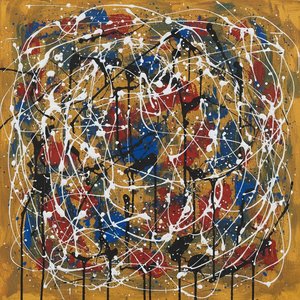
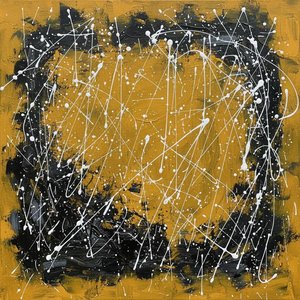
At the heart of this movement lies a fascination with the physical act of creation itself. Often referred to as Action Painting or gestural abstraction, this style emphasizes the spontaneous, even chaotic, application of paint. Rather than carefully applied layers designed to depict a finished subject, artists utilized techniques where paint was splashed, dribbled, or smeared onto the canvas. The resulting work serves as a visceral record of the artist's movement, making the canvas not just a surface for an image, but an arena in which to act.
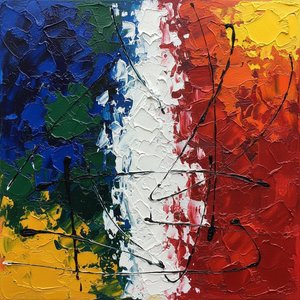
Consider the works of Michael Goldberg, a pioneer of this rhythmic, gestural intensity. His technique carries the weight of physical movement across the surface, creating a rich, tactile texture that catches the light with every shift in perspective. In masterpieces like Red Sunday Morning, one witnesses a kaleidoscopic explosion of color where vibrant reds and sun-drenched yellows dance in a rhythmic arrangement. This approach allows the viewer to connect with the raw, pulsating energy of the human psyche, finding beauty within the turbulent layers of the subconscious.
Color as Emotion: Exploring the Depth of Color Field Painting
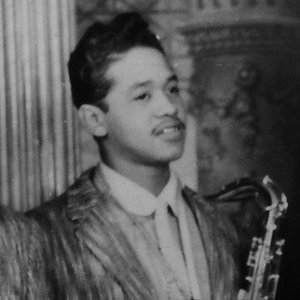 Raymond Parker
Raymond Parker: A Life in Color and Abstraction Born: Minneapolis, United States of America (1922) Died: 1990 Raymond Parker was a significant American painter associated with Abstract Expressionism, Color Field painting, and Lyrical Abstraction. His...
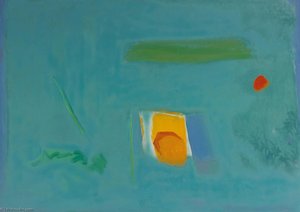
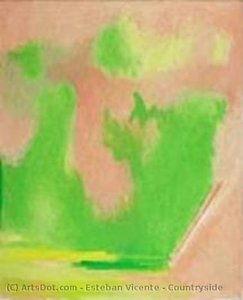
While some artists focused on the frantic energy of the brushstroke, others sought a different kind of transcendence through the vast, meditative expanses of Color Field painting. This branch of Abstract Expressionism moved away from the "event" of painting toward the emotional resonance of pure color. Here, the subject is not a figure or a gesture, but the way light and hue interact to evoke profound psychological states.
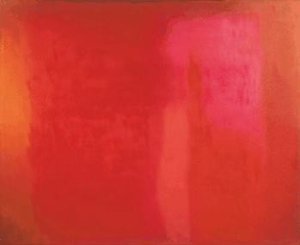
The power of this method lies in its ability to envelop the viewer. By utilizing large-scale canvases, artists like Mark Rothko or Raymond Parker created environments where color could breathe and expand. In these works, the tension between high-contrast hues—such as the warmth of oranges against the cooling presence of deep blues—mirrors the complex duality of human experience: the tension between passion and introspection, or the clarity of morning and the lingering shadows of night. It is a form of visual music, where color theory guides the eye through a labyrinth of emotion.
Masters of the New York School: From Pollock to Goldberg
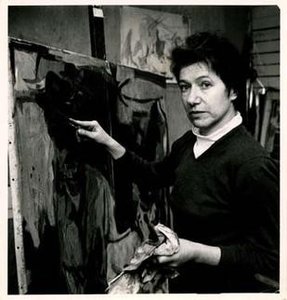 Jack Tworkov
A Life Forged in Transition: The Journey of Jack Tworkov Jack Tworkov, born Yakov Tworkovsky in 1900 in the Polish border town of Biała Podlaska, embodied a life shaped by transition – from Old World origins to the burgeoning American art scene, and ...
The New York School was a vibrant, intellectual crucible, a gathering of titans who engaged in spirited dialogues within legendary spaces like the Eighth Street Club and the Cedar Bar. This community included luminaries such as Jackson Pollock, Willem de Kooning, Arshile Gorky, and Lee Krasner. Their interactions were more than social; they were intellectual skirmishes that redefined the boundaries of modernism. Each artist brought a unique lineage, blending the emotional intensity of German Expressionism with the radical visual vocabulations of European avant-garde schools like Futurism and Synthetic Cubism.
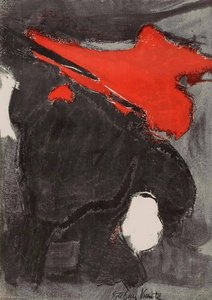
Within this circle, we find artists like Jack Tworkov, whose journey from Old World origins to the heart of American abstraction embodied the very spirit of transition. We also see the profound contributions of Hedda Sterne, whose work, such as New York (1956), explored the intersection of perception and materiality. Through their collective courage, these artists moved beyond the need for narrative, instead utilizing spontaneous and automatic methods inspired by Surrealist pioneers to tap into the collective unconscious.
Curating Chaos: How to Integrate Abstract Expressionism into Modern Interiors
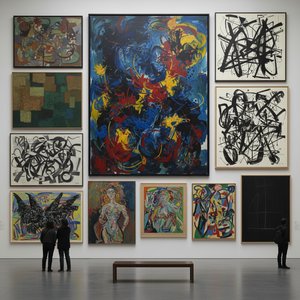 Abstract Expressionism's 10 Defining Masterpieces |
Introduction To gaze upon these ten canvases is to step into a realm where emotion reigns supreme, where the very act of painting became a visceral outpouring of the human spirit. The Abstract Expressionist movement, born in the aftermath of World Wa...
For the discerning collector, integrating Abstract Expressionist works into a contemporary home is an exercise in adding soul to structure. Because these paintings are liberated from narrative constraints, they act as powerful anchors for a room's atmosphere. A large-scale, multi-panel arrangement—splitting a single emotive image across three or five panels—can transform a wide wall or a grand staircase into a modern architectural feature, creating a sense of movement and flow.
When decorating, one might choose to browse by color palette or mood to ensure the artwork complements the existing design. A vibrant, high-energy piece can serve as a focal point in a living area, while more muted, Color Field-inspired works offer a meditative quality perfect for study or bedroom spaces. The key is to embrace the "remix" of history; much like how we at ArtsDot.com allow you to transform personal photos into the style of a master, an Abstract Expressionist piece allows you to bring the profound energy of the post-war era into the intimate sanctuary of your modern life.
The Tactile Legacy: Preserving the Energy of the Brushstroke
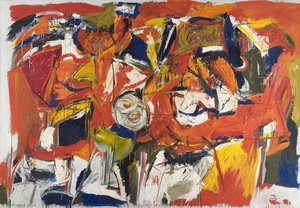 Red Sunday Morning
A Symphony of Visceral Emotion In the vast, evocative landscape of Abstract Expressionism, few works capture the raw, pulsating energy of the human psyche quite like Red Sunday Morning . This monumental canvas, measuring an imposing 202 x 289 cm, ser...
The true value of an Abstract Expressionist reproduction lies in its tactile depth. Unlike a flat, computer-printed poster, a hand-painted oil reproduction on 100% cotton canvas preserves the essential "soul" of the movement: the visible brushstrokes and the impasto texture. This physical presence creates a three-dimensional quality that changes with the light, offering a deeper tonal range and a much closer match to the original masterpieces.
To ensure these investments endure for generations, proper preservation is paramount. Using high-quality materials—such as flexible gesso to prevent cracking and Damar varnish to protect against atmospheric pollutants—is essential. For collectors, we recommend avoiding direct sunlight and using acid-free matting to maintain the vibrancy of the pigments. Whether it is a bespoke commission or a carefully selected reproduction, the goal remains the same: to preserve the visceral outpouring of the human spirit that these magnificent canvases represent.
At ArtsDot.com, we believe art should be a welcoming discovery. Whether you are looking to transform a personal milestone into a masterpiece through our custom photo services or seeking an expert consultation to find the perfect piece for your collection, our mission is to help you build a home filled with meaning and beauty.