The Golden Age Glow: An Introduction to Rembrandt’s World
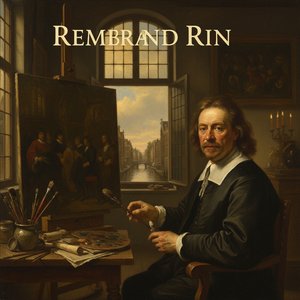
Rembrandt Harmenszoon van RijnA Life Illuminated: The World of Rembrandt van Rijn Rembrandt Harmenszoon van Rijn, a name synonymous with the Dutch Golden Age and a master of light and shadow, was born in Leiden, Netherlands, on July 15, 1606. He wasn’t simply a painter; he was a ...
To step into the world of Rembrandt van Rijn is to enter a realm where the air itself feels heavy with significance, as if every breath were caught in a moment of profound revelation. Born in 1606 amidst the burgeoning prosperity of Leiden, Netherlands, Rembrandt emerged during the Dutch Golden Age—a period of unprecedented scientific discovery and artistic flourishing. This was an era when the newly independent Dutch Republic turned its gaze inward, finding extraordinary beauty not in grand mythological spectacles, but in the quiet dignity of everyday life and the soulful depth of the human condition.
Rembrandt’s upbringing provided a foundation of comfortable middle-class stability, allowing him to pursue an education that blended classical learning with a deep fascination for the visual narrative. His early training under masters like Jacob van Swanenburg and Pieter Lastman ignited a passion for dramatic historical scenes, yet he would eventually transcend these influences to create something entirely his own. As he moved to the bustling, canal-lined streets of Amsterdam, his studio became a sanctuary where light was not merely an environmental factor,
but a living, breathing protagonist in every canvas he touched.
Defining Chiaroscuro: The Dramatic Dance of Light and Dark
Chiaroscuro - Wikipedia--- title: Chiaroscuro - Wikipedia author: Hide Authority Control Databases International Gnd National United States France Bnf Data Spain Israel Other Yale Lux url: https://en.wikipedia.org/wiki/Chiaroscuro hostname: wikipedia.org sitename: Wikimedi...
At the heart of Rembrandt’s revolutionary approach lies the technique known as
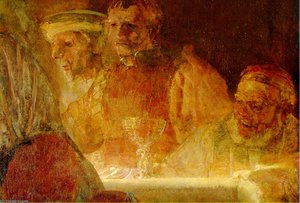
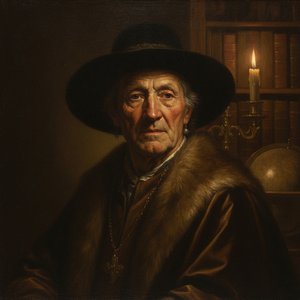
chiaroscuro—an Italian term meaning light-dark. While many of his contemporaries used light to clarify form, Rembrandt utilized it to sculpt emotion. He mastered the art of the extreme contrast, where brilliant, concentrated highlights emerge from an enveloping, velvety darkness. This was not a simple binary of brightness and gloom; rather, it was a sophisticated manipulation of gradients that allowed him to create a sense of three-dimensional volume and tactile reality.
In his hands, chiaroscuro became a tool for focus and narrative tension. By plunging large portions of the canvas into deep shadow, he could direct the viewer's eye with surgical precision toward a single tear, a furrowed brow, or a glint of gold in a sleeve. This technique creates a rhythmic movement across the painting, pulling the observer through layers of obscurity into moments of sudden, luminous clarity. It is this very interplay that gives his works their unmistakable weight and presence, making the painted surface feel less like a flat image and more like a window into a physical, atmospheric space.
The Emotional Lens: Using Shadow to Tell Human Stories
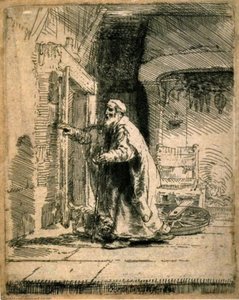 The Blindness of Tobit
A Window into Faith: Rembrandt’s ‘The Blindness of Tobit’ Rembrandt van Rijn's etching, “The Blindness of Tobit,” stands as a testament to the artist’s unparalleled ability to distill biblical narrative into visual poetry. Executed around 1650-52 dur...
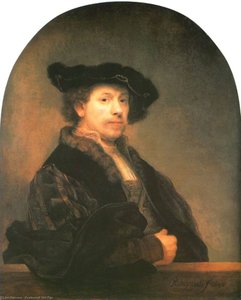
Beyond the technical brilliance of his brushwork, Rembrandt’s true genius resided in his ability to use light as a psychological instrument. He understood that much of the human experience is lived in the shadows—in the moments of doubt, grief, and quiet contemplation that define our existence. In works such as his poignant self-portraits or his depictions of biblical figures like
The Blindness of Tobit, the darkness serves as a metaphor for the unknown, the subconscious, and the vulnerabilities we often hide from the world.
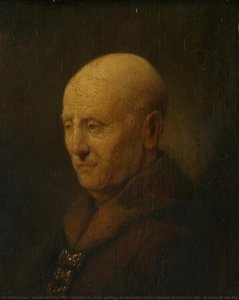
When light strikes a face in a Rembrandt painting, it does not merely illuminate skin; it reveals character. The way a highlight catches the edge of a wrinkled cheek or the soft glow illuminates a subject's eyes allows us to witness their inner life. He painted real people—flawed, complex, and deeply human—rather than idealized icons. Through the strategic use of shadow, he could shroud a subject in mystery or highlight a moment of spiritual epiphany, ensuring that every portrait was an exploration of the soul’s capacity for both great joy and profound sorrow.
Beyond the Canvas: The Legacy of Rembrandt Lighting in Modern Visuals
 Rembrandt lighting
Rembrandt lighting is a standard lighting technique that is used in studio portrait photography and cinematography; it is also used in contrast with butterfly lighting It can be achieved using one light and a reflector, or two lights, and is popular ...
The influence of Rembrandt’s aesthetic extends far beyond the 17th century, permeating the very fabric of modern visual storytelling. If you have ever watched a cinematic masterpiece or studied professional studio photography, you have likely encountered
"Rembrandt lighting." This standard technique is characterized by a small, illuminated triangle of light—often called the "Rembrandt patch"—positioned just below the eye on the shadowed side of the subject's face.
This method remains a favorite among cinematographers and portrait photographers because it achieves a natural yet compelling drama with minimal equipment. It mimics the way light interacts with the human form in nature, creating depth and a sense of three-dimensional realism that flat lighting simply cannot replicate. The legacy of his technique lives on every time a camera captures a shadow that adds mystery to a face or a highlight that brings a subject to life, proving that his mastery of the light-dark dance is truly timeless.
Bringing the Master Home: Curating Baroque Drama in Contemporary Interiors
 Dutch Baroque Masters: 10 Paintings That Shaped an Era | ArtsDot
Introduction To gaze upon the masterpieces of the Dutch Baroque is to step into a world illuminated by both unprecedented wealth and profound introspection. This was an era—the 17th century—where the Netherlands, newly independent and flourishing thr...
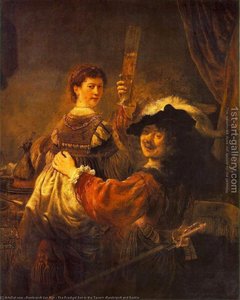
Integrating the dramatic essence of the Dutch Masters into a modern home is an exquisite way to add layers of history and soul to your personal space. While the scale of a Baroque masterpiece can feel daunting, the principles of Rembrandt’s chiaroscuro can be beautifully adapted to contemporary interior design. The key lies in creating focal points that play with contrast and mood, much like the artist did on his canvases.
For those looking to celebrate this legacy, consider how a high-quality reproduction can serve as an anchor for a room's aesthetic. Whether it is a large-scale multi-panel set spanning a wide hallway or a single, intimate portrait in a study, these works introduce a sense of "visual weight" and narrative depth. You might pair the deep tones of a Rembrandt-style painting with rich textures like velvet or dark wood to enhance the atmospheric glow, or use it as a striking contrast against a minimalist, light-filled room. By embracing the interplay of shadow and light, you can transform a house into a curated gallery of emotion and timeless elegance.
Discovering Artistry with ArtsDot.com
At
ArtsDot.com, we believe that fine art should be an accessible discovery for everyone. Whether you are looking to transform a modern selfie into a 17th-century masterpiece through our "Period Shift" services or seeking a hand-painted oil reproduction of a classic icon, our mission is to help you decorate meaningfully. Our professional artists specialize in capturing the very textures and light-drenched styles that made the Old Masters legendary. Explore our collections by color, mood, or room type, and let us help you find the perfect piece to illuminate your world.