
The Canvas of Conflict: Visualizing Social Upheaval in 19th-Century Europe
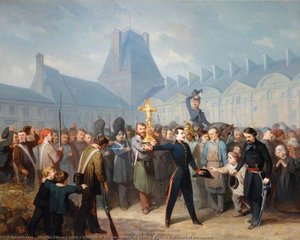 Incident of the Revolution of 1848 in Paris in the Court of the Louvre
Nicolas-Edward Gabé’s "Incident of 1848" captures a dramatic Parisian Revolution scene in muted tones. Oil on canvas, reminiscent of 19th-century historical art. Explore this powerful depiction of national pride and conflict.
To gaze upon the canvases of the nineteenth century is to witness a continent in the throes of profound transformation. The era was defined not by static peace, but by a rhythmic pulse of unrest, where the streets of Paris and the corridors of power became stages for dramatic human struggle. When we examine works such as Nicolas-Edward Gabé’s Incident of the Revolution of 1848 in Paris, we are not merely looking at an oil on canvas; we are observing a captured heartbeat of national pride and conflict. The muted tones and heavy textures characteristic of this period do more than depict a scene; they evoke the very atmosphere of tension that hung over the French populace during those pivotal days of upheaval.
This visual documentation extends beyond the grand scale of battlefields to the raw, unbridered energy of urban riots. Honoré Daumier, a master of capturing societal fracture, utilized monochrome tones in works like L'Emeute ou Scène de révolution to invite viewers into a streetscape defined by motion and uncertainty. Through his brush, the crowd becomes a singular, breathing entity, caught in the throes of a conflict that threatened the very foundations of the existing order. These paintings serve as visceral witnesses, providing a depth of emotion and a sense of immediacy that written chronicles often lack, allowing us to feel the weight of the cobblestones and the heat of the mounting rage.
Revolutionary Aesthetics: How Political Turmoil Redefined Artistic Movements
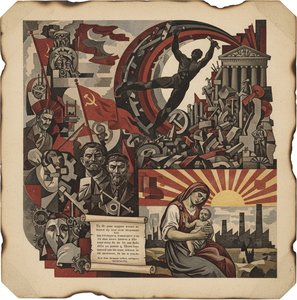 Echoes of Revolution: Artistic Responses to the Tumultuous Year of 1917
The Precipice of Change: Russia on the Brink in 1917 Wikipedia: October Revolution The October Revolution, also known as the Great October Socialist Revolution (in Soviet historiography), October coup, Bolshevik coup, or Bolshevik revolution, was the...
The tremors of political revolution inevitably sent shockwaves through the creative psyche, forcing artists to abandon established norms in search of a new visual language. As old regimes crumbled, so too did the rigid structures of academic art. We see this seismic shift most clearly in the transition from the structured landscapes of the past toward the fragmented, dynamic energy of the modern era. The year 1917, for instance, stands as a monumental catalyst; the Russian Revolution did not merely alter the political landscape but acted as a rupture with tradition, leaving a vacuum filled by utopian dreams and a desperate search for new forms to represent a radically altered reality.
This period of experimentation birthed movements like Cubo-Futurism, which embraced the speed, mechanization, and fragmentation of the modern world. Even within the realm of landscape and form, the revolution was palpable. The journey from the sun-drenched, structured investigations of Paul Cézanne toward the fractured planes of Cubism mirrors a broader societal move toward deconstructing established perspectives. This was an era where artists sought to break free from representational constraints, exploring abstraction as a means of conveying pure emotion and spiritual truth amidst the chaos of a changing world.
Documenting the Struggle: Art as a Primary Source for National Identity
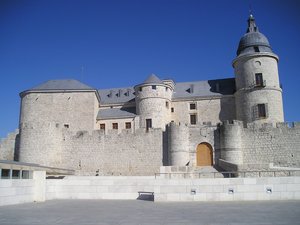 Archivo General de Simancas
A Legacy Etched in Stone and Parchment: The Archivo General de Simancas The Archivo General de Simancas stands as a singular monument to Spanish history—not merely a building, but an institution dedicated to safeguarding the nation’s past. Founded in...
Beyond the expressive power of painting, the very fabric of history is woven through the meticulous preservation of official records and personal testimonies. History is often found in the most unexpected places—not just in grand declarations, but in the fine calligraphy of a notary’s hand or the quiet archives of a nation. In 16th-century Seville, the work of Luis de Porras, a public notary, provides an intimate window into a legal world where even the legendary Miguel de Cervantes navigated life's complexities. These original documents, rendered in elegant Latin calligraphy with iron gall ink on aged parchment, act as tangible links to pivotal moments, anchoring the literary and social history of Spain to a physical reality.
Similarly, institutions like the Archivo General de Simancas and the National Archives of the Netherlands serve as the collective memory of their respective nations. These repositories are far more than mere collections of paper; they are living chronicles that encompass governmental actions, societal shifts, and personal stories. From the royal decrees of the Habsburg monarchy to the photographic records of Dutch social movements, these archives safeguard the fragments of time that constitute a national identity. They allow us to trace the threads of lineage, legal reformations, and cultural evolution, ensuring that the struggles and triumphs of the past remain accessible to the historians and lovers of heritage who seek to understand the soul of a people.
From Portraits to Protests: The Evolution of Political Iconography
 raúl martínez rodríguez
Raúl Martínez Rodríguez: A Life in Color and Revolution Early Life and Artistic Beginnings Born: January 21, 1927, Havana, Cuba. Raúl Martínez Rodríguez embarked on his artistic journey in the 1940s, a period of significant social and political chang...
The iconography of revolution is a study in the power of the image to mobilize and memorialize. Throughout history, artists have transitioned from creating portraits of the elite to documenting the faces of the masses. In Cuba, the work of Raúl Martínez Rodríguez demonstrates how vibrant colors and geometric forms can be utilized to reflect a period of significant social and political change, turning the canvas into a medium for revolutionary identity. This evolution shows that art can function both as a mirror to power and a tool for its subversion.
This transformative power is also evident in the way personal narratives are elevated to historical significance. The watercolor paintings of Mohammad Toha Adimidjojo, created during the Indonesian struggle for independence, offer a deeply personal perspective on conflict and displacement. By documenting the years of occupation through a lens of unwavering national spirit, his work transforms individual experience into a collective symbol of resistance. Whether through the grand scale of a mural or the intimate detail of a watercolor, the evolution of political iconography continues to shape how we perceive the legitimacy and the legacy of revolutionary movements.
Preserving the Flame: Modern Archives and the Curation of Revolutionary Memory
 China Modern and Contemporary Art Document Research Center
A Beacon of Chinese Artistic Heritage: Exploring the China Modern and Contemporary Art Document Research Center Located in the vibrant heart of Beijing, the China Modern and Contemporary Art Document Research Center stands as a testament to China’s d...
In our contemporary era, the preservation of artistic and historical legacy requires an active, global effort. Institutions such as the China Modern and Contemporary Art Document Research Center in Beijing exemplify this dedication, acting as engines for understanding the evolution of art from the Song Dynasty to the present day. By preserving manifestos, exhibition prefaces, and artist writings, these centers ensure that the intellectual currents driving artistic experimentation are never lost to time.
The curation of revolutionary memory is a continuous process of bridging the past with the contemporary identity. It involves the careful management of both the ephemeral—such as conceptual works and performance documentation—and the monumental. As we look back at the great revolutions, it is the synergy between the artist's vision and the archivist's care that allows these moments of profound change to endure. Through the preservation of these visual and written legacies, we ensure that the echoes of revolution continue to inform and inspire future generations, keeping the flame of historical truth burning brightly.