The Fundamentals of Cubism: Deconstructing Perspective for Modern Interiors
 Cubist Expression: The Sophisticated Art of Shattering Reality Through Geometric Abstraction
The Genesis of Fragmentation: Understanding the Cubist Revolution At the dawn of the twentieth century, the art world stood on the precipice of a seismic shift, moving away from the romanticized perceptions of nature toward a more cerebral, structure...
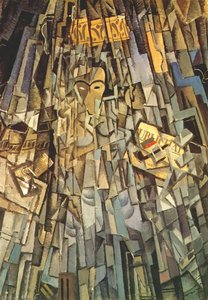
At the dawn of the twentieth century, the art world stood on the precipice of a seismic shift, moving away from the romanticized perceptions of nature toward a more cerebral, structured reality. The birth of Cubism was not merely a change in aesthetic preference but a radical intellectual rebellion against the traditional constraints of perspective that had governed Western art since the Renaissance. This movement sought to dismantle the single-point perspective, replacing it with a multifaceted view of the world where objects were no longer viewed from a fixed position, but through a series of overlapping, simultaneous viewpoints. For the modern designer, understanding this deconstruction is essential; it represents a move away from the window-like illusion of depth toward a complex plane of intersecting lines and planes that invites active engagement.
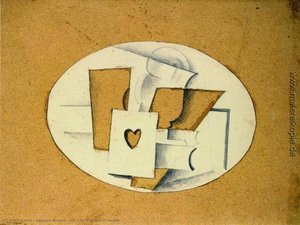
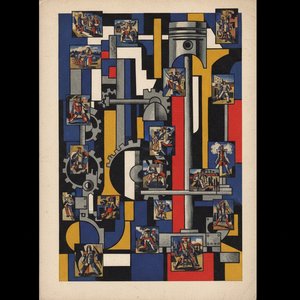
This revolution was driven by an urge to capture the true essence of form—not as it appears to the eye in a fleeting moment of light, but as it exists in the mind's comprehension. By breaking down subjects into their fundamental geometric components, artists like Pablo Picasso and Georges Braque began to explore the relationship between space and volume in ways previously unimagined. In the early phase known as Analytical Cubism, the focus shifted toward a monochromatic palette of muted earth tones—ochres, greys, and browns—to ensure that the viewer's attention remained fixed on the structural integrity of the composition rather than being distracted by superficial color. This disciplined approach to form provides a sophisticated foundation for any contemporary interior, offering a sense of intellectual depth and architectural permanence.
Geometric Abstraction in Hospitality: Creating Visual Interest Through Fragmented Forms
 Geometric abstraction
Geometric abstraction is a form of abstract art based on the use of geometric forms sometimes, though not always, placed in non-illusionistic space and combined into non-objective (non-representational) compositions. Although the genre was popularize...
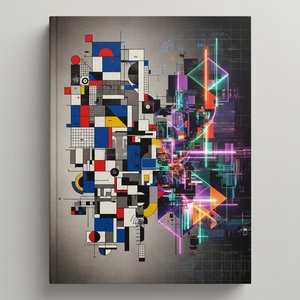
In the high-stakes environment of hospitality design, where every visual element must contribute to a cohesive brand narrative, geometric abstraction offers unparalleled versatility. The power of Cubist expression lies in its ability to shatter reality into manageable, aesthetically pleasing fragments that can be harmonized with modern architectural lines. Unlike traditional figurative art, which may demand a specific focal point, the fragmented nature of Cubism allows the eye to wander across the canvas, discovering new angles and intersections within the composition. This creates a dynamic visual energy that is particularly effective in lobbies, lounges, and transit spaces where movement is constant.
The use of geometric forms—cubes, spheres, and intersecting planes—servulate as a bridge between the organic world and the structured environment of a luxury hotel. When integrating these works, one can utilize the tension found in pieces like Picasso’s
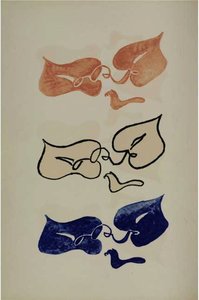
Harlequin and Woman with Collar, where figures are rendered as geometric constructions that create a sense of rhythmic movement. This fragmentation does not result in chaos; rather, it provides a sophisticated way to introduce texture and complexity without overwhelming the space. By utilizing the mathematical precision of geometric abstraction, designers can anchor a room with art that feels both avant-garde and structurally integrated into the building's own geometry.
Strategic Implementation: Using Multi-Panel Cubist Sets for Large-Scale Hotel Walls
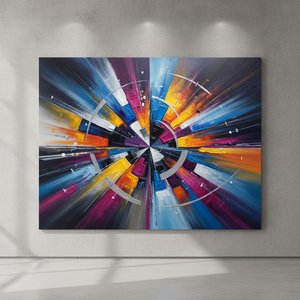
For procurement managers and designers tasked with furnishing expansive hotel corridors or grand atrium walls, the challenge often lies in scale. A single, standard-sized canvas frequently fails to command the necessary presence in a high-volume architectural setting. This is where the trend of multi-panel or group set paintings becomes an indispensable tool. By splitting a singular Cubist composition across three, four, or even five panels, a designer can transform a vast, empty wall into a monumental narrative. This technique allows for a seamless flow of color and brushstroke across a wide surface area, creating a cohesive, modern architectural look that mimics the rhythm of the surrounding structure.
The beauty of multi-panel implementation lies in its ability to manipulate the perceived boundaries of a room. A large-scale Cubist triptych can elongate a hallway or provide a rhythmic punctuation mark to a dining hall. Because our artists ensure that colors and textures flow seamlessly across every panel, the result is not a collection of separate images, but a singular, expansive masterpiece. This approach is particularly effective for staircases or wide feature walls where the art must act as an architectural element rather than mere decoration. For the professional decorator, this provides a scalable solution that can be tailored to the specific dimensions of any project, ensuring that the artwork commands attention without being lost in the scale of the architecture.
Color Theory and Texture: Balancing Monochromatic Cubism with Contemporary Palettes
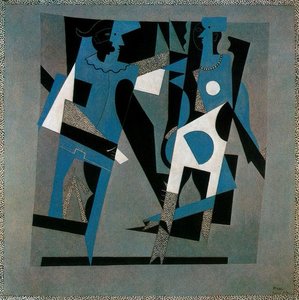 Harlequin and woman with collar
A Fragmented Reflection of Grief: Decoding Picasso’s Harlequin and Woman with Collar Pablo Picasso's *Harlequin and Woman with Collar*, created in 1924, stands as a pivotal work bridging his earlier explorations into Cubism and the burgeoning emotion...
While the roots of Analytical Cubism are found in muted, monochromatic earth tones, the evolution of the movement has allowed for a much broader application of color within contemporary interiors. A designer can strategically choose between the somber, intellectual weight of ochre and grey palettes to complement minimalist, industrial aesthetics, or opt for more vibrant, "Crystal Cubist" approaches that utilize flattened surfaces and overlapping planes in richer hues. This flexibility allows for precise color matching with a hotel's existing upholstery, stone finishes, or custom wall treatments.
Texture plays an equally vital role in the impact of these works. Unlike mass-produced prints that offer a flat, computer-printed appearance, a hand-painted oil reproduction provides a tactile depth that is essential for luxury environments. The visible brushstrokes and the impasto technique—where paint is applied thickly to create physical relief—add a layer of sensory richness that interacts with the ambient lighting of a room. This interplay of light and shadow across the textured surface of the canvas prevents the art from appearing static, instead imbuing it with a palpable sense of life and movement. When selecting pieces, considering the tonal range and the physical presence of the paint can ensure that the artwork complements the overall atmospheric goals of the hospitality space.
Customizing the Vision: Bespoke Cubist Commissions and Digital Mockups for Designers
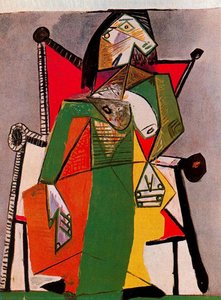 Woman sitting in an armchair (8)
A Portrait of Surreal Reflection: Picasso’s Woman Sitting in an Armchair (8) Pablo Picasso's "Woman Sitting in an Armchair," painted in 1941, transcends mere representation; it embodies the core tenets of Surrealism—a movement that sought to liberate...
The ultimate luxury in hospitality design is the ability to achieve a bespoke aesthetic that aligns perfectly with a property's unique identity. For designers working on high-end commissions, the ability to "remix" art history offers a powerful creative advantage. Through professional customization services, it is possible to request a photo or a modern concept be reimagated in the Cubist style, or even undergo a "Period Shift," where contemporary imagery is transformed into a structured, geometric masterpiece. This level of personalization ensures that every piece of art serves as a unique signature for the hotel brand.
To mitigate the risks associated with large-scale procurement, we provide a Professional Digital Mockup Service. This allows designers to see exactly how a proposed composition will look on their specific wall before the painting process even begins. This is an essential step for managing complex orders, allowing for unlimited revisions to color or scale until the vision is perfected. From the initial digital confirmation to the final delivery of a hand-painted, museum-grade oil work via DHL or FedEx, our streamlined process is designed for the efficiency and reliability required by the global hospitality industry. Whether you are looking for a single statement piece or a coordinated series for an entire hotel chain, our commitment to academic excellence and operational precision ensures that your vision is realized with unparalleled quality.