
Introduction
To step into the presence of a true masterpiece is to witness a moment where time stands still. While the heavy textures of oil on canvas often command our attention in grand galleries, there exists a more intimate, breath-taking dimension of art history found within the delicate marriage of acrylic pigment and paper . This medium, characterized by its rapid drying time and unparalleled luminosity, allowed artists to capture the fleeting pulse of modern life with a precision and vibrancy that traditional oils could rarely match.
The emergence of acrylics marked a profound cultural shift, mirroring the accelerating pace of the twentieth century. As artists moved away from the academic rigidity of the past, they embraced the fluidity of paper to experiment with bold, flat planes of color, sharp graphic edges, and translucent layers that seem to glow from within. These works do not merely sit upon a surface; they vibrate with the energy of their era, bridging the gap between classical technique and the experimental spirit of the modern age.
Today, these legendary works remain deeply meaningful, serving as much more than historical artifacts. They are emotional touchstones that continue to influence contemporary design, street art, and even digital aesthetics. Each piece in this collection offers a window into a transformative period of human creativity, where the boundaries of what could be achieved on a simple sheet of paper were pushed to their absolute limits.
As we journey through this curated selection, prepare to encounter works that redefined visual language. From the explosive color fields that challenged our perception of depth to the intricate, rhythmic lines that capture movement itself, these top ten masterpieces represent the pinnacle of acrylic innovation—works that did not just decorate walls, but fundamentally changed the way we see the world.
Map of Tuscany and the Chiana Valley - Leonardo da Vinci
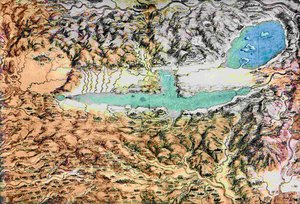 Map of Tuscany and the Chiana Valley - Leonardo da Vinci
While many recognize Leonardo da Vinci for the enigmatic smile of the Mona Lisa , few realize that his 1502 Map of Tuscany and the Chiana Valley was born from a high-stakes military commission. Tasked with assisting Cesare Borgia in strategic planning, Leonardo utilized his unparalleled scientific eye to transform cartography into an art form. This masterpiece transcends simple geography; it is a profound intersection of engineering and aesthetics. Using delicate chalk on paper, he rendered the undulating mountains and meandering rivers with a topographical precision that feels almost three-dimensional.
The subtle interplay of light and shadow across the Chiana Valley reveals his mastery of spatial relationships, where every shaded slope and tiny settlement dot serves as a testament to his observational genius. The muted earth tones and meticulous linework create a sense of timelessness and intellectual depth. Integrating such a piece into a modern study or executive home office provides more than just decor; it introduces an atmosphere of focused ambition and sophisticated clarity, mirroring the very precision that defined Leonardo’s legendary career.
Near the Hearth - vincent willem van gogh
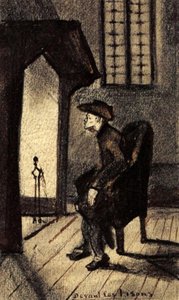 Near the Hearth - vincent willem van gogh
What story does the flickering warmth of the hearth tell in Vincent van Gogh’s 1881 work, Near the Hearth ? Long before his iconic use of vibrant oils, this early masterpiece demonstrates a profound mastery of texture and shadow. While part of our exploration into legendary works on paper, this piece stands out for its intense realism, capturing an elderly man in a moment of solitary, quiet contemplation. The composition, rendered with meticulous precision, uses the hearth as a symbol of domestic security against the encroaching social shifts of 19th-century Europe.
The interplay of light from the fireplace and the structural depth provided by the background windows creates an atmospheric sanctuary. For the modern collector, integrating such a piece into a curated space offers more than mere decoration; it provides a window into history and a sense of emotional escape. This work remains a cornerstone of art history, proving that even in monochrome, the weight of human experience can be felt through every deliberate stroke.
Head of a Man - vincent willem van gogh
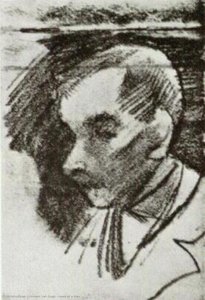 Head of a Man - vincent willem van gogh
In Vincent van Gogh’s 1886 work, Head of a Man , we are not merely observing a portrait, but witnessing a profound moment of quietude. The subject, with eyes closed and features softened by shadow, exists in a state of deep, internal reverie. This piece stands as a vital entry in our collection of the Top 10 Legendary 'Acrylic On Paper' Masterpieces That Changed Art Forever , not because of vibrant color, but because of its unparalleled psychological depth. Van Gogh utilizes the stark, tactile nature of his medium to capture a universal human experience: the vulnerability found in solitude.
The heavy, expressive lines and the interplay of light and dark create an atmosphere of intense introspection. For those looking to curate a space for mindfulness, integrating such a powerful emotional resonance can transform a personal sanctuary or a quiet corner of a corporate lounge into a site for profound reflection. It serves as a visual anchor, inviting anyone who enters the room to pause, breathe, and engage with the silent beauty of the human soul.
The Magic Flute Opera by Wolfgang Amadeus Mozart. Set design for second scene, the Queen of the Night’s Hall of Stars - Karl Friedrich Schinkel
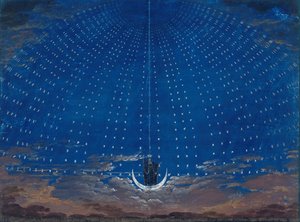 The Magic Flute Opera by Wolfgang Amadeus Mozart. Set design for second scene, the Queen of the Night’s Hall of Stars - Karl Friedrich Schinkel
To gaze upon Karl Friedrich Schinkel’s stage design for the Queen of the Night’s Hall of Stars is to step through a veil into the infinite. There is a profound, breathless wonder in how Schinkel captures that precise moment where architectural precision meets the boundless cosmos. The deep indigo vaults, peppered with a thousand shimmering stars, evoke a sense of celestial majesty that feels both intimate and overwhelming, pulling the viewer into Mozart’s allegorical realm of light and shadow.
This masterpiece earns its place among the greatest works because it transcends mere set design; it is a triumph of Romanticism, blending Neoclassical structure with an ethereal, dreamlike atmosphere that has captivated audiences for centuries. The way the warm, swirling clouds at the base contrast against the cool, cosmic heights creates a visual symphony of tension and peace. At ArtsDot.com, we honor this enduring legacy through our meticulous hand-painted reproductions. Our artists use traditional techniques to recreate the delicate textures and luminous depth of Schinkel’s vision, allowing you to bring this transformative sense of awe and historical grandeur into your own professional or private space.
Satan Exulting over Eve - William Blake
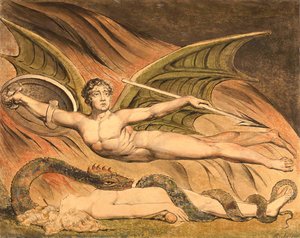 Satan Exulting over Eve - William Blake
To encounter Satan Exulting over Eve by William Blake is to witness a profound moment of spiritual and artistic revelation, a piece that feels less like a drawing and more like a window into a private, mystical dimension. As one of the most significant works in our exploration of legendary masterpieces, this 1795 creation commands attention through its raw, emotional intelligence and its departure from the polite aesthetics of the Romantic Age.
Blake utilizes a revolutionary, multi-layered technique—applying thick watercolors to stiff board before transferring them to paper—to achieve a visceral texture that captures the very essence of temptation and fall. The composition, dominated by earth tones and the dramatic silhouette of a triumphant, winged Satan looming over the unconscious Eve, creates an unsettling yet captivating atmosphere. For the discerning collector or curator of fine interiors, this work offers more than mere decoration; it provides a centerpiece of profound historical weight and symbolic depth. Its presence in a sophisticated space serves as a testament to a taste for art that explores the duality of human nature, making it a timeless pillar of art history.
Natural disaster - Leonardo da Vinci
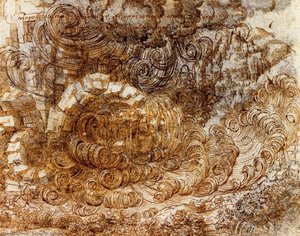 Natural disaster - Leonardo da Vinci
In Leonardo da Vinci’s Natural Disaster , light does not merely illuminate the scene; it acts as a conductor for the chaos unfolding on paper. While this masterpiece is celebrated for its masterful use of chalk and ink to capture the turbulent energy of the High Renaissance, the way Da Vinci composes movement feels almost liquid. You can feel the weight of the swirling clouds and the spray of crashing waves through his precise tonal gradations.
At the heart of this tempestuous vision is a solitary horse, a symbol of resilience amidst the elemental fury. Da Vinci’s scientific precision allows us to see every muscle in tension, creating a profound meditation on humanity's vulnerability to nature's unpredictable power. This work is a cornerstone of art history because it doesn't just depict a storm; it invents the very atmosphere of dread and awe. To witness such a dynamic composition is to experience a portal into the Renaissance mind, where every sharp line and shadow tells a story of strength confronting the infinite.
The sculptor - Pablo Picasso
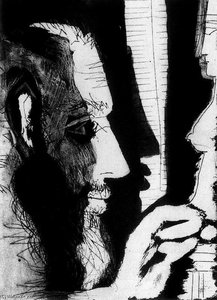 The sculptor - Pablo Picasso
In Pablo Picasso’s The Sculptor , a profound sense of monochromatic intensity dominates the viewer, where deep, charcoal blacks and stark, bone-whites establish a mood of introspective gravity. This mastery of a restricted palette is precisely why this work stands among the Top 10 Legendary 'Acrylic On Paper' Masterpieces That Changed Art Forever . By stripping away color, Picasso forces the eye to confront the raw, rhythmic energy of his lines and the architectural fragmentation of the human form. The interplay of light and shadow does not merely define shape; it breathes life into the Cubist deconstruction of the sculptor and his model.
For the discerning decorator or professional curator, integrating a piece with such high-contrast drama can redefine the atmosphere of a modern corporate lounge or a sophisticated dining room. The stark, graphic nature of this work serves as an anchor for minimalist interiors, providing a focal point that commands attention without clashing with existing color schemes. Utilizing the dramatic chiaroscuro of this masterpiece allows you to curate a space defined by intellectual depth and timeless, sculptural elegance.
Cut Outs - Henri Matisse
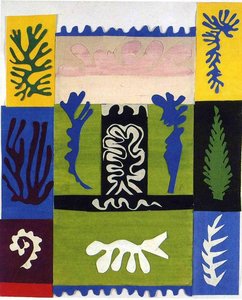 Cut Outs - Henri Matisse
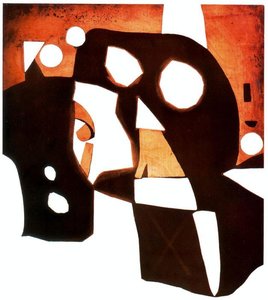
What story does the vibrant, rhythmic movement within Cut Outs by Henri Matisse tell about the liberation of color? Emerging from a period when Matisse sought to bypass the physical limitations of traditional brushwork, these works represent a radical shift in the history of acrylic on paper and mixed media. By utilizing his revolutionary découpage technique, Matisse transformed simple paper shapes into a symphony of organic forms and bold, graphic intensity. This piece broke ground by proving that depth and emotion could be achieved through flat, overlapping layers of saturated hues rather than realistic perspective.
In modern interior design, integrating such a masterpiece offers more than just decoration; it provides a curated escape into a world of tranquility and vitality. The juxtaposition of cool blues against warm yellows creates an atmospheric setting that brings the energy of a Mediterranean garden into any professional or residential space. For collectors seeking to anchor a room with historical significance, Matisse’s cut-outs serve as a timeless window into the soul of Fauvism, offering a sensory experience that remains as impactful today as it was in the 20th century.
El Toro 7 - Pablo Picasso
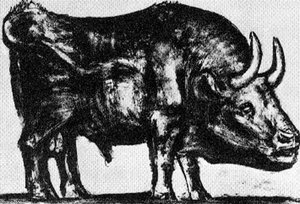 El Toro 7 - Pablo Picasso
In the pantheon of the Top 10 Legendary 'Acrylic On Paper' Masterpieces That Changed Art Forever , Pablo Picasso’s El Toro 7 stands as a visceral testament to the power of reduction. This work transcends mere illustration, acting as a primal conduit for the raw energy and cultural weight of the Spanish bull. Through a masterful command of black ink on white paper, Picasso strips away the unnecessary, leaving only the skeletal essence of strength and aggression.
The piece utilizes Cubist fragmentation to break the subject into geometric planes, where thick, authoritative lines define musculature and sudden, sharp angles suggest movement. This visual language—characterized by stark contrast and a deliberate lack of traditional shading—resonates deeply within modern minimalist aesthetics. In today's curated corporate and hospitality spaces, the bold, monochromatic intensity of El Toro 7 serves as a sophisticated focal point, mirroring contemporary trends toward high-contrast, impactful design that favors emotional depth and structural clarity over ornamental complexity.
Constellation: Toward the Rainbow - Joan Miró
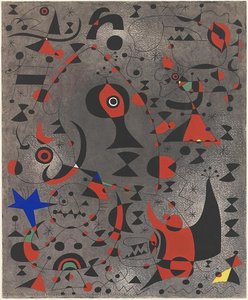 Constellation: Toward the Rainbow - Joan Miró
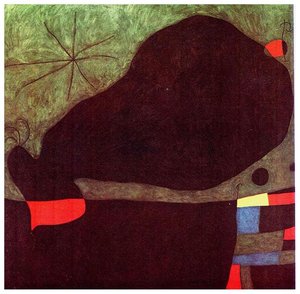
In 1941, amidst the profound shadows of World War II, Joan Miró crafted Constellation: Toward the Rainbow as a vibrant act of psychological survival. This masterpiece is not merely a depiction of the night sky; it is an immersive descent into the artist's subconscious. The composition vibrates with a riotous palette where deep blues and greens collide with fiery reds and ochres, creating a celestial dance of amorphous shapes—circles, triangles, and crescent moons—connected by delicate, web-like black lines.
Miró’s signature Surrealist vocabulary is on full display here, utilizing intuitive symbols like scattered eyes and primal, face-like forms to express an internal state rather than external reality. Owning this piece from the top 10 legendary acrylic on paper masterpieces isn't just a purchase; it is an inheritance of a profound artistic lineage. Through ArtsDot, this legacy of taste moves from the museum archives to your own walls, allowing you to host a fragment of the cosmos within your space.
Conclusion
As we draw the curtain on this journey through pigment and paper, we are reminded that these masterpieces are far more than mere historical artifacts preserved in archives. They are living, breathing presences that pulse with the energy of their creators, bridging the vast expanse of centuries to touch our souls in the present moment. Each stroke of acrylic captured on paper serves as a silent, enduring conversation—a rhythmic dialogue between the artist’s initial impulse and the admirer’s quiet reflection.
To stand before these works is to witness the persistence of human emotion; they possess a unique ability to shape the atmosphere of our modern interiors and stir the dormant creativity within us. They remind us that while eras pass and technologies evolve, the fundamental human need to express beauty, struggle, and wonder remains unchanged. Whether through a sudden burst of color or a delicate, translucent layer, these works continue to move hearts and inspire new generations to look closer at the world around them.
We invite you to continue this exploration and find your own connection to these timeless legacies by browsing our full collection . May you find a piece that speaks to your spirit, bringing a fragment of this eternal conversation into your own space.