
Introduction
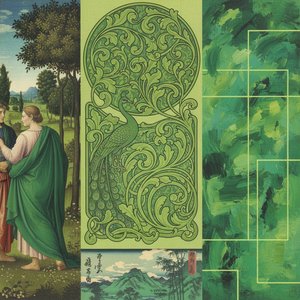
Step into a world where the air feels heavy with the scent of damp earth and the quiet vitality of a forest after rain. To wander through a collection dominated by Sap Green is to experience the very pulse of nature captured in pigment. This specific, translucent hue—a versatile, organic shade that sits perfectly between the brightness of spring growth and the deep, shadowed mysteries of ancient woodlands—has long served as the heartbeat of landscape painting.
Historically, the mastery of green tones represents a pivotal moment in art history, marking the era when painters moved beyond mere documentation to capture the atmospheric soul of the natural world. From the soft, light-drenched glades of the Impressionists to the dramatic, moody thickets of the Romantic era, Sap Green has provided artists with the essential vocabulary to communicate depth, moisture, and life. It is a color that does not merely sit upon the canvas; it breathes within it, creating an illusion of infinite layers of foliage and light.
These artworks remain profoundly meaningful today because they offer a sensory sanctuary. In our increasingly digital and urban existence, these paintings serve as windows to a primal, verdant reality, reminding us of our enduring connection to the earth's cycles. They evoke a sense of nostalgia for landscapes we may never have visited, yet instinctively recognize.
As we journey through this curated selection, prepare to encounter ten masterpieces that utilize the depth and versatility of Sap Green to transform canvas into living, breathing ecosystems. Each work on this list demonstrates how a single, masterful tonal range can command an entire composition, pulling the viewer into a lush, immersive experience of botanical splendor.
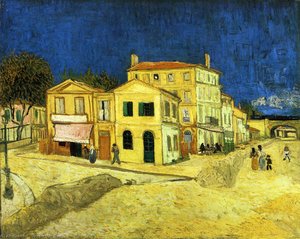
The Street, the Yellow House - vincent willem van gogh
 The Street, the Yellow House - vincent willem van gogh
In The Street, the Yellow House by Vincent van Gogh, the strategic integration of Sap Green tones serves as a vital anchor amidst the artist's legendary explosion of yellows and blues. While the sun-drenched architecture of Arles commands immediate attention, it is the deep, organic greens found in the shadows and street-level foliage that provide the necessary weight and botanical realism to this Post-Impressionist masterpiece. This mastery of color—balancing luminous golds with earthy, verdant depths—is precisely why this work stands out in our selection of top 10 famous paintings dominated by Sap Green tones .
For the modern interior designer or decorator, this specific color interplay offers a sophisticated blueprint for atmospheric curation. The way Van Gogh uses green to transition between light and shadow can be used to ground a vibrant dining room or add organic depth to a corporate lounge. By incorporating these heavy, textured greens into your decor, you can replicate the painting's emotional stability, creating a space that feels both energetically bright and rooted in natural tranquility.
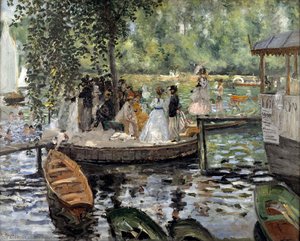
La Grenouillere - Pierre-Auguste Renoir
 La Grenouillere - Pierre-Auguste Renoir
Imagine standing on the banks of the Seine in 1869, where the air is thick with the scent of river reeds and the soft murmur of summer leisure. In this evocative moment, La Grenouillere by Pierre-Auguste Renoir emerges as a masterclass in atmospheric depth. This piece earns its place among the top 10 famous paintings dominated by 'sap green' tones through its brilliant use of verdant, leafy hues that anchor the composition.
Renoir employs loose, expressive brushstrokes to capture the dappled sunlight filtering through lush foliage, creating a rhythmic interplay between deep forest greens and bright, sun-drenched highlights. The palette is a sophisticated blend of earthy greens and cool blues, reflecting the vitality of nature during an era of profound artistic transition. As the light dances across the water's surface, the painting radiates a sense of joy and communal connection. Today, such a vibrant display of Impressionistic color continues to transform modern interiors, bringing a timeless, tranquil energy into any professional or private space.
Last Judgment - Michelangelo Buonarroti
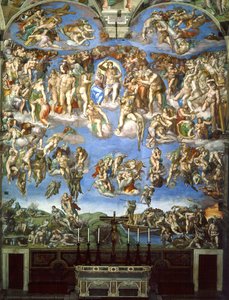 Last Judgment - Michelangelo Buonarroti
While many associate the Sistine Chapel with the serene heavens of the ceiling, Michelangelo’s Last Judgment introduces a turbulent, muscular energy that redefined the Mannerist era. A fascinating detail lies in the artist's profound psychological state during its creation; the sheer scale of this fresco, depicting the Second Coming, forced him to confront themes of mortality and divine justice with unprecedented intensity. Within this swirling vortex of souls, deep, earthy undertones provide a necessary anchor to the composition.
The technical genius of this work lies in its ability to balance hundreds of anatomically precise figures within a complex, multi-layered narrative. In certain shadowed recesses and the heavy drapery of the descending angels, one can detect the influence of deep, organic pigments—specifically those Sap Green tones that ground the celestial drama in a visceral, earthly reality. This masterful use of color and shadow creates a sense of profound depth and weight. Much like the focused ambition required to execute such a monumental fresco, incorporating these powerful, classic aesthetics can inspire a sense of disciplined productivity and sophisticated gravitas within a modern home office or executive study.
Ophelia (Cropped) - Sir John Everett Millais
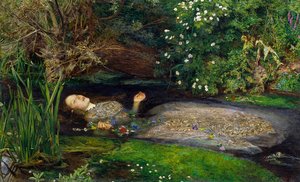 Ophelia (Cropped) - Sir John Everett Millais
In the lush, drowning world of Ophelia (Cropped) by Sir John Everett Millais, the heavy, saturated weight of Sap Green does more than just depict foliage; it creates an immersive atmosphere of beautiful decay. This masterpiece earns its place in our Top 10 through its unparalleled use of verdant tones to weave a narrative of melancholy and naturalistic precision. The deep, mossy greens of the ferns and riverbank flora press against the central figure, blurring the line between the human spirit and the wild, untamed earth.
Millais’ rebellion against academic blandness is visible in every meticulously rendered leaf and shadowed stem, offering a sensory experience that feels both hyper-real and dreamlike. At ArtsDot.com, we believe such profound emotional depth should not be confined to museum archives. Whether you are furnishing a corporate suite or a private study, bringing this symphony of botanical greens into your space transforms a mere wall into a window onto the Pre-Raphaelite soul, making high-caliber art history a functional part of your modern environment.
The Potato Eaters - vincent willem van gogh
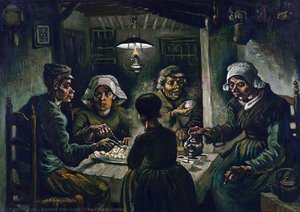 The Potato Eaters - vincent willem van gogh
In Vincent van Gogh’s 1885 masterpiece, The Potato Eaters , the heavy presence of sap green and earthy undertones serves as more than just a color choice; it is the very breath of the Dutch countryside. This somber, powerful work captures a group of peasants gathered around a dim oil lamp, their faces etched with the fatigue of honest toil. The palette is dominated by deep, murky greens and muddy browns, creating a thick, atmospheric texture that mirrors the ruggedness of the subjects' lives.
The use of dark, organic tones creates a profound sense of weight and realism, where the shadows seem to pulse with the grit of the earth itself. As you observe the heavy impasto brushstrokes, the interplay between the dim light and the deep green shadows evokes a raw, visceral empathy for the rural working class. Bringing this piece into your collection is an inheritance of taste—a way to anchor a modern space with a lineage of profound human emotion and historical gravity.
The Elephant Celebes - Max Ernst
 The Elephant Celebes - Max Ernst
Max Ernst’s 1921 masterpiece, The Elephant Celebes , stands as a cornerstone of the Surrealist movement, bridging the chaotic energy of Dada with the structured dreamscapes of the subconscious. This work earns its place among the top paintings dominated by sap green tones through its masterful use of organic, deep verdant hues that ground its most unsettling imagery. The central, boiler-like figure—an elephant-inspired entity—is rendered with heavy, textured brushstrokes where dark greens and earthy mossy shades merge to create a sense of primordial weight.
As you observe the juxtaposition of the metallic, trunk-like structure against the muted, forest-toned background, you are invited into a realm where logic dissolves. The sap green palette does more than provide color; it evokes a biological, almost decaying vitality that mirrors the psychological depth of Ernst’s vision. For the modern collector or decorator, integrating such a profound piece into a curated space offers a timeless conversation between historical avant-garde rebellion and sophisticated, atmospheric interior design.
Daubigny's Garden - vincent willem van gogh
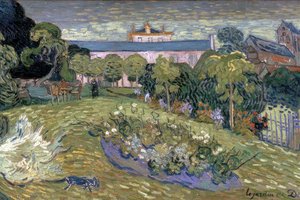 Daubigny's Garden - vincent willem van gogh
In Daubigny's Garden , the heavy impasto technique of Vincent van Gogh transforms a simple landscape into a tactile experience. The painting is defined by its masterful use of sap green tones , layered with thick, energetic brushstrokes that create a rhythmic movement across the canvas. These verdant hues do not merely represent foliage; they possess a physical depth, where the ridges of paint catch the light to mimic the organic texture of a thriving garden. This mastery of color and substance is what secures its place among the most impactful green-dominated works in art history.
At ArtsDot.com, our mission is to preserve this three-dimensional quality for your professional or residential projects. Our hand-painted oil reproductions meticulously recreate every visible brushstroke and tonal variation found in Van Gogh’s original. By using authentic oils on cotton canvas, we ensure that the lush, sap green depths and the emotional intensity of the garden's texture are fully realized, providing a museum-grade centerpiece that brings the soul of Post-Impressionism into any architectural space.
Trees and Undergrowth 2 - vincent willem van gogh
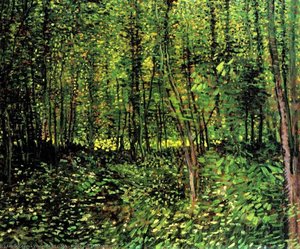 Trees and Undergrowth 2 - vincent willem van gogh
What story does the dense, sun-dappled environment in Trees and Undergrowth 2 by Vincent van Gogh tell? Created in 1887 during his transformative Paris period, this masterpiece serves as a profound exploration of nature's vitality. As one of the standout works in our selection of paintings dominated by sap green tones , it captures a lush, immersive woodland where light filters through a thick canopy of mossy and vibrant foliage.
Van Gogh utilizes heavy, expressive brushstrokes to layer deep forest hues with bright, yellowish highlights, creating a textured, three-dimensional effect that breathes life into the canvas. This piece broke ground by blending Impressionist light with the bold outlines influenced by Japanese ukiyo-e prints. For the modern professional decorating corporate spaces or hospitality interiors, this artwork offers more than mere decoration; it provides a curated escape. The rhythmic movement of the green palette evokes a sense of tranquility and organic energy, making it an ideal focal point for those seeking to introduce a restorative, historical atmosphere into contemporary architectural projects.
Dolmen in the Snow - Caspar David Friedrich
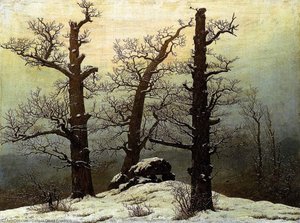 Dolmen in the Snow - Caspar David Friedrich
In Caspar David Friedrich’s Dolmen in the Snow , light does not merely illuminate a winter scene; it acts as a silent narrator of the sublime. While much of this landscape is defined by the stark, chilling whites of snow and the somber grays of an overcast sky, the subtle integration of deep, muted tones—including traces of mossy, dark sap green within the rocky textures and dormant earth—anchors the composition in a sense of organic endurance. Friedrich composes light like a musician crafting a haunting sonata, using atmospheric haze to blur the line between the physical world and the spiritual realm.
The three skeletal trees stand as sentinels of resilience against a landscape of profound solitude. As you observe the interplay of shadow and diffused light, you feel the weight of German Romanticism—a movement where every brushstroke seeks to evoke the infinite. This masterpiece does not just reflect the cold; it invents a mood of contemplative melancholy that is waiting to spill into your space, turning your walls into portals of historical inspiration.
Peach Trees in Blossom - vincent willem van gogh
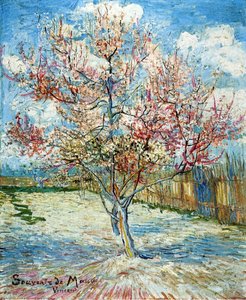 Peach Trees in Blossom - vincent willem van gogh
In Peach Trees in Blossom by Vincent van Gogh, the gaze of nature follows you—not with judgment, but with a profound sense of understanding . This 1888 masterpiece does not merely depict a landscape; it acts as a mirror to the soul's capacity for renewal. While the eye is immediately drawn to the vibrant pinks and reds of the blossoms, it is the strategic use of earthy, deep greens—specifically those heavy with Sap Green tones —that anchors the composition. These verdant hues provide the essential structural depth, grounding the ethereal flowers against a bright, expansive sky.
The thick, tactile impasto technique creates a rhythmic movement across the canvas, where every visible brushstroke breathes life into the branches. For the discerning collector or decorator, integrating this work into a professional space offers more than just color coordination; it provides a constant, silent reminder of resilience and growth. To hang this painting is to invite a piece of the spring season into your architecture, ensuring that your environment remains as vibrant and vital as the master's own vision.
Conclusion
As the light fades on our journey through these verdant landscapes, we are reminded that these masterpieces are far more than mere relics of art history or static images preserved in museum halls. They are living presences, breathing with the vitality of the earth itself. The deep, rhythmic pulse of Sap Green—the mossy shadows, the sun-drenched foliage, and the quiet, organic depths—serves as a timeless bridge between the artist's initial vision and our own modern existence. These works do not simply exist to be observed; they exist to inhabit our lives, offering a sanctuary of color and texture that can transform a sterile room into a space of profound reflection and grace.
To bring one of these paintings into your home is to invite the enduring spirit of human creativity to sit with you in the quiet moments of every day. It is an opportunity to surround yourself with the tactile beauty of visible brushstrokes and the emotional resonance of a landscape that refuses to fade. Whether through the sweeping vistas of a forest or the intimate shadows of a garden, these tones remind us of our fundamental connection to the natural world and the infinite capacity for beauty to inspire the human soul. We invite you to explore the full collection and find the piece that speaks to your own story, allowing these timeless echoes of green to shape the atmosphere of your personal sanctuary.