



Introduction
To gaze upon a portrait of a child is to encounter one of the most profound mirrors of the human condition. Throughout the history of art, the depiction of youth has served as much more than mere documentation; it is a vessel for exploring innocence, vulnerability, burgeoning curiosity, and the inevitable passage of time. From the quiet, solemn stares of Renaissance oil portraits to the vibrant, chaotic energy of Impressionist scenes, artists have long sought to capture that fleeting, luminous moment before the complexities of adulthood settle upon the features.
Historically, the representation of children has shifted alongside our cultural understanding of childhood itself. In earlier eras, children were often painted as miniature adults, draped in heavy fabrics and posed with a gravity that reflected their perceived role in lineage and legacy. As centuries progressed, the lens softened. The Romantic and Impressionist movements invited us into more intimate, sensory worlds—capturing the sunlight hitting a garden playmate or the tender, unscripted bond between a mother and her infant. These works moved away from formal status and toward the raw, emotional truth of growing up.
These masterpieces remain deeply resonant today because they touch upon universal truths that transcend borders and eras. Whether it is the nostalgic ache of a lost childhood or the quiet strength found in a child's gaze, these paintings evoke a shared empathy. They remind us of our own beginnings and the enduring purity of wonder that exists even in the most turbulent times.
In the following selection, we invite you to walk through a curated gallery of emotion. We have identified ten pivotal artworks that masterfully navigate the theme of childhood, offering a journey through different textures, eras, and perspectives. Each piece on this list stands as a testament to the artist's ability to freeze a heartbeat, allowing us to rediscover the world through eyes that have not yet learned to look away.
Free hour at Amsterdam orphanage - Max Liebermann
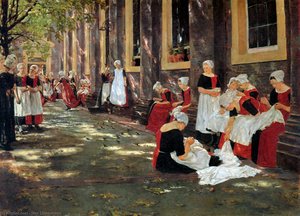 Free hour at Amsterdam orphanage - Max Liebermann
Max Liebermann’s 1876 masterpiece, Free hour at Amsterdam orphanage , offers a profound window into the tender complexities of childhood and community. As a cornerstone in our exploration of artworks centered on children, this piece transcends mere documentation; it captures the pulse of human connection through a lens of German Impressionism. The courtyard becomes a stage where sunlight filters through trees, casting dappled light across women in traditional red and white attire as they tend to the young.
The painting’s visual language—characterized by loose, energetic brushstrokes and a warm, earthy palette—creates an atmosphere of nostalgic warmth that remains strikingly relevant for modern interiors. The interplay of organic shapes and structured architectural lines provides a sophisticated balance, making it an ideal focal point for spaces seeking to evoke serenity and cultural depth. By focusing on the essence of movement rather than rigid detail, Liebermann invites viewers to experience the universal emotions of care and togetherness, ensuring this work remains a timeless testament to the enduring spirit of communal life.
Children’s Games - Pieter Bruegel the Elder
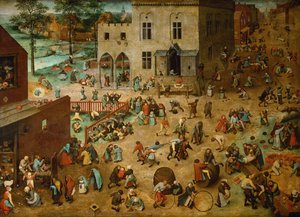 Children’s Games - Pieter Bruegel the Elder
To witness this masterpiece is to step into a sprawling, bird’s-eye panorama of human vitality, where the boundaries between urban bustle and rural tranquility dissolve into a single, rhythmic heartbeat. In Children’s Games by Pieter Bruegel the Elder , we encounter one of the most profound explorations of childhood in art history. Created in 1560, this Northern Renaissance marvel transcends simple genre painting; it is an encyclopedic archive of joy, featuring over 230 figures engaged in eighty-three distinct activities.
Bruegel utilizes a warm, earth-toned palette punctuated by subtle blues and greens, guiding the eye through a landscape of hoops, dolls, and shared laughter. The meticulous oil brushwork captures the palpable atmosphere of a bygone era, where every small movement—from quiet concentration to exuberant mischief—is rendered with academic precision. As a cornerstone of our selection, this work reminds us that the essence of play is a universal language. Its enduring presence continues to transform modern spaces, offering a timeless window into the innocence and community that define the human experience.
The Happy Day - Jean-Antoine Watteau
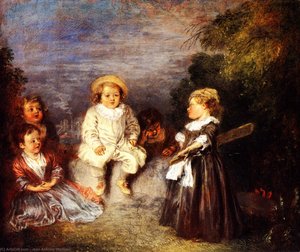 The Happy Day - Jean-Antoine Watteau
A soft, luminous verdant green dominates The Happy Day by Jean-Antoine Watteau , establishing an atmosphere of tranquil vitality and pastoral peace. This masterfully applied palette, characteristic of the Rococo movement, utilizes delicate light gradations to capture the fleeting essence of childhood innocence. The way the sunlight filters through the lush foliage onto the playing children and their canine companions creates a sense of warmth that is central to its inclusion in our selection of the top 10 artworks that explore the theme of children .
For the discerning decorator or professional curator, this painting offers more than historical value; it provides a blueprint for emotional lighting in modern interiors. The gentle, diffused tones and organic color scheme can be used to anchor a dining room or lounge, introducing a sense of rhythmic calm and sophisticated leisure. By integrating such soft, nature-inspired hues into a space, one can replicate the painting's signature atmosphere of idyllic pleasure, making it an ideal centerpiece for high-end hospitality or residential projects seeking a refined, timeless aesthetic.
The Little Children Being Brought to Jesus - Rembrandt van Rijn
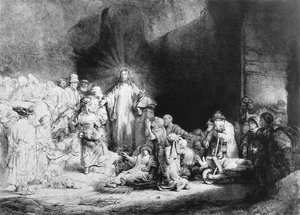 The Little Children Being Brought to Jesus - Rembrandt van Rijn
In Rembrandt van Rijn’s 1647 masterpiece, The Little Children Being Brought to Jesus , the power of the work lies in its profound use of chiaroscuro . While this piece is a legendary etching, the way Rembrandt manipulates line and shadow creates a palpable, sculptural texture that feels almost three-dimensional. Through masterful hatching and cross-hatching, he directs a divine light onto the central figures, capturing the raw, organic energy of a crowd gathered in reverence. The varying weights of his lines do more than define shapes; they evoke the tactile roughness of period clothing and the delicate softness of youthful skin, making the theme of childhood innocence feel immediate and deeply human.
This extraordinary control of light and shadow is why this work stands as a pillar among the top 10 artworks that explore the theme of children . At ArtsDot.com, we strive to preserve this essential materiality. Our hand-painted oil reproductions are meticulously crafted on 100% cotton canvas, utilizing thick, visible brushstrokes and layered pigments to recreate the depth, tonal range, and soul of Rembrandt’s original vision for your professional or private collection.
The Massacre of the Innocents (detail) - Jacopo Tintoretto
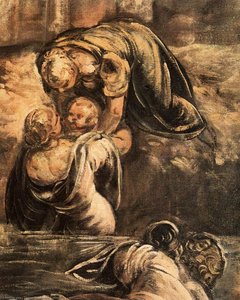 The Massacre of the Innocents (detail) - Jacopo Tintoretto
In the detail of The Massacre of the Innocents by Tintoretto , a deep, visceral crimson dominates the canvas, setting a heavy, somber mood that captures the profound tragedy of the subject matter. This mastery of color—using blood-red tones against stark, dramatic shadows—is precisely why this work stands among the top 10 artworks exploring the theme of children. The artist, known as 'Il Furioso,' uses this intense palette to evoke the raw emotion and chaos of the biblical event, creating a sensory experience that transcends the frame.
For professionals designing impactful spaces, such as high-end hotel lounges or private dining rooms, this painting offers a blueprint for dramatic atmosphere. The interplay of chiaroscuro and symbolic gold accents can inspire a sophisticated interior palette, where deep reds and warm metallic tones create a sense of prestige and emotional depth. Integrating such powerful visual narratives allows decorators to curate environments that feel both historically significant and emotionally resonant.
Madonna and Child with an Angel (detail) - Sandro Botticelli
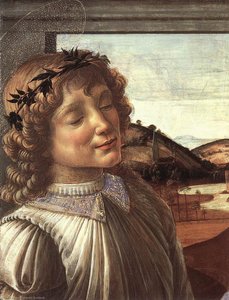 Madonna and Child with an Angel (detail) - Sandro Botticelli
To encounter the Early Renaissance is to witness a profound shift where divine subjects were imbued with newfound human tenderness. In Madonna and Child with an Angel (detail) by Sandro Botticelli, this transition reaches its most intimate peak. This work earns its place among the top artworks exploring the theme of children through its unparalleled depiction of maternal devotion and celestial innocence. Botticelli utilizes a luminous tempera technique to create a scene that feels both physically present and spiritually ethereal.
The viewer is drawn into a rhythmic flow of soft contours and delicate, lyrical lines. The palette—rich with deep crimsons, muted ochres, and precious ultramarine—radiates a gentle light that softens the features of the Virgin and Child. An observing angel adds a layer of supernatural guardianship to the composition. Beyond its historical significance, the painting’s ability to evoke meditative stillness makes it a timeless masterpiece; it remains a powerful tool for transforming any contemporary space into an environment of peace, grace, and sophisticated contemplation.
Principles of a schoolmaster, teaching scene for children - Hans Holbein the Younger
 Principles of a schoolmaster, teaching scene for children - Hans Holbein the Younger
Hans Holbein the Younger’s 1516 masterpiece, Principles of a Schoolmaster, Teaching Scene for Children , serves as a profound visual testament to the dawn of humanist education. Beyond its charming depiction of a classroom, the work captures the quiet intensity of intellectual awakening. Through delicate tempera strokes on wood, Holbein illuminates a world where light and shadow dance across instructional lecterns and focused young faces, symbolizing the transition from ignorance to enlightenment.
The painting holds a unique position among the top 10 artworks that explore the theme of children due to its ability to portray youth not merely as subjects of innocence, but as active participants in the social and intellectual progress of the Northern Renaissance. In today’s curated interiors, this piece resonates deeply; its emphasis on structured learning and the disciplined pursuit of knowledge mirrors modern values regarding development and mentorship. The meticulous rendering of textures—from heavy gowns to aged wooden benches—creates a sensory experience that brings the historical classroom into a contemporary dialogue about the enduring importance of foundational growth.
The Nurture of Bacchus - Nicolas Poussin
 The Nurture of Bacchus - Nicolas Poussin
In The Nurture of Bacchus , Nicolas Poussin transcends mere mythological illustration to present a profound meditation on the vulnerability of youth. Created around 1630, this masterpiece captures the infant god not as a figure of divine power, but as a child in need of sanctuary. Through a masterful use of chiaroscuro , Poussin allows light to caress the soft features of the young Bacchus, pulling the viewer into an intimate circle of caregivers. The composition is anchored by a sense of communal protection; adults and children gather around the infant, their expressions a delicate tapestry of curiosity and watchful tenderness.
The presence of a loyal dog and the sun-dappled atmosphere ground this divine event in a recognizable, earthly reality, emphasizing the universal theme of nurturing. For those seeking to transform their environment, this work offers more than visual depth—it brings a sense of serene, classical grace. To possess such a piece is to surround oneself with the very essence of human care and historical genius.
Breakfast at Berneval - Pierre-Auguste Renoir
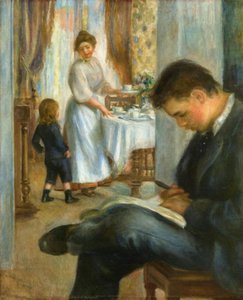 Breakfast at Berneval - Pierre-Auguste Renoir
In Pierre-Auguste Renoir’s 1898 masterpiece, Breakfast at Berneval , light does not merely illuminate the scene; it acts as a tender language of affection. As you observe this quintessential Impressionist work, you feel the warmth of a private family ritual. Renoir does not just paint a morning meal; he compers a sonata of soft textures and luminous tones that celebrate the innocence of childhood. The way the natural light spills across the table, catching the edges of porcelain cups and the gentle faces of the children, creates an atmosphere of profound intimacy.
The composition captures a serene moment of domesticity, where the vibrant colors and delicate, visible brushstrokes breathe life into the subjects. It is this ability to invent a sense of warmth—transforming a simple breakfast into a timeless sanctuary—that secures its place among the greatest explorations of childhood in art. This radiant energy is waiting to spill into your own space, turning a room into a portal of inspiration. For those looking to bring this era of elegance to their professional or private collections, our handmade oil painting reproductions offer the same tactile depth and emotional resonance.
Five Men and a Child in the Snow - vincent willem van gogh
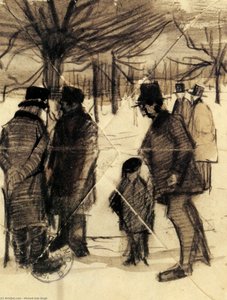 Five Men and a Child in the Snow - vincent willem van gogh
Before the vibrant, swirling yellows of his mature period defined his legacy, Vincent van Gogh captured the quiet, somber textures of human existence through a much more restrained lens. In Five Men and a Child in the Snow by Vincent van Gogh , we encounter a profound study of vulnerability and communal warmth amidst a biting Dutch winter. This 1883 work is essential to our exploration of children in art, as it places a single, small figure within a cluster of weathered adults, highlighting the delicate innocence of youth against a stark, monochromatic landscape.
The piece relies on masterful graphite hatching to evoke the crispness of falling snow and the heavy, textured fabrics of the men's winter clothing. There is no color to distract the eye; instead, the viewer is drawn into the emotional weight of the scene through light and shadow. The child serves as a focal point of tenderness, a soft element in an otherwise rugged environment. This early masterpiece reminds us that art remains a powerful tool for capturing the timeless, silent bonds between generations, offering a sense of peace and historical depth to any modern collection.
Conclusion
As the light fades from the gallery walls and the shadows of these great works lengthen, we are left with more than just images of the past; we carry away the echoes of a shared humanity. These paintings, capturing the innocence, the curiosity, and the profound vulnerability of childhood, do not exist merely as relics of a bygone era. They remain living presences, breathing through every brushstroke and every gaze, reminding us that the emotions felt by a child in a 17th-century portrait are the same tender currents that move us today.
To walk among these masterpieces is to realize that art is not a frozen moment in history, but a continuous dialogue between generations. Whether through the soft light of an Impressionist garden or the heavy, soulful shadows of a classical study, these works continue to shape our modern interiors and stir our creative spirits, bringing a sense of timeless grace into our contemporary lives. They invite us to look closer, to feel more deeply, and to find beauty in the simplest expressions of life.
We invite you to continue this journey of discovery and bring these enduring stories into your own space by exploring our full collection . May these windows into the soul serve as a constant reminder of the wonder that remains, even as the sun sets on the day.