
Introduction
To wander through the visual landscape of Paul Klee is to embark on a journey where the boundaries between sound and sight, between form and feeling, begin to dissolve. His work does not merely represent the world; it translates the very rhythm of existence into a language of delicate lines, vibrant pigments, and profound geometric harmony.
Born in Switzerland, Klee’s artistic soul was deeply rooted in the musicality of his upbringing. As the son of a music teacher, he approached the canvas much like a composer approaches a score—layering elements to create a symphonic arrangement of color and shape. From his early explorations in Munich to the transformative, sun-drenched light of his travels in Tunisia, Klee’s evolution was a continuous dialogue with the avant-garde, weaving together threads of Expressionism, Cubism, and Surrealism into something entirely his own.
These twenty-five selected works remain vital today because they capture the universal essence of perception. In an era of digital complexity, Klee’s ability to distill emotion into pure abstraction offers a moment of clarity and wonder. Each piece in this collection serves as a window into his unique method of "seeing" —a method that invites us to look past the surface of reality to find the hidden patterns of the universe.
As we prepare to delve into this curated selection, we invite you to observe not only the shapes but the movement and the music held within each frame. The following masterpieces represent the pinnacle of a life spent decoding the poetry of form.
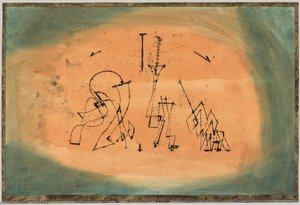
Twittering machine 1 - Paul Klee
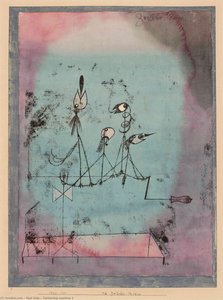 Twittering machine 1 - Paul Klee
Twittering machine 1 by Paul Klee is not merely an artifact of the Bauhaus era; it is a rhythmic pulse captured on paper. In this seminal work, Klee invites us into a delicate world where the boundaries between the organic and the mechanical dissolve. Through thin, fragmented lines of ink and soft washes of watercolor, he constructs a whimsical bestiary—creatures that are part insect, part machine, perched within a dreamlike landscape of pale blues and muted pinks.
This piece captures the profound tension of the post-war age, reflecting a fascination with automation and the human attempt to replicate nature’s song through technology. To possess a reproduction of this masterpiece is to do more than decorate a wall; it is to invite a sense of intellectual curiosity and quiet contemplation into your space. It transforms a room into a gallery of the soul , where every line whispers of the beautiful, fragile intersection between humanity and the machine.
To Parnassus - Paul Klee
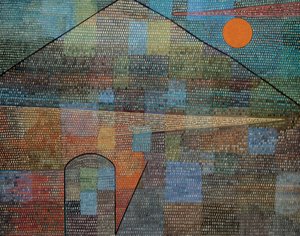 To Parnassus - Paul Klee
In To Parnassus , Paul Klee masterfully manipulates a singular, luminous orange orb that acts as the painting's spiritual sun. This radiant light source does more than illuminate the geometric landscape; it breathes life into the mosaic-like textures, casting a glow that defines the work's place among the top 25 artworks of Paul Klee . The interplay between this celestial warmth and the deep, rhythmic shadows within the arched portals creates a profound sense of transition and spiritual discovery.
Historically, Klee’s command of light—blended with the precision of Cubism and the soul of Expressionism—secured his reputation as a pioneer of modern abstraction. When captured in a meticulous hand-painted reproduction, the subtle gradations of color and the tactile, pixelated depth of the brushstrokes are preserved, offering a sophisticated focal point for any curated space. Integrating such a vibrant, light-filled masterpiece into your interior adds an unmistakable layer of intellectual luxury and architectural depth to a contemporary wall.
Legend of the Nile - Paul Klee
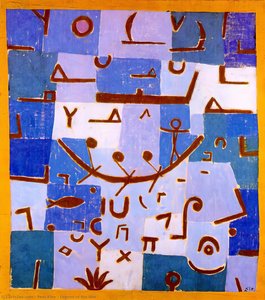 Legend of the Nile - Paul Klee
In Legend of the Nile , Paul Klee invites us into a rhythmic, mythic landscape where the boundaries between ancient history and modern abstraction dissolve. This 1937 masterpiece stands as a cornerstone of his top 25 works because it perfectly encapsulates his ability to translate cultural symbols—hieroglyphic motifs and aquatic forms—into a sophisticated visual language. Through a vibrant palette of deep blues, purples, and warm accents, Klee creates a textured, fragmented world that feels both primordial and avant-garde.
The painting’s significance stems from its profound philosophical depth; it is not merely a depiction of a river, but an exploration of how humanity perceives the sacred through pattern and color. As we gaze upon these interlocking blocks and celestial shapes, we are reminded of the eternal connection between nature and spirituality. For the modern collector or decorator, this piece offers more than just visual interest; its energetic geometry and rich symbolic weight provide a timeless conversation piece, ideal for bringing a sense of intellectual mystery and cultural prestige to sophisticated contemporary interiors.
Rose Garden - Paul Klee
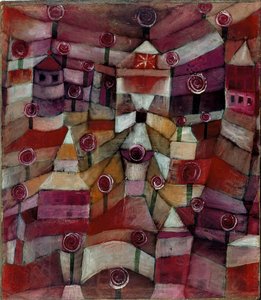 Rose Garden - Paul Klee
Close your eyes and feel the warmth radiating from Paul Klee’s Rose Garden . In this masterpiece, light is not merely an illumination; it is a carefully composed language. Klee does not simply paint light—he orchestrates it, much like a musician crafting a rhythmic sonata. As one of the most captivating entries in our exploration of the top 25 artworks of Paul Klee, this piece invites you into a world where nature and geometry exist in perfect, vibrant unison.
The canvas vibrates with a sun-drenched palette of deep reds, soft pinks, and glowing oranges, punctuated by cool, structural accents of purple and white. Through a sophisticated arrangement of triangles and rectangles, Klee creates an architectural landscape that feels both organic and structured. This is the true magic of his work: the way these geometric shapes dance to create a sense of breathing, living flora. When this light enters your space, it does more than decorate a wall; it transforms it into a portal of rhythmic, colorful inspiration.
Botanical Theater - Paul Klee
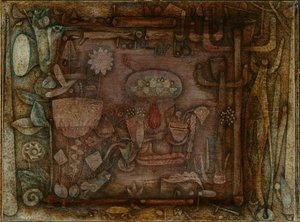 Botanical Theater - Paul Klee
In Botanical Theater , the tactile magic lies in Klee’s meticulous use of fine hatching and delicate gouache washes. Up close, one can trace the rhythmic, undulating lines that act as the connective tissue for this surreal stage, where earthy ochres meet sudden, vibrant blooms. This mastery of graphic texture—where every stroke contributes to a sense of organic movement—is precisely why this piece stands among the top 25 artworks of Paul Klee . It is not merely a painting but a structural symphony of form and color.
At ArtsDot.com, we specialize in preserving this profound materiality for collectors and professionals. Our hand-painted reproductions are engineered to capture the visible brushstrokes and the three-dimensional depth of Klee’s original technique, ensuring that the soulful, layered quality of his 1934 masterpiece is tangibly present in any space.
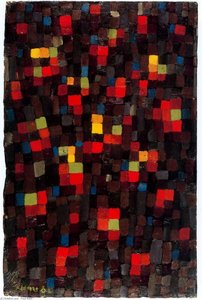
May Picture - Paul Klee
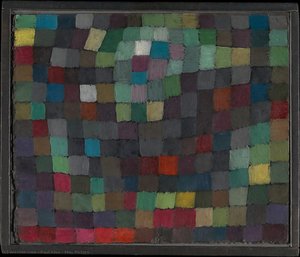 May Picture - Paul Klee
May Picture by Paul Klee exists as a rhythmic dance of light and geometry, where color is not merely seen but felt through a vibrant, interlocking mosaic. This masterpiece earns its place among the top 25 works for its unparalleled ability to translate musical rhythm into a visual symphony, bridging the gap between pure abstraction and organic life. Each carefully placed square acts as a chromatic note; deep reds, serene blues, and sun-drenched yellows overlap to create a luminous depth that breathes with movement. The delicate layering of pigment offers a tactile richness, inviting the eye to wander through its fragmented landscape of color and form. In contemporary living, the structured yet playful energy of this piece provides a sophisticated focal point, bringing a sense of balanced harmony and intellectual intrigue to modern interiors.
Arctic Dew - Paul Klee
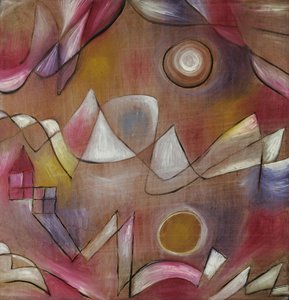 Arctic Dew - Paul Klee
In the ethereal realm of “Arctic Dew” by Paul Klee, the boundaries between reality and imagination dissolve into a luminous dance of rhythm and color. This 1920 masterpiece is a vital inclusion in our selection of the top 25 artworks of Paul Klee, as it redefines the emotional potential of abstraction through its celestial symphony of form.
Klee orchestrates a striking visual experience using undulating lines and a palette where warm ochre, sun-drenched yellows, and soft pinks meet the cool depths of blue and purple. The painting’s brilliance lies in its symbolic duality, capturing a sense of cosmic equilibrium that commands attention. For procurement managers and decorators furnishing hospitality or corporate spaces, this work offers an unparalleled opportunity to introduce prestige and depth. At ArtsDot.com, we provide reliable, high-quality reproductions designed to transform professional environments into curated, impactful landscapes.
Woman Knitting - Paul Klee
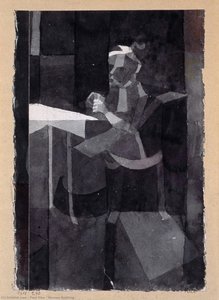 Woman Knitting - Paul Klee
The somber, charcoal grays in Woman Knitting establish a mood of profound stillness and quiet introspection. Klee’s masterful use of this monochromatic palette—relying on subtle tonal shifts between black, white, and slate—is precisely why this piece earns its place among the top 25 artworks of Paul Klee . By stripping away representational color, he directs our gaze toward the rhythmic interplay of geometric forms and the structural integrity of the composition.
For designers curating modern living spaces or minimalist dining rooms, this artwork offers a sophisticated architectural anchor. The restrained grayscale scheme provides an elegant foundation that complements contemporary monochrome interiors, setting a tone of calm, intellectual focus without overwhelming the surrounding decor. It is a masterclass in how abstract geometry can introduce tactile depth and a sense of serene permanence to any professional or residential environment.
Comedians' Handbill - Paul Klee
 Comedians' Handbill - Paul Klee
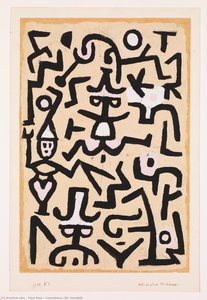
At ArtsDot.com, our mission is to democratize beauty, making the world's most profound masterpieces accessible to collectors and professionals alike. Comedians' Handbill by Paul Klee is a cornerstone of this vision, earning its place in our top 25 artworks through its masterful fusion of rhythmic abstraction and theatrical whimsy.
Created in 1938, this captivating gouache work vibrates with a unique, playful energy. Klee employs bold, meandering black lines to delineate organic shapes that suggest the presence of performers, weaving a dynamic composition across a warm, cream-toned background. The subtle interplay of pink accents and fluid forms creates a visual rhythm that is both humorous and deeply emotive, capturing the very essence of movement and imagination.
The transformative presence of Klee’s rhythmic legacy can be brought into any modern home, corporate space, or personal gallery through our high-fidelity, hand-painted reproductions, allowing this iconic piece to inspire and elevate your interior aesthetic.
Fire at Full Moon - Paul Klee
 Fire at Full Moon - Paul Klee
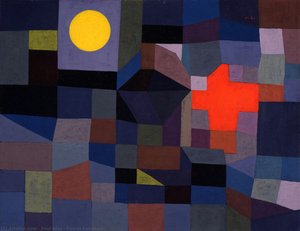
In Fire at Full Moon by Paul Klee, the viewer is met with a masterful orchestration of geometry. The canvas is structured around a rhythmic grid of rectangular and trapezoidal shapes that interlock like a visual puzzle, creating a profound structural harmony. This precise arrangement of form contributes to its enduring appeal as one of the top 25 artworks of Paul Klee , offering a sense of timeless perfection through its fractured yet balanced composition.
The central, luminous yellow moon acts as a steadying focal point, casting a soft glow over deep blues and purples, while a sudden burst of fiery red introduces a captivating emotional tension. This balance between cool nocturnal tones and warm, energetic accents achieves a state of equilibrium that transcends mere abstraction. Furthermore, Klee’s use of clean lines and balanced color fields draws a direct parallel to the principles of modern minimalist design. The artwork's ability to provide both mystery and order makes it an ideal anchor for a clean, contemporary aesthetic, grounding sophisticated interiors with its architectural precision.
Women - Paul Klee
 Women - Paul Klee
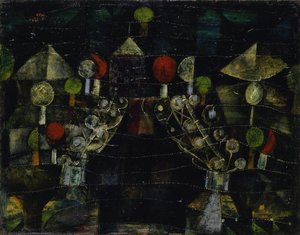
Women by Paul Klee is far more than a 1921 composition; it is an invitation into a fragmented dreamscape that challenges the very boundaries of perception. Within this work, Klee liberates the viewer from the constraints of reality, offering instead a profound distillation of memory and emotion. The palette—a somber, evocative arrangement of charcoal, gray, and deep green—is punctuated by sudden, rhythmic flashes of red and yellow, acting much like unexpected notes in a musical score.
The figures emerge as simplified, enigmatic silhouettes, reminiscent of women holding parasols or organic branches, drifting through an architectural landscape of overlapping shapes. There is no fixed focal point; instead, the eye wanders through a symphony of geometric tension and soft, organic lines. To surround yourself with such a masterpiece is to invite true transformation into your space, turning a mere room into a gallery of the soul where mystery and melancholy reside in perfect, abstract harmony.
Strong Dream - Paul Klee
 Strong Dream - Paul Klee
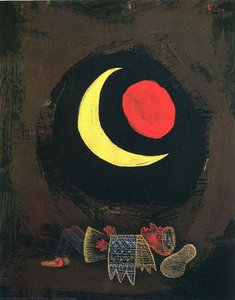
In Strong Dream by Paul Klee, the piercing, luminous yellow of the crescent moon acts as a sudden burst of consciousness amidst an enveloping, nocturnal black. This striking contrast establishes a mood of profound mystery and psychological tension, characteristic of Klee's most evocative period. As one of the top 25 artworks of Paul Klee , this piece showcases his unparalleled mastery of color theory; the way the vibrant yellow interacts with deep, blood-red accents and heavy black shapes creates a rhythmic, almost musical, visual experience.
For the discerning decorator, this painting offers a sophisticated template for modern interiors. Integrating such a bold, symbolic palette can transform a contemporary dining room or living space, providing an anchor of dramatic emotional lighting. By mirroring these high-contrast tones in accent pieces or ambient lighting, you can curate a room that feels both avant-garde and deeply introspective, echoing the dreamlike atmosphere of Klee’s surrealist vision.
Black prince - Paul Klee
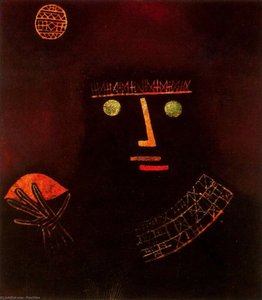 Black prince - Paul Klee
What story does the abyssal, void-like background of Black prince by Paul Klee tell? It speaks of a profound psychological rupture, capturing the fractured psyche of an era on the brink of catastrophe. As one of the most haunting entries in our survey of the top 25 artworks of Paul Klee , this 1937 masterpiece utilizes Expressionist principles to manifest human anxiety through a distorted, asymmetrical face emerging from the shadows. Klee’s technical use of encaustic —a rich, tactile medium of beeswax and resin—imbues these geometric fragments with a sculptural warmth that feels almost tangible. In modern interior curation, such a piece serves as a powerful atmospheric anchor; it offers a sophisticated escape into historical depth, inviting viewers to contemplate resilience amidst chaos. Integrating this work into a contemporary space provides an unparalleled sense of intellectual gravity and emotional resonance, making it a vital cornerstone for any serious collection.
Like a Window Pane - Paul Klee
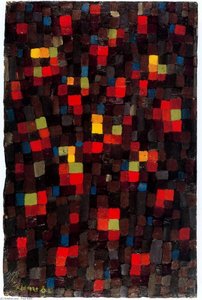 Like a Window Pane - Paul Klee
A luminous, sun-drenched yellow dominates “Like a Window Pane” by Paul Klee , immediately establishing a mood of clarity and quiet optimism. As one of the top 25 artworks of Paul Klee , this piece stands out due to its masterful command of color theory; Klee utilizes translucent washes of primary reds, blues, and greens within an interlocking grid of squares. This rhythmic arrangement creates a stained-glass effect that feels both structured and ethereal.
For the modern professional decorating a high-end dining room or a light-filled living space, this painting offers unparalleled versatility. The artwork’s vibrant yet balanced palette can be used to anchor a room's color scheme, providing a focal point that mimics the shifting patterns of natural light. By integrating such a piece, designers can introduce a sense of geometric stability and sophisticated warmth, transforming a contemporary interior into a curated sanctuary of light and form.
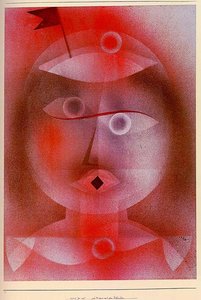
Head of a Famous Robber - Paul Klee
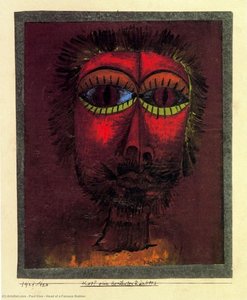 Head of a Famous Robber - Paul Klee
Imagine standing before a sudden burst of crimson heat, where the air feels thick with an unspoken, rhythmic tension. In "Head of a Famous Robber," Paul Klee invites us into a psychological landscape where color and form collide to evoke profound human emotion. Painted in 1934, this work captures the turbulent spirit of an era shadowed by rising political uncertainty, using a stylized, fiery visage to represent either primal chaos or the untamable human spirit.
This masterpiece earns its place among the top 25 artworks of Paul Klee through its visceral energy and masterful use of texture. The vibrant interplay between the central red figure and the glowing orange backdrop creates a luminous, vibrating effect that commands attention. For collectors and designers, integrating such a powerful piece into a modern environment offers more than mere decoration; it provides a sophisticated focal point that injects dramatic warmth and historical depth into any curated space.
In the Houses of Saint Germain - Paul Klee
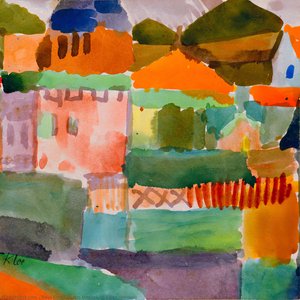 In the Houses of Saint Germain - Paul Klee
A rhythmic dance of color and geometry, In the Houses of Saint Germain by Paul Klee captures a moment where urban life is distilled into pure, melodic abstraction.
This masterpiece stands prominently among the top 25 artworks of Paul Klee due to its unparalleled ability to bridge the structured logic of Cubism with the emotional spontaneity of Expressionism. The canvas breathes with a vibrant, sensory palette; splashes of sun-drenched orange, deep violets, and verdant greens pulse across the surface like a visual symphony. Through a careful arrangement of rectangles, triangles, and circles, Klee creates an architectural rhythm that evokes the bustling energy of a community in motion.
For the contemporary collector, this work offers more than mere decoration; it provides a sophisticated focal point for modern interiors, where its playful geometry and light-filled vitality inspire a sense of structured calm and intellectual curiosity.
Part of G - Paul Klee
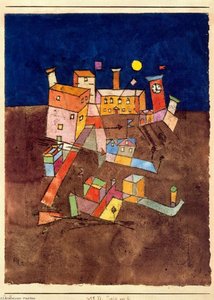 Part of G - Paul Klee
In Part of G , Paul Klee invites us into a nocturnal dreamscape where the boundaries between reality and the subconscious dissolve. There’s a gaze in Part of G by Paul Klee that follows you—not with judgment, but with understanding. This isn’t a portrait; it’s a mirror. Its spot in the top 25 artworks of Paul Klee is a testament to its power to make the invisible visible.
The painting presents a surreal cityscape bathed in an ethereal indigo glow, where buildings cluster like hesitant giants beneath a luminous crescent moon. As you observe the clock tower and the boats drifting through the urban labyrinth, you feel the rhythmic pulse of Klee’s Expressionist-Cubist style. Through delicate, watercolor-like washes, he captures the melancholic beauty and the underlying anxieties of the era. Now, imagine that gaze in your space. Not watching you, but reminding you: you are seen. You are part of the story.
Marked - Paul Klee
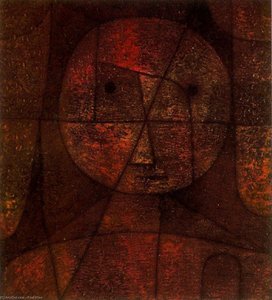 Marked - Paul Klee
In "Marked" by Paul Klee, one encounters a masterclass in geometric tension and emotional resonance. The composition is defined by a striking interplay of fragmented shapes set against a deep, pulsating crimson field. These lines and forms do not merely occupy space; they create a rhythmic, structural harmony that feels both mathematically precise and deeply intuitive. This equilibrium is precisely what secures its position within the top 25 artworks of Paul Klee , offering a sense of timeless perfection that transcends its 1937 origins.
There is a profound parallel here to the principles of modern minimalist design; the artwork’s ability to distill complex human vulnerability into clean, balanced abstractions provides a grounding elegance. For the contemporary collector, "Marked" serves as an essential anchor, bringing a sophisticated, avant-garde energy that complements the stripped-back aesthetics of modern architectural interiors.
Chinese porcelain - Paul Klee
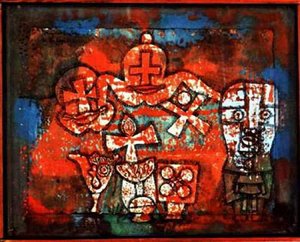 Chinese porcelain - Paul Klee
Acquiring Chinese porcelain by Paul Klee represents a profound investment in both artistic legacy and refined taste for the discerning collector. As a definitive entry within the top 25 artworks of Paul Klee, its position is cemented by an unparalleled influence on the evolution of abstraction and a market value that reflects its immense historical importance. The work serves as a masterclass in geometric symbolism, where the rhythmic interplay of crimson , ochre , and deep indigo creates a visual symphony of profound emotional weight.
Klee’s ability to translate complex psychological landscapes into structured, vibrant forms ensures this piece remains a cornerstone of modernism. For the professional decorator or collector, a high-quality reproduction offers the same aesthetic authority and prestige as an original. It acts as a commanding centerpiece for modern luxury interiors, bringing a sense of sophisticated history and quiet, intellectual grandeur to any high-end residential or corporate environment.
The Lamb - Paul Klee
 The Lamb - Paul Klee
To encounter “The Lamb” is to witness a moment of profound spiritual clarity within the vast canon of Paul Klee’s masterpieces. As one of the most significant pieces in the top 25 artworks of Paul Klee, this 1920 work showcases his unparalleled ability to merge Cubist structure with Expressionist emotion. The composition, reminiscent of luminous stained glass, utilizes bold black outlines to compartmentalize a vibrant mosaic of blues, yellows, and soft pinks. Within this geometric sanctuary, two stylized hands tenderly cradle a simplified lamb silhouette, while a subtle cross anchors the piece in the sacred symbolism of the Agnus Dei .
Beyond its religious echoes, the painting’s rhythmic energy and fractured, mosaic-like texture offer a sophisticated focal point for any refined collection. Its balance of playful abstraction and structural precision makes it an enduring icon of modernism, perfectly suited to bring a sense of historical depth and intellectual elegance to contemporary, high-end interiors.
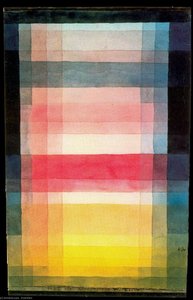
Cosmic Architecture - Paul Klee
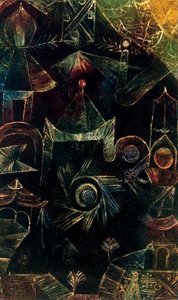 Cosmic Architecture - Paul Klee
Imagine Paul Klee approaching his canvas not merely as a painter, but as a composer, treating every geometric shape in "Cosmic Architecture" like a rhythmic note in a visual symphony.
This 1919 masterpiece is a cornerstone of the top 25 artworks of Paul Klee , marking his pivotal transition from Expressionist emotion to the structured, mathematical beauty of abstraction. Through the delicate application of gouache, Klee orchestrated a dazzling array of deep indigos, sunny yellows, and vibrant greens that pulse with an internal logic. The work functions as a musical score for the eyes, where overlapping circles and triangles create a sense of movement and harmonic depth.
Integrating such a profound exploration of form and color into a modern home office or study can transform a workspace, providing a sophisticated backdrop that inspires deep focus and architectural clarity during your most productive hours.
Erasing - Paul Klee
 Erasing - Paul Klee
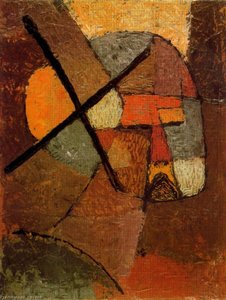
In the profound collection of the top 25 artworks of Paul Klee, Erasing stands as a haunting meditation on the ephemeral nature of existence. Painted in 1940 amidst the heavy shadows of the Second World War, this work transcends mere abstraction to touch the very essence of loss and transformation. The composition centers on an enigmatic face marked by a striking cross, surrounded by a fragmented dance of ghostly impressions that suggest a struggle against the inevitable tide of forgetting. Klee’s technical mastery is evident in the rich, autumnal palette of reds, oranges, and deep browns , where delicate watercolor washes meet heavy, tactile impasto strokes. This interplay between light and texture mirrors the tension between the seen and the unseen. To possess a reproduction of this piece is not merely to decorate a room; it is to invite a transformative presence into your space, turning a simple wall into a gallery of the soul that captures the beauty found within the process of decay.
With the Mauve Triangle - Paul Klee
 With the Mauve Triangle - Paul Klee
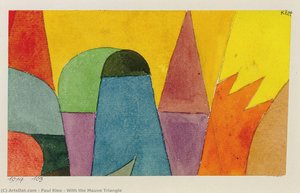
"With the Mauve Triangle" by Paul Klee is far more than an abstract composition; it is a rhythmic invitation into a world where geometry meets profound emotion. Created during his influential Bauhaus period, this watercolor masterpiece transcends simple decoration to become a transformative sensory experience. The eye is immediately drawn to the striking triangular form that anchors the upper quadrant, acting as a structural heartbeat amidst a sea of soft, undulating shapes reminiscent of an abstracted landscape.
Klee utilizes a vibrant, carefully orchestrated palette—splashes of sun-drenched yellow, deep orange, and tranquil blue —to create a visual symphony where complementary colors dance in perfect tension. There is an inherent musicality here, a careful arrangement of lines and planes that echoes his belief in art as a form of rhythmic composition. To surround yourself with such a work is to move beyond mere furnishing; it is to liberate your space, transforming a simple room into a gallery of the soul where every curve invites deep contemplation.
About Chess - Paul Klee
 About Chess - Paul Klee
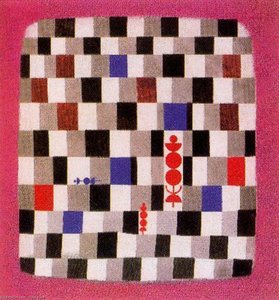
In About Chess by Paul Klee, the eye is captivated by a rhythmic dance of geometry. The composition utilizes a sophisticated interplay of squares, triangles, and delicate dots to create a sense of organized chaos. This structural harmony—where bold primary colors collide with stark black and white—establishes a timeless perfection that secures its place among the top 25 artworks of Paul Klee . There is an inherent balance in Klee’s meticulous use of hatching, which mirrors the clean principles of modern minimalist design. For the contemporary professional or decorator, this piece acts as a grounding element; its abstract language provides a sophisticated focal point that complements architectural lines and neutral palettes. By bridging the tension of 1940s Europe with the serenity of modern aesthetics, About Chess remains an essential study in how form and color evoke profound emotional resonance.
Hammamet - Paul Klee
 Hammamet - Paul Klee
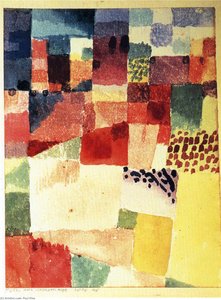
Before the geometric precision of his later years, Paul Klee found a transformative spark in the sun-drenched landscapes of North Africa. It was here that the intense, blinding light began to dissolve solid forms into pure, rhythmic color. In Hammamet , Klee achieves a breathtaking conceptual leap, moving away from representation toward a symphony of interconnected squares.
Using watercolor on paper, he meticulously layers warm washes of amber, ochre, and deep crimson, creating a sense of luminous depth that defies the flatness of the medium. This piece stands as a cornerstone in the top 25 artworks of Paul Klee because it captures the precise moment where structure meets spontaneity—a masterclass in abstraction where every square feels like a musical note in a visual composition.
The rhythmic balance and vibrant energy of this work offer more than just aesthetic pleasure; they provide a focal point of intellectual clarity. Integrating such a masterpiece into a modern home office or study fosters an atmosphere of focused creativity and sophisticated calm, ideal for any professional space.
Conclusion
As we conclude this journey through the rhythmic, chromatic world of Paul Klee, we find that his works are far more than mere historical artifacts or studies in abstraction; they are living presences that continue to pulse with the rhythm of human emotion. Klee’s unique ability to translate the intangible—the movement of music, the warmth of light, and the delicate balance of form—allows his paintings to transcend their era, finding a permanent home within our contemporary hearts and our most cherished spaces. To encounter his art is to participate in an eternal dialogue between the abstract and the everyday, where a single line or a subtle shift in color can reshape our perception of the world around us. These works do not merely occupy a room; they animate it, turning walls into windows of infinite possibility and transforming interiors into landscapes of quiet contemplation. As you seek to bring this sense of structured wonder into your own environment, we invite you to discover the full collection , where the enduring legacy of Klee’s vision remains ready to inspire, move, and transform.