

The New Frontier: Merging Traditional Mastery with Digital Scalability
In the hallowed halls of art history, the tension between the unique, singular masterpiece and its mechanical reproduction has long been a subject of profound philosophical debate. As Walter Benjamin famously explored, the age of mechanical reproduction poses a challenge to the aura—that inimitable essence of a work that exists only in its original, physical presence. Yet, for the modern art student standing at the crossroads of tradition and technology, this tension is not a conflict to be resolved, but a powerful synergy to be harnessed. We are witnessing a subtle revolution where the tactile, soulful brushstroke of a hand-painted oil reproduction meets the relentless, precise efficiency of digital commerce. This convergence allows an artist to transcend the physical limitations of their own hands, extending their creative reach far beyond the confines of a single studio or a solitary canvas.
To scale an art business in the contemporary landscape is to master the art of presence and absence simultaneously. It requires the ability to maintain the sanctity of the original technique—the heavy impasto of a Van Gogh or the luminous chiaroscuro of a Rembrandt—while utilizing automated workflows to ensure that this vision can be shared globally. This new frontier is not about replacing the artist with a machine, but rather about using technology as an amplifier for human mastery. By integrating high-resolution digital mockups and precision printing with the timeless labor of oil painting, creators can build a brand that possesses both the depth of a museum gallery and the scalability of a global enterprise.
Unlocking Passive Revenue: The Mechanics of Automated Print & Oil Workflows
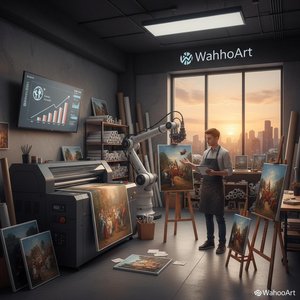
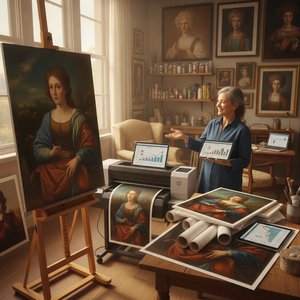
The true engine of a scalable art business lies in the strategic implementation of dual revenue streams: the high-value, bespoke commission and the high-volume, automated print. At the heart of this transformation is a proprietary production pipeline that functions with the clockwork precision of a modern logistics firm. The process begins long before a brush touches canvas; it starts with digital rendering and high-resolution software that allows for the creation of precise mockups. This stage is critical for both the artist and the client, as it provides a visual blueprint that ensures the final physical product—whether an oil painting or a Giclée print—aligns perfectly with the initial vision.
While the artist focuses on the intensive, meditative process of applying layers of pigment to 100% cotton canvas, a parallel digital channel operates in the background. This is where the concept of passive income becomes tangible. Through an automated print-on-demand model, Giclée technology—utilizing 12-color pigment-based inks on museum-grade substrates—can fulfill orders worldwide without the artist ever needing to touch a shipping box. Each print serves as a high-fidelity ambassador of the artist's style, offering collectors an accessible entry point into their oeuvre. This dual system allows for a steady flow of revenue that operates independently of the artist’s physical presence, creating a financial foundation that grows with every new digital upload and every successful commission.
Preserving the Aura: Maintaining Artistic Integrity in the Age of Reproduction
A significant concern for any serious practitioner is whether the soul of the work survives the transition from a single object to a reproducible edition. To achieve this, one must embrace the rigorous science of archival excellence. A true fine art reproduction is not merely a copy; it is an act of resurrection. When we speak of Giclée printing, we are referring to a process designed to capture the subtle gradations and nuanced tones that define a masterpiece. By using pigment-based inks rather than standard dyes, these prints offer a level of color accuracy and lightfastness that ensures the artwork remains vibrant for up to a century, preserving the visual integrity of the original for generations.
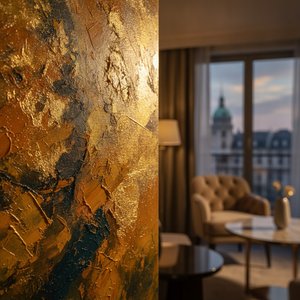
Furthermore, the distinction between a mere poster and a professional reproduction lies in the tactile experience. For those seeking the pinnacle of authenticity, our hand-painted oil reproductions offer a depth that no printer can replicate. These works feature visible brushstrokes, the scent of wet oil, and even the intentional application of craquelure to mimic the aged beauty of museum originals. By offering both the precision of the digital print and the textured reality of the oil painting, an artist can cater to a diverse range of collectors—from those seeking affordable decor to those investing in significant, physical assets. This approach ensures that even in an age of mass distribution, the artistic aura remains intact, respected, and profoundly felt.
Strategic Diversification: Balancing High-End Commissions with Print-on-Demand
A sustainable art career is built upon a diversified portfolio of income. Relying solely on one-off commissions can lead to periods of financial instability, whereas relying solely on prints may lack the prestige required to build a high-end brand. The most successful art entrepreneurs utilize a balanced strategy: using print-on-demand to build global brand recognition and steady cash flow, while reserving their physical energy for high-margin, custom oil commissions. This allows the artist to use their digital presence as a marketing tool, where every Giclée print sold serves as an advertisement for their ability to execute complex, large-scale oil works.
This diversification extends to the very nature of the art produced. An artist might offer everything from small, accessible photographic prints to massive, bespoke wall murals painted by fresco specialists. This spectrum of offerings allows you to capture different market segments—from the individual collector to the procurement manager furnishing a luxury hotel chain. By managing these various streams through a centralized order management system, you can maintain professional oversight over every stage of production, from the initial digital mockup to the final delivery via international couriers like DHL or FedEx. This level of operational sophistication transforms an art practice into a robust, scalable business.
Operational Excellence: Managing Global Distribution and Order Fulfillment
The final pillar of a professional art enterprise is the ability to deliver excellence across borders with absolute reliability. For the artist-entrepreneur, the complexity of international logistics—handling VAT, customs declarations, and various regional tax requirements like Brazil's CPF or Mexico's RFC—can be daunting. However, by adopting a structured, trade-oriented approach, these hurdles become manageable components of a global supply chain. True professional success is found in the ability to provide a seamless experience for the buyer, ensuring that whether an artwork is shipped to New York, London, or Tokyo, it arrives with the same level of care and documentation.
Operational excellence also demands transparency and trust. A robust order management system allows clients to track their commissions in real-time, providing pre-shipment photo approvals that guarantee satisfaction before the work ever leaves the studio. This commitment to quality control—ensuring that every frame is sturdy, every canvas is properly stretched, and every package is protected by heavy-duty materials—builds a reputation for reliability that is essential for attracting large-scale B2B clients, such as interior designers and corporate decorators. By mastering the logistics of fulfillment, you move beyond being a mere creator and become a dependable global supplier of fine art, ready to furnish the world's most prestigious spaces.