




The Death of the Branded Mug: Why Traditional Swag Fails the Modern Executive
 Beyond Gifts: Personalized Art for Lasting Corporate Appreciation
The Problem with Traditional Corporate Gifts: Why They're Often Forgotten In today’s competitive business landscape, showing appreciation to clients and employees is more crucial than ever. However, the standard corporate gifts – pens, mugs, branded ...
In the hyper-competitive landscape of modern enterprise, the ritual of corporate gifting has reached a point of profound stagnation. For decades, the standard repertoire of appreciation—the ubiquitous branded mug, the generic ballpoint pen, the hastily selected calendar—has served as a placeholder for gratitude. Yet, in an era defined by authenticity and individual recognition, these items have become symbols not of esteem, but of indifference. They are ephemeral commodities, destined to gather dust in office drawers or be discarded with the same lack of ceremony with which they were received. The fundamental flaw lies in their lack of soul; they convey a sense of obligation rather than genuine connection, failing to resonate on any meaningful emotional level.
When an executive receives a mass-produced trinket, the message is transactional. It signals that the relationship is merely another line item on a spreadsheet, a box to be checked during a quarterly review. This impersonal approach diminishes the impact of the gesture and ultimately undermines the very brand loyalty it seeks to foster. To truly differentiate oneself in a crowded marketplace, one must move beyond the veneer of practicality and embrace a medium that speaks the language of intention. The modern professional no longer seeks more objects; they seek more meaning. As we navigate an increasingly digital and disconnected world, the value of a gift is measured not by its utility, or even its price tag, but by its ability to leave a lasting impression on the recipient's consciousness.
The Psychology of Aesthetic ROI: Building Brand Equity Through Visual Impact
 The Canvas of Connection: Quantifying the ROI of Art-Based Gifting on Corporate Relationships and Brand Equity
The Psychology of Gifting: Building Rapport & Reciprocity Psychology of art The psychology of art is the scientific study of cognitive and emotional processes precipitated by the sensory perception of aesthetic artefacts, such as viewing a painting o...
Beyond the surface level of decoration lies a profound scientific reality: the psychology of art is a powerful driver of cognitive and emotional processes. When we perceive an aesthetic artifact—be it the textured impasto of a hand-painted oil work or the striking geometry of a modern sculpture—our brains undergo a complex dance of neurochemical responses. The viewing of beautiful, high-impact art triggers the release of dopamine, fostering feelings of pleasure, trust, and social bonding. In a corporate context, this is where the concept of Return on Investment (ROI) transcends financial metrics and enters the realm of brand equity.
Art-based gifting initiates a delicate dance of reciprocity. Unlike a generic gift that fades from memory, an impactful piece of art becomes a permanent fixture in the recipient's environment, acting as a continuous, silent ambassador for the giver’s taste and values. This is the true "Canvas of Connection." By presenting a work that stimulates conversation and inspires creativity, a corporation is not merely exchanging a commodity; it is investing in a long-term psychological bond. The strategic value lies in the ability to cut through the noise of daily business transactions, forging connections that transcend mere contracts and solidify bonds through shared aesthetic appreciation.
Beyond the Transaction: Custom Art as a Narrative for Corporate Identity
 Beyond Corporate Gifts: Scaling Personalized Art Experiences for Enhanced Client Engagement and Brand Loyalty
The Evolving Landscape of Corporate Gifting: From Swag to Strategic Relationship Building For generations, the corporate gift has been a curious ritual—a token exchanged, often with little thought beyond fulfilling an obligation. The ubiquitous pen, ...
We are, at our very core, storytellers. Every successful brand is built upon a narrative of vision, excellence, and shared values. Therefore, the most potent gifts are those that act as extensions of this narrative. Custom art offers an unparalleled canvas for such storytelling, allowing a corporation to move away from ostentation and toward authenticity. While historical precedents like Renaissance patronage used portraits to communicate power and alliance, modern corporate gifting uses bespoke art to demonstrate deep consideration and an understanding of the individual.
A custom commission allows a brand to weave its identity into the very fabric of a relationship. Whether it is a large-scale mural that reflects a company's architectural ambition or a personalized portrait that honors a long-standing partner, these works are much more than decorations; they are tangible embodiments of respect. This shift from "swag" to "strategy" represents a quiet revolution in corporate culture. It is an acknowledgment that true appreciation is found in the details—the choice of subject matter, the vibrancy of the color palette, and the meticulous craftsmanship of the artist. When art is used as a tool for relationship building, it transforms a simple gesture into a lasting legacy.
From Portraits to Pop Art: Tailoring Bespoke Commissions for High-Value Clients
 Request a Custom Quote Today!bronze sculptureCommission a truly unique sculpture – a dynamic bronze depiction of movement and grace. This piece, inspired by dancers or performers, showcases exceptional anatomical detail and flowing lines, brought to l
A Dynamic Bronze Embrace: Custom Metal Sculpture Capture a moment of grace and strength with this bespoke metal sculpture, meticulously crafted from bronze to depict a powerful yet elegant scene—a figure lifting another in what could be interpreted a...
The true luxury of custom art lies in its infinite versatility and the ability to "remix" history to suit contemporary tastes. For the discerning client, the possibilities are limited only by imagination. One might commission a "Period Shift," where a modern digital photograph is transformed into a 17th-century masterpiece through the meticulous hand-painting of an artist trained in academic excellence. This process allows for a profound level of personalization, such as combining individuals from different photos into a single, cohesive group portrait or adjusting color palettes to match a client's specific interior design aesthetic.
For those who prefer a more high-energy, urban aesthetic, the realm of Pop Art and street-inspired styles offers a bold alternative. Imagine presenting a client with a vibrant, graphic work that echoes the energy of Warhol or the punchy lines of Lichtenstein—pieces that prioritize visual impact and cultural relevance over classical tradition. This level of customization extends to the very medium itself; one can choose between the tactile depth of a handmade oil reproduction, featuring visible brushstrokes and rich textures, or the sleek, modern allure of custom metal wall sculptures and light installations. By tailoring the style, scale, and subject matter, the gift becomes a bespoke reflection of the recipient's unique personality.
Strategic Implementation: Curating Artful Experiences for Corporate Events and Milestones
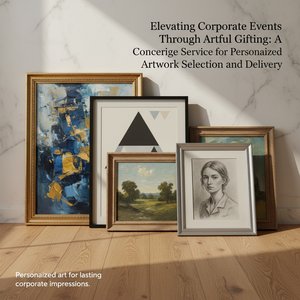 Elevating Corporate Events Through Artful Gifting: A Concierge Service for Personalized Artwork Selection and Delivery
The Strategic Value of Artful Gifting: Beyond Corporate Swag For generations, the corporate gift has been a curious ritual—a token exchange intended to solidify relationships, express gratitude, or simply mark an occasion. Too often, however, these g...
Implementing an art-based gifting strategy requires more than just selecting a beautiful object; it requires the curation of an experience. For major corporate milestones, anniversaries, or high-level executive retreats, art can serve as the centerpiece of a larger narrative. This might involve commissioning large-format murals or ceiling frescoes that transform a temporary event space into a breathtaking environment, much like the historical grandeur of the Sistine Chapel reimagined for a modern hotel or lounge.
To ensure success, the process should be managed with the same precision as any high-stakes business project. Utilizing professional coordination services—where every detail from digital mockups to final delivery is overseen—removes the uncertainty often associated with bespoke commissions. From the initial digital proof that allows for unlimited revisions to the final, secure delivery via global logistics partners like DHL or FedEx, the goal is to create a seamless transition from concept to reality. When executed with such care, artful gifting becomes more than a gesture; it becomes a landmark event in the lifecycle of a professional relationship, leaving an indelible mark on both the giver and the receiver.