



The Foundation of Sight: Understanding Line as Movement and Emotion
--- title: Line url: https://www.getty.edu/education/teachers/building_lessons/formal_analysis.html hostname: getty.edu description: This page provides definitions and examples of the elements of art and principles of design that are used by artists ...
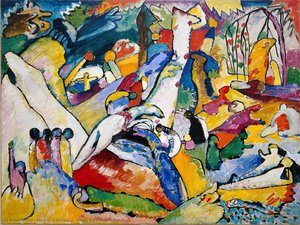
To the untrained eye, a line is merely a boundary, a simple stroke of pigment separating one space from another. However, for those seeking to truly decode the visual language of a masterpiece, the line serves as the very heartbeat of the canvas. It is the primary conductor of energy, directing our gaze through the labyrinth of the image. When we observe the works of masters like Vaclav Vytlacil, we see how bold, decisive lines in a triptych can establish a rhythmic pulse, creating a sense of structural tension that demands attention. These are not just marks; they are trajectories of intent.
Lines possess an inherent psychological weight. Consider the contrast between the fluid, organic curves found in the landscapes of John Howard Jephcott and the sharp, aggressive vectors of more modern, industrial-inspired works. A soft, undulating line can evoke a sense of tranquility, mimicking the gentle roll of a hill or the flow of water, whereas jagged, interrupted lines introduce discord and anxiety. In the realm of Abstract Expressionism, the line often transcends representation entirely, becoming a record of the artist's physical movement—a gestural trace of a brush hitting canvas with spontaneous force. By tracing these paths, we begin to understand that a line does not just define an edge; it dictates the emotional temperature of the entire piece.
Geometric Power: Decoding Shape, Form, and Spatial Depth
 Geometric Abstraction's 10 Defining Masterpieces | Art for Your Home - ArtsDot
Introduction Imagine a world stripped bare to its essential forms – lines, colors, and shapes resonating with an almost mathematical purity. This is the realm of Geometric Abstraction, a movement that dared to abandon representational art in favor of...
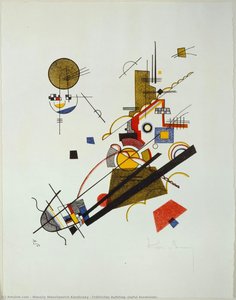
Once the lines have established their path, they inevitably enclose space, giving birth to shape. This is where the architecture of art begins to solidify. In the world of Geometric Abstraction, shapes are stripped of their narrative baggage to reveal a mathematical purity. We see artists seeking a universal order through the use of circles, squares, and triangles—forms that resonate with an almost primal stability. These shapes act as the building blocks of visual logic, providing a framework uponty which more complex ideas can be layered.
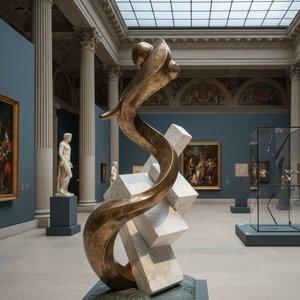
However, the transition from two-dimensional shape to three-dimensional form is where the true magic of depth occurs. Through the clever manipulation of overlapping planes and varying densities, an artist can trick the eye into perceiving volume where there is only flat pigment. In the works of contemporary masters like Gusti Agung Mangu Putra, we witness a masterful command of this phenomenon. By layering hues and textures, shapes appear to recede or advance, creating a layered world that invites the viewer to peer into hidden depths. This interplay between the flatness of the canvas and the illusion of depth is what transforms a mere arrangement of forms into a profound, immersive experience.
The Architect’s Eye: Mastering Composition and Visual Balance
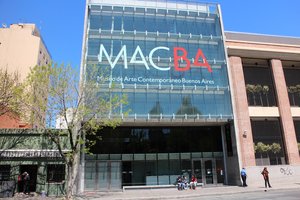 MACBA - Museum of Contemporary Art in Buenos Aires
A Window into Argentine Abstract Expressionism: Exploring MACBA’s Legacy Buenos Aires' Museum of Contemporary Art (MACBA) stands as a testament to Argentina’s artistic evolution, born from the ambitious vision of the Aldo Rubino Foundation and anchor...
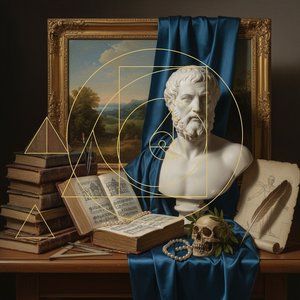
Composition is the ultimate blueprint of a painting; it is the invisible scaffolding that holds every element in place. A great composition does not happen by accident; it is a deliberate orchestration of weight, tension, and equilibrium. When analyzing a work, one must look for the focal points—those strategic locations where the artist has concentrated visual interest to anchor the viewer's attention. This might be achieved through a pyramidal structure, as seen in Renaissance classics, or through a more radical, asymmetrical balance that challenges our sense of stability.
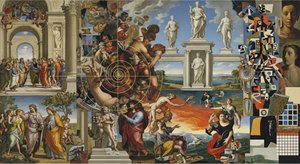
The concept of balance is particularly fascinating when we examine modern movements like the Argentine Abstract Expressionism found in museums such as MACBA. Here, composition often relies on the tension between large, heavy masses of color and smaller, lighter accents. The artist must manage the "visual weight" of each element to ensure the eye does not fall off the edge of the canvas but is instead led in a continuous, satisfying loop. Whether it is the structured rhythm of a multi-panel installation or the chaotic energy of an impasto-heavy abstract, the success of the composition lies in its ability to create a cohesive visual narrative that feels both intentional and complete.
Color Dynamics: How Hue and Value Drive Narrative Impact
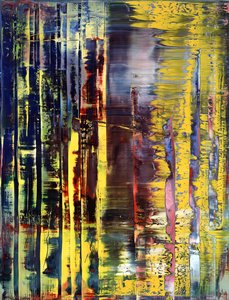 Abstract Painting 780-1
Vibrant Abstraction: A Dance of Color and Light Gerhard Richter's "Abstract Painting 780-1" is a mesmerizing exploration of color, texture, and movement. Created in 1992, this piece exemplifies Richter's mastery of abstract expressionism, offering a ...
If line and shape provide the skeleton, then color is the flesh and blood of the painting. Color is perhaps the most visceral tool at an artist's disposal, capable of triggering immediate physiological and emotional responses. The relationship between hue—the actual color itself—and value—its lightness or darkness—determines the luminosity and mood of the work. A palette dominated by cool blues and teals can evoke a sense of ethereal stillness, while a sudden burst of warm oranges or reds can act as a visual shout, disrupting the peace.
In the monumental works of Gerhard Richter, we see how color and light dance together to create movement. His use of contrasting tones can divide a canvas into distinct emotional zones, creating a sense of rhythm that mimics the ebb and flow of light itself. Furthermore, the technique of impasto—applying thick, textured layers of paint—allows color to interact with physical light, casting tiny shadows that add a tactile dimension to the hue. When we analyze color, we are not just looking at pigments; we are analyzing the way an artist uses light and shadow to sculpt emotion directly onto the viewer's consciousness.
Beyond the Surface: Integrating Formal Analysis with Emotional Resonance
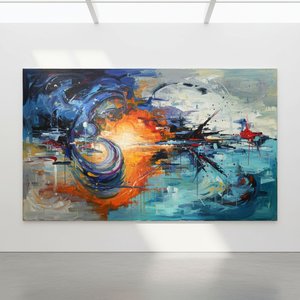 Beyond Representation: Emotional Resonance & Formal Innovation in Abstract Painting
The Shift from Mimetic Representation: A Historical Overview Abstract expressionism Abstract expressionism in the United States emerged as a distinct art movement in the aftermath of World War II and gained mainstream acceptance in the 1950s, a shift...
The ultimate goal of formal analysis is not merely to categorize elements like a scientist, but to understand how these technical components coalesce to create meaning. The true mastery of art lies in the intersection where technique meets soul. When we look at a painting, we are witnessing a profound dialogue between the artist's formal choices and their inner reality. The shift from mimetic representation—the faithful rendering of the world—to pure abstraction was a revolution driven by a desire to express truths that words and literal images could not reach.
To read a painting is to recognize that every brushstroke, every geometric intersection, and every color choice is a deliberate step toward emotional resonance. Whether it is the Byzantine grandeur infused into the works of Fahrelnissa Zeid or the raw, spontaneous energy of the New York School, the formal elements are the tools used to tap into universal human experiences: grief, joy, transcendence, and awe. By mastering the ability to analyze line, shape, and composition, we move beyond being mere observers; we become active participants in the profound, silent conversation that art has been conducting with humanity for centuries.
About ArtsDot.com
ArtsDot.com is a global leader in making fine art accessible to everyone. Since 2004, we have specialized in providing high-quality, hand-painted reproductions and museum-grade prints that bring the power of the masters into modern homes. From custom portrait commissions that transform your personal memories into oil masterpieces to large-scale architectural murals, our mission is to preserve human creativity for a modern audience. Whether you are looking to explore the bold aesthetics of Pop Art or the textured depth of Abstract Expressionism, ArtsDot offers an unparalleled experience in art curation and customization.