
The Great Divide: When Enlightenment Reason Met Artistic Rebellion
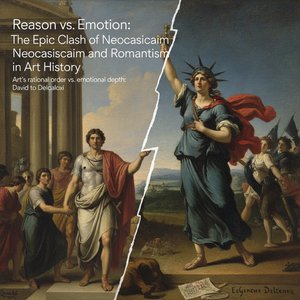 Reason vs. Emotion: The Epic Clash of Neoclassicism and Romanticism in Art History
The Age of Enlightenment: The Rational Foundations of Neoclassicism French Revolutionary Army The French Revolutionary Army (French: Armée révolutionnaire française) was the French land force that fought the French Revolutionary Wars from 1792 to 180...
Neoclassicism: The Aesthetic of Order, Logic, and Heroic Virtue
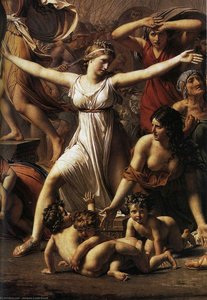
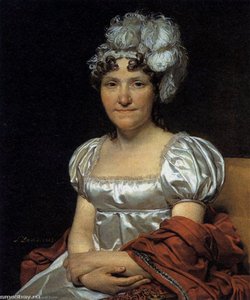
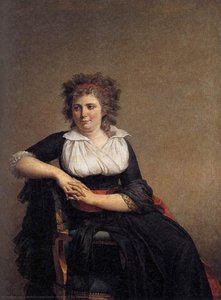
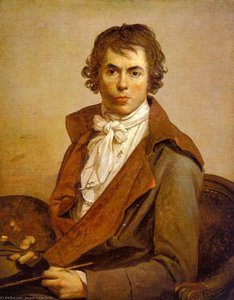
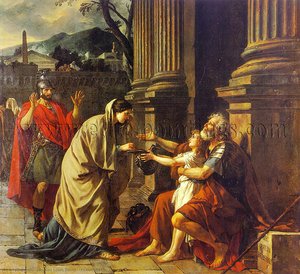
The Neoclassical aesthetic was one of absolute clarity, restraint, and an almost mathematical precision in composition. Stripping away the frivolous, swirling ornamentation of the preceding Rococo period, Neoclassical painters replaced decadence with a sense of moral gravity. Every line was intended to be purposeful; every form, anatomically perfect. This movement sought to find beauty in the harmonious balance of structure and truth, utilizing smooth, almost invisible brushwork to create windows into a world where logic reigned supreme. Jacques-Louis David, the leading master of this era, utilized themes of civic duty, heroism, and self-sacrifice to mirror the political upheavals of the French Revolution. In these works, the palette is controlled, and the subject matter often revolves around the disciplined grandeur of antiquity, presenting a vision of the world that is stable, noble, and profoundly rational. It was art as an anchor, providing a sense of permanence in a rapidly changing political landscape.Romanticism: Embracing the Sublime, the Wild, and the Unfiltered
 Romanticism
Romanticism (also known as the Romantic movement or Romantic era) was an artistic and intellectual movement that originated in Europe towards the end of the 18th century. The purpose of the movement was to advocate for the importance of subjectivity,...
Masterpieces in Conflict: Analyzing the Visual Language of Two Eras
 Anne-Louis Girodet: Bridging Neoclassicism & Romanticism with Emotional Truth
Early Life & David’s Atelier: The Foundation of a Unique Style Anne-Louis Girodet de Roussy-Trioson Discover Anne-Louis Girodet (1767-1824), a French painter bridging Neoclassicism & Romanticism. Explore his dramatic portraits, literary scenes & subt...
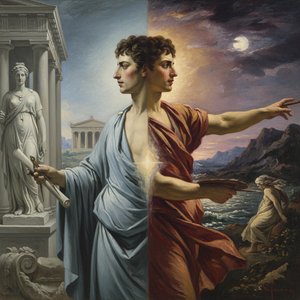
We can even find fascinating middle grounds in artists like Anne-Louis Girodet, who bridged these two worlds. Trained under David, Girodet maintained the rigorous anatomy and historical subject matter of Neoclassicism but infused his compositions with a burgeoning Romantic sensibility—adding dramatic lighting and psychological complexity that hinted at the emotional depth to come. This tension between the invisible brushstroke and the textured, impasto application is where the true soul of art history resides. It is the difference between observing a moment of perfect stillness and being plunged directly into the heart of a storm.
The Eternal Tension: How This Epic Showdown Defines Modern Visual Impact
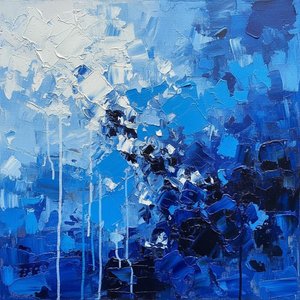 Fragmented Midnight: An Eternal Study of Celestial Light and Oceanic Tension
Experience the hypnotic tension of Laurent Noiret’s Fragmented Midnight, a contemporary abstract masterpiece of luminous starlight and deep navy impasto textures, available for your private collection.
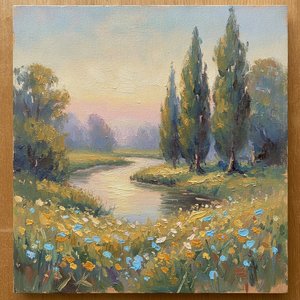
At ArtsDot.com, we celebrate this eternal tension by bringing these legendary eras into the contemporary home. Whether it is a meticulously detailed reproduction that honors the precision of the Neoclassical masters or a custom, hand-painted piece that captures the wild, textured energy of Romanticism, our mission is to provide art with true visual impact. We believe that the depth of an oil painting—with its visible brushstrokes and rich tonal range—is the only way to truly experience the weight of history. By reimagining these classic movements through a modern lens, we ensure that the epic showdown between reason and emotion remains a living, breathing part of your personal space.