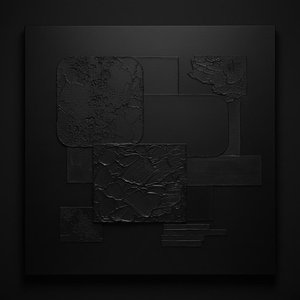

The Power of Silence: Why Minimalism is the Ultimate Visual Rebellion
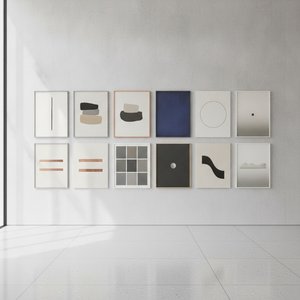 10 Stunning Artworks That Perfectly Capture a Minimalist Vibe
Introduction Strip it back. Cut the noise. In a world that feels like it's constantly shouting, there is an undeniable power in the quiet. Minimalism isn't just about empty space; it’s about the intentional use of what remains. It is a visual rebelli...
In a world that feels like it is constantly shouting, there is an undeniable power in the quiet. We live in an era defined by constant noise and visual saturation, where every digital screen and street corner competes for a fragment of our attention. This is why minimalism has emerged not just as an aesthetic choice, but as a radical act of rebellion. To encounter minimalist artwork is to step into a sanctuary of intentionality, where the absence of excess becomes a presence of clarity. It is a deliberate stripping away of the superfluous to reveal the emotional marrow beneath. Historically, this movement was a sophisticated reaction against the ornate complexities of previous eras, seeking truth in raw geometry and bold lines. Today, that same energy is more vital than ever; it serves as a visual deep breath for the modern psyche, offering a much-needed pause from the cacophony of the hyper-connected world.
This rebellion isn't about emptiness or a lack of effort; it is about the presence of intention. When an artist chooses to limit their palette, they are making a high-stakes decision to let every single line and shadow carry more weight than a thousand cluttered strokes. It is the difference between a loud, chaotic protest and a single, resonant note that lingers in your mind long after you have left the gallery. By embracing the void, minimalism invites us to find resonance in the space between objects, proving that true impact doesn't require volume—it requires precision.
Stripping Back the Noise: How Monochromatic Textures Create Depth Without Color
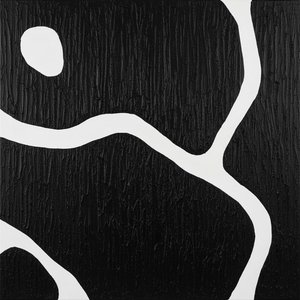
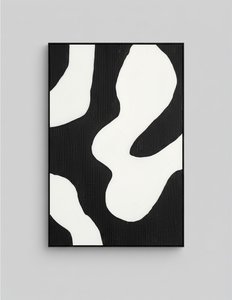 Ethereal Void: A Monochromatic Study of Fluid Motion and Silent Rhythmic Tension
A Vision of Silent Motion Ethereal Void: A Monochromatic Study of Fluid Motion and Silent Rhythmic Tension is a profound exploration of minimalist abstraction. This piece presents a striking, biomorphic arrangement where luminous, organic white forms...
When we remove color from the equation, something fascinating happens: the eye stops searching for hue and starts searching for feeling. Monochromatic art is often misunderstood as being "simple," but in reality, it is a masterclass in complexity. Without the distraction of a vibrant palette, the viewer is forced to confront the raw architecture of the work—the way light hits a raised edge, the subtle grit of a brushstroke, or the rhythmic tension of a dark void. Consider the profound exploration found in works like Ethereal Void, where luminous, organic white forms meander through an infinite black expanse. Here, the high-contrast achromatic tones create a sense of monumental scale that color alone could never achieve.
The magic lies in the interplay of texture and tone. In monochromatic studies, depth is engineered through tactile variation. We see it in the way charcoal masses might collide with sweeping, curvilinear white strokes to create a hypnotic, meditative experience. It is also found in the subtle vertical striations that meet smooth, painterly shapes, or the weathered beauty of distressed edges that evoke organic decay. By focusing on the language of line and the weight of shadow, monochromatic art achieves a sophisticated visual dialogue. It proves that you don't need a rainbow to tell a story; you only need enough contrast to make the soul visible.
Trend Forecast: Integrating High-Contrast Black & White into Urban Interiors
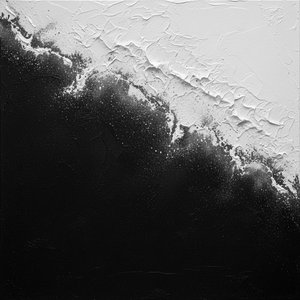
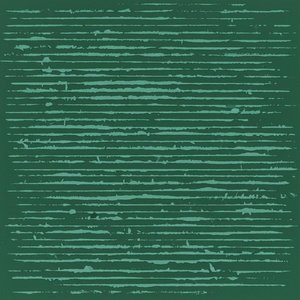 Ethereal Strata of Distressed Seafoam in a Meditative Monochromatic Study
A Vision of Meditative Minimalism Experience the profound tranquility of Ethereal Strata of Distressed Seafoam in a Meditative Monochromatic Study , a breathtaking new vision from the ArtsDot.com Studio. This piece offers a sophisticated evolution o...
As we look toward the future of interior design, the trend is moving decisively away from "color fatigue" and toward high-impact, architectural monochrome. For the modern urban professional, the goal is to create a space that feels like a curated sanctuary rather than a cluttered showroom. High-contrast black and white pieces act as the ultimate anchor for contemporary living. They provide the architectural breathing room necessary for both sleek corporate environments and private retreats. A single, well-placed monochrome canvas can define an entire room, providing a focal point that is both commanding and calming.
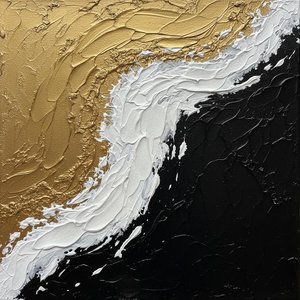
The future of styling lies in the "multi-panel" approach—using large-scale, split compositions to transform wide walls or staircases into immersive experiences. Imagine a three or five-panel set where fluid white waves dance across a midnight black ground, flowing seamlessly across your architecture. This creates a sense of continuous, rhythmic motion that feels both modern and timeless. When paired with industrial textures like concrete, matte metals, or natural wood, monochromatic art doesn't just occupy space; it defines it, turning a standard apartment into a high-design gallery.
From Street Art to Studio: The Modern Edge of Achromatic Abstraction
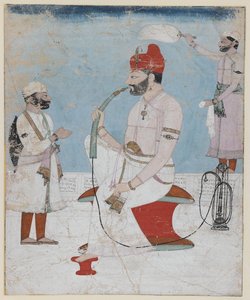 Shubhankar Chandere
Shubhankar Chandere: Echoes of Coexistence in Minimalist Paper Born in Pune, India, in 1993, Shubhankar Chandere’s artistic journey is one defined by a quiet yet profound exploration of interconnectedness. His work, primarily executed with paper as i...
The lineage of monochrome is far from academic; it is deeply rooted in the energy of contemporary culture. There is a direct, pulsing connection between the raw, graphic impact of street art and the refined abstraction found in high-end studios. Both movements share a fundamental DNA: the desire to use bold, unadulterated forms to make an immediate statement. This aesthetic isn't about looking backward at art history; it’s about pulling forward the energy of the present. We see this in the way modern artists utilize biomorphic shapes and heavy impasto-like grains to create works that feel as much like a piece of streetwear as they do a fine art masterpiece.
This edge is characterized by a "remix" mentality. Just as a designer might reinterpret a classic silhouette for a new season, contemporary monochromatic artists take the principles of 20th-century abstraction and inject them with a fresh, digital-age vitality. Whether it is through the use of intricate networks of lines that mirror the interconnectedness of our globalized world or the exploration of "distressed" textures that reflect the beauty of organic decay, the modern monochrome movement is about impact over ornament. It is art for those who value visual identity and cultural literacy above all else.
Mastering the Void: Curating Impactful Monochrome Collections for Your Space
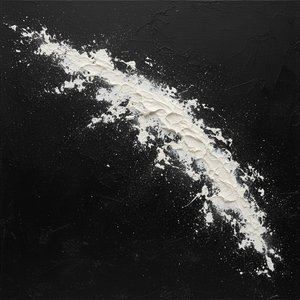
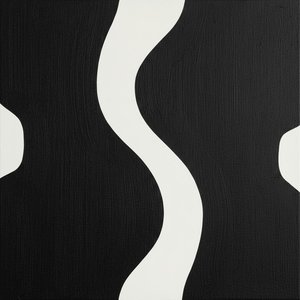 Monolithic Serenity: An Eternal Dance of Fluid White Waves on Midnight Black
A Vision of Minimalist Transcendence Monolithic Serenity: An Eternal Dance of Fluid White Waves on Midnight Black is a profound exploration of balance and rhythmic motion. This piece presents a high-contrast, biomorphic study where a central, serpent...
Curating a collection of monochromatic works requires a discerning eye for balance and scale. To avoid a space feeling "flat," the key is to layer different types of achromatic intensity. You might pair a stark, high-contrast piece—where white forms float in an infinite black expanse—with a more subtle, tonal work that utilizes soft greys or deep charcoals. This creates a visual rhythm that keeps the eye moving. For those looking to make a truly bespoke statement, the ability to customize and remix is essential. Imagine commissioning a piece where your personal history is translated into the sweeping, curvilinear strokes of a neo-abstract masterpiece.
Ultimately, mastering the void is about finding that singular, resonant note that lingers in the mind. Whether you are selecting a single "one-of-one" masterpiece or building a large-scale multi-panel installation, the goal remains the same: to find beauty in clarity and depth in simplicity. By focusing on the essential elements of form, texture, and light, you can curate a collection that doesn't just decorate a wall, but provides a window into a more intentional, powerful way of seeing the world.