


The Death of Muted Tones: Why High-Impact Graphics are Reclaiming the Visual Narrative
 Digital Art Revolution: High-Impact Graphics & The Future of Contemporary Design Trend Forecast
The New Visual Language: How High-Impact Graphics are Redefining Modern Aesthetics We are currently witnessing a seismic shift in the way we perceive visual reality. The era of subtle, muted tones is being aggressively dismantled by a new visual lang...
We are currently witnessing a seismic shift in the way we perceive visual reality, a fundamental restructuring of our aesthetic DNA that refuses to blend into the background. The era of subtle, muted tones and quietude is being aggressively dismantled by a new visual language—one that speaks in the loud, unapologetic dialect of high-impact graphics. This isn't merely a passing trend or a change in preference; it is a rebellion against the ephemeral nature of our hyper-connected, scrolling existence. Today, the eye no longer seeks the comfort of soft gradients; it craves the electric pulse of saturated pigments and the sharp, definitive edges of graphic precision.
This movement draws its strength from a refusal to be ignored. In an age where we are bombarded by a constant stream of digital imagery, the modern eye has developed a hunger for visual force. We see this in the way heavy, saturated color blocks can anchor a room with the weight of an industrial monument, providing a necessary jolt of engagement. This new aesthetic serves as a mirror to our high-speed existence, offering a moment of intense, undeniable presence that demands we stop and look.
Saturated & Sharp: Decoding the DNA of Modern Pop and Street Aesthetics
Pop art is an art movement that emerged in the United Kingdom and the United States during the mid-to late 1950s. The movement presented a challenge to traditions of fine art by including imagery from popular and mass culture—including advertising, c...
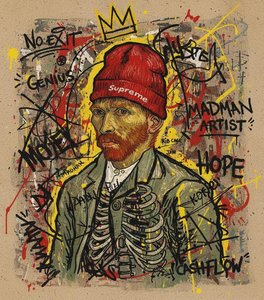
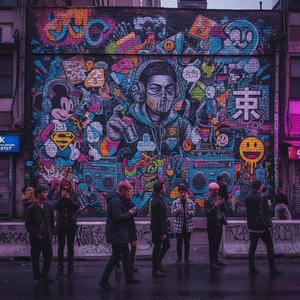
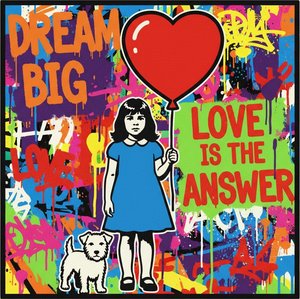
To understand this visual revolution, one must acknowledge the titans who paved the way. The DNA of today’s digital revolution is deeply embedded in the legacy of Pop Art. When masters like Roy Lichtenstein utilized bold lines and simplified forms, they were already deconstructing reality into a graphic shorthand, proving that everyday objects could be elevated to high art through stylized presentation. This lineage continues through the vibrant, stencil-driven energy of contemporary street artists who play with iconic logos and pop culture symbols to create surreal, contemporary twists on familiar imagery.
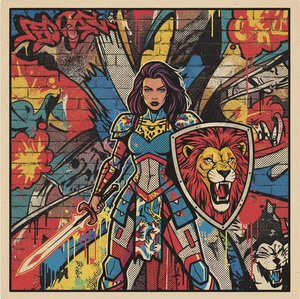
The core of this aesthetic lies in the tension between clarity and chaos. It is found in works like Crimson Resonance, where a high-contrast, vector-inspired style commands attention through a saturated palette of deep crimson, golden yellow, and sharp teal accents. Here, the composition utilizes bold, decisive black outlines and cel-shaded shadows to create a sense of sculptural form within a flat, graphic plane. This aggressive, confrontational pop aesthetic is not about subtlety; it is about creating an unmistakable visual statement that vibrates with energy.
From Halftone to Vector: The Technical Evolution of Graphic Intensity
 Magenta Reverie: A Singular Study in Graphic Halftone and Golden Symmetry
A Symphony of Magenta and Light In the vibrant intersection of contemporary graphic design and mid-century nostalgia lies Magenta Reverie: A Singular Study in Graphic Halftone and Golden Symmetry , a breathtaking exploration of modern Pop Artistry. T...
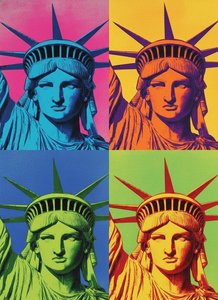
The technical mastery behind this movement bridges the gap between industrial precision and artistic soul. We see a breathtaking exploration of modern artistry in pieces like Magenta Reverie, where bold, black linework meets an electric magenta backdrop. This work achieves a mesmerizing balance by utilizing Ben-Day halftone dots—a technique famously utilized by Pop Art masters to mimic the look of vintage mass-media printing. Through these rhythmic patterns, artists create artificial gradients and subtle shadows that suggest form without sacrificing the flat, graphic impact essential to the genre.
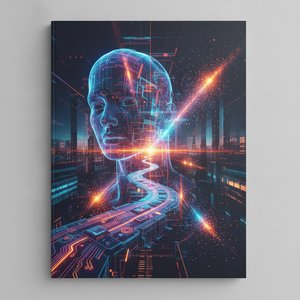
As we move further into the digital age, this evolution has transitioned from the mechanical textures of lithography and halftone screens to the razor-sharp precision of vector design. We see this in the way modern works capture hypnotic tension, where organic flows meet aggressive, vector-style precision. The use of sharp, cel-shaded edges and high-contrast palettes—ranging from emerald and teal to electric orange and acid green—creates a captivating sense of mystery and monumental scale. This technical progression allows for an impossible geometry that feels more real than the physical world itself.
Architectural Impact: Using Bold Visuals to Anchor Urban Interior Design
 Windmill Vibes: Bold & Graphic Artworks to Level Up Your Space with High-Impact Pop Energy
The New Iconography: Why Windmill Graphics are Dominating Modern Urban Spaces Forget everything you think you know about dusty, forgotten museum landscapes. In the high-octane world of modern interior design, the windmill has undergone a massive rebr...
In the high-octane world of modern interior design, art is no longer just a decoration; it is an architectural anchor. We are seeing a massive rebrand of iconic imagery, where even traditional subjects like windmills have evolved into graphic icons—powerful silhouettes that command attention in any urban loft or design-conscious studio. The structural rhythm of a subject is stripped of its pastoral past and reimagined as a bold, graphic element that interacts dynamically with the surrounding space.
For the modern urban dweller, these high-impact pieces function as focal points that ground a room with strength and order. Whether it is through the use of large-format multi-panel layouts that split an image across three or five canvases to cover wide walls, or the selection of a singular, massive centerpiece, bold graphics provide a sense of stability. The ability to utilize saturated color systems—such as triadic approaches featuring deep burgundy and pale yellows—allows designers to create spaces that are both energetic and structurally harmonious.
The Future of the Frame: How Digital Precision Meets Hand-Painted Texture
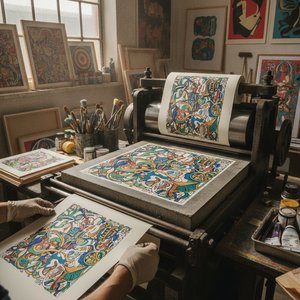 Beyond the Print: The High-Impact World of Lithography & Graphic Art
The Power of the Press: Why Graphic Art Hits Harder Than Traditional Canvas In a world saturated with fleeting digital imagery, there is an undeniable, visceral punch that only graphic art can deliver. While traditional oil paintings often invite a q...
As we look toward the future, the most exciting frontier lies in the intersection of digital precision and the tactile depth of traditional craftsmanship. While the era of the pixel offers impossible clarity, there is an undeniable, visceral punch that only physical texture can deliver. The true evolution occurs when the sharp edges of a vector design are translated onto 100% cotton canvas through the medium of oil paint. This brings visible brushstrokes and a deeper tonal range that no computer print can replicate.
This is where the "remix" of art history becomes possible. We are entering an era where the mechanical precision of graphic design meets the soul of the artist's hand. Imagine the impact of a piece that utilizes the aggressive, high-contrast palette of modern street art but possesses the thick, impasto texture of a master painter. This fusion ensures that while our visual language remains bold and contemporary, it retains the enduring, tactile quality that makes art a lasting legacy for generations to come.