



Introduction
There is a raw, unfiltered magic in the way art captures the essence of childhood—a fleeting intersection of innocence, chaos, and pure, unadulterated emotion. To look at a portrait of a child is to gaze into a mirror of our own beginnings, seeing reflections of curiosity, vulnerability, and that wild, untamed spirit we often lose in the grind of adult life. Whether it is the quiet, contemplative stillness of a solitary figure or the vibrant, kinetic energy of a playground scene, art has always been the ultimate vessel for preserving these ephemeral moments.
Throughout history, the depiction of children has shifted dramatically across cultural landscapes. In eras dominated by rigid social hierarchies, children were often painted as miniature adults—stiff, formal, and draped in heavy, symbolic garments to denote status. However, as movements like Impressionism and later, the bold strokes of Pop Art and Street Art, began to break the rules, the focus shifted toward the sensory experience of being young. We moved from the structured portraits of the past to capturing the messy, colorful, and deeply human reality of youth: the smudge of dirt on a cheek, the wide-eyed wonder at a summer afternoon, or the defiant rebellion found in a street-style graphic.
These works remain profoundly meaningful today because they tap into a universal truth that transcends time and medium. In an increasingly digital and hyper-connected world, these images serve as a grounding force, reminding us of the tactile, physical joys of growing up. They evoke nostalgia for the textures we can almost feel—the heavy impasto of a thick oil stroke or the sharp, high-impact lines of contemporary graphic works.
In this curated journey, we are stepping away from the dusty archives of traditional galleries to explore a selection that hits hard. We have hand-picked ten masterpieces that redefine how we see the next generation. From soulful, hand-painted classics to high-energy, modern interpretations, prepare to experience a collection that celebrates the beautiful, complex, and often loud reality of childhood.
Free hour at Amsterdam orphanage - Max Liebermann
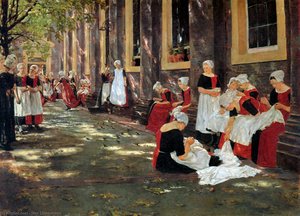 Free hour at Amsterdam orphanage - Max Liebermann
Step into the sun-drenched courtyard of 19th-century Amsterdam with Max Liebermann’s Free hour at Amsterdam orphanage . This isn't just a painting; it is a living, breathing window into a moment of pure communal connection. As you gaze upon the canvas, you are pulled into a vibrant tapestry of life where the innocence of childhood meets the rhythmic pulse of daily tradition.
Liebermann masterfully uses impressionistic, loose brushstrokes to capture the dappled sunlight filtering through the trees, casting a warm, golden glow over women in striking red aprons and white caps. The scene is thick with texture and movement—the soft sway of garments, the chatter of children, and the organic shapes of a bustling community. There is a profound sense of nurturing and togetherness found in every stroke. To bring this piece into your home is to invite more than just color; it is to surround yourself with the soulful, nostalgic warmth of human connection and the timeless beauty of shared existence.
Children’s Games - Pieter Bruegel the Elder
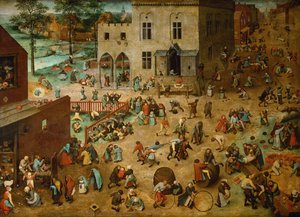 Children’s Games - Pieter Bruegel the Elder
Owning a piece inspired by Children’s Games by Pieter Bruegel the Elder is more than an aesthetic choice; it is a profound investment in cultural legacy and timeless taste for the discerning collector. As one of the most significant works exploring the theme of childhood, this 1560 masterpiece functions as an encyclopedic visual archive. Bruegel’s bird’s-eye perspective captures over 230 figures engaged in eighty-three distinct activities, creating a rhythmic, panoramic energy that transcends its Northern Renaissance origins.
The painting's market prestige is anchored by its unparalleled complexity, where earth tones and dramatic chiaroscuro meet the joyful chaos of urban play. For the modern connoisseur, this work offers a sophisticated narrative of community and human nature. Integrating a high-quality oil reproduction of such a monumental piece into modern luxury interiors provides an immediate sense of historical authority. Whether anchoring a minimalist loft or a grand estate, the textured brushstrokes and vibrant, sprawling composition command the room, bringing the soulful depth of the Renaissance into a contemporary design dialogue.
The Happy Day - Jean-Antoine Watteau
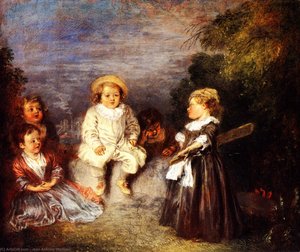 The Happy Day - Jean-Antoine Watteau
In Jean-Antoine Watteau’s 1718 masterpiece, The Happy Day , the fleeting essence of childhood is captured not through heavy drama, but through a luminous, rhythmic celebration of pure existence. As one of the most evocative pieces in our exploration of the top 10 artworks that explore the theme of children, this Rococo gem transcends mere portraiture to become an atmospheric study of joy. Watteau utilizes a soft, diffused light that dances across the verdant landscape, illuminating a group of children lost in spontaneous play alongside their loyal canine companions.
The painting’s visual language—characterized by pastel hues and delicate, fluid brushstrokes—resonates deeply with today's modern craving for escapism and organic aesthetics. In an era of digital saturation, the tactile, sensory richness of Watteau’s world offers a profound cultural counterpoint, reminding us of the beauty found in unscripted, pastoral simplicity. It is a timeless narrative of innocence, where every movement on the grass feels like a heartbeat of pure, unadulterated freedom.
The Little Children Being Brought to Jesus - Rembrandt van Rijn
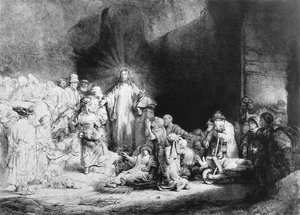 The Little Children Being Brought to Jesus - Rembrandt van Rijn
In Rembrandt van Rijn’s 1647 etching, The Little Children Being Brought to Jesus , the dominant mood is sculpted not by pigment, but by a profound, velvety darkness that radiates a sense of sacred intimacy. This mastery of monochrome—using nothing but the interplay of deep blacks and brilliant, light-drenched highlights—is exactly why this piece earns its spot among the top 10 artworks exploring the theme of children . Rembrandt uses dramatic chiaroscuro to transform a crowded biblical gathering into a focused meditation on innocence and divine grace.
The way light pierces through the shadows to illuminate the faces of the young figures creates an atmosphere of pure, unshielded emotion. For the modern collector, this high-contrast aesthetic is a powerhouse for interior design. Integrating a piece with such intense tonal depth can anchor a contemporary living space, providing a sophisticated focal point that works perfectly with minimalist, moody, or industrial decor. By leveraging the dramatic light and shadow found in this masterpiece, you can curate a room that feels both intellectually deep and visually striking, bringing a touch of Dutch Golden Age soul to a high-impact urban home.
The Massacre of the Innocents (detail) - Jacopo Tintoretto
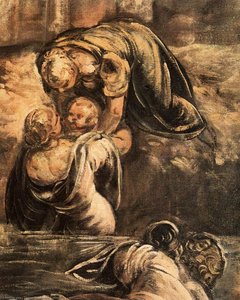 The Massacre of the Innocents (detail) - Jacopo Tintoretto
Acquiring a piece inspired by The Massacre of the Innocents (detail) by Tintoretto is more than a design choice; it is an investment in a legacy of raw, cinematic emotion. As one of the top 10 artworks exploring the theme of children, this work stands as a titan of the Venetian Renaissance, commanding immense market prestige and historical influence. Known as "Il Furioso," Tintoretto utilizes a high-octane Mannerist style, where muscular figures collide in a chaotic dance of light and shadow.
The visual impact is undeniable: deep, blood-red tones clash against dramatic chiaroscuro, creating a sensory experience that captures the tension of the biblical narrative. The movement within the composition—the desperate grasp of a mother, the frantic energy of soldiers—provides an unparalleled depth of storytelling. For the modern collector, integrating a high-quality oil reproduction of this masterpiece into a luxury interior brings a sense of profound aesthetic authority. It transforms a contemporary space into a gallery of high-impact drama, offering the same prestige and soul-stirring intensity as the original found in the Scuola Grande di San Rocco .
Madonna and Child with an Angel (detail) - Sandro Botticelli
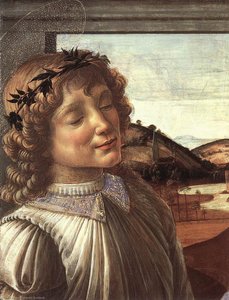 Madonna and Child with an Angel (detail) - Sandro Botticelli
In Madonna and Child with an Angel (detail) , Sandro Botticelli captures a gaze that transcends time—a look of profound, quiet tenderness shared between mother and child. This isn't just a religious relic; it is a masterclass in the psychological depth of early childhood connection. The way the light catches the soft contours of the Christ Child’s face creates a sense of breathing, living warmth, making the divine feel intimately human.
As one of the top 10 artworks that explore the theme of children , this piece serves as a universal mirror for the protective, soulful bond shared by all generations. The delicate use of tempera and those iconic, lyrical lines bring a rhythmic grace to the composition, pulling the viewer into a state of meditative stillness. For the modern collector, integrating this level of Florentine serenity into a home can transform a chaotic living space into a personal sanctuary. It is more than decor; it is an anchor of calm, offering a window of celestial peace and sophisticated emotional resonance for any contemporary interior.
Principles of a schoolmaster, teaching scene for children - Hans Holbein the Younger
 Principles of a schoolmaster, teaching scene for children - Hans Holbein the Younger
Hans Holbein the Younger’s Principles of a Schoolmaster is far more than a quiet classroom snapshot; it is a high-definition window into the soul of Northern Renaissance humanism. In this 1516 masterpiece, Holbein captures the precise moment when classical intellect began to reshape the modern world through the lens of early education. This work earns its place among the top artworks exploring childhood because it moves beyond mere portraiture to document the very architecture of learning—the patient guidance of a tutor, the focused intensity of a student, and the structured ritual of discovery.
The painting’s luminous tempera textures and masterful light play create an atmosphere of profound intellectual intimacy. As you observe the delicate rendering of fabrics and the concentrated expressions of the young pupils, you are invited to reflect on the timelessness of curiosity and the foundational role of mentorship in human development. For the modern collector, bringing a piece with this level of historical depth into a curated space creates a sophisticated dialogue between the heritage of the past and the design-conscious present, turning any room into a sanctuary of culture and contemplation.
The Nurture of Bacchus - Nicolas Poussin
 The Nurture of Bacchus - Nicolas Poussin
A moment of divine stillness is frozen in time within The Nurture of Bacchus by Nicolas Poussin, where the weight of mythology meets the softest breath of infancy. This masterpiece secures its place among the top 10 artworks exploring the theme of children because it strips away the boisterous legends of the god of wine, revealing instead a raw, tender vulnerability. Poussin uses a masterclass in chiaroscuro , letting light caress the skin of caregivers and highlight the innocent features of the young god, creating a sculptural depth that feels almost tactile.
The composition breathes with sensory richness; you can almost feel the warmth of the sun-dappled sanctuary and the quiet, watchful protection of the assembly surrounding the infant. The interplay of deep shadows and glowing highlights creates an atmosphere of profound peace. For the modern collector, this piece brings a sense of timeless prestige and calm to any space, offering a sophisticated window into the universal, eternal bond of care and the beautiful potential found in every child.
Breakfast at Berneval - Pierre-Auguste Renoir
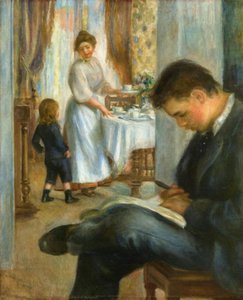 Breakfast at Berneval - Pierre-Auguste Renoir
Renoir’s 1898 masterpiece, Breakfast at Berneval , is a masterclass in capturing the soft, unscripted intimacy of childhood. While many works in our top 10 list focus on the drama of youth, Renoir leans into the quiet, luminous glow of a shared morning. The painting radiates warmth through its sun-drenched palette, centering on a tender domestic scene where light dances across porcelain cups and the gentle faces of children gathered around a breakfast table.
The emotional power of this piece lies in its ability to freeze a fleeting moment of peace. Renoir uses delicate, impressionistic brushstrokes to create an atmosphere that feels both timeless and immediate—a vibe that resonates deeply with modern design lovers seeking to bring organic warmth and "cozy chic" aesthetics into their living spaces. It isn't just a depiction of family; it is an exploration of the light that defines our most cherished memories. For those looking to inject this same sense of soulful, sun-lit serenity into their own interiors, our handmade oil painting reproductions offer a way to own a piece of this enduring Impressionist legacy.
Five Men and a Child in the Snow - vincent willem van gogh
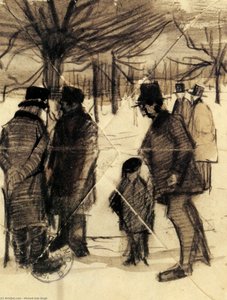 Five Men and a Child in the Snow - vincent willem van gogh
Before the world knew him for the electric yellows of Sunflowers , Vincent van Gogh was mastering the raw, gritty textures of human existence. In Five Men and a Child in the Snow (1883), we encounter a pre-Impressionist master capturing the quiet, heavy pulse of life. This piece earns its place among the top artworks exploring childhood by presenting a child not as a separate entity, but as an integral part of a communal, wintry survival. The graphite lines trace a scene of profound vulnerability and shared warmth amidst a stark, monochrome landscape.
There is a haunting beauty in how the small figure navigates the swirling snow alongside the men, symbolizing the innocence that persists even in the harshest climates. It serves as a powerful meditation on human connection and the cyclical nature of generations. For the modern collector, this work offers more than just a historical relic; it provides a soulful, monochromatic anchor for contemporary spaces, inviting a contemplative dialogue between the rugged realism of the past and the sophisticated, minimalist aesthetics of today's urban interiors.
Conclusion
As the light fades on this gallery of memory, we realize that these masterpieces do more than merely document a moment in time; they act as mirrors to our own shared humanity. The laughter, the innocence, and even the quiet shadows captured in these works transcend their original centuries, breathing life into the spaces they inhabit today. They are not static relics locked behind museum glass, but living presences that pulse with an eternal rhythm, capable of transforming a modern room into a sanctuary of reflection and warmth.
To bring one of these iconic visions into your home is to invite a continuous dialogue between history and your everyday life—a way to anchor your personal space with the profound emotions of the past. Whether through a bold, textured oil reproduction that commands attention or a delicate print that whispers of nostalgia, these works continue to shape our culture and stir the soul, reminding us that the essence of childhood remains one of art's most enduring and sacred inspirations. We invite you to explore the heartbeat of this theme further within our full collection , where every brushstroke serves as a bridge to the timeless.