
Introduction
Imagine stepping away from the grayscale noise of modern life and plunging headfirst into a world where color doesn't just represent reality—it defines it. This is the universe of Eugène Henri Paul Gauguin , a rebel who traded the predictable safety of a Parisian stockbroking career for a life of raw, unfiltered expression. He didn''t just paint landscapes; he painted emotions, using heavy, saturated hues and bold, flat planes of color to capture the soul of the places he touched, from the rugged coasts of Brittany to the sun-drenched, mysterious landscapes of Tahiti.
Gauguin was a pioneer of the Synthetism movement, breaking away from the fleeting light of Impressionism to seek something much deeper and more symbolic. His work serves as a bridge between the recognizable world and the abstract, avant-garde energy that would later define modern art. He sought a 'primitive' purity, stripping away the polished layers of Western civilization to find a visceral, spiritual truth in the textures of nature and the faces of the people he encountered.
Today, these masterpieces remain incredibly potent. In an era of digital perfection, Gauguin’s work offers a much-needed dose of human grit and chromatic intensity. His ability to blend the exotic with the deeply personal continues to inspire designers, street artists, and collectors who crave visual impact and emotional depth. As we walk through this curated selection, you won't just see historical artifacts; you will experience a journey of transformation.
Get ready to explore the top 25 artworks that define Gauguin’s legacy—a collection of high-impact visuals that continue to pulse with the same wild, unapologetic energy that drove him to change the course of art history forever.
Where do we come from what are we where are we going - Eugène Henri Paul Gauguin
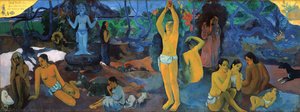 Where do we come from what are we where are we going - Eugène Henri Paul Gauguin
Owning a piece inspired by Where do we come from what are we where are we going by Eugène Henri Paul Gauguin is more than an aesthetic choice; it is a profound investment in a legacy of rebellion and raw, visual truth. As one of the most significant works within the top 25 artworks of Eugène Henri Paul Gauguin, this monumental masterpiece commands attention through its heavy use of Synthetism—replacing traditional realism with flat, vibrant planes of color and deep, symbolic meaning. The composition flows like a fever dream, moving from the innocence of infancy to the wisdom of old age across a lush, Tahitian landscape saturated in melancholic blues and fiery oranges.
The market value and historical influence of this work are undeniable, marking it as a cornerstone of Post-Impressionist history. For the modern collector, bringing a high-quality, hand-painted reproduction of this piece into a luxury interior provides an instant injection of cultural authority. Its bold, graphic energy and spiritual depth serve as a sophisticated focal point, offering the same atmospheric prestige and status as the original in any contemporary, design-conscious space.
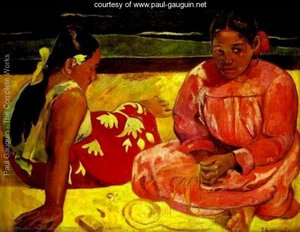
Two Women on the Beach - Eugène Henri Paul Gauguin
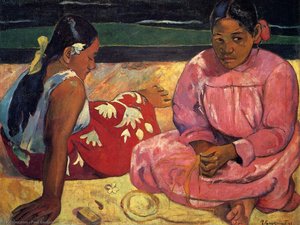 Two Women on the Beach - Eugène Henri Paul Gauguin
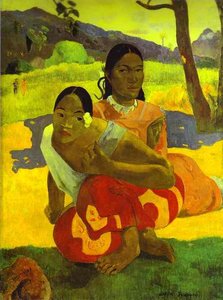
Owning a piece inspired by Two Women on the Beach by Eugène Henri Paul Gauguin is more than an aesthetic choice; it is an investment in a legendary artistic legacy. As one of the most significant works within the top 25 artworks of Gauguin, this 1891 masterpiece serves as a cornerstone of Post-Impressionism, commanding immense respect in the global art market for its radical departure from Western naturalism.
The canvas vibrates with the heat of Tahiti, utilizing Synthetism to flatten perspective into bold, saturated planes of ochre, deep crimson, and tropical pink. Gauguin captures a moment of quietude—two women engaged in a game of cards—where the heavy, textured brushstrokes and dark, Cloisonnist outlines create an atmosphere of profound intimacy and mystery. The composition eschews photographic detail to prioritize raw emotional impact and symbolic depth. For the modern collector, a high-quality oil reproduction of this work brings unparalleled aesthetic authority to luxury interiors, offering a high-impact visual anchor that bridges the gap between historical rebellion and contemporary sophisticated design.
Yellow Christ - Eugène Henri Paul Gauguin
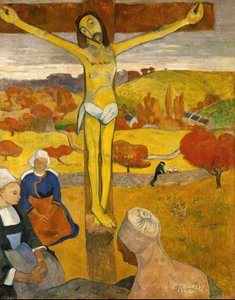 Yellow Christ - Eugène Henri Paul Gauguin
Owning Yellow Christ by Eugène Henri Paul Gauguin isn’t just a purchase; it’s an inheritance . This piece stands as a heavy-hitting legend in the top 25 artworks of Gauguin, acting as a visceral handshake across centuries of rebellion. Moving far beyond traditional religious iconography, this work hits you with a raw, psychedelic energy that defies expectation. The figure of Christ is rendered in unsettling, non-naturalistic yellows and greens, stripping away the polished divinity of the past to reveal something much more human and haunting.
Gauguin utilizes his signature Synthetist style here, employing bold, graphic outlines and flattened planes of color that feel almost like modern street art. The landscape of Brittany is transformed into a symbolic, dreamlike stage where heavy impasto textures and muted tones evoke a profound sense of spiritual isolation. To hang this on your walls is to claim a lineage of taste , bringing the high-impact, emotional depth of Post-Impressionism into your personal space. It is a masterclass in using color not just to depict reality, but to command it.
The Loss of Virginity (also known as The Awakening of Spring) - Eugène Henri Paul Gauguin
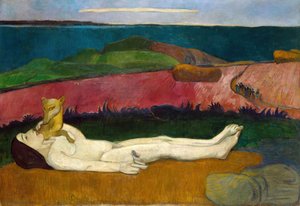 The Loss of Virginity (also known as The Awakening of Spring) - Eugène Henri Paul Gauguin
Step into a fever dream where the boundaries between the human spirit and the wild unknown dissolve. The Loss of Virginity (also known as The Awakening of Spring) is not merely a painting; it is a visceral encounter with the primal. Gauguin masterfully weaves a surreal narrative, presenting a reclining figure that feels both vulnerable and eternal, set against a landscape that pulses with life. The palette is an explosion of high-impact color—deep, oceanic blues clashing with sun-drenched pinks and earthy ochres—creating a mood that oscillates between profound stillness and intense emotional energy.
As you gaze upon this masterpiece, notice the symbolic weight of the composition: the flattened perspective and thick, expressive brushstrokes pull you directly into a Tahitian mythos. The presence of animalistic elements suggests a world where instinct reigns supreme over intellect. To hang this work in your collection is to invite a sense of mystery and transformative power into your space, turning a simple wall into a portal to the subconscious. It is a definitive highlight among the top 25 artworks of Eugène Henri Paul Gauguin , capturing the very essence of his revolutionary spirit.
Mahana no atua (Day of God) - Eugène Henri Paul Gauguin
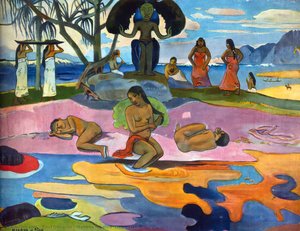 Mahana no atua (Day of God) - Eugène Henri Paul Gauguin
In Mahana no atua (Day of God) , Gauguin masterfully orchestrates a composition where organic shapes and rhythmic lines collide to create a sense of eternal motion. The structural harmony of the piece relies on a dynamic arrangement of figures across a pinkish shoreline, leading the eye toward the deep turquoise ocean. This deliberate use of flattened perspective and layered depth creates a visual equilibrium that feels both chaotic and perfectly balanced—a hallmark of the top 25 artworks of Eugène Henri Paul Gauguin .
The painting’s internal logic mirrors the principles of modern minimalist design; by stripping away unnecessary realism in favor of bold, symbolic forms and high-impact color blocking, Gauguin achieves a clean, contemporary aesthetic. The juxtaposition of earthy tones against vibrant purples and oranges provides a grounded yet electric energy. For the modern collector, this work offers more than just a window into Polynesian ritual; it serves as a masterclass in using Post-Impressionist geometry to evoke profound spiritual resonance and timeless visual impact.
Self Portrait with Hat - Eugène Henri Paul Gauguin
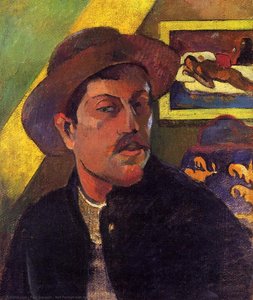 Self Portrait with Hat - Eugène Henri Paul Gauguin
Imagine stepping into a dimly lit studio, where the air is thick with the scent of turpentine and the weight of a restless soul. In Self Portrait with Hat , Gauguin doesn't just show us his face; he invites us into his psyche. This 1893 masterpiece is a masterclass in Synthetism , stripping away the delicate fluff of Impressionism to reveal something raw and heavy. The composition hits you with a punch of stark contrast: a deep black shirt set against a muted, brooding backdrop that feels both intimate and isolating.
The texture is everything—thick, visible brushstrokes create an impasto energy that makes the artist's melancholic gaze feel almost tactile. Gauguin uses non-naturalistic tones to bypass reality and go straight for the gut, using earthy ochres and somber shadows to build a sense of quiet prestige. For the modern collector, bringing this piece into a space adds an instant layer of intellectual depth and moody sophistication. It is more than just one of the top 25 artworks of Eugène Henri Paul Gauguin ; it is a soulful anchor for any room designed for reflection and creative grit.
Tahitian Women Bathing - Eugène Henri Paul Gauguin
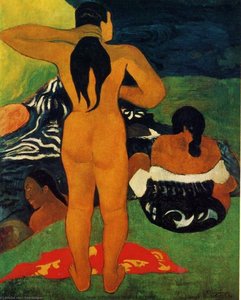 Tahitian Women Bathing - Eugène Henri Paul Gauguin
Close your eyes. Can you feel the tropical heat radiating from Tahitian Women Bathing by Eugène Henri Paul Gauguin? It is not just a depiction of a sun-drenched afternoon; it is an immersion into a fever dream of color. In this masterpiece, Gauguin doesn’t just capture light—he composes it like a heavy, rhythmic bassline in a street anthem. He abandons the soft, fleeting shadows of Impressionism for something much more high-impact: Synthetism .
The canvas explodes with saturated blues, fiery oranges, and lush, verdant greens that feel almost hallucinatory. You can see the thick, deliberate brushstrokes—the raw energy of an artist rejecting Western restraint to find truth in the primitive. The women are not mere subjects; they are symbols of a rhythmic, natural existence, rendered in bold blocks of pigment that create a dynamic tension across the frame. This piece earns its spot in the top 25 because it doesn't just reflect a tropical scene; it invents a new reality. When you bring this work into your space, you aren't just hanging a painting; you are opening a portal to an exotic, soulful escape.
Three Tahitians - Eugène Henri Paul Gauguin
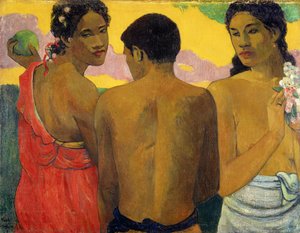 Three Tahitians - Eugène Henri Paul Gauguin
To encounter Three Tahitians by Eugène Henri Paul Gauguin is to step directly into a fever dream of color and rebellion. As one of the most definitive pieces in the top 25 artworks of Gauguin, this 1899 masterpiece functions less like a window and more like a portal, transporting the viewer from the structured streets of Paris to the raw, sun-drenched soul of Oceania.
Gauguin breaks away from the fleeting light of Impressionism, instead utilizing bold, flattened planes of pigment and a striking cloisonné technique that gives the figures a sculptural, almost graphic intensity. The vibrant palette—saturated yellows, deep greens, and earthy reds—creates a high-impact visual rhythm that feels incredibly modern. For the contemporary collector, this work offers more than just historical significance; it brings an unmatched energy to a luxury interior. It is a piece of pure emotional intelligence, capturing a sense of quiet contemplation and connection to the earth that resonates deeply within any design-conscious space. This isn't just art; it is a legacy of untamed beauty.
Little Girls (Landscape with Two Breton Girls) - Eugène Henri Paul Gauguin
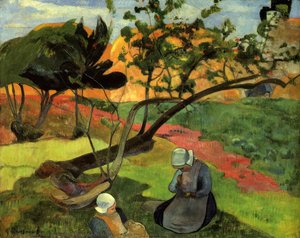 Little Girls (Landscape with Two Breton Girls) - Eugène Henri Paul Gauguin
There is a profound, quiet magic in witnessing Little Girls (Landscape with Two Breton Girls) ; it captures that universal, fleeting moment of pure innocence where the world feels safe, still, and infinitely beautiful. This 1889 masterpiece earns its place among the top 25 artworks of Eugène Henri Paul Gauguin because it marks a revolutionary departure from Impressionism. Here, Gauguin moves beyond mere light effects to embrace Cloisonnism —using bold, flattened planes of vibrant red, deep green, and striking blue bounded by dark, rhythmic outlines.
The scene, featuring two young girls resting under a lush canopy, vibrates with a symbolic energy that transcends its rural Breton setting. It is a masterclass in emotional depth and color theory, proving why Gauguin remains a titan of Post-Impressionism. At ArtsDot.com, we bring this high-impact visual energy into your space through meticulous, hand-painted oil reproductions. Our artists honor every thick, expressive brushstroke and rich pigment layer, ensuring the soulful, tactile essence of Gauguin’s vision is preserved on 100% cotton canvas for your collection.
Vairumati - Eugène Henri Paul Gauguin
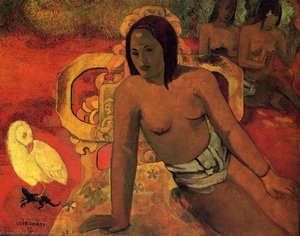 Vairumati - Eugène Henri Paul Gauguin
To encounter Vairumati by Eugène Henri Paul Gauguin is to step directly into a fever dream of color and raw, uninhibited spirit. As one of the most striking entries in our collection of the top 25 artworks of 'Eugène Henri Paul Gauguin', this 1892 masterpiece serves as a high-impact portal to his Tahitian era. The painting commands attention through its audacious use of Synthetism—replacing traditional realism with bold, saturated blocks of cerulean, fiery orange, and deep jungle greens that pulse with life.
The central figure radiates a profound, dignified allure, seated amidst a communal scene where the boundaries between humanity and the natural world blur, punctuated by the delicate presence of a small bird. For the modern collector, Vairumati offers more than just historical significance; it brings a transformative, graphic energy to contemporary spaces. Its flattened forms and intense visual weight make it a definitive statement piece for those seeking to anchor a luxury interior with art that possesses both primal soul and sophisticated, avant-garde edge.
The White Horse - Eugène Henri Paul Gauguin
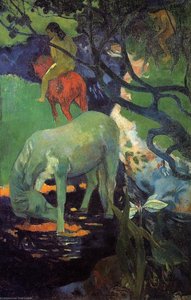 The White Horse - Eugène Henri Paul Gauguin
Step into a world where reality dissolves into pure, rhythmic color. In 1898, during his transformative second voyage to Tahiti, Paul Gauguin captured something far deeper than a mere landscape; he captured a spiritual pulse. The White Horse stands as a definitive masterpiece in our collection of the top 25 artworks of Eugène Henri Paul Gauguin because it perfectly embodies the Synthetist revolution—moving away from fleeting light toward bold, symbolic truth.
The canvas vibrates with lush, saturated greens and deep blues, centered around a magnificent white horse drinking from a crystalline stream. Gauguin’s signature technique uses flattened planes of color and thick, tactile brushstrokes that reject traditional perspective in favor of emotional impact. Figures move through the scene like characters in a myth, creating an atmosphere of profound peace and primordial innocence. This isn't just a painting; it is a visual sanctuary. Even today, bringing the vivid energy of this work into a modern space does more than decorate a wall—it invites a sense of timeless, soulful tranquility into your home.
Les Alyschamps - Eugène Henri Paul Gauguin
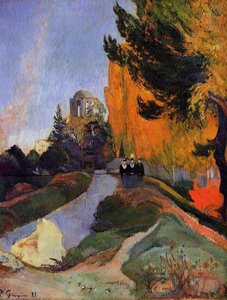 Les Alyschamps - Eugène Henri Paul Gauguin
There is a profound, quiet intensity in Les Alyschamps that transcends a simple countryside stroll. When you look at this 1888 masterpiece, you aren't just seeing riders on a sun-drenched road; you are stepping into Gauguin’s internal landscape, where the world is distilled into pure, vibrating emotion. The way the deep blues and lush greens collide with flashes of ochre creates a mood that feels both serene and hauntingly dreamlike.
This work earns its place among the top 25 artworks of Eugène Henri Paul Gauguin because it marks a revolutionary pivot toward Synthetism . By flattening perspective and prioritizing bold, symbolic color over mere photographic reality, Gauguin broke the rules of Impressionism forever. It is this very texture—the visible, soulful brushstrokes and the heavy, emotive palette—that we strive to capture in our handmade oil reproductions. At ArtsDot.com, we bring this level of high-impact, transformative energy into your space, ensuring that the tactile depth and rebellious spirit of Gauguin’s vision remain as vivid on your wall as they are in the Musée d’Orsay.
Still Life with Teapot and Fruit - Eugène Henri Paul Gauguin
 Still Life with Teapot and Fruit - Eugène Henri Paul Gauguin
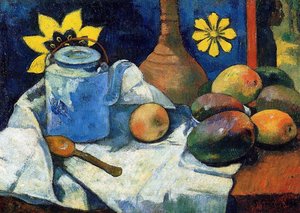
Close your eyes. Can you feel the light in Still Life with Teapot and Fruit by Eugène Henri Paul Gauguin? It’s not just illumination; it’s a language . The artist didn’t merely paint light—he composed it , like a musician crafting a high-impact sonata of color. In this 1896 masterpiece, the warmth of ochre and deep reds doesn't just reflect light; it invents it , creating a pulse of vitality that feels almost tactile.
This piece earns its spot in the top 25 artworks of Gauguin because it breaks every rule of tradition. Moving far beyond Impressionism, Gauguin uses flattened forms and thick, expressive impasto to turn a simple arrangement of apples, bananas, and a teapot into a symbol of Tahitian abundance. The heavy brushstrokes create a rhythmic, visual energy that demands attention. Now, open your eyes. That vibrant, sun-drenched glow? It’s waiting to spill into your home, turning your walls into portals of inspiration and bringing the bold, revolutionary spirit of Post-Impressionism directly to your space.
Woman Holding a Fruit - Eugène Henri Paul Gauguin
 Woman Holding a Fruit - Eugène Henri Paul Gauguin
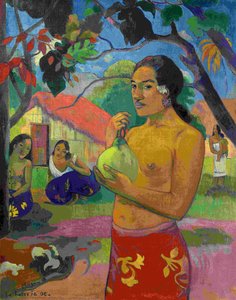
Imagine stepping into a sun-drenched tropical sanctuary, where the heavy scent of ripening fruit and damp earth hangs in the warm Tahitian air. In Woman Holding a Fruit , Gauguin doesn't just paint a scene; he captures a pulse. The vibrant, saturated red of the woman’s skirt hits you with the same intensity as a street art mural, while her direct, soulful gaze pulls you into an intimate moment of quiet connection. This piece is a heavy hitter in the top 25 artworks of Eugène Henri Paul Gauguin because it embodies his radical shift from mere observation to pure, symbolic emotion.
Through bold, flattened shapes and non-naturalistic colors, Gauguin moves beyond reality to touch something primal and profound. The lush greens and deep blues create a dreamlike atmosphere that feels both exotic and deeply grounded. Bringing this level of visual impact into a modern space does more than decorate a wall; it injects a sense of adventurous spirit and soulful depth into your daily environment, reminding us to find the extraordinary within the ordinary.
Sunken Path, Wooded Rise - Eugène Henri Paul Gauguin
 Sunken Path, Wooded Rise - Eugène Henri Paul Gauguin
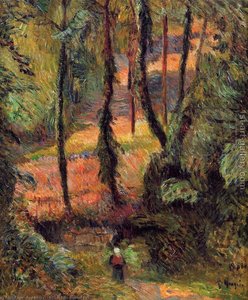
Unveiling Sunken Path, Wooded Rise by Eugène Henri Paul Gauguin is like discovering a hidden portal into the raw, unfiltered soul of Post-Impressionism. This 1884 masterpiece earns its place among the top 25 artworks of Eugène Henri Paul Gauguin through its radical departure from mere observation, opting instead for a deep, symbolic immersion into the natural world.
The canvas vibrates with a rhythmic energy; Gauguin utilizes bold, heavy brushstrokes and a striking palette of lush greens, deep ochres, and cool blues to sculpt a forest that feels alive. There is a profound, quiet prestige in how the solitary figure wanders through the dense, textured woods, inviting viewers into a state of meditative solitude. For the modern collector, this piece offers more than just visual impact—it brings a sense of organic luxury and timeless depth to any contemporary space. It is a masterclass in Synthetist style , where color and form merge to create an atmosphere that is both serene and subtly haunting, making it an essential cornerstone for any high-impact art collection.
Marahi Metua no Tehamana (also known as Tehamana Has Many Ancestors) - Eugène Henri Paul Gauguin
 Marahi Metua no Tehamana (also known as Tehamana Has Many Ancestors) - Eugène Henri Paul Gauguin
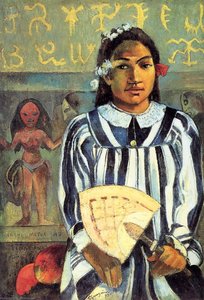
Owning a piece like Marahi Metua no Tehamana (Tehamana Has Many Ancestors) by Eugène Henri Paul Gauguin is more than an acquisition; it is a profound investment in a legacy of rebellion and high-impact aesthetics. As one of the top 25 artworks of Gauguin, this 1893 masterpiece commands immense market authority, bridging the gap between Post-Impressionist grit and Symbolist dreamscapes. The canvas vibrates with a heavy, saturated palette—deep oceanic blues, sun-drenched ochres, and striking reds that demand attention in any curated space.
Gauguin moves beyond mere portraiture here, using Tehamana’s serene gaze to anchor a complex web of symbolism, from the unexpected presence of apples to the ancestral glyphs etched in the background. The work captures a raw, primal energy that feels strikingly contemporary. For the modern collector, a high-quality oil reproduction of this piece brings that same unmistakable aesthetic authority and status to a luxury interior, serving as a bold, soulful centerpiece that echoes the unapologetic spirit of street art and modern design.
Night Cafe in Arles (Madame Ginoux) - Eugène Henri Paul Gauguin
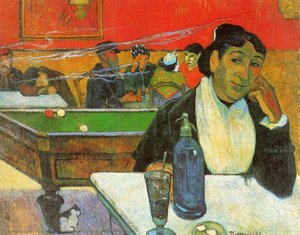 Night Cafe in Arles (Madame Ginoux) - Eugène Henri Paul Gauguin
Forget everything you know about subtle lighting; Night Cafe in Arles (Madame Ginoux) is a high-voltage masterclass in visual impact. As one of the most electric entries in our collection of the top 25 artworks of Eugène Henri Paul Gauguin, this 1888 piece hits with the same punchy, saturated energy you’d find in modern street art or premium graphic design. Gauguin ditches the soft edges of Impressionism for a heavy-hitting palette of deep reds and striking greens that demand attention.
The scene captures the raw, nocturnal pulse of Arles, centered around the contemplative Madame Ginoux. The composition is pure vibe—a mix of social leisure and moody introspection, featuring a green billiards table and sharp, bold silhouettes. For today’s design-conscious collector, this painting isn't just history; it’s an aesthetic blueprint. Its fearless use of color contrast makes it the ultimate statement piece for urban interiors looking to break away from the mundane and embrace a bold, contemporary edge.
Vase of Peonies I - Eugène Henri Paul Gauguin
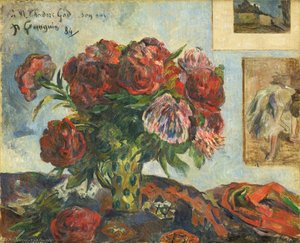 Vase of Peonies I - Eugène Henri Paul Gauguin
Step into a moment of pure, saturated emotion with Vase of Peonies I . Before Gauguin became the icon of tropical rebellion, this 1884 masterpiece captured him in the heart of his Parisian awakening, experimenting with the very soul of color. The scene hits you instantly with a pulse of crimson; a vase overflowing with deep red roses sits center stage, surrounded by scattered blossoms that feel almost tactile against the canvas.
There is a cinematic stillness here—a woman stands poised by the table, her presence adding a layer of quiet contemplation to the vibrant floral arrangement. Gauguin moves away from the blurry light of Impressionism, opting instead for bold, flattened planes and a high-impact palette that vibrates with life. The interplay of warm reds against cool greens creates a visual rhythm that is both hypnotic and grounding. For the modern collector, bringing this piece into a living space isn't just about decor; it’s about injecting a dose of Post-Impressionist energy and sophisticated warmth into your walls, turning a room into a sanctuary of creative reflection.
Jeanne d'Arc, or Breton girl spinning - Eugène Henri Paul Gauguin
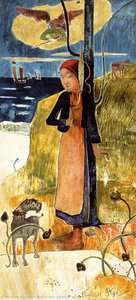 Jeanne d'Arc, or Breton girl spinning - Eugène Henri Paul Gauguin
Owning Jeanne d'Arc, or Breton girl spinning by Eugène Henri Paul Gauguin isn’t just a purchase; it’s an inheritance of pure, rebellious spirit. This 1889 masterpiece captures the raw, rhythmic soul of Brittany, moving far beyond simple portraiture to touch something primal. As you gaze upon this piece, you aren't just seeing a woman at her craft; you are witnessing the birth of Cloisonnism—a high-impact style where bold, flat planes of color and heavy outlines reject academic stuffiness for pure visual punch.
Gauguin layers deep ochres, crimson, and ultramarine to create an ethereal glow that feels both grounded and spiritual. The scene is a masterclass in atmosphere: the serene coastline, the solitary tree symbolizing resilience, and the quiet presence of dogs by the sea all weave together a narrative of peaceful, rustic strength. To hang this work in your space is to claim a lineage of taste, bringing the textured, sun-drenched energy of Post-Impressionism directly onto your walls. It is a heavy-hitting piece of history, reimagined for the modern collector.
Christ in the Garden of Olives - Eugène Henri Paul Gauguin
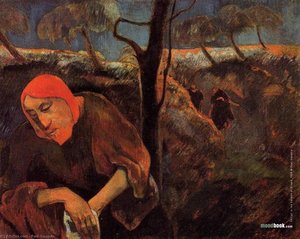 Christ in the Garden of Olives - Eugène Henri Paul Gauguin
What story does the heavy, shadowed landscape of Christ in the Garden of Olives by Eugène Henri Paul Gauguin tell? Beyond the biblical narrative, this 1889 masterpiece serves as a profound window into the artist's transition toward Symbolism, moving away from the fleeting light of Impressionism toward something much more visceral and psychological. In this piece, Gauguin breaks ground by using a striking red hooded robe to anchor the composition, creating a high-impact visual contrast against the muted, earthy tones of the grove.
The painting captures a moment of intense, solitary contemplation that feels incredibly modern. For the contemporary collector looking to curate an escape within their home, this work offers more than just decor; it provides a sanctuary of quietude and introspection. The flattened perspectives and bold, simplified forms—heavily influenced by Japanese aesthetics—bring a graphic energy that fits perfectly into a design-conscious space. As one of the top 25 artworks of Eugène Henri Paul Gauguin, this piece remains a legendary example of how nature and spirituality can merge to create an atmosphere of timeless, soulful peace.
The Universe Is Created - Eugène Henri Paul Gauguin
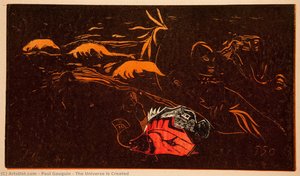 The Universe Is Created - Eugène Henri Paul Gauguin
In The Universe Is Created by Eugène Henri Paul Gauguin, the light does not merely illuminate; it haunts. The way Gauguin manipulates the interplay of shadow and sudden, saturated brilliance creates a heavy, atmospheric tension that defines this masterpiece within his top 25 artworks. There is no soft Impressionist glow here; instead, we encounter a dramatic, almost cinematic use of contrast that pulls the viewer into a moment of profound spiritual weight. The light catches the edges of the kneeling figure and the stillness of the unconscious subject, casting the rugged coastline and distant mountains into a realm of mythic importance.
This sophisticated command of illumination is what secures the painting's legendary status. When reproduced as a high-quality oil painting, the depth of these shadows and the vibrancy of the tropical hues bring a transformative, luxurious energy to any modern interior. The piece acts as a focal point of mystery, where the heavy brushstrokes and tonal shifts add a tactile, museum-grade dimension to your walls, turning a simple space into a curated sanctuary of contemporary design.
Children in the Pasture (also known as Orchard below Bihorel Church) - Eugène Henri Paul Gauguin
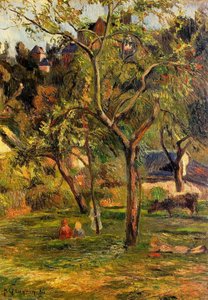 Children in the Pasture (also known as Orchard below Bihorel Church) - Eugène Henri Paul Gauguin
In Children in the Pasture (also known as Orchard below Bihorel Church ), Gauguin delivers a high-impact masterclass in color and raw emotion. This 1884 gem stands as a vital entry in the top 25 artworks of Eugène Henri Paul Gauguin because it captures that precise, electric moment where Impressionism breaks away from reality to embrace pure, symbolic feeling. The canvas vibrates with a sun-drenched palette—intense sky blues, lush verdant greens, and warm ochres that pull you directly into this Breton summer.
The composition uses bold, flattened perspectives and thick, textured brushstrokes that feel incredibly modern, echoing the graphic energy found in contemporary street art and high-end design. For the modern collector, this piece isn't just a window into a nostalgic past; it is a statement of visual power. Its heavy use of light and dappled shadows offers an unparalleled way to inject warmth and a sense of organic life into a minimalist or urban interior. It is a soulful, rhythmic celebration of innocence that remains as visually striking today as it was over a century ago.
Title in Swedish: Landskap från Bretagne - Eugène Henri Paul Gauguin
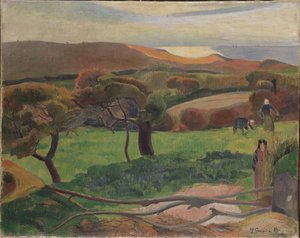 Title in Swedish: Landskap från Bretagne - Eugène Henri Paul Gauguin
Step into the raw, sun-drenched soul of 1889 with Gauguin’s Landskap från Bretagne . This isn't just a landscape; it is a high-impact visual manifesto. Imagine walking through a sprawling Breton field where the air feels thick with the scent of earth and the energy of movement. Gauguin breaks away from the soft, blurry edges of Impressionism, hitting you instead with a punchy, rhythmic palette of deep ochre, crimson, and striking turquoise.
The texture is everything—thick, heavy impasto strokes create a tactile landscape where horses and figures emerge from the terrain like characters in a living graphic novel. There is a profound, cinematic tension here between the serene sky and the rugged, textured ground. Bringing a piece of this movement into your modern space does more than decorate a wall; it injects a dose of rebellious, symbolic energy. Whether you are drawn to its spiritual depth or its bold, contemporary color theory, this masterpiece serves as a powerful anchor for any design-conscious collector looking to spark creativity and reflection.
Haystack, near Arles - Eugène Henri Paul Gauguin
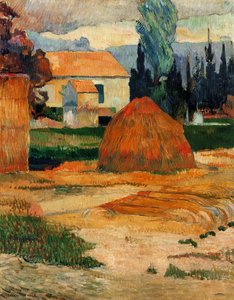 Haystack, near Arles - Eugène Henri Paul Gauguin
In the collection of the top 25 artworks of Eugène Henri Paul Gauguin, Haystack, near Arles (1888) stands as a high-impact masterclass in Post-Impressionist energy. This isn't just a landscape; it is a visceral immersion into the sun-drenched soul of Provence. During his legendary, turbulent period in Arles, Gauguin moved beyond mere observation to capture pure, radiant emotion. The painting hits you immediately with a luminous, almost electric yellow haystack that radiates warmth and abundance, acting as a bold symbol of life and fertility.
The work vibrates with the influence of his contemporaries, channeling the thick, expressive energy of Van Gogh while utilizing the structured, geometric planes inspired by Cézanne. As you observe the interplay of deep greens, earthy browns, and the stark white of the distant house, you aren't just looking at a rural scene—you are witnessing a revolution in color. To own a piece like this is to invite a transformative, soulful atmosphere into your space, turning any modern room into a curated gallery of historical genius.
Christmas night - Eugène Henri Paul Gauguin
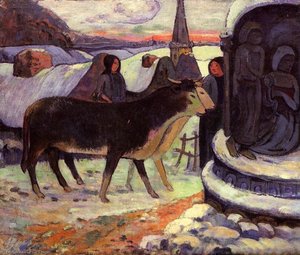 Christmas night - Eugène Henri Paul Gauguin
Deep, nocturnal purples and midnight blues dominate Christmas Night by Eugène Henri Paul Gauguin, casting a heavy, mystical veil over the scene that instantly commands attention. This isn't just a winter landscape; it is a masterclass in Synthetist color usage. By abandoning the soft, blended light of Impressionism for bold, flattened planes of saturated pigment, Gauguin creates a high-impact visual rhythm that secures this piece's spot among the top 25 artworks of Eugène Henri Paul Gauguin .
The painting’s atmosphere—a blend of solemn reverence and earthy mysticism—offers incredible potential for modern interior curation. The cool, twilight palette is perfect for anchoring a sophisticated dining room or a moody, lounge-style living space, providing a sense of calm, intellectual depth. Whether you are drawn to the symbolic ox or the striking silhouettes of the Breton figures, this work brings a punchy, contemporary edge to any collection. It’s an essential piece for those looking to infuse their home with the rebellious, soulful energy of Post-Impressionist legend.
Conclusion
To wander through the world of Gauguin is to step beyond the boundaries of the ordinary and into a realm where color breathes and emotion takes physical form. These twenty-five masterpieces are far more than mere relics of a bygone era or static entries in an art history textbook; they are living, pulsing presences that refuse to be silenced by time. Each stroke of vibrant ochre, deep cobalt, and sun-drenched crimson carries with it the rebellious spirit of an artist who dared to seek truth in the wild, the primitive, and the profound. When we look at these works, we aren't just observing history—we are witnessing a continuous dialogue between the human soul and the raw beauty of our existence.
There is a unique magic that occurs when such powerful imagery moves from the museum wall into the intimacy of your own home. To live with Gauguin’s work is to invite a daily dose of wonder into your space, allowing his heavy textures and symbolic depths to transform a simple room into a sanctuary of inspiration. These paintings serve as rhythmic reminders of our capacity for transformation, urging us to find beauty in the unconventional and strength in our most authentic selves. Whether it is the tropical warmth of his Tahitian visions or the hauntingly beautiful landscapes of his travels, bringing these pieces into your life allows their light and texture to become a part of your daily narrative.
As we close this visual journey through Gauguin’s most iconic achievements, we invite you to explore the full collection and find the piece that speaks directly to your spirit. Let these works be more than just decor; let them be the windows through which you rediscover creativity, grace, and the enduring power of the human touch.