
Introduction
Imagine stepping off the bustling streets of Paris and into a space where time doesn't just pass—it vibrates. The Musée d'Orsay is not your typical, hushed museum; it is a high-voltage collision of industrial grit and pure, unadulterated light. Housed within the breathtaking Beaux-Arts shell of a former railway station, this sanctuary holds a collection that feels less like a history lesson and entirely more like a revolution captured in oil and pigment.
Walking through its vast, glass-domed concourses, you aren't just looking at paintings; you are witnessing the moment art broke free from the rules. This is the epicenter of the Impressionist and Post-Impressionist movements—a period where artists like Monet, Renoir, and Van Gogh stopped trying to paint what they knew and started painting how they felt . They traded rigid, academic perfection for the shimmer of sunlight on water, the frantic energy of a dance hall, and the raw, swirling emotion of a starlit sky.
These works remain deeply vital today because they mirror our own modern pulse. In an era of digital filters and fleeting snapshots, the thick, tactile impasto strokes and the intentional, atmospheric depth of these masterpieces remind us of the power of human perception. They capture the ephemeral—the way light hits a petal or how shadows stretch at dusk—making them as much about the present moment as they are about the nineteenth century.
As we prepare to journey through this curated selection, get ready to encounter the heavy hitters that define the museum's soul. From the rhythmic grace of Degas’ dancers to the visceral, color-drenched landscapes that changed the visual language of the world forever, these are the 25 essential works that demand your attention and will undoubtedly leave you seeing the world through a much more vibrant lens.
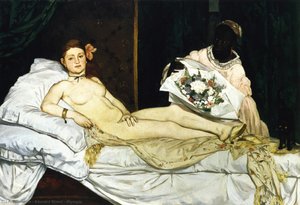
Olympia - Édouard Manet
 Olympia - Édouard Manet
To stand before Olympia is to meet a gaze that refuses to blink. Édouard Manet’s 1863 masterpiece remains one of the most provocative entries in our list of the top 25 artworks in Musée d'Orsay, Paris , not because of what it shows, but because of how it confronts. Moving far beyond the soft, idealized nymphs of classical tradition, Manet presents a contemporary reality that was nothing short of scandalous. The painting captures a raw, unapologetic tension: the stark, flattened light hitting Olympia’s skin, the heavy symbolism of the black cat and the vibrant bouquet, and the unflinching eye contact that transforms the viewer from a passive observer into an active participant in the scene.
In today’s era of bold, visual storytelling and the dismantling of traditional hierarchies, Olympia feels strikingly modern. Its rejection of academic polish in favor of visible, rhythmic brushstrokes and high-contrast realism mirrors our current cultural obsession with authenticity and raw truth. It is a masterclass in using light and shadow to challenge social norms, making it an essential pillar of the museum's revolutionary collection.
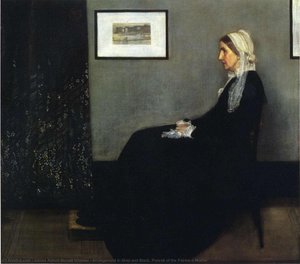
Arrangement in Grey and Black. Portrait of the Painter's Mother - James Abbott McNeill Whistler
 Arrangement in Grey and Black. Portrait of the Painter's Mother - James Abbott McNeill Whistler
Imagine stepping into a quiet, shadowed corner of the gallery where the noise of Paris fades into a profound, monochromatic stillness. Before you sits James Abbott McNeill Whistler’s most iconic achievement: Arrangement in Grey and Black No. 1 . There is an immediate, heavy sense of reverence in the air, a weight brought on by the somber, tonal mastery of this 1871 masterpiece.
This isn't just a portrait; it is the ultimate manifesto of the Aesthetic Movement. Whistler strips away the cluttered sentimentality of the Victorian era, replacing narrative drama with a pure, rhythmic study of form and light. Through subtle gradations of charcoal, slate, and bone, he captures a moment of eternal dignity and quiet melancholy. As one of the top 25 artworks in Musée d'Orsay, Paris , it earns its place by proving that true impact doesn't require loud colors—only perfect composition. Bringing such a piece into a modern space offers more than decor; it introduces a meditative anchor, a sophisticated touch of serenity that reminds us to find beauty in the most understated, silent moments of life.
Gare Saint Lazare, Pari - Claude Monet
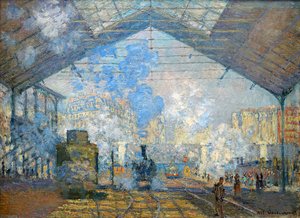 Gare Saint Lazare, Pari - Claude Monet
Forget everything you know about static landscapes; Gare Saint Lazare, Paris by Claude Monet is pure, unadulterated energy. This isn't just a painting of a train station; it is a high-octane snapshot of the industrial revolution hitting its stride. Monet captures the raw, pulsing soul of 1877 Paris, where the heavy iron of locomotives meets the ethereal, drifting plumes of steam.
The magic lies in the atmosphere. Using a masterclass in Impressionist technique, Monet uses loose, rhythmic brushstrokes to dissolve solid forms into a haze of cool blues, slate grays, and sudden, warm ochre highlights. You can almost feel the damp, metallic air and hear the distant whistle echoing under the vast glass arches. It is a study of transience—the beauty of a moment that vanishes as quickly as a passing train. Bringing this masterpiece into your collection isn't about decorating a wall; it’s about injecting that same sense of movement and modern grit into your space. It transforms a room into a window onto the heartbeat of history.
The Great Bathers (The Nymphs) - Pierre-Auguste Renoir
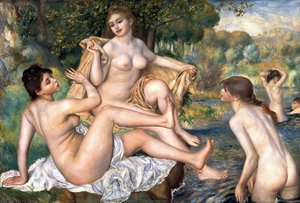 The Great Bathers (The Nymphs) - Pierre-Auguste Renoir
Step into a world where the boundaries between skin and sunlight dissolve. Pierre-Auguste Renoir’s The Great Bathers (The Nymphs) is more than a painting; it is a luminous sanctuary of peace, captured in the softest pastel hues of peach, rose, and verdant green. As one of the most essential works within the top 25 artworks in Musée d'Orsay, Paris, this masterpiece marks a pivotal moment in art history where Impressionist light meets a new, sculptural monumentality. Renoir uses thick, rhythmic impasto to make the dappled sunlight feel almost tactile, inviting you to experience the warmth of the riverbank.
This piece earns its legendary status by redefining beauty through harmony and natural grace, far removed from the chaos of the modern world. At ArtsDot.com, we believe such transformative energy shouldn't be confined to a museum gallery. We bring this same sense of serenity and high-impact aesthetic to your personal sanctuary. Whether you are looking to anchor a contemporary office or add a soulful layer to your living space, a hand-painted reproduction of Renoir’s vision turns any wall into a breathtaking statement of timeless elegance.
Two Women on the Beach - Eugène Henri Paul Gauguin
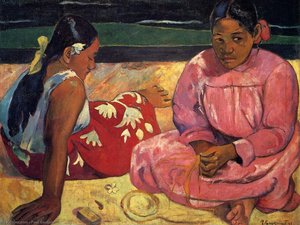 Two Women on the Beach - Eugène Henri Paul Gauguin
In Two Women on the Beach by Paul Gauguin, the traditional play of light is traded for a radical, saturated glow that defines his Post-Impressionist rebellion. Rather than relying on classical chiaroscuro to sculpt form, Gauguin utilizes a diffuse, tropical radiance that flattens the perspective into bold, rhythmic planes of color. The illumination feels less like an external sun and more like an internal heat, radiating from the rich ochres, deep reds, and warm pinks that characterize this Tahitian reverie. This mastery of light—focusing on mood over mimicry—is exactly why this piece remains a heavy hitter in the top 25 artworks in Musée d'Orsay, Paris .
The way these vibrant, sun-drenched tones interact creates a visual pulse that is incredibly high-impact. When captured in a premium hand-painted oil reproduction , this sophisticated use of color and light brings an unmatched sense of luxury and exotic depth to a modern interior. It’s not just decor; it’s a window into a stylized, emotive world that transforms any contemporary wall into a curated gallery space.
Dance at the Moulin de la Galette - Pierre-Auguste Renoir
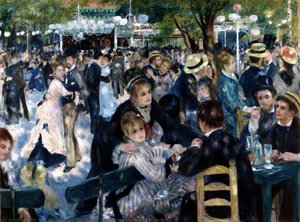 Dance at the Moulin de la Galette - Pierre-Auguste Renoir
Before it became a cornerstone of the Musée d'Orsay collection, Renoir’s Dance at the Moulin de la Galette was a radical experiment in capturing pure, unadulterated energy. While many contemporaries focused on static portraits, Renoir obsessed over the way sunlight fractures through leaves to create a flickering, rhythmic pattern of light and shadow across moving bodies. This wasn't just painting; it was an attempt to freeze the pulse of Paris.
The technical genius lies in his use of broken color and soft, pastel hues—lavenders, peaches, and blues—that dissolve hard outlines into a shimmering haze of joy. He traded photographic precision for emotional resonance, using thick, visible brushstrokes to simulate the warmth of a summer afternoon and the hum of conversation. This masterpiece proves that true impact comes from movement and light rather than rigid structure. Bringing this level of vibrant, sun-drenched atmosphere into your own space can transform a modern study or home office, replacing sterile stillness with an inspiring, high-energy aesthetic that fuels creativity and sophisticated focus.
The Card Players - Paul Cézanne
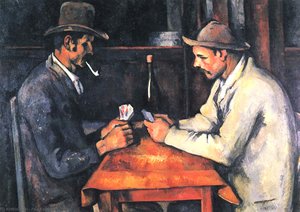 The Card Players - Paul Cézanne
Imagine the heavy, hushed atmosphere of a dim Provençal tavern, where the only sounds are the soft shuffle of cards and the rhythmic breathing of men lost in thought. In The Card Players , Paul Cézanne captures this profound stillness, stripping away the noise of the world to focus on a moment of pure, concentrated existence. This isn't just a game; it is a masterclass in tension and dignity.
As one of the most vital pieces among the top 25 artworks in Musée d'Orsay, Paris , this painting serves as the architectural blueprint for modern art. Cézanne moves beyond mere Impressionism, using earthy ochres, deep browns, and sculptural, geometric forms to build a sense of permanent reality. He transforms simple peasants into monumental figures, proving that everyday life holds immense weight. This work belongs in the elite ranks because it teaches us to find structure and beauty in the mundane. Bringing such a grounded, soulful energy into a modern space allows you to anchor your environment with a sense of timeless stability and quiet, contemplative strength.
The origin of the world - Gustave Courbet
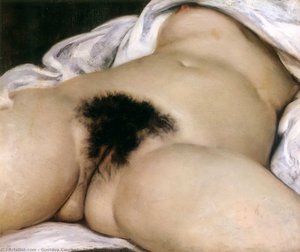 The origin of the world - Gustave Courbet
In The Origin of the World by Gustave Courbet, there is no gaze to meet; instead, you are met with a raw, visceral confrontation of pure existence. This isn't the polished, idealized beauty found in classical galleries—this is the unapologetic pulse of life itself. Courbet strips away the face and the narrative, leaving only the heavy, sculptural textures of skin, light, and shadow. The composition is an intimate, tight crop that forces you into a direct encounter with the human form in its most natural state.
As one of the most provocative pieces among the top 25 artworks in Musée d'Orsay, Paris , it serves as a masterclass in Realism. The muted palette of ochre, cream, and deep earth tones creates a somber, grounded mood that is both startling and strangely meditative. Bringing this level of intense, tactile energy into your own space can transform a room into a sanctuary of profound reflection, challenging the viewer to find beauty in the unfiltered truth of our physical reality.
Three Muses - Denis Maurice
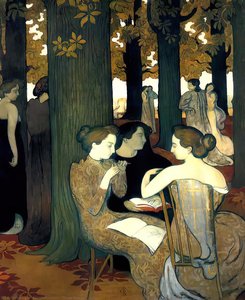 Three Muses - Denis Maurice
Step into a dreamscape where reality blurs with myth in Three Muses by Maurice Denis. This 1893 masterpiece is a heavy hitter in the Musée d'Orsay collection, acting as a high-impact bridge between the soft light of Impressionism and the bold, structural energy of modern art. Denis uses a striking palette of deep forest greens, earthy browns, and shimmering gold accents to create an atmosphere that feels both ancient and incredibly fresh.
The composition is pure visual rhythm; flowing, organic lines and Art Nouveau curves wrap around the figures, making the entire scene feel like a living, breathing organism. For the modern design enthusiast, this piece is all about mood and texture . Its blend of muted tones and luminous highlights offers a sophisticated blueprint for contemporary interiors seeking a sense of calm, layered luxury. It isn't just a painting; it’s an immersive experience in symbolism and botanical elegance that continues to influence the graphic aesthetics of today.
Family Reunion - Frédéric Bazille
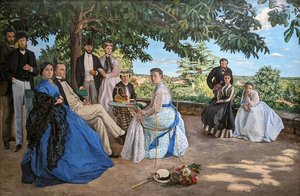 Family Reunion - Frédéric Bazille
Acquiring Family Reunion by Jean Frédéric Bazille is more than a purchase; it is an investment in a legacy of prestige and refined taste for the discerning collector. As one of the top 25 artworks in Musée d'Orsay, Paris, this 1867 masterpiece stands as a cornerstone of the early Impressionist movement. Its historical provenance is undeniable, forged through Bazille’s intimate connections with legends like Monet and Renoir, cementing its high market value and cultural significance.
The canvas vibrates with the energy of a sun-drenched social gathering, where meticulous textures and vibrant hues capture a fleeting moment of communal joy. Under the dappled light of a lush canopy, the intricate patterns of elegant attire and the soft, atmospheric landscape create a sensory experience that feels both intimate and grand. For those curating modern luxury interiors, a high-quality reproduction of this piece brings an unmatched aesthetic authority to any space, offering a sophisticated focal point that commands attention and radiates timeless status.
Luxe, Calme, et Volupté (compositional study) - Henri Matisse
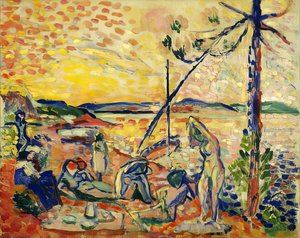 Luxe, Calme, et Volupté (compositional study) - Henri Matisse
Step into the vibrant energy of 1904 with Matisse’s Luxe, Calme, et Volupté (compositional study) , a work that serves as a high-voltage blueprint for the Fauvist revolution. This piece is all about the geometry of emotion; Matisse masterfully balances organic, fluid shapes with a rhythmic arrangement of figures that creates a striking structural harmony. The composition doesn't just sit on the canvas—it pulses, using a sun-drenched palette to guide your eye through a coastal symphony of light and movement.
What makes this standout among the top 25 artworks in Musée d'Orsay, Paris is its incredible ability to bridge the gap between historical rebellion and modern aesthetics. The way Matisse uses bold, flat planes of color and intentional spatial balance mirrors the principles of modern minimalist design . It possesses that clean, impactful visual identity that grounds a contemporary room, offering a sophisticated anchor for any design-conscious space. It is pure, unadulterated visual impact—a timeless masterclass in how color and structure can collide to create absolute perfection.
Young Girls at the Piano - Pierre-Auguste Renoir
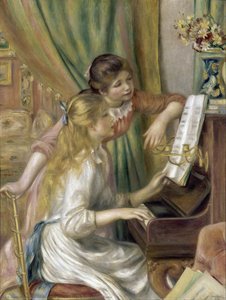 Young Girls at the Piano - Pierre-Auguste Renoir
Imagine stepping into a sun-drenched afternoon where the outside world fades, leaving only the soft, melodic hum of a piano and the quiet companionship of youth. Pierre-Auguste Renoir’s Young Girls at the Piano (1892) captures this exact frequency of peace. It is not just a painting; it is an atmosphere of pure, unadulterated serenity. Through his signature Impressionist lens, Renoir uses a harmonious palette of soft pinks, delicate whites, and warm golds to wrap the viewer in a sense of domestic tenderness.
This masterpiece earns its place among the top 25 artworks in Musée d'Orsay, Paris because it transcends its era. While the brushstrokes are loose and fluid, the emotional impact is incredibly structured and lasting. The way the light dances across the girls' clothing and the rich textures of the room evokes a nostalgic longing for simplicity. In our fast-paced, digital age, bringing such a sense of calm and refined beauty into our modern living spaces can transform a room into a sanctuary of light and grace.
Camille Monet On Her Deathbed - Claude Monet
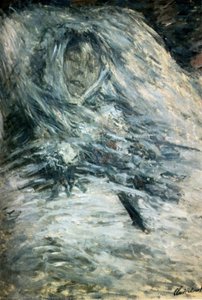 Camille Monet On Her Deathbed - Claude Monet
What if I told you that Camille Monet On Her Deathbed by Claude Monet was born from a moment of profound vulnerability—a stroke of raw, unfiltered emotion against the weight of loss? This isn't just a painting; it is a hauntingly beautiful manifesto of grief and devotion. Its place in the top 25 artworks of Musée d'Orsay is demanded by its ability to redefine the boundaries of Impressionism, moving beyond mere light to capture the heavy, atmospheric soul of human suffering.
Monet utilizes a muted palette of blues, grays, and whites, with thick, impasto brushstrokes that create a swirling, dreamlike shroud around his first wife. The lack of distinct features invites you into a deeply personal space of contemplation. At ArtsDot.com, we believe art should be more than a memory; it should be a living presence. Imagine this masterpiece reimagined as a high-impact centerpiece in your urban loft or office—turning a quiet corner into a profound statement of depth and elegance. Your space is not just a room; with pieces this powerful, it becomes a sanctuary.
Red Roofs, Corner of a Village, Winter - Camille Pissarro
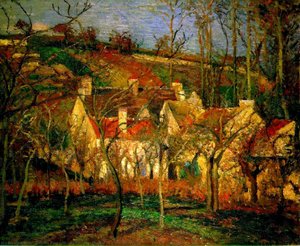 Red Roofs, Corner of a Village, Winter - Camille Pissarro
Running your eyes across the surface of Camille Pissarro’s Red Roofs, Corner of a Village, Winter , you immediately feel the pulse of the Impressionist revolution. The magic lies in the heavy, tactile impasto ; Pissarro doesn't just depict a landscape, he builds it with thick, broken strokes of ochre, burnt orange, and muted earth tones that catch the light physically. This isn't a flat image—it is a rhythmic dance of pigment where every dab of paint captures the crisp, biting atmosphere of a French winter afternoon.
As one of the most essential works in the Musée d'Orsay, Paris collection, this piece defines the era’s shift from precise realism to emotional, sensory truth. At ArtsDot.com , we believe that such profound texture deserves more than a digital print. Our handmade oil reproductions are meticulously crafted to preserve this three-dimensional quality , ensuring the visible brushwork and deep tonal range of Pissarro’s masterpiece bring that same soulful, atmospheric energy directly into your modern space.
Starry Night Over the Rhone - vincent willem van gogh
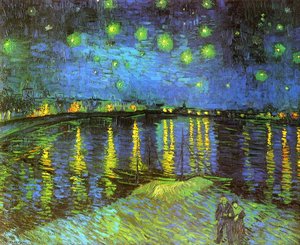 Starry Night Over the Rhone - vincent willem van gogh
Forget everything you know about the dark; in Starry Night Over the Rhone , Vincent van Gogh doesn't just depict the night—he electrifies it. Standing before this masterpiece in the Musée d'Orsay, you don't just see a landscape; you feel a rhythmic pulse of light vibrating against the deep, midnight blues of the French sky. Van Gogh didn't merely paint the stars; he composed them into a visual sonata, using thick, impasto strokes that make the celestial glow feel almost tangible.
The way the golden reflections dance across the water’s surface creates a hypnotic movement, pulling your gaze from the distant lights of Arles down to the quiet, strolling figures by the riverbank. It is a symphony of high-contrast energy—the heavy, textured yellows clashing beautifully with the swirling indigo depths. This isn't just a historical treasure; it is a masterclass in emotional atmosphere. When you bring this level of intensity into your own space, you aren't just hanging a painting; you are inviting a portal of cosmic wonder and luminous energy to transform your walls forever.
Cart on the Snow Covered Road with Saint-Simeon Farm - Claude Monet
 Cart on the Snow Covered Road with Saint-Simeon Farm - Claude Monet
There is a quiet, rhythmic pulse in Cart on the Snow Covered Road with Saint-Simeon Farm by Claude Monet that lingers long after you turn away. It doesn’t demand attention with loud colors; instead, it pulls you into a frozen moment of absolute stillness. As one of the most evocative pieces among the top 25 artworks in Musée d'Orsay, Paris , this 1865 masterpiece acts as a sensory window into a world of muted blues, crisp whites, and soft grays.
Monet’s early mastery is visible in every textured, broken brushstroke that captures the biting chill and the ethereal light of a French winter. The winding path, leading toward the distant farmhouse, creates a visual journey that feels less like a landscape and more like a meditation on solitude. To hang this piece in your space is to invite a sense of profound tranquility; it serves as a mirror to those moments of reflection, reminding you that even in the coldest, most isolated seasons, there is an undeniable, breathtaking beauty to be found.
The Floor Scrapers (also known as The Floor Strippers) - Gustave Caillebotte
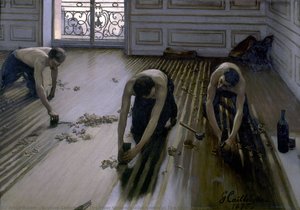 The Floor Scrapers (also known as The Floor Strippers) - Gustave Caillebotte
Forget the polished galleries; Gustave Caillebotte’s The Floor Scrapers hits you with raw, cinematic grit. This isn't just a painting; it is a high-impact study of texture and tension. As you stand before this masterpiece in the Musée d'Orsay, your eyes are immediately pulled into the diagonal rhythm of three laborers, their muscles tensed against the heavy task of refinishing a grand wooden floor. The composition is pure visual adrenaline—the sharp, receding lines of the floorboards create a depth that feels almost hyper-realistic, pulling you right into the sawdust and sweat.
Caillebotte uses a moody, grounded palette of earthy browns, muted grays, and sun-bleached whites, punctuated by the naturalistic light streaming from an unseen window. There is a profound dignity in this depiction of manual labor, a heavy, tactile energy that resonates far beyond the 19th century. Owning a piece like this isn’t just a purchase; it’s an inheritance . It brings a legacy of grit and sophisticated realism to your space, proving that true style finds beauty in the most unvarnished moments of life.
Irises in Monet's Garden - Claude Monet
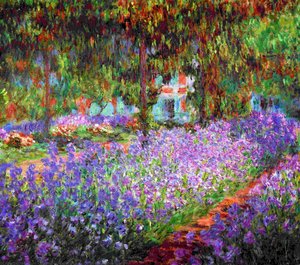 Irises in Monet's Garden - Claude Monet
Step into the lush, sun-drenched sanctuary of Giverny with Claude Monet's Irises in Monet's Garden . This isn't just a painting; it is a sensory immersion into a world where color breathes. As you stand before this 1900 masterpiece at the Musée d'Orsay , the heavy impasto textures pull you into a sea of electric purples and deep blues. Monet uses thick, rhythmic brushstrokes to capture the fleeting vibration of light hitting delicate petals, creating a scene that feels less like a static image and more like a living, breathing moment of botanical chaos.
The atmosphere is heavy with the scent of damp earth and summer warmth, offering a profound sense of tranquility and renewal. For the modern collector, bringing this piece into a contemporary space provides an instant injection of organic energy. Whether you are looking to anchor a minimalist loft or add a sophisticated focal point to a creative studio, the vibrant, light-drenched composition of these irises serves as a timeless window to nature's most serene and impactful rhythms.
Noon Rest from Work after Millet - vincent willem van gogh
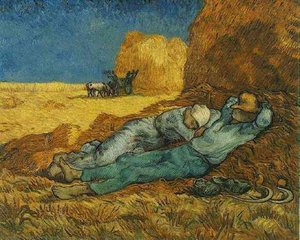 Noon Rest from Work after Millet - vincent willem van gogh
Step into a moment of sun-drenched stillness with Noon Rest from Work after Millet . In this evocative piece, Vincent van Gogh reimagines a scene of rural tranquility, transforming a simple midday break in a golden wheat field into a profound meditation on labor and peace. The canvas vibrates with the energy of his signature Post-Impressionist technique; thick, tactile impasto strokes create a landscape you can almost feel beneath your fingertips, where the heavy texture of the haystack meets the swirling, turbulent blue of the sky.
Van Gogh’s palette is a masterclass in warmth and contrast, utilizing earthy ochres, deep browns, and brilliant yellows to capture the heat of the midday sun. While the subject pays homage to Millet, the emotional depth is purely Van Gogh—a soulful translation that finds beauty in the weary repose of the figures. For the modern collector, this masterpiece offers more than just historical significance; its organic textures and calming, earthy tones provide a grounding presence, perfect for injecting a sense of serene, natural character into a contemporary urban loft or a sophisticated design-led space.
The Harbour at Argenteuil - Claude Monet
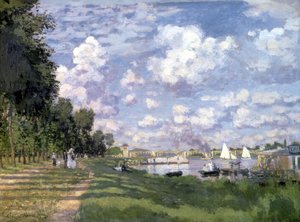 The Harbour at Argenteuil - Claude Monet
A soft, ethereal blue dominates The Harbour at Argenteuil by Claude Monet , instantly setting a mood of profound tranquility and airy lightness. This isn't just a landscape; it is a masterclass in capturing the fleeting pulse of light. Monet’s innovative palette—a harmonious blend of sky blues, pale pinks, and sun-drenched yellows—breaks away from rigid realism to prioritize pure atmospheric sensation. It is this precise mastery of color and movement that secures its spot among the top 25 artworks in Musée d'Orsay, Paris .
For the modern design enthusiast, this piece serves as a powerful tool for curation. The painting’s serene color scheme can anchor a minimalist living space or a bright dining room, providing a sense of calm, natural depth without overwhelming the architecture. By integrating this Impressionist icon, you introduce a rhythmic, fluid energy that mimics the movement of water and light, effectively transforming any contemporary interior into a sanctuary of peace and sophisticated, sun-drenched elegance.
Harvest - Charles-François Daubigny
 Harvest - Charles-François Daubigny
Owning Harvest by Charles-François Daubigny isn’t just a purchase; it’s an inheritance of the very soul of the Barbizon School. As you wander through the Musée d'Orsay, this 1851 masterpiece stands as a vital link in the lineage of taste, predating the Impressionist revolution with its raw, atmospheric energy. Daubigny captures a moment of profound rural rhythm, where golden wheat fields sway under a soft, diffused sky, and the earthy palette of ochre and deep green breathes life into the canvas.
The composition pulls you into the landscape via a winding dirt track, leading your eye toward figures immersed in the seasonal labor of abundance. A striking splash of color—perhaps a solitary red hat or the movement of a horse—breaks the serene, sun-drenched stillness, creating a visual pulse that feels remarkably modern. With its visible, tactile brushstrokes and masterful use of light, Harvest offers more than just scenery; it offers a connection to nature’s eternal cycle. Bringing this legacy to your walls means hosting a piece of history where every glance is a nod to the masters.
Burial at Ornans - Gustave Courbet
 Burial at Ornans - Gustave Courbet
A heavy, somber silence hangs over the canvas of Burial at Ornans by Gustave Courbet, a work that breathes with the raw, unvarnished weight of mortality. At ArtsDot.com, we believe in democratizing beauty, and there is no better way to experience this than by bringing its profound, earth-toned gravity into your own space. This masterpiece earns its place among the top 25 artworks in Musée d'Orsay because it was a total system shock; Courbet shattered academic elitism by applying a massive, heroic scale to a simple, gritty provincial funeral.
The painting is a masterclass in Realism, utilizing a muted palette of deep browns, blacks, and slate grays to capture the collective grief of a community. There is no idealized glory here—only the visceral texture of heavy fabrics, the starkness of the open grave, and the democratic arrangement of mourners standing as equals. Its rugged, impasto brushwork creates an immediacy that feels strikingly modern, much like the bold, high-impact aesthetics found in contemporary street art. By choosing a high-fidelity reproduction, you can bring this transformative, monumental presence into your home or office, turning a private wall into a powerful gallery of historical rebellion.
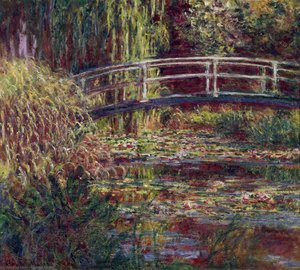
Water-Lily Pond, Symphony in Rose - Claude Monet
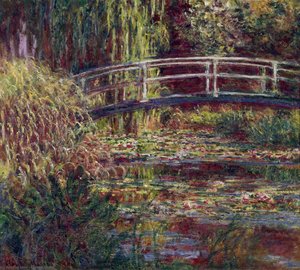 Water-Lily Pond, Symphony in Rose - Claude Monet
There is a rhythm in Water-Lily Pond, Symphony in Rose by Claude Monet that pulls you into its depths—not with a heavy hand, but with a soft, luminous invitation. This isn't just a landscape; it is a mirror of the soul’s need for tranquility. As one of the most iconic pieces within the top 25 artworks in Musée d'Orsay, Paris, this masterpiece captures the very heartbeat of Impressionism.
Monet moves beyond mere depiction, using layers of pure pigment to recreate the shimmering surface of his Giverny pond. You see the delicate dance of pink and white blooms against the dark, reflective water, punctuated by sudden pops of vibrant red. The weathered wooden bridge provides a grounding anchor, while the soft, blurred shoreline creates an infinite sense of peace. To have this piece in your collection is to invite that same atmospheric magic into your home—a constant, beautiful reminder that even in a fast-paced world, there is a profound, sun-drenched stillness waiting to be found.
Hospital Saint-Paul at Saint-Rémy-de-Provence - vincent willem van gogh
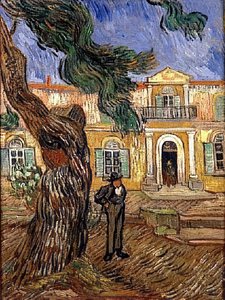 Hospital Saint-Paul at Saint-Rémy-de-Provence - vincent willem van gogh
Owning Hospital Saint-Paul at Saint-Rémy-de-Provence by Vincent van Gogh isn’t just a purchase; it is an inheritance of raw, unfiltered emotion. As one of the most profound pieces within the top 25 artworks in 'Musée d'Orsay, Paris', this painting serves as a visceral window into the soul of a genius navigating his darkest hours. Created during his transformative stay at the Saint-Paul asylum, the work vibrates with a restless energy that only Van Gogh could command.
The canvas captures the striking architectural rhythm of the asylum, where sun-drenched yellow walls clash against deep green shutters, creating a high-impact visual tension. Through thick, expressive brushstrokes, we see figures moving through the scene, yet there is an undeniable sense of isolation and heavy atmosphere. It is a masterclass in Post-Impressionist texture—a lineage of taste that you can bring to your own space. At ArtsDot.com, we believe this legacy shouldn't be confined to museum walls; it belongs where you live, turning your home into a sanctuary of light and historical depth.
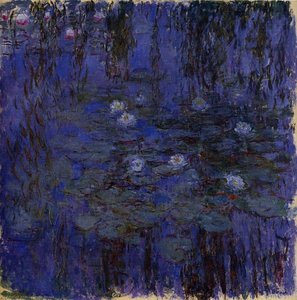
Water-Lilies (12) - Claude Monet
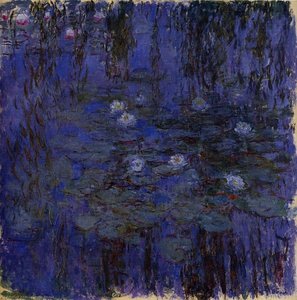 Water-Lilies (12) - Claude Monet
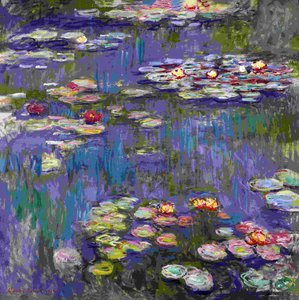
Imagine stepping into a dream where the boundaries between water and sky dissolve into a symphony of deep blues and ethereal purples. Water-Lilies (12) by Claude Monet is not just a painting; it is a portal to a tranquil, submerged world. As part of our mission at ArtsDot.com to democratize beauty, we recognize this masterpiece as a cornerstone of the Musée d'Orsay’s collection, standing in the top 25 for its sheer emotional gravity and revolutionary technique.
Monet’s late-period brilliance shines through broken brushstrokes that capture the fleeting pulse of light at dusk. This work is irreplaceable because it transcends mere representation, offering a visceral experience of serenity and the ephemeral nature of life. Its moody, atmospheric palette serves as the ultimate inspiration for modern, design-conscious interiors seeking a sense of calm and depth. You don't need a Parisian gallery to experience this magic; through our high-fidelity, hand-painted oil reproductions, you can bring this transformative, light-drenched presence into your own home or office, turning any space into a personal sanctuary of Impressionist soul.
Conclusion
As the golden light of a Parisian dusk settles over the Seine, leaving the grand halls of the Musée d'Orsay in a soft, contemplative shadow, we are reminded that these masterpieces are far more than static relics of a bygone era. They are living, breathing pulses of human emotion—the frantic energy of a dancer’s leap, the quiet warmth of a sun-drenched garden, and the visceral, swirling depths of a restless soul. To witness these works is to participate in a continuous dialogue with history, where every brushstroke serves as a bridge between the triumphs of the past and the inspirations of our present.
The true magic of these paintings lies not just in their preservation within museum walls, but in their ability to transcend them. They possess an enduring power to transform the spaces we inhabit, turning a simple room into a sanctuary of light and texture. By bringing these echoes of creativity into your own home, you do more than decorate a wall; you invite a timeless grace to reside with you, offering daily reminders of the beauty, resilience, and boundless imagination that define our shared human experience. We invite you to continue this journey of discovery and bring these legendary vibrations into your personal sanctuary by exploring our full collection .