


Introduction
Step into a world where the boundaries between reality and dreams dissolve into a feverish, technicolor haze. To encounter the works of Salvador Dalí is not merely to view art, but to undergo a psychological expedition through the corridors of the subconscious. He was the ultimate provocateur, a master of the paranoiac-critical method , who possessed the uncanny ability to take the most fluid, irrational anxieties of the human mind and render them with the sharp, hyper-realistic precision of a Renaissance master.
Emerging from the sun-drenched streets of Figueres, Spain, Dalí didn't just participate in the Surrealist movement; he redefined it. While his contemporaries in 1920s Paris were exploring the rebellion of Dada, Dalí was busy constructing a visual language of melting timepieces, elongated limbs, and desert landscapes that feel both infinitely vast and claustrophobically intimate. His era was one of profound global shifts—the tension of world wars, the birth of psychoanalysis, and the fracturing of traditional logic—and his canvases became the stage where these cultural tremors were transformed into iconic, surrealist iconography.
Today, Dalí’s impact vibrates far beyond the museum walls. You see his DNA in modern digital design, street art, and even the dream-logic of contemporary cinema. His ability to manipulate symbols—the ants, the crutches, the soft watches—continues to captivate a generation that finds beauty in the bizarre and meaning in the unexpected. These pieces remain vital because they speak to the universal human experience: our fears, our desires, and the strange, beautiful instability of time itself.
In the following curation, we navigate through twenty-five of his most electrifying masterpieces. From the haunting stillness of his most famous landscapes to the complex, multi-layered compositions that challenge your very perception of space, prepare to lose yourself in the brilliant, distorted, and utterly unforgettable vision of the master of Surrealism.
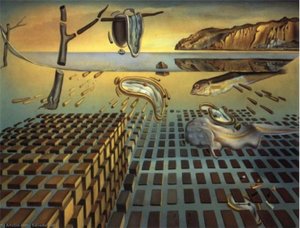
The Disintegration of Persistence of Memory, 1952-54 - Salvador Dalí
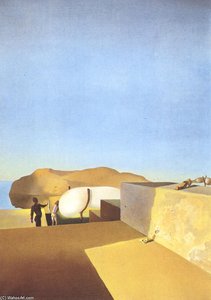
If the original Persistence of Memory was a dream, then The Disintegration of the Persistence of Memory is the moment that dream shatters into a thousand surreal fragments. Created between 1952 and 1954, this masterpiece stands as a high-impact evolution in Dalí’s legendary catalog, moving beyond mere melting clocks into a complex, deconstructed landscape of cosmic decay. It captures a profound sense of instability, where the familiar textures of time dissolve into a geometric, grid-like reality.
Visually, the piece is a masterclass in tension; the earthy ochres and muted browns collide with sharp, structural elements, creating a mood that is both melancholic and strikingly modern. For the contemporary collector, this work offers an unparalleled edge—its fragmented composition and deconstructed forms mirror the glitch aesthetics and layered textures found in today’s digital design and street art. It isn't just a painting; it is a visual disruption that brings a sophisticated, avant-garde energy to any curated space, proving why Dalí remains the ultimate icon of psychological depth and visual impact.
The Elephants, 1948 - Salvador Dalí
 The Elephants, 1948 - Salvador Dalí
In The Elephants (1948), Salvador Dalí masters a high-impact visual paradox that feels as much like a modern graphic fever dream as a classical masterpiece. The composition is anchored by an incredible vertical tension; the impossibly spindly, insect-like legs of the creatures create long, rhythmic lines that slice through a desolate, expansive landscape. This structural geometry creates a striking balance between the heavy, dark obelisks and the airy, weightless movement of the figures, achieving a sense of timeless perfection that remains a standout in the top 25 artworks of Salvador Dalí .
The color palette is intensely saturated, featuring a fiery, oppressive orange sky that clashes beautifully with the muted, ghostly greys of the elephants. This bold use of contrast mirrors the principles of modern minimalist design—using stark, clean silhouettes to ground a complex, surrealist narrative. For the contemporary collector, this piece offers a sophisticated aesthetic that bridges the gap between dreamlike subconscious exploration and a sharp, high-contrast visual identity that commands any urban space.
Crucifixion - Salvador Dalí
 Crucifixion - Salvador Dalí
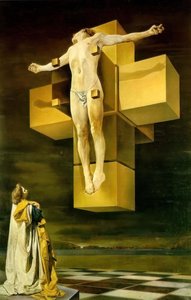
Imagine standing before a vision that defies the laws of physics, where the sacred meets the scientific in a breathtaking collision of geometry and grace. In Crucifixion , Dalí moves away from the melting clocks of his early Surrealism to embrace what he called 'nuclear mysticism.' This isn't just a religious scene; it is a high-impact exploration of the atomic age, featuring Christ suspended within a golden, four-dimensional hypercube.
The painting captures a profound moment in human history—the era when science began to reshape our understanding of reality. By merging divine iconography with rigid, mathematical precision, Dalí creates a tension that is both unsettling and deeply spiritual. It earns its place among the top 25 artworks of Salvador Dalí because it challenges the viewer to find meaning in the fragmented and the complex. Bringing such a powerful, thought-provoking piece into a modern space does more than decorate a wall; it injects a sense of intellectual depth and cosmic wonder into your daily environment, turning any room into a sanctuary for contemplation.
Heads Full of Clouds (Diptych) - Salvador Dalí
 Heads Full of Clouds (Diptych) - Salvador Dalí
In Heads Full of Clouds (Diptych) , Dalí achieves a hypnotic structural harmony that anchors this piece within the top 25 artworks of Salvador Dalí. The composition relies on a striking symmetrical balance; two mirrored panels frame a desolate, dreamlike landscape through silhouettes that mimic human profiles. This geometric precision—where organic, swirling cloud formations meet the sharp, skeletal lines of petrified rock—creates a sense of timeless perfection that transcends the chaos of the subconscious.
The visual weight is masterfully distributed between the warm, earthy ochres of the desert floor and the heavy, turbulent blues of the sky. This tension between light and shadow offers a profound internal balance that resonates with the principles of modern minimalist design. Much like a clean, contemporary interior, the diptych’s use of negative space and focused subject matter provides a grounding element for high-impact, graphic aesthetics. It is a masterclass in using duality to explore the fragile boundary between reality and illusion, making it an essential, soul-stirring masterpiece for any serious collection.
Cubist Self-portrait - Salvador Dalí
 Cubist Self-portrait - Salvador Dalí
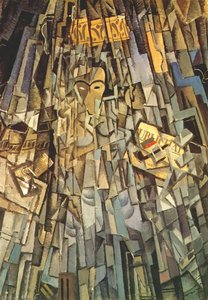
What story does the fractured geometry of Cubist Self-portrait by Salvador Dalí tell about a young genius finding his edge? Before he became the king of melting clocks and surrealist fever dreams, Dalí was deep in the trenches of the avant-garde, using the sharp, analytical language of Picasso to deconstruct his own identity. This 1926 masterpiece captures a pivotal moment where tradition shatters into a kaleidoscope of blues, ochres, and grays.
The painting rejects a simple likeness, opting instead for a high-impact visual puzzle of overlapping planes and angular shadows. It is an intellectual workout for the eyes, presenting multiple viewpoints of the artist simultaneously. For the modern collector looking to inject a dose of raw, disruptive energy into their space, this piece offers more than just decor; it provides a sophisticated escape into the mechanics of perception. As one of the top 25 artworks of Salvador Dalí , it serves as the perfect foundation for a bold, contemporary interior, bringing a sense of historical rebellion and structural depth to any curated gallery wall.
Christ of Saint John of the Cross, 1951 - Salvador Dalí
 Christ of Saint John of the Cross, 1951 - Salvador Dalí
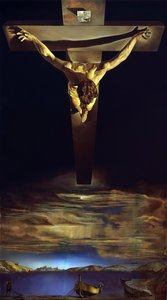
Imagine standing at the edge of a cosmic precipice, where the boundaries between the divine and the subconscious dissolve into a single, breathtaking vision. This is the visceral experience of Christ of Saint John of the Cross, 1951 by Salvador Dalí . Moving away from the melting clocks of his earlier era, Dalí utilizes a precise, almost hyper-realistic technique to capture a moment of profound metaphysical weight. The composition is anchored by a striking geometric tension—a triangle and circle symbolizing the Trinity—while the figure of Christ hangs suspended over the turbulent, dark waters of Port Lligat.
Dalí’s mastery of light is unparalleled here; an intense, golden radiance emanates from the cross, cutting through the deep blues and shadows to create a sense of spiritual electricity. By intentionally omitting the traditional gore of the crucifixion—no nails, no blood—he elevates the scene into a pure, symbolic exploration of the universe's nucleus. This masterpiece earns its place among the top 25 artworks of Salvador Dalí because it transcends religious iconography to become a high-impact visual statement. It remains a transformative piece for any modern space, offering a sense of dramatic depth and eternal mystery that continues to captivate the contemporary eye.
The Ship - Salvador Dalí
 The Ship - Salvador Dalí
Step into a realm where the boundaries between solid reality and fluid subconscious dissolve, leaving you suspended in a dreamscape of pure imagination. In The Ship by Salvador Dalí , we encounter one of the most hauntingly beautiful entries in our collection of the top 25 artworks of Salvador Dalí. Painted in 1935, this piece captures the artist at the height of his "Paranoiac-Critical" method, where he mastered the art of making the impossible feel tangibly real.
The canvas presents a spectral, massive vessel that feels less like wood and steel and more like a heavy, draped memory being carried across a desolate shore. Dalí uses a muted, melancholic palette of ochres, deep blues, and hazy grays to create an atmosphere of profound isolation. The meticulous, hyper-realistic textures of the sand and fabric clash with the illogical, amorphous shape of the ship, creating a visual tension that pulls you into his psychological labyrinth. It is a masterclass in using light and shadow to represent the weight of human longing. Today, this work remains a powerful statement on the burdens we carry, proving that Dalí’s surreal visions continue to transform modern spaces with their deep, emotional resonance.
The Enigma of Hitler - Salvador Dalí
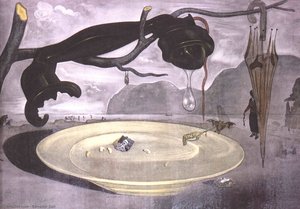 The Enigma of Hitler - Salvador Dalí
In The Enigma of Hitler , Dalí masterfully manipulates a muted, almost spectral light to navigate the psychological tension of 1938 Europe. The illumination does not radiate warmth; instead, it acts as a cold, clinical spotlight, casting subtle shadows that pull everyday objects—an umbrella, a hat, a lightbulb—into a state of hyper-realist unease. This precise command of chiaroscuro creates a heavy, atmospheric weight, where the interplay between stark highlights and deep, shadowy recesses mirrors the era's looming political darkness. It is this haunting ability to use light as a tool for psychological depth that secures its place among the top 25 artworks of Salvador Dalí .
When brought into a modern interior, a high-quality reproduction of this piece offers more than just surrealist intrigue; the sophisticated gradients and tonal shifts add an incredible layer of intellectual luxury to any space. The way the light seems to emerge from within the canvas itself provides a captivating focal point, transforming a contemporary wall into a window onto the subconscious.
Tuna Fishing, 1967 - Salvador Dalí
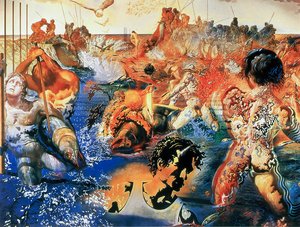 Tuna Fishing, 1967 - Salvador Dalí
To witness Tuna Fishing (1967) is to step directly into the fever dream of a master at the height of his cosmic powers. This isn't just a painting; it is a high-octane, sensory explosion that secures its place among the top 25 artworks of Salvador Dalí through sheer, unadulterated scale and stylistic audacity.
Dalí pulls from every corner of the visual lexicon here—blending the precision of classicism with the raw energy of action painting and even psychedelic undertones. The canvas is a chaotic, beautiful battlefield where nude figures and swirling tuna collide amidst intense oranges, fiery reds, and sun-drenched yellows. It captures the Almadraba fishing method not as a mere tradition, but as a monumental struggle between man and the cosmos. For the modern collector, this piece serves as a definitive statement of taste; its dense, textured layers and visceral movement bring an unparalleled sense of drama and intellectual depth to any luxury space. It is a masterpiece of motion, embodying the very moment where surrealist subconscious meets the infinite energy of the universe.
Autumn Cannibalism - Salvador Dalí
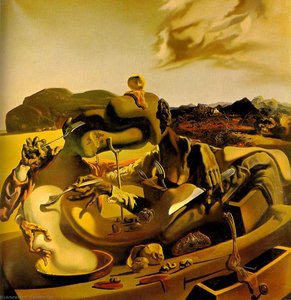 Autumn Cannibalism - Salvador Dalí
What story does the unsettling, sun-drenched landscape in Autumn Cannibalism by Salvador Dalí tell? Emerging from the feverish energy of 1936, this piece captures Dalí at the peak of his Surrealist power, utilizing his famous "paranoiac-critical method" to blur the lines between a dream and a nightmare. The canvas is dominated by a massive, distorted face that seems to melt into its surroundings, surrounded by a chaotic yet meticulously rendered collection of organic shapes and heavy textures.
The palette relies on deep earthy tones—warm ochres, browns, and beiges—that ground the bizarre imagery in a sense of visceral reality. For the modern collector looking to curate a high-impact space, this artwork offers more than just decoration; it provides a profound psychological escape. It is a centerpiece that challenges the viewer's perception of form and stability, making it an essential inclusion in any collection of the top 25 artworks of Salvador Dalí . Bringing such a piece into a contemporary home injects a dose of avant-garde rebellion and intellectual depth, turning a simple wall into a window to the subconscious.
The Burning Giraffe, 1937 - Salvador Dalí
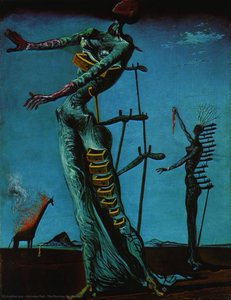 The Burning Giraffe, 1937 - Salvador Dalí
Step into a fever dream where the boundaries of reality dissolve. The Burning Giraffe (1937) is not merely a painting; it is a visceral, cinematic explosion of Dalí’s subconscious. Set against a haunting, deep indigo twilight, the composition vibrates with an unsettling energy that captures the tension of a world on the brink of chaos. The central, distorted figure—a surreal fusion of human and architectural form—features those iconic, Freud-inspired drawers, inviting you to peer into the hidden recesses of the psyche.
The visual impact is undeniable: the stark, flickering flames licking the distant giraffe serve as a chilling premonition of war, casting a warm, apocalyptic glow against the cool, shadowy landscape. Every brushstroke pulls you deeper into this landscape of anxiety and transformation. To own a piece inspired by this masterpiece is to invite a profound transformation into your space, turning a simple wall into a gateway for the soul. It is high-impact, high-concept art that demands attention and rewards the daring collector.
Dalí soft construction with boiled beans - premonition of civ - Salvador Dalí
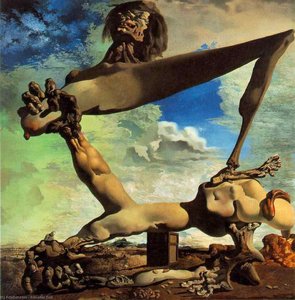 Dalí soft construction with boiled beans - premonition of civ - Salvador Dalí
Imagine standing on the precipice of a storm, where the air grows heavy with an unspoken, impending dread. This is the visceral atmosphere of Dalí soft construction with boiled beans - premonition of civ . Before the first brushstroke even hits the canvas, Dalí captures the suffocating tension of a world about to fracture. Painted in 1936, this masterpiece serves as a haunting psychic snapshot of the Spanish Civil War, translating political chaos into a surrealist nightmare of contorted limbs and grotesque, bone-like structures.
The painting earns its place among the top 25 artworks of Salvador Dalí through its sheer psychological power. The way massive, distorted figures emerge from an arid, desolate landscape forces us to confront the fragility of civilization itself. It is a profound exploration of human anxiety and the disintegration of reality. Bringing such a high-impact, provocative piece into your space does more than decorate a wall; it invites a deep, intellectual dialogue, transforming a modern interior into a gallery of profound meaning and historical weight.
'Morphological Echo', circa 1936 - Salvador Dalí
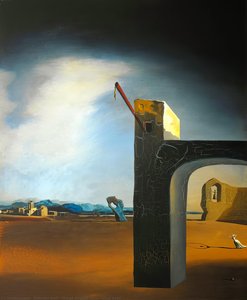 'Morphological Echo', circa 1936 - Salvador Dalí
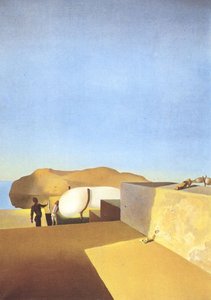
Step into a fever dream where the boundaries of reality dissolve into a vast, sun-scorched desert. In 'Morphological Echo' (circa 1936), Salvador Dalí pulls you into a landscape that feels both ancient and impossible, capturing that precise, unsettling moment between waking and sleep. The scene is dominated by crumbling, monolithic structures and an arched gateway that leads the eye toward a swirling, atmospheric sky of deep blues and whites.
This masterpiece earns its place among the top 25 artworks of Salvador Dalí through its sheer psychological depth. By blending hyper-realistic textures with distorted, organic shapes—like the striking red hook hanging from an archway—Dalí forces us to confront themes of decay, memory, and the erosion of time. It is a visual exploration of the subconscious that remains as provocative today as it was in the 1930s. Bringing such a piece into a modern space does more than decorate a wall; it introduces a portal for introspection, inviting a sense of profound mystery and intellectual energy into your daily environment.
Gala's Castle at Pubol - Salvador Dalí
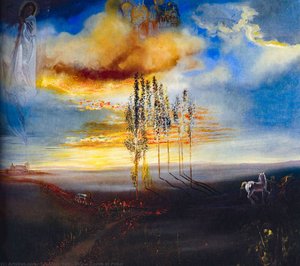 Gala's Castle at Pubol - Salvador Dalí
Step into a realm where the boundaries between stone and spirit dissolve in Gala's Castle at Pubol by Salvador Dalí. This 1973 masterpiece is more than a landscape; it is a visceral love letter to his muse, Gala, rendered through a lens of pure Surrealist magic. As one of the most essential pieces in our top 25 artworks of Salvador Dalí, this work earns its place through its staggering ability to blend architectural precision with the fluid logic of dreams.
Dalí utilizes a high-impact palette of vibrant blues, sun-drenched yellows, and striking reds to animate a scene where elongated figures dance amidst an intricate, weathered fortress. The painting captures the very essence of the paranoiac-critical method, turning a physical castle into a psychological monument of passion and memory. Its visual energy—defined by swirling skies and distorted forms—serves as a profound inspiration for modern, bold interiors seeking a focal point of conversation. At ArtsDot.com, we believe in democratizing this level of genius; through our high-fidelity oil reproductions, you can bring the transformative, dreamlike presence of Dalí’s subconscious into your own home or personal gallery.
Velazquez Painting the Infanta Margarita with the Lights and Shadows of His Own Glory, 1958 - Salvador Dalí
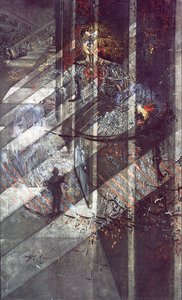 Velazquez Painting the Infanta Margarita with the Lights and Shadows of His Own Glory, 1958 - Salvador Dalí
In Velázquez Painting the Infanta Margarita with the Lights and Shadows of His Own Glory , Dalí executes a high-voltage collision between Baroque mastery and Surrealist fever dreams. This isn't just a tribute; it is a cinematic remix of art history. By reimagining Velázquez mid-stroke, Dalí weaves a complex narrative where the boundaries between creator and creation dissolve into a haze of dramatic chiaroscuro.
As one of the most profound entries in our collection of the top 25 artworks of Salvador Dalí , this piece captures the artist's obsession with legacy. The deep, moody palette of midnight blues and obsidian shadows creates an atmosphere of intense, theatrical grandeur, perfect for adding a sophisticated, edgy focal point to modern, dark-toned interiors. Look closely and you will find the signature Dalí DNA: symbolic ants crawling through the shadows and the haunting presence of his own reflection in a mirror, asserting that even the greatest masters are part of an eternal, surreal loop. It is a breathtaking masterclass in light, shadow, and the psychological depth of the subconscious.
Woman with a Head of Roses - Salvador Dalí
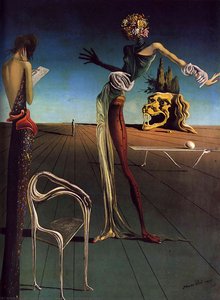 Woman with a Head of Roses - Salvador Dalí
Imagine stepping into a sun-drenched dream where the air smells of summer heat and blooming flora, yet something feels fundamentally shifted. In Woman with a Head of Roses , Dalí pulls you into a tennis court setting that feels hyper-real, only to shatter your logic with a single, breathtaking image: a woman whose identity is replaced by a vibrant, exploding bouquet of roses. It is a moment of pure, surrealist tension—a collision between the structured world of sport and the wild, untamed subconscious.
This masterpiece earns its spot in the top 25 artworks of Salvador Dalí because it perfectly captures his 'paranoiac-critical method,' blending meticulous, photographic detail with impossible imagery. The roses symbolize a fusion of beauty and decay, suggesting that even our most vibrant identities are ephemeral. Bringing such a piece into a modern space does more than decorate a wall; it introduces a conversation starter that challenges the mundane, injecting a sense of mystery and high-impact visual drama into your daily environment.
Aphrodisiac Telephone (Lobster Phone) - Salvador Dalí
 Aphrodisiac Telephone (Lobster Phone) - Salvador Dalí
Owning Aphrodisiac Telephone (Lobster Phone) by Salvador Dalí isn’t just a purchase; it’s an inheritance of the avant-garde. This 1938 masterpiece is a high-impact collision of the mundane and the bizarre, perfectly capturing that signature Dalí shock value. Imagine a gleaming, white rotary telephone—a symbol of human connection—suddenly hijacked by the textured, primal presence of a vivid lobster. The way the crustacean’s claws delicately grip the receiver creates a tension that is both unsettling and deeply sensual.
Dalí uses a hyper-realistic technique to render the smooth, glossy surface of the phone against the segmented, organic armor of the lobster, making the dreamscape feel startlingly tangible. The muted, monochromatic palette allows the psychological weight of the piece to take center stage, exploring themes of desire, communication, and the unexpected beauty found in the subconscious. Bringing this iconic Surrealist vision to your space is a lineage of taste, turning your walls into a curated gallery where the boundaries between reality and dream dissolve.
Gala Contemplating the Mediterranean Sea Which at Eighteen Metres Becomes the Portrait of Abraham Lincoln - Salvador Dalí
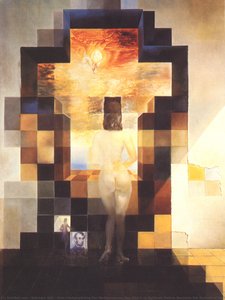 Gala Contemplating the Mediterranean Sea Which at Eighteen Metres Becomes the Portrait of Abraham Lincoln - Salvador Dalí
If you think you’ve seen everything Surrealism has to offer, prepare for a total glitch in perception. In Gala Contemplating the Mediterranean Sea Which at Eighteen Metres Becomes the Portrait of Abraham Lincoln , Dalí isn't just painting; he is choreographing a visual heist. At first glance, you’re met with the serene, sun-drenched gaze of Gala, his ultimate muse, staring out over an expansive, turquoise Mediterranean dreamscape. The colors are deep, hypnotic, and pulse with life.
But here is the kicker: this isn't a static image—it’s a visual transformation . As you step back, the geometric cubes and sea spray begin to shift, rearranging themselves into the unmistakable, stoic visage of Abraham Lincoln. It is a masterclass in optical illusion that challenges your very reality. This piece belongs in the top 25 artworks of Salvador Dalí because it turns a simple viewing into an interactive experience. Imagine this level of high-impact, mind-bending energy on your own walls—a conversation starter that makes your space breathe with rhythm and mystery.
Singularities - Salvador Dalí
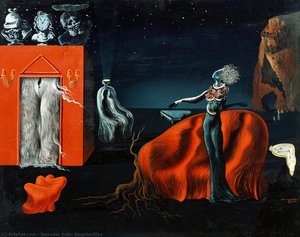 Singularities - Salvador Dalí
In Singularities , Salvador Dalí delivers a high-impact descent into pure dream logic, making it an essential pillar in the top 25 artworks of Salvador Dalí. This piece isn't just a painting; it is a visual glitch in reality, where a woman in a striking, fluid red gown merges with organic, tree-like forms atop a rearing horse. It captures that exact moment when the subconscious takes over, blending hyper-realistic precision with the impossible.
Dalí utilizes his legendary paranoiac-critical method to layer symbols—clocks, vases, and distorted figures—into a composition that feels like a fever dream captured in high definition. For the modern collector, this work brings an unmatched edge to contemporary interiors. Its bold use of chiaroscuro and dramatic color contrasts provides a sophisticated, avant-garde energy that resonates with today's graphic design and streetwear aesthetics. It is a masterpiece of psychological depth, perfect for those looking to anchor their space with a piece of surrealist history that feels as fresh and disruptive today as it did in 1936.
The Anthropomorphic Cabinet - Salvador Dalí
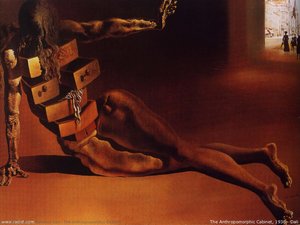 The Anthropomorphic Cabinet - Salvador Dalí
To encounter The Anthropomorphic Cabinet by Salvador Dalí is to step directly into the architect of a fever dream, unveiling a masterpiece that feels less like a painting and more like a psychological revelation. As one of the most profound entries in our curation of the top 25 artworks of Salvador Dalí, this 1936 work commands attention through its sheer, unsettling brilliance. Dalí masterfully blurs the line between the human form and sculptural object, presenting a figure whose very anatomy serves as a foundation for a precarious stack of drawers—a striking visual metaphor for the hidden compartments of the subconscious.
The composition vibrates with a tension that is perfect for the modern, design-conscious collector looking to inject high-impact, surrealist energy into a luxury space. The interplay of light and shadow across the prone figure creates a hauntingly beautiful atmosphere, where every brushstroke whispers of memory, duality, and the fragility of existence. It is a timeless piece of visual storytelling that transcends mere decoration, offering a sophisticated, avant-garde focal point that resonates with the bold, contemporary aesthetic of today's most refined interiors.
DALÍ Minnets envishet,1931, MOMA - Salvador Dalí
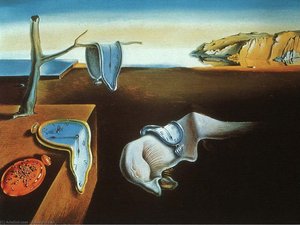 DALÍ Minnets envishet,1931, MOMA - Salvador Dalí
Time dissolves into a fever dream within the frame of Minnets Envishet , a masterpiece where Salvador Dalí captures the very heartbeat of the subconscious. This 1931 icon stands at the summit of the top 25 artworks of Salvador Dalí because it does more than depict a scene; it deconstructs reality itself. Through his legendary paranoiac-critical method, Dalí renders the impossible with a hyper-realistic precision that feels both unsettling and hypnotic. The soft, melting textures of the clocks whisper of time’s ultimate fragility, while the desolate, sun-drenched landscape evokes a profound, silent tension.
Every brushstroke breathes life into a world of distorted perspectives, where shadows stretch across an infinite horizon and unexpected symbols—like the delicate birds and skeletal branches—create a sensory journey through memory and decay. For the modern collector, bringing this level of surrealist energy into a space provides an instant injection of intellectual depth and avant-garde sophistication. It is not just a painting; it is a window into a dimension where logic fails and pure, visual impact reigns supreme.
Sleep, 1937 - Salvador Dalí
 Sleep, 1937 - Salvador Dalí
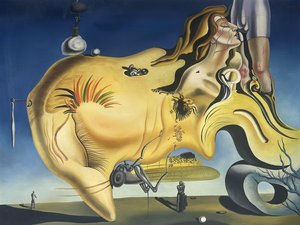
What story does the haunting, desolate landscape of Sleep, 1937 by Salvador Dalí tell about the fragility of our conscious reality? Emerging from the peak of the Surrealist movement, this masterpiece stands as a heavy hitter in the top 25 artworks of Salvador Dalí because it captures the raw, unfiltered chaos of the subconscious. The composition is dominated by an enormous, distorted face that seems to float precariously above a barren terrain, held aloft by thin, puppet-like strings. The palette—a moody blend of cool blues, deep greens, and fleshy, warm tones—creates a sensory experience that is both mesmerizing and deeply unsettling.
For the modern collector looking to curate an escape within their home, this piece offers more than just decor; it provides a window into a dreamscape where logic dissolves. The soft, diffused lighting and smooth, sculpted forms invite a sense of profound introspection, making it a perfect anchor for a design-conscious space that values psychological depth and high-impact visual storytelling.
Phosphene, 1979 - Salvador Dalí
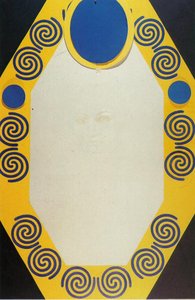 Phosphene, 1979 - Salvador Dalí
What if I told you that Phosphene by Salvador Dalí was born from a moment of pure neurological rebellion—a stroke of defiance against the ordinary? This isn't just a painting; it is a visual manifestation of the light we see when our eyes are closed, a vibrant, sun-drenched yellow expanse punctuated by hypnotic cerulean discs that pulse with an inner life. Its inclusion in our Top 25 is non-negotiable because Dalí successfully translated a fleeting biological flicker into a permanent, high-impact masterpiece of color and motion.
By blending the precision of his technical mastery with the spontaneous energy of Op Art, Dalí creates a rhythmic vitality that bypasses rational thought to hit you straight in the subconscious. At ArtsDot.com, we believe art should do exactly that—disrupt the mundane. Imagine this luminous, swirling labyrinth hanging in your studio or living space, turning a blank wall into a window to the dreaming mind. Phosphene proves that your space is not just a room; it is a high-energy statement of cosmic wonder.
The Invisible Man - Salvador Dalí
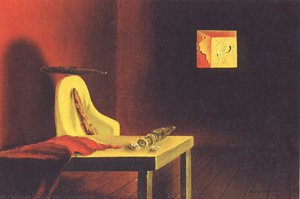 The Invisible Man - Salvador Dalí
Owning The Invisible Man by Salvador Dalí isn’t just a purchase; it’s an inheritance of the surreal. As one of the most profound entries in our collection of the top 25 artworks of Salvador Dalí, this 1932 masterpiece serves as a psychological puzzle, inviting you to look beyond the visible. The scene is deceptively quiet: a chair holds a figure draped in white, clutching a knife that vibrates with latent tension, while a clock hangs above a dining table, marking the relentless march of mortality.
Dalí utilizes his signature paranoiac-critical method to blend hyper-realistic detail with unsettling distortions. The atmosphere is heavy, charged with the shadows of Freud and the mysteries of the subconscious. Every brushstroke captures a sense of presence within absence, making this piece a true lineage of taste for the modern collector. With ArtsDot.com, you can bring this high-impact, dreamlike energy to your own walls, transforming your space into a gallery of profound existential depth.
Profile of Time - Salvador Dalí
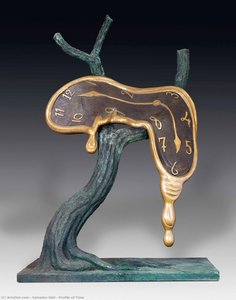 Profile of Time - Salvador Dalí
To encounter Profile of Time by Salvador Dalí is to witness the physical manifestation of a dream, a rare moment where the fluid boundaries of the subconscious are frozen in bronze. As one of the most profound entries in our collection of the top 25 artworks of Salvador Dalí, this 1984 masterpiece transcends its two-dimensional origins to command any space it inhabits.
Moving beyond the canvas of his legendary The Persistence of Memory , this sculpture translates Dalí’s obsession with temporal decay into a tactile, three-dimensional experience. The bronze captures the heavy, drooping weight of melting pocket watches draped over a skeletal tree branch, creating a striking interplay of light and shadow that feels both ancient and avant-garde. For the modern collector, this piece serves as a high-impact anchor for luxury interiors, offering a sophisticated dialogue between industrial strength and surrealist vulnerability. It is not merely a sculpture; it is a monumental exploration of how time loses its grip when we enter the realm of the psyche, making it an essential cornerstone for any serious contemporary gallery.
Conclusion
To wander through the visual landscape of Salvador Dalí is to step beyond the boundaries of reality and into a realm where the subconscious breathes. These twenty-five masterpieces are far more than mere relics of a Surrealist era; they are vibrant, living pulses that continue to disrupt our perceptions and ignite our imaginations. When we bring these works into our modern spaces, we aren't just decorating walls—we are inviting a dialogue between the tangible world and the infinite depths of the human dream. Each melting clock, distorted figure, and sharp shadow serves as a reminder that art is an eternal bridge, connecting our most private anxieties and desires to the shared culture of humanity.
As the sun sets on this exploration of Dalí’s genius, we find that his legacy remains as potent and provocative as ever, shaping the way we perceive time, memory, and identity. His ability to render the impossible with such meticulous, breathtaking clarity ensures that his vision will never fade, but rather continue to evolve within every new generation of collectors and dreamers. Whether through a bold statement piece in a contemporary loft or a subtle, surrealist touch in a quiet study, Dalí’s work remains a profound testament to the beauty found in the unexpected. We invite you to continue this journey of discovery and find your own piece of the dream within our full collection .


