
Early Life & Training: Foundations in The Hague
Johannes Bosboom’s artistic journey began not amidst grand academies or bustling studios, but within the intimate world of his cousin Bartholomeus Johannes van Hove’s workshop in The Hague. Born in 1817, young Johannes was quickly recognized for a precocious talent for drawing, and Van Hove—a respected urban painter and theatrical designer—took him under his wing at the tender age of fourteen. This early apprenticeship proved formative, immersing Bosboom in the practicalities of visual representation; he assisted with scenery painting for the Royal Theatre, learning to conjure convincing illusions of space and perspective. These foundational skills, honed through the demands of stagecraft, would later prove crucial in his masterful depictions of architectural interiors.
However, Van Hove’s influence wasn't solely technical. The studio environment fostered a collaborative spirit, with Johannes working alongside his cousin’s son, Hubertus. Crucially, Bosboom also sought formal training at the Hague Academy of Art, attending classes intermittently between 1831 and 1840. It was here he encountered artists like Anthonie Waldorp and Wijnand Nuyen, broadening his artistic circle and exposing him to diverse approaches to painting. These early experiences—a blend of practical workshop training and academic study—laid the groundwork for Bosboom’s distinctive style, a style that would ultimately find its most compelling expression in the serene beauty of Dutch church interiors.
The Allure of Church Interiors: Bosboom’s Signature Style
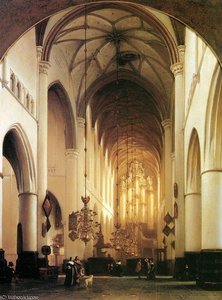 Sint Bavo in Haarlem Sun
Johannes Bosboom’s "Sint Bavo in Haarlem Sun" captures a grand Gothic cathedral interior with dramatic light & shadow. Explore this Romantic masterpiece's serene beauty & Dutch Hague School style.
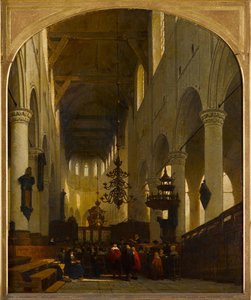
While many artists of his time embraced landscapes or portraiture, Johannes Bosboom carved out a unique niche for himself with his captivating paintings of churches. These weren't merely architectural studies; they were immersive experiences, imbued with a palpable sense of atmosphere and spiritual quietude. Bosboom’s fascination with these spaces stemmed from more than just aesthetic appeal. He sought to capture the dramatic interplay of light and shadow within their vast interiors, evoking a feeling of reverence and timelessness.
His early works in this vein demonstrate a clear debt to 17th-century masters like Pieter Saenredam and Emanuel de Witte, artists renowned for their meticulous depictions of Dutch Gothic architecture. However, Bosboom wasn’t simply copying these earlier styles; he infused them with his own sensibility, softening the harsh lines and emphasizing the emotional impact of light. He populated these interiors with figures dressed in 17th-century attire—not as historical reenactments, but as elements that enhanced the sense of atmosphere and narrative depth. Paintings like “Sint Bavo in Haarlem Sun” exemplify this approach, drawing viewers into a world of tranquil beauty and contemplative stillness.
Bosboom and the Hague School: A Nuanced Relationship
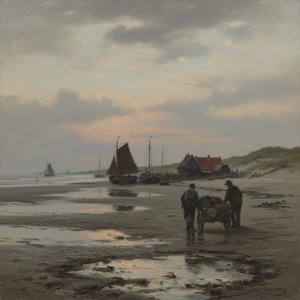
 Jan Hillebrand Wijsmuller
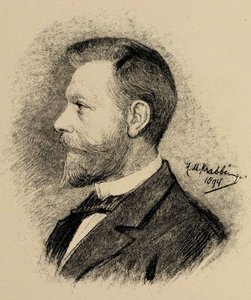
Jan Hillebrand Wijsmuller (1855-1925) was a Dutch Impressionist painter of Amsterdam's 2nd Golden Age. Known for vibrant cityscapes, landscapes & coastal scenes reflecting the Hague School & French Impressionism styles. Discover his plein air realism
Defining Bosboom’s relationship with the Hague School is a complex undertaking. While he shared certain characteristics with artists associated with this influential movement—a focus on realism, an interest in Dutch landscapes, and a sensitivity to light—he remained somewhat apart from its core tenets. The Hague School painters often depicted everyday life, focusing on scenes of peasants, fishermen, and coastal views. Bosboom’s subject matter – grand church interiors – felt decidedly more traditional.
However, to dismiss him as outside the movement entirely would be a mistake. Bosboom's pursuit of atmospheric effects—his masterful rendering of light filtering through stained glass windows or illuminating vaulted ceilings—aligned perfectly with the Hague School’s broader interest in capturing fleeting moments and subjective experiences. He shared their commitment to *plein air* painting, though he applied it more often to preliminary sketches than finished works. His ability to evoke a sense of place and mood through subtle nuances of color and tone firmly places him within the orbit of this important artistic circle.
Mastering Light and Atmosphere: Techniques and Influences
The key to Bosboom’s success lay in his exceptional ability to manipulate light. He wasn't simply *depicting* light; he was using it as a compositional element, a means of creating depth, atmosphere, and emotional resonance. His technique involved layering thin washes of color, building up the luminosity gradually until the desired effect was achieved. This approach allowed him to capture the subtle gradations of tone that define natural light, from the warm glow of sunlight streaming through stained glass to the cool shadows cast by towering columns.
The influence of Rembrandt is readily apparent in Bosboom’s work, particularly his use of chiaroscuro—the dramatic contrast between light and dark. He also drew inspiration from Andreas Schelfhout, a fellow Dutch painter who became a close confidant and friend. Schelfhout encouraged Bosboom to focus on the emotional impact of color and atmosphere, pushing him beyond mere technical proficiency towards a more expressive style. This dedication to capturing the *feeling* of a space—rather than simply its appearance—is what sets Bosboom’s work apart.
Beyond Churches: Landscapes and a Wider Artistic Vision
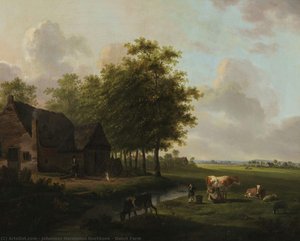
While church interiors remained his primary focus, Johannes Bosboom wasn't limited to this single subject matter. He also produced a number of compelling landscapes, particularly during a stay in Scheveningen in 1873. These watercolors—depicting town views, dunes, and coastal scenes—reveal a keen eye for detail and a sensitivity to the natural world.
Interestingly, these landscape paintings may have played a role in inspiring other Hague School artists like Hendrik Willem Mesdag and Jacob Maris to concentrate further on marine subjects. Bosboom’s exploration of light and atmosphere in these works likely encouraged his colleagues to push their own boundaries and experiment with new approaches to painting the sea and coastline. Although less well-known than his church interiors, these landscapes demonstrate a broader artistic vision—a willingness to explore different themes and techniques while remaining true to his core aesthetic principles.
Legacy & Rediscovery: The Enduring Appeal of Johannes Bosboom
Johannes Bosboom’s career spanned a period of significant change in the art world. While he enjoyed considerable success during his lifetime, his work fell somewhat out of favor after his death in 1891. However, in recent years, there has been a renewed appreciation for his unique contribution to Dutch Realism.
Today, Bosboom’s paintings are admired for their serene beauty, technical mastery, and evocative atmosphere. His ability to capture the spiritual quietude of church interiors—and the dramatic interplay of light within those spaces—continues to resonate with viewers. His work offers a glimpse into a bygone era, inviting us to contemplate the enduring power of art and the timeless allure of Dutch landscapes and architecture. Through reproductions offered by ArtsDot, Bosboom’s masterpieces are now accessible to collectors and enthusiasts worldwide, ensuring his legacy continues to inspire generations to come.