The Silent Partner: Defining the Frame's Role in Visual Narrative
 The Frame as Argument: An Expert Guide to Selecting the Perfect Frame to Elevate Your Art
The Silent Partner: Understanding the Frame's Role in Visual Narrative The Frame as Argument: How the Right Frame Completes or Ruins a Painting The Silent Partner: Defining the Frame's Role in Visual Narrative The Frame as Argument: An Expert Guide t...
To the casual observer, a frame may appear as nothing more than a functional boundary, a wooden perimeter designed to separate the vibrant world of the canvas from the static reality of the wall. However, for those who truly inhabit the space of visual culture, we understand that the frame is far more than a mere border; it is a silent partner in the profound dialogue between the artwork and the observer. It acts as a curated gateway, a threshold that prepares the mind for the emotional journey ahead. Much like the concept of framing in our own lives—where we use mental filters to organize and interpret reality—the physical frame provides a cognitive structure for visual information. It tells us precisely where the world of the painting ends and our own reality begins, focusing our attention and directing the gaze inward, preventing the eye from wandering into the periphery of the room. When we contemplate a masterpiece, our perception is immediately shaped by this structural introduction. The frame establishes the initial context, setting the stage upon which the artist’s vision performs. It provides the necessary punctuation to the artist's visual sentence; without it, the image remains a mere depiction, but with it, the work becomes a curated object of contemplation.
A Threshold of Perception: The Psychological Impact of the Border
 Bstraction with Picture Frame
A Dialogue Between Reality and Illusion: Roy Lichtenstein's "Abstraction with Picture Frame" Roy Lichtenstein’s “Abstraction with Picture Frame,” painted in 1982, is more than just a blue and white canvas; it’s a carefully constructed meditation on t...
The relationship between an image and its boundary is deeply psychological. When we stand before a canvas, our perception is immediately shaped by this structural introduction. A heavy, gilded border can command a sense of reverence and historical weight, while a minimalist edge might invite a more contemporary, unmediated connection. This interaction creates a tension between the tangible object and the illusion within. Consider the works of Roy Lichtenstein, such as
Abstraction with Picture Frame, where the artist utilizes the iconic imagery of the frame itself to meditate on the nature of representation. By blending recognizable imagery with fractured forms, he highlights the central tension: the attempt to capture a tangible object within an increasingly abstract composition. This illustrates how a frame can act as a psychological anchor, defining the limits of our subjective experience and guiding us through the layers of meaning presented by the artist.
Historical Rhetoric: From Renaissance Gilded Grandeur to Modern Minimalism
Throughout history, the frame has evolved from a tool of necessity into an elaborate display of wealth and status. During the Renaissance, gilded carvings became symbols of patronage and power, where the ornate detail reflected the prestige of the collector. As art flourished, so too did the frame’s aesthetic role, moving beyond mere protection to become an integral part of the artwork's social standing. In contrast, the twentieth century brought a radical shift toward minimalism. The rise of modernism demanded a rejection of tradition, leading to frames that prioritize clean lines and unadorned surfaces. This evolution is not merely stylistic but rhetorical; a frame from the Baroque era argues for the divine and the monumental, while a contemporary aluminum or acrylic frame argues for the immediacy and the present moment. Even in the delicate Symbolist works, such as Johan Victor Aarne’s 1903
Triangle Frame with Grand Duke Alexander Mikhailovich and Grand Duchess Xenia Alexandrovna, the geometric precision of the triangular wooden and gold-leaf frame serves as a vessel for emotion, creating an arresting rhythm that draws the eye toward the melancholy subjects within.
The Art of Selection: How Frame Styles Shape Artistic Interpretation
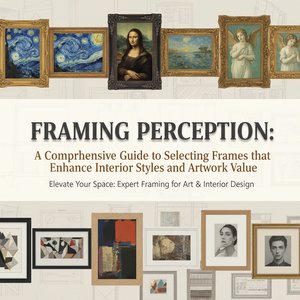 Framing Perception: A Comprehensive Guide to Selecting Frames that Enhance Interior Styles and Artwork Value
The Art of Framing: Beyond Protection – Elevating Interiors & Artwork Value Wikipedia: Interior design Interior design is the art and science of enhancing the interior of a building to achieve a healthier and more aesthetically pleasing environment f...
Selecting a frame is an act of profound artistic consideration—a decision that can amplify beauty or fundamentally alter the perceived value of a piece. The spectrum of styles is as diverse as the art it encompasses. Traditional frames, often crafted from richly stained woods like oak or mahogany, evoke a sense of timeless elegance. These are the frames that complement oil paintings with classical themes, portraits steeped in history, and landscapes imbued with romanticism. Their ornate detailing—acanthus leaves, egg-and-dart molding, and gilded accents—speaks to a bygone era, adding gravitas and sophistication. Conversely, modern frames embrace minimalism, prioritizing clean lines and understated elegance. For the contemporary collector, choosing between a heavy, textured wood and a sleek metal profile is not just about matching decor; it is about deciding which version of the artist's story you wish to tell. The frame provides the essential punctuation that allows the visual sentence to reach its intended conclusion.
Preserving the Legacy: The Functional Trinity of Protection, Presentation, and Preservation
 Enhancing Art with Framing: A Guide to Selection & Aesthetic Integration
Understanding the Role of Framing in Art Presentation For freelance decorators, understanding the power of framing extends far beyond simply enclosing a piece of art. It’s about completing the visual narrative, enhancing its impact, and protecting a ...
While we often focus on the aesthetic argument of the frame, we must never overlook its fundamental responsibilities. The primary functions of a professional frame are threefold: protection, presentation, and preservation.
Protection shields the artwork from physical damage and environmental factors like dust and UV light.
Presentation draws the eye, sets the tone, and complements the artwork’s aesthetic integration into a space. Finally,
Preservation ensures longevity through the use of archival-quality materials that prevent deterioration. This is why the choice of materials—such as acid-free matting to create an air gap between the print and glass—is vital to preventing moisture damage and ensuring pigments remain vibrant for decades. At ArtsDot.com, our commitment to this trinity is evident in our handmade oil reproductions. We use flexible gesso to prevent cracking and specific oils, like safflower, to prevent yellowing, finishing every piece with a coat of Damar varnish to protect the surface from atmospheric pollutants for generations.
Beyond the Canvas: Integrating Masterpieces into Contemporary Interiors
 The Frame as Argument: An Expert Guide to Selecting the Perfect Frame for Your Art
The Silent Partner: Understanding the Frame's Role in Visual Narrative Beyond the Canvas: Framing as a Catalyst for Value & Aesthetic Impact in Luxury Art Reproduction The Historical Significance of Framing: Beyond Protection For centuries, the frame...
A thoughtfully chosen frame does not just hold artwork; it integrates it into the surrounding space, influencing mood, style, and perceived value. For the discerning collector or interior designer, framing is an integral part of the design process, not an afterthought. Whether one is utilizing a large-format mural to recreate a historical ceiling or splitting a single masterpiece across a multi-panel layout for a wide staircase, the frame serves as the bridge between the art and the architecture. The goal is aesthetic integration—ensuring that the weight, color, and texture of the frame harmonize with the room's palette. Whether you are seeking to transform a personal milestone into a hand-painted oil masterpiece or looking to place a museum-quality reproduction in a modern gallery-style hall, the frame remains the final, essential stroke of the artist's brush, completing the visual narrative and turning a simple image into a curated object of eternal contemplation.
For those seeking to bring these historical narratives into their own homes, ArtsDot.com offers unparalleled expertise in creating museum-quality oil reproductions and custom commissions that honor the profound dialogue between art and its frame.








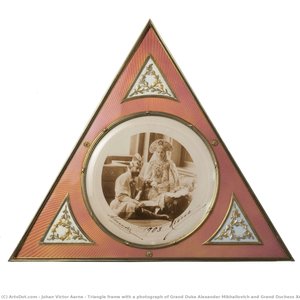 Triangle frame with a photograph of Grand Duke Alexander Mikhailovich and Grand Duchess Xenia Alexandrovna