



The Psychology of Space: Why Historical Art Anchors Modern Minimalism
Interior design psychology is a field within environmental psychology, which concerns the environmental conditions of the interior. It is a direct study of the relationship between an environment and how that environment affects the behavior of its i...
In the contemporary landscape of interior design, we often find ourselves inhabiting spaces defined by a certain clinical perfection. The rise of modern minimalism, characterized by clean lines, monochromatic palettes, and an almost monastic devotion to simplicity, has provided much-needed clarity in an era of digital chaos. Yet, as many discerning collectors have discovered, there is a profound psychological risk in the pursuit of the void. A space that lacks visual friction often lacks a soul; it becomes a sterile gallery rather than a personal sanctuary. This phenomenon, explored through the lens of interior design psychology, suggests that our environments directly influence our emotional well-being and sense of stability.
To counteract the potential emptiness of minimalist architecture, the introduction of historical art serves as a vital anchor. When a room featuring mid-century modern furniture or sleek, industrial elements is graced with a reproduction of a High Renaissance masterpiece, a profound dialogue begins. The weight of history—the recognizable presence of figures from the era of Raphael or Da Vinci—provides a sense of permanence that contemporary trends cannot replicate. This juxtaposition creates what designers call visual tension, a necessary ingredient for emotional resonance. By integrating works that carry centuries of human narrative, we transform a mere room into a space of depth, providing the inhabitant with a connection to the enduring continuum of human achievement.
The Renaissance Revival: Integrating Old Masters into Contemporary Architecture
 Renaissance
The Renaissance (UK: rin-AY-sənss, US: REN-ə-sahnss) was a European period of history and cultural movement taking place at the end of the Late Middle Ages and the beginning of the early modern era. It is variously defined as covering the 15th and 16...
The resurgence of interest in classical aesthetics is not merely a nostalgic whim; it is a sophisticated movement known as the Remix Revolution. In this era, we are witnessing a beautiful blurring of boundaries where the rigid structures of modern architecture meet the fluid, emotive power of the past. The integration of Old Masters into contemporary settings allows for a reimagining of space, where a sleek, glass-walled penthouse can suddenly possess the gravitas of a Florentine palazzo. This is not about replicating the past, but rather about reclaiming its most potent symbols to serve as the heartbeat of a modern home.
Consider the impact of architectural elements such as soaring arches or intricate structural details found in works like those of Pieter Neefs the Elder. When these themes are echoed through carefully selected reproductions, they can expand the perceived boundaries of a room, lending an air of grandeur to even the most compact urban apartment. Whether it is the light-drenched serenity of an Impressionist landscape or the dramatic chiaroscuro of a Baroque portrait, these works act as silent ambassadors of culture. They allow the modern dweller to curate an environment that speaks of both current sophistication and timeless intellectual curiosity, effectively using art as the ultimate architectural ornament.
Beyond the Print: The Tactile Luxury of Hand-Painted Oil Reproductions
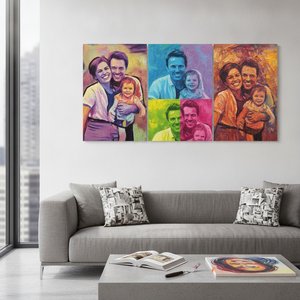 Turn Your Photos into Bold Pop Art Masterpieces: Custom Hand-Painted Oil Portraits for Modern Interiors
The New Avant-Garde: Why Pop Art is the Ultimate Statement for Modern Interiors In the ever-evolving landscape of interior design, the boundary between high culture and contemporary lifestyle has dissolved into a beautiful, vibrant blur. We are witne...
In a world increasingly dominated by the ephemeral glow of digital screens and the flat, sterile precision of computer-aided printing, true luxury is found in the physical. There is an almost spiritual distinction between a high-quality Giclée print and a hand-painted oil reproduction. While a print may offer an accurate color match, it lacks the essential alchemy of the human hand. The true connoisseur seeks the tactile richness of impasto—the visible dance of the brushstroke, the ridges of pigment that catch the light, and the profound depth of color that only layers of oil on 100% cotton canvas can provide.
A bespoke oil reproduction is a living object. Each stroke applied by an artist trained in the rigorous traditions of fine arts academies brings a three-dimensional reality to the canvas. When one observes a hand-painted work, one sees the subtle variations and the intentionality of the creator. This physical texture creates a sense of movement within the room, as the painting’s appearance shifts slightly with the changing light of the day. To choose a hand-painted reproduction is to reject the mass-produced in favor of the unique, ensuring that your interior is adorned with an object of substance, weight, and enduring beauty.
The Art of the Remix: Customizing Masterpieces for Personal Expression
 The Art of the Remix: How to Reclaim Classical Masterpieces for High-Impact Modern Interiors
The Remix Revolution: Why Classical Art is the New Streetwear for Your Walls Remix culture Remix culture, also known as read-write culture, is a term describing a culture that allows and encourages the creation of derivative works by combining or edi...
One of the most exhilarating developments in modern art curation is the ability to "remix" history to suit a personal aesthetic. The boundaries between high culture and contemporary lifestyle have dissolved, allowing for a new wave of expressive energy. We are no longer limited to merely hanging an existing image; we can now participate in the creative process itself. This "Remix Culture" allows a collector to take the DNA of a historical masterpiece and adapt it to their specific design needs, creating something entirely bespoke.
This transformative capability extends to what we call Period Shifts or stylistic customizations. Imagine the profound impact of having a contemporary family portrait reimagined through the lens of Rembrandt’s dramatic lighting, or a modern landscape transformed into the vibrant, textured style of Van Gogh. Through professional digital mockups, the uncertainty of such a commission is removed, allowing for unlimited revisions until the composition perfectly aligns with one's vision. This level of customization ensures that the artwork does not simply sit within the room but becomes an integral, personalized component of the home’s narrative, blending personal milestones with the grandeur of art history.
Curating a Legacy: Selecting Subject Matter to Define Interior Identity
 Powerful Dragon Artworks: A Professional Buyer's Guide to Mythical Masterpieces and Custom Oil Commissions for Luxury Interiors
The Symbolism of Dragons: Selecting Themes for Hospitality and Corporate Interiors Korean dragon Korean dragons (Korean: 용/룡) are legendary creatures in Korean mythology and folklore. It is also called Mir (미르) or Miri (미리) in Korean. == In Korean my...
The selection of subject matter in fine art is a powerful tool for defining the psychological atmosphere of a space. In high-stakes environments, such as luxury hospitality or corporate headquarters, every visual element serves as an ambassador of identity. A designer seeking to evoke authority and stability might gravitate toward the formidable presence of Western dragons or the structured grandeur of classical architecture. Conversely, a space intended for tranquility and prosperity might draw inspiration from the benevolent, water-linked motifs of East Asian mythology.
For the private collector, the choice is even more intimate. The subject matter can be used to curate a legacy of interests and values. From the hauntingly beautiful domesticity found in 19th-century French interiors to the bold, high-impact energy of Pop Art, the themes we choose to surround ourselves with shape our daily experience. By strategically selecting works that resonate with our personal history or aspirations—be it through pet portraits that elevate a beloved companion to the status of a historical general, or wedding commissions that immortalize a moment of profound love—we turn our homes into curated autobiographies written in oil and canvas.
Technical Excellence: Preserving the Soul of Art through Professional Craftsmanship
 Interior design
Interior design is the art and science of enhancing the interior of a building to achieve a healthier and more aesthetically pleasing environment for the people using the space. With a keen eye for detail and a creative flair, an interior designer is...
The longevity of an art collection depends entirely upon the integrity of its creation and preservation. True museum-grade reproductions require a mastery of both chemistry and artistry. The use of flexible gesso is essential to prevent the cracking that can plague inferior works, while specific oils, such as safflower, are utilized in lighter pigments to prevent the dreaded yellowing over time. Each piece is finished with a protective coat of Damar varnish, creating a barrier against the dust, moisture, and atmospheric pollutants that threaten the vibrancy of the pigments.
This commitment to excellence extends from the initial brushstroke to the final delivery. A professional commission involves a meticulous six-step process: from the immediate confirmation of the order and the creation of digital mockups for approval, to the weeks of patient layering by the artist, and finally, the rigorous quality control in specialized studios. When these works are shipped globally via trusted partners like DHL or FedEx, they are protected by industrial-grade packaging designed to withstand the rigors of international transit. This dedication to technical perfection ensures that the masterpiece you acquire today remains a vibrant, breathtaking testament to beauty for generations to come.