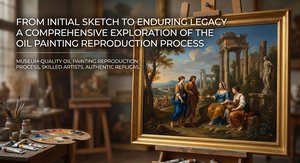
The Scriptorium's Legacy: Illuminated Manuscripts as Sacred Records
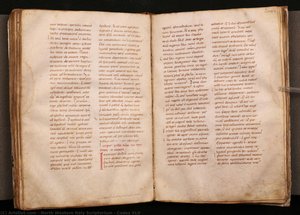 north western italy scriptorium
Origins and the Dawn of Illuminated Script Within the shadowed halls of medieval monasteries, a remarkable tradition blossomed – the art of the scriptorium. More than simply a room for copying manuscripts, it was a crucible where faith, scholarship, ...
To step into the shadowed halls of a medieval monastery is to enter a crucible where faith, scholarship, and artistry converged with singular purpose. Long before the advent of mass printing, the
scriptorium served as the beating heart of intellectual preservation, particularly within the North Western Italy Scriptorium and similar monastic workshops across Europe. Here, the act of copying was not merely clerical labor but a sacred duty, a meticulous endeavor to safeguard classical knowledge and liturgical truth from the erosion of time. These were not simply functional texts; they were vibrant, breathing works of art.
The beauty of these manuscripts lies in their
illumination—the delicate application of gold leaf, intricate floral borders, and miniature illustrations that transformed parchment into a celestial window. Artists like
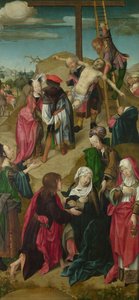
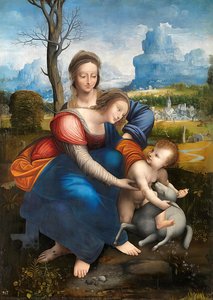
Master Honoré, active in Paris during the late Gothic period, revolutionized this medium. Rather than relying on flat, two-dimensional figures, Honoré acted as a sculptor of light and shadow, imbuing his subjects with a remarkable sense of volume and realistic drapery. Through such craftsmanship, the written word was elevated, ensuring that the sanctity of the text was matched by the splendor of its presentation.
Ink and Soul: The Personal Manuscripts of Great Thinkers
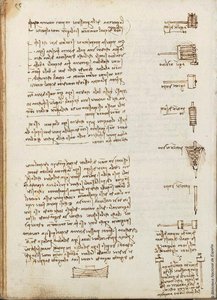
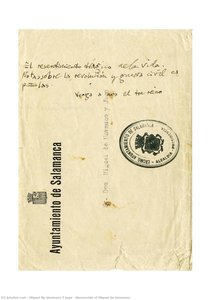 Manuscript of Miguel de Unamuno
A Glimpse into the Soul: Unraveling Miguel de Unamuno's Manuscript The photograph before us isn’t merely an image of aged paper and faded ink; it is a portal, a whispered invitation to step inside the mind of one of Spain’s most profound thinkers, Mi...
Beyond the communal devotion of the monastery lies a more intimate form of historical documentation: the personal manuscript. There is a profound, quiet power in witnessing the raw, unedited traces of a human mind captured on aged paper. Consider the fragments of
Miguel de Unamuno, the profound Spanish philosopher and novelist. To gaze upon his manuscript is to encounter a portal into an existential struggle; the faded ink and yellowed, creased parchment serve as a tangible link to a man grappling with the eternal questions of faith, reason, and mortality.
These documents possess a texture that mass-produced texts can never replicate. The irregular lines of the pen, guided by a hand that felt the weight of history, reveal a human touch that is both vulnerable and relentless. In these fragments, we find the
texture of time itself—the subtle folds and organic decay that celebrate the beauty of a life lived in pursuit of truth. Such artifacts remind us that history is not merely a collection of dates, but a series of whispered invitations from the souls who preceded us.
The Art of the Codex: Preserving Divine Revelation and Law
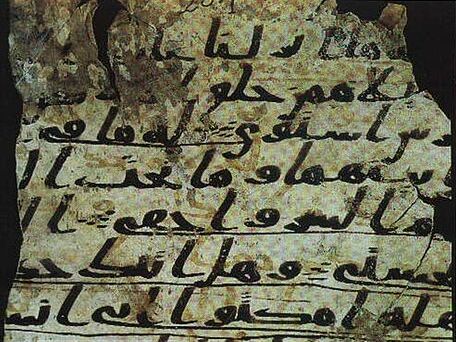 Early Quranic manuscripts
In Muslim tradition the Quran is the final revelation from God, Islam's divine text, believed to be delivered to the Islamic prophet Muhammad through the angel Jibril (Gabriel). Muhammad's revelations were said to have been recorded orally and in wri...
The codex represents one of humanity's most significant technological and artistic achievements, providing a structured vessel for the world's most sacred revelations. In the Islamic tradition, the compilation of the
Quran stands as a monumental feat of preservation, with early manuscripts like those from the Hijazi style showcasing an elegant, sloping script that predates the more formalized Kendo styles. Similarly, the
Timbuktu Manuscripts in Mali offer a breathtaking testament to West African scholarship, preserving centuries of wisdom regarding medicine, astronomy, and philosophy within their Arabic and Ajami scripts.
These codices were often accompanied by exquisite artistry, much like the
Early Quranic manuscripts or the beautifully decorated Christian liturgical books. The process was a symphony of specialized skills: scribes prepared the parchment with precision, while illuminators layered gold to create shimmering halos and divine light. This intersection of law, religion, and art ensured that the foundational documents of civilizations were not only readable but awe-inspiring, commanding reverence through their very materiality.
From Parchment to Precedent: Capturing Historical Truth through Realism
 Realism (art movement)
Realism was an artistic movement that emerged in France in the 1840s. Realists rejected Romanticism, which had dominated French literature and art since the early 19th century. The artist Gustave Courbet, the original proponent of Realism, sought to ...
As history progressed into the 19th century, the artistic lens shifted from the divine and the symbolic toward a more unvarnished observation of the human condition. The movements of
Realism and
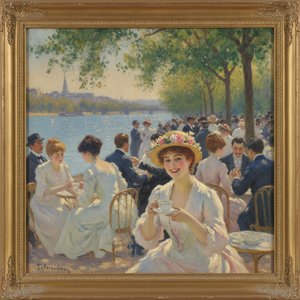
Romantic Realism emerged as powerful reactions to the idealized classicism of previous eras. Artists like Gustave Courbet rejected the exaggerated drama of Romanticism in favor of portraying contemporary life with startling accuracy, focusing on the laboring classes and the gritty realities of existence.
This era sought to capture the "raw truth," finding profound meaning in the mundane and the overlooked. In
Romantic Realism, we see a beautiful tension between dream and reality, where the meticulous observation of the external world meets the deep, subjective experience of the individual psyche. This movement proved that history is not only found in grand proclamations but in the quiet, honest depiction of everyday struggle and grace. At
ArtsDot.com, we celebrate this legacy by offering hand-painted oil reproductions that capture these very textures—the visible brushstrokes and deep tonal ranges that bring the weight of historical truth into the modern home.
The Tactile History: Materiality, Texture, and the Beauty of Decay
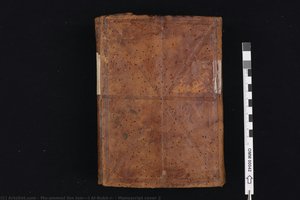 Manuscript cover 2
Discover a rare 800 manuscript cover by al-Bukhari! Macro photography reveals intricate details of this aged leather piece – a testament to Islamic scholarship & artistry.
Ultimately, the study of history through art is an appreciation of
materiality. Whether it is the heavy, aged leather of an 800-year-old manuscript cover by al-Bukhari or the delicate silk covering a funeral bier in a Florentine Gradual, the physical substance of these works tells a story of their own. We are drawn to the
beauty of decay—the way light interacts with cracked varnish, the way shadows settle into the grooves of an impasto painting, and the way time leaves its mark on the most precious of human records.
To possess a reproduction of such historical significance is to invite that sense of timelessness into one's own space. Our artists, trained in the highest academic traditions, utilize 100% cotton canvas and specialized oils to ensure that every painting we create—from custom portraits to recreations of the masters—possesses the depth and soul required to stand as a lasting legacy. Just as the scribes of the North Western Italy Scriptorium sought to preserve knowledge for posterity, we strive to provide art that serves as a permanent bridge between the triumphs of the past and the homes of the future.