
The Evolution of Childhood: From Mini-Adults to Innocent Subjects
 History of childhood
The history of childhood has been a topic of interest in social history since the highly influential book Centuries of Childhood, published by French historian Philippe Ariès in 1960. He argued "childhood" as a concept was created by modern society. ...
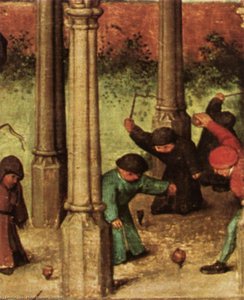
To understand the profound emotional resonance of childhood in art, one must first recognize that the very concept of "childhood" is a relatively modern invention. For much of human history, as noted by the influential historian Philippe Ariès, children were often depicted in the visual record as miniature adults, lacking the distinct, protected status they hold today. Before the seventeenth century, the boundaries between the world of the adult and the world of the child were remarkably fluid; children appeared in paintings, gravestones, and social records with little distinction from their elders in terms of dress or demeanor. It was only through the slow progression of social history that a specialized lens emerged—one capable of perceiving the unique vulnerability, curiosity, and unadulterated wonder that defines the formative years. This historical shift transformed the canvas from a place of mere representation into a sanctuary for capturing the ephemeral essence of innocence, a transition that allows us to appreciate the masterpieces we study today not just as portraits, but as windows into a fleeting state of being.
Northern Renaissance Vitality: Bruegel and the Art of Play
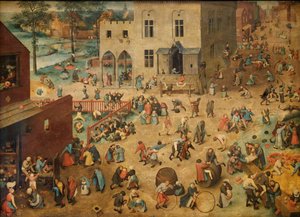
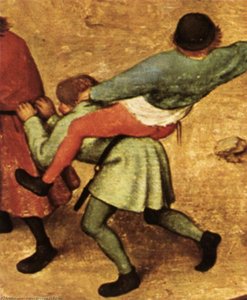
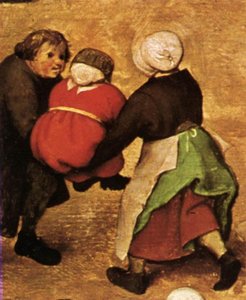
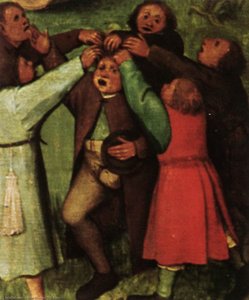
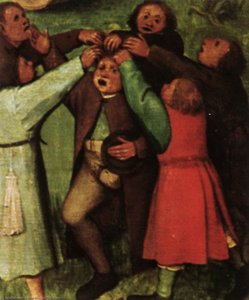 Children's Games (detail) (20)
A World of Play: Unveiling Pieter Bruegel the Elder’s *Children's Games (detail) (20)* Pieter Bruegel the Elder stands as a towering figure of the Northern Renaissance, celebrated for his keen observation of everyday life and masterful depiction of l...
As we move into the sixteenth century, the Northern Renaissance brought with it a renewed fascination with the meticulous observation of everyday life. No artist captured this spirit more vibrantly than Pieter Bruegel the Elder. His seminal work, Children's Games (1559), serves as an extraordinary historical document, offering a kaleidoscopic view of youth in the sixteenth century. Within this single composition, one can discover over ninety distinct games and playful pursuits, from boys engaged in knucklebones to children imitating the complex rituals of adult society. Bruegel’s mastery lies in his ability to balance a sprawling, chaotic energy with profound narrative skill. Through his use of oil on panel, he achieves a level of detail that invites the viewer to lose themselves in the movement and texture of the scene. This work does not merely depict play; it celebrates the boundless energy of youth, presenting a world where the boundaries of reality are as fluid as the imaginations of the subjects themselves. For those seeking to bring this sense of historical vitality into their own spaces, our hand-painted oil reproductions strive to replicate Bruegel's precise brushwork and rich, atmospheric depth, ensuring that the lively spirit of the Renaissance is preserved on 100% cotton canvas.
Rococo Grace: The Idealized Youth in Georgian Portraiture
 Two Nude Children
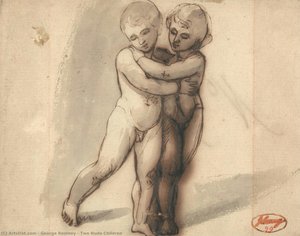
A Moment of Innocence: Exploring George Romney’s “Two Nude Children” George Romney's "Two Nude Children," painted circa 1762, isn’t merely a depiction of youth; it’s a carefully constructed tableau brimming with quiet intimacy and an almost palpable ...
By the eighteenth century, the artistic focus shifted toward a more refined and idealized vision of youth, particularly within the elegant framework of Rococo portraiture. In Georgian England, artists like George Romney utilized the era's fascination with classical ideals to create tableaux of quiet intimacy. His work, such as Two Nude Children (circa 1762), exemplifies the period's characteristic restraint and grace. Unlike the bustling energy of Bruegel, Romney’s approach is one of timelessness and soft, sculptural beauty. He masterfully captures a fleeting moment between subjects, imbuing the canvas with an almost palpable sense of serenity. This era of portraiture was less about the documentation of activity and more about the construction of an aesthetic ideal—a celebration of purity through light and form. At ArtsDot.com, we understand the importance of this subtle tonal range; our artists use specific oils, such as safflower for whites, to prevent yellowing and ensure that the delicate luminosity found in Rococo masterpieces remains vibrant for generations.
Victorian Tenderness: Sentimentality and the Golden Age of Watercolor
 mary gillies
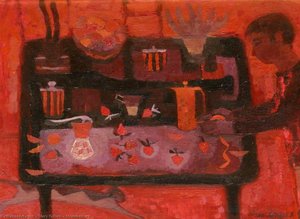
Mary Gillies: A Whisper of Childhood, a Voice of Victorian Imagination The name Mary Gillies conjures an image of gentle watercolors and the quiet rustle of turning pages – a legacy born from a childhood steeped in both privilege and profound loss. B...
The Victorian era introduced a profound layer of sentimentality to the depiction of childhood, characterized by a deep reverence for domesticity and the emotional landscape of the young. This period saw the rise of masters who could capture the "whisper" of childhood through delicate mediums. The works of Mary Gillies, for instance, evoke a sense of Victorian imagination through gentle watercolors that reflect both privilege and the quietude of memory. Similarly, James Sant, often regarded as the "Emperor of Children," utilized his training in watercolor to imbue his canvases with profound symbolic meaning and an unparalleled ability to capture the essence of youth. Alongside him, artists like Anton Heinrich Dieffenbach contributed scenes of idyllic domesticity, where light and color were used to elevate simple moments into something much more significant. This era was defined by a mastery of texture and light—a skill we honor in our custom commissions. Whether you wish to transform a personal photograph into the soft, light-drenched style of a Victorian watercolor or require a "Period Shift" to turn a modern portrait into a nineteenth-century masterpiece, our Professional Digital Mockup Service allows you to visualize these historical transformations before the first brushstroke touches the canvas.
Modernist Introspection: Capturing Psychological Depth and Vulnerability
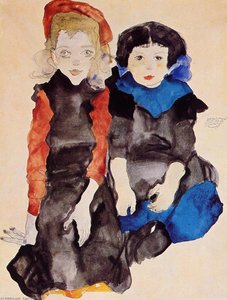 Two Little Girls
Captivating Subject and Emotional Depth This evocative watercolor captures an intimate moment between two young children, radiating innocence, curiosity, and a tender sense of companionship. The subjects are portrayed with gentle, expressive lines th...
As we entered the twentieth century, the artistic lens underwent a radical transformation, moving away from sentimentalism toward a more raw, psychological exploration of the human condition. The works of Egon Schiele represent this profound shift. In pieces such as Two Little Girls (1911), Schiele moved beyond mere likeness to explore the inner experience. His use of expressive, often spontaneous lines and a restrained yet bold palette emphasizes emotional immediacy over precise realism. This modernist approach celebrates the vulnerability and the "unfiltered psyche" of the subject, inviting viewers into a quiet, sometimes haunting world of childhood wonder and existential depth. Schiele’s work challenges traditional conventions, focusing on the tension between the physical form and the psychological weight of existence. It is this level of emotional intensity that we strive to capture in our Handmade Oil Reproductions, where the visible brushstrokes and impasto textures provide a tactile depth that digital prints simply cannot replicate.
Curating the Eternal: Bringing Historical Innocence into the Modern Home
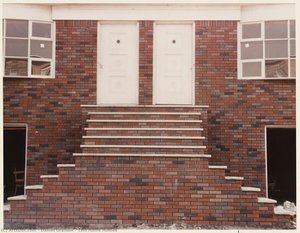 Two Home Homes
Dan Graham's "Two Home Homes" (1966) is a captivating photographic exploration of space and perception, challenging our understanding of domesticity and urban environments. A seminal work of conceptual art.
The study of these masterpieces reveals a universal truth: the longing for the simplicity and purity of youth is a timeless human emotion. To possess a piece of this history is to invite a sense of profound continuity into one's personal environment. Whether it is the vibrant energy of a Bruegel, the grace of a Romney, or the psychological depth of a Schiele, these works offer more than mere decoration; they provide an anchor to our collective cultural heritage.
At ArtsDot.com, we serve as the bridge between the museum and the home. We specialize in:
- Hand-Painted Oil Reproductions: Meticulously crafted by artists with academic excellence, ensuring every stroke honors the original master.
- Custom Portrait Commissions: Transforming your personal milestones—from weddings to pet portraits—into museum-quality oil paintings.
- Architectural Art: Creating large-format murals and frescoes that can recreate historical grandeur on a grand scale.
- Expert Consultation: Providing personalized art placement and color analysis to ensure your selection perfectly complements your interior design.
Art is a lasting legacy. Through our rigorous six-step production process—from the initial digital mockup to the final application of protective Damar varnish—we ensure that your chosen masterpiece arrives as a testament to both historical significance and unparalleled craftsmanship. We invite you to explore our collection of the world's most canonical works and begin your own journey into the eternal beauty of art history.