The Visual Language of Authority: Decoding Uniforms and Regalia
 Beyond the Fabric: Decoding Identity, Authority, and Symbolism in the Art of Military Uniforms
The Threads of Command: Uniforms as Visual Language of Authority To gaze upon a historical military portrait is to read a silent, yet thunderous, lexicon of power. A uniform is never merely a garment; it is a carefully constructed architecture of ide...
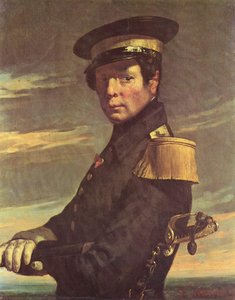
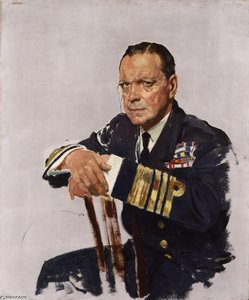
To gaze upon a historical military portrait is to enter a silent, yet thunderous, lexicon of power. In the realm of fine art, a uniform is never merely a garment; it is a carefully constructed architecture of identity designed to communicate rank, duty, and allegiance before a single word is transferred from subject to observer. The artist serves as a vital translator of this visual language, meticulously rendering the textures that define authority. When we examine works such as those by Josep Cusachs i, we see how the application of light and shadow can evoke the rigid discipline of military life through the very fabric itself.
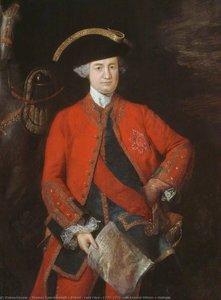
The weight of command is often felt through the perceived heaviness of the attire depicted on canvas. Artists utilize masterful techniques to convey the stiffness of heavy wool, the luster of polished brass, or the intricate complexity of gold braid. Every button, epaulette, and sash acts as a punctuation mark in a narrative of institutional strength. This visual vocabulary transcends simple documentation; it creates an atmosphere of permanence. For those who appreciate the profound details of history, these portraits offer a way to touch the past, much like our museum-quality oil reproductions allow collectors to bring the tactile depth of visible brushstrokes and rich tonal ranges into their own private galleries.
The Architect of Identity: Artists and the Documentation of Command
 Richard Simkin
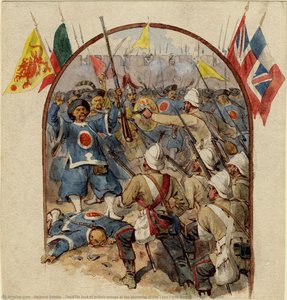
Richard Simkin: A Watercolor Pioneer of Military Portraiture Richard Simkin (1850-1926) stands as a remarkable figure in Victorian and Edwardian art history, primarily recognized for his prolific watercolor depictions of British military uniforms and...
The history of military art is inextricably linked to the artists who dedicated their lives to documenting the ebb and flow of empires. Figures such as Richard Simkin, a watercolor pioneer of the Victorian and Edward of era, demonstrate how an artist’s personal connection to the military can shape a monumental body of work. Having spent formative years in Aldershot, a location deeply entwined with the British Army, Simkin possessed a unique ability to capture the precise uniforms and weaponry of various regiments with unparalleled accuracy. His prolific output, much of it produced for the War Office, serves as a vital historical record of the British Army’s appearance and ethos.
Beyond mere illustration, these artists acted as curators of identity. In academic portraiture, the artist does not simply record a likeness; they curate an existence. Consider the stunning oil paintings by Heinrich von Angeli, such as his depiction of Prince Henry in military uniform, where Victorian opulence meets the disciplined academic style. The meticulous attention to detail ensures that the subject is anchored within a larger historical continuum. This level of craftsmanship is what we strive to preserve at ArtsDot.com, where our artists—holders of degrees from prestigious Fine Arts academies—use 100% cotton canvas and traditional oils to ensure that every glint of brass and fold of fabric remains as lifelike as the day it was first painted.
Beyond the Battlefield: Intimate Realism and the Soul of a Soldier
 Chelsea Pensioners Ben Lee, Royal Military Police
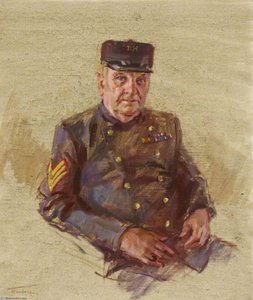
A Glimpse into Valor: The Soul of a Soldier In the intimate portrait Chelsea Pensioners Ben Lee, Royal Military Police , the viewer is invited into a profound encounter with history and character. Painted by the esteemed June Mendoza, this work trans...
While much of military art focuses on the grand scale of conquest, there exists a profound subgenre of intimate realism that seeks to capture the human soul beneath the regalia. This is perhaps most movingly seen in works like June Mendoza’s portrait of Chelsea Pensioner Ben Lee. In such pieces, the viewer is invited into a profound encounter with character. The subject sits with a quiet, commanding presence that speaks volumes of a life defined by duty. There is an unmistakable weight to his gaze—a directness that meets the observer with both confidence and seasoned authority.
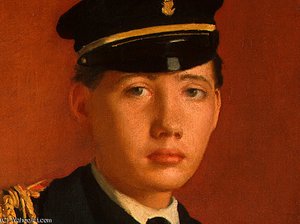
In these intimate portraits, the technical prowess of the artist—specifically the manipulation of light and shadow—creates a three-dimensional depth that breathes life into the subject. The way light catches the textures of a heavy uniform or the structured brim of a cap demonstrates a meticulous attention to the individual's humanity. This style of painting transcends the politics of war to find the universal truth of service. It is this very essence of character that we aim to capture in our custom portrait commissions, where we allow clients to transform personal milestones into masterpieces through our "Buy from Photo" service, ensuring the soul of the subject is never lost in translation.
Symbols of Valor: Heraldry, Medals, and the Iconography of Honor
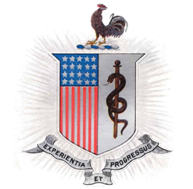 Army Medical Department regimental coat of arms
The regimental coat of arms of the Army Medical Department of the United States Army—known as the AMEDD—is an heraldic emblem dating back, with slight variations, to about 1863. Since 1986, it has formed the basis of the AMEDD's distinctive unit insi...
The iconography of the officer in classical portraiture is a complex web of symbols that invites the discerning eye to look deeper than the surface. Every medal, ribbon, and heraldic emblem tells a story of personal triumph or ancestral lineage. The regimental coat of arms, such as the historic emblem of the Army Medical Department dating back to 1863, serves as a foundational marker of identity. These symbols are not mere decorations; they are the anchors of history, grounding an individual within a specific unit and a shared legacy of sacrifice.
In many ways, these portraits function as much like heraldry as they do fine art. The inclusion of certain motifs can hint at spiritual allegories or secret narratives of bravery. When we look at the vibrant depictions of regimental flags and instruments, such as Daniel Cunlifie’s work on the Royal Warwickshire Regiment, we see how color and symbol coalesce to celebrate heritage. For the history lover, these details provide a roadmap through the annals of time. Our collectors often seek out these specific historical nuances, which is why our reproduction process focuses on maintaining the closest possible match to the original's intricate details, from the subtle glint of a Victoria Cross to the weathered texture of an old standard.
From Propaganda to Portraiture: The Evolution of Military Art Styles
Heroic realismHeroic realism is art used as political propaganda. Examples include the socialist realism style associated with socialist states, and sometimes the similar art style associated with fascism. Its characteristics are realism and the depiction of figur...
The evolution of military art reflects the changing nature of warfare and the shifting ideologies of the eras in which they were created. While battle scenes have long been used by rulers to celebrate victories and intimidate opponents, the style of these depictions has undergone radical transformations. We see the transition from the symbolic victory stelae of ancient Mesopotamia to the highly stylized "Heroic Realism" used in 20th-century political propaganda. Unlike pure realism, heroic realism seeks to depict figures as ideal types or symbols, often rejecting modernism to promote a specific revolutionary or nationalistic narrative.
In contrast, the movement of Contemporary Realism offers a different lens, seeking to capture the world with breathtaking clarity and an emphasis on the exquisite, overlooked details of existence. This spectrum—from the grand, intimidating battle scenes of the past to the quiet, truthful observations of the present—represents the incredible breadth of military subject matter. Whether it is the large-scale, awe-inspiring murals that recreate historical ceilings or the intimate, hand-painted oils that sit quietly in a study, military art remains one of the most powerful mediums for exploring the human condition under the pressure of history. At ArtsDot.com, we are honored to bridge these eras, offering the world's most iconic masterpieces as timeless treasures for your collection.