The Evolution of the Vista: From Topographical Accuracy to Emotional Expression
 Landscape painting
Landscape painting, also known as landscape art, is the depiction in painting of natural scenery such as mountains, valleys, rivers, trees, and forests, especially where the main subject is a wide view—with its elements arranged into a coherent compo...
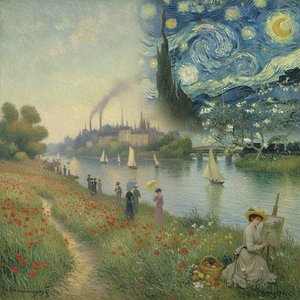
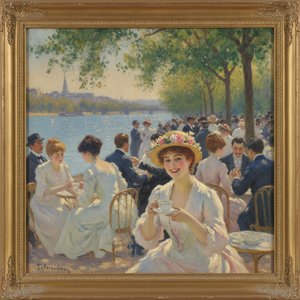
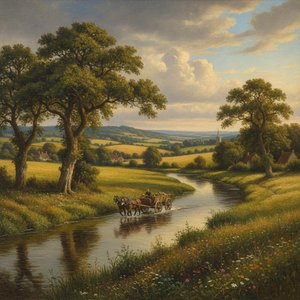
To gaze upon a landscape is to engage in a silent dialogue with time itself. In the early annals of art history, the depiction of natural scenery was often bound by the rigorous demands of topography and documentation. These works served as visual records, meticulously detailing mountains, valleys, and rivers with a precision that favored the literal over the lyrical. The primary objective was clarity; the artist acted as an observer, capturing the physical geography of a region to provide a window into a specific, unadorned reality. As these traditions matured, however, a profound shift began to occur within the Western consciousness. The landscape ceased to be merely a backdrop for historical or mythological drama and emerged as a subject capable of profound psychological resonance.
This transition marked the birth of a more subjective way of seeing. Artists began to move beyond the mere recording of landforms to explore the emotional weight of the wilderness. As we moved toward the Romantic era, the landscape became a vessel for the sublime—a way to express the overwhelming power of nature and the smallness of the human spirit. The focus shifted from the measurable distance between two points to the intangible feeling of awe or melancholy evoked by a storm-tossed sea or a lonely mountain peak. This evolution fundamentally redefined the genre, transforming the canvas from a map into a mirror of the human soul, where every ridge and river could carry the weight of an unspoken sentiment.
The Impressionist Revolution: Capturing the Fugitive Nature of Light and Atmosphere
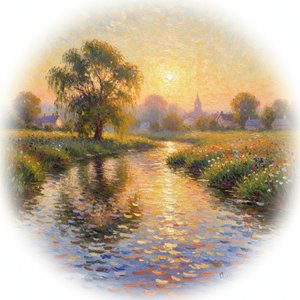 Capturing Light: A Masterclass in the Ethereal Beauty of Impressionistic Landscapes
The Ephemeral Moment: Understanding the Impressionist Philosophy of Light To gaze upon an Impressionist landscape is to witness a profound dialogue between the eye and the passing second. Unlike the rigid, studio-bound traditions of the Académie, whi...
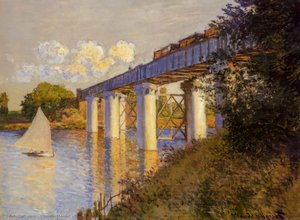
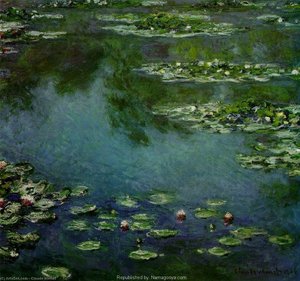
The late 19th century witnessed perhaps the most radical transformation in the history of landscape art: the Impressionist revolution. This movement was not merely a change in technique, but a profound rebellion against the rigid, studio-bound traditions of the Académie. Where the old masters sought to immortalize subjects in permanent, static forms, the Impressionists pursued something far more elusive—the fugitive nature of light. They understood that a meadow at dawn is fundamentally different from that same meadow under the midday sun, and they sought to capture the very vibration of the atmosphere as it danced across the surface of the world.
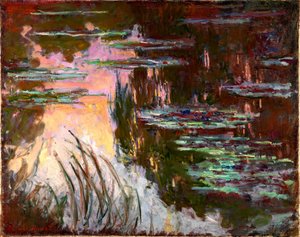
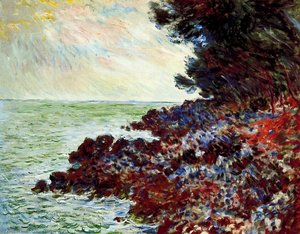
To observe an Impressionist landscape is to witness a masterclass in the science of luminosity. Artists like Claude Monet and Pierre-Auguste Renoir abandoned heavy, blended pigments in favor of broken brushstrokes and pure, unadulterated color applied side-by-side. This technique allowed for optical mixing, where the viewer's eye performs the work of blending, creating a shimmering effect that mimics the true experience of sight. They captured the ephemeral moment—the way sunlight refracts through moisture or how shadows turn a deep, cool blue at twilight. It is an art of the present tense, a continuous attempt to freeze the heartbeat of a moment before it dissolves into the next. For those who cherish this era, owning a high-quality oil reproduction allows one to bring that same sense of light-drenched tranquility and movement into a contemporary living space.
Beyond the Western Eye: The Spiritual Depth of Traditional Chinese Landscape Painting
 Chinese painting
Chinese painting (simplified Chinese: 中国画; traditional Chinese: 中國畫; pinyin: Zhōngguó huà) is one of the oldest continuous artistic traditions in the world. Painting in the traditional style is known today in Chinese as guó huà (国画; 國畫), meaning "nat...
While the West was grappling with the physics of light, an entirely different philosophy of landscape was flourishing in the East. Traditional Chinese painting, or
guó huà, represents one of the world's oldest and most continuous artistic traditions, rooted in a spiritual connection to the natural order. Unlike the Western pursuit of capturing a specific moment in time, Chinese landscape art often seeks to embody the eternal spirit, or
Qi, of the universe. This is not an art of photographic accuracy, but one of meditative essence, drawing deeply from Daoist and Buddhist philosophies that view humanity as an inseparable part of the natural landscape.
The techniques employed in this tradition—such as the delicate use of black ink and colored pigments on silk or paper—emphasize line, balance, and the beauty of emptiness. In many works, particularly those of the literati style, the "void" is just as important as the mountain or the tree; it represents the breath of the cosmos. The mastery lies in the brushwork, where a single stroke can convey the strength of a weathered pine or the softness of a distant mist. This transcultural vision reminds us that landscape painting can transcend mere sight to become an act of spiritual contemplation, inviting the viewer to find harmony within the vast, flowing rhythms of existence.
Mastering Perspective: The Science of Aerial Depth and Compositional Balance
 Aerial perspective
Aerial perspective, or atmospheric perspective, is the effect of the atmosphere has on the appearance of an object as viewed from a distance. As the distance between an object and a viewer increases, the contrast between the object and its background...
The illusion of depth on a two-dimensional surface is one of the most sophisticated achievements in art history. To create a sense of immense scale—to make a viewer feel as though they could walk into a distant mountain range—artists rely heavily on the principle of aerial, or atmospheric, perspective. This scientific phenomenon dictates that as an object recedes into the distance, its contrast decreases, its details soften, and its colors shift toward the cooler, bluer tones of the horizon. By masterfully manipulating these elements, painters can guide the eye through a complex composition, creating a rhythmic journey from the foreground to the furthest reaches of the sky.
Achieving this balance requires a meticulous arrangement of elements into a coherent whole. A successful landscape uses leading lines—perhaps a winding river or a sloping path—to anchor the viewer and pull them into the scene. The interplay of light and shadow is equally crucial, providing the structural bones upon which the atmosphere is draped. When these elements are executed with academic excellence, the result is a sense of profound spatial harmony. This is why collectors often seek out multi-panel or "group set" paintings; by splitting a wide, breathtaking vista across several canvases, one can physically expand the architectural boundaries of a room, recreating the grandeur of a panoramic view within a modern interior.
The Painter's Touch: Exploring Texture, Impasto, and the Tactile Dimension of Nature
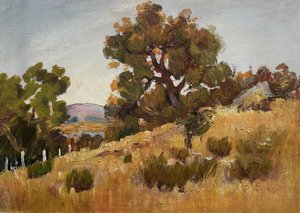 Landscape
A Symphony of Light and Texture In this breathtaking impressionistic landscape, the canvas breathes with the warmth of a sun-drenched afternoon. The artist invites the viewer into a serene, pastoral world where the boundaries between light and matter...
Beyond color and composition lies the physical presence of the paint itself—the tactile dimension that distinguishes a true masterpiece from a mere image. In many of the most celebrated landscapes, particularly those influenced by Impressionism or Expressionism, the artist uses
impasto—the thick, heavy application of paint—to lend a remarkable sculptural quality to the work. This technique allows the canvas to breathe with texture; one can almost feel the ruggedness of tree bark, the weight of a summer cloud, or the rhythmic movement of wind through golden grasses.
This emphasis on texture transforms the painting from a window into a physical object of beauty. The visible brushstrokes and the raised ridges of pigment create a play of light and shadow on the surface of the canvas itself, adding a layer of complexity that a flat print can never replicate. When you hold a hand-painted oil reproduction, you are experiencing the artist's labor and passion through every textured stroke. It is this very materiality—the depth of the tonal range and the physical presence of the oil on cotton canvas—that provides the soul and longevity required for an artwork to become a cherished heirloom in any sophisticated collection.
Bringing the Gallery Home: Preserving the Legacy of Masterpieces in Modern Interiors
The ultimate goal of studying art history is not merely to archive the past, but to allow its beauty to inform our present. Integrating iconic landscapes into a modern home is an act of cultural preservation and personal expression. Whether it is a large-format mural that recreates the grandeur of a Renaissance ceiling or a carefully selected oil reproduction of a Monet, these works serve as anchors of elegance and intellectual depth in our living spaces. They provide a momentary escape from the frenetic pace of modern life, offering instead a window into a world of timeless peace and natural harmony.
To ensure these treasures endure for generations, one must approach their care with the same seriousness as a museum curator. Protecting fine art from direct sunlight and utilizing acid-free materials are essential steps in maintaining the vibrancy of the pigments. As we continue to find new ways to "remix" history—transforming personal memories into the style of the masters or bringing classical vistas into contemporary architecture—we ensure that the legacy of the world's greatest painters remains a living, breathing part of our daily experience. Through the careful selection and preservation of these masterpieces, we keep the flame of human creativity burning brightly in the homes of the modern era.



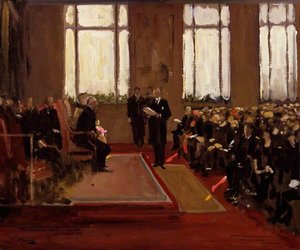 Opening of the Lord Duveen Annexe to the National Portrait Gallery