

The Enlightenment Catalyst: From Rococo Excess to Rational Restraint
 The Revival of Antiquity: Exploring Neoclassical Art's Ideals & Enduring Legacy
The Seeds of Revival: Enlightenment Ideals & Rediscovering Classical Antiquity The latter half of the 18th century witnessed a profound shift in European artistic sensibilities, a deliberate turning away from the ornate frivolity of the Rococo and to...
To understand the profound shift of Neoclassicism, one must first envision the sensory overload of the preceding era. The mid-18th century was dominated by the Rococo, a style characterized by its whimsical frivolity, asymmetrical flourishes, and an almost breathless preoccupation with the ornamental. It was an art of the salon—intimate, decorative, and often steeped in the lighthearted eroticism of the aristocracy. However, as the intellectual currents of the Enlightenment began to surge across Europe, this perceived decadence faced a rigorous critique. Thinkers such as Voltaire and Rousseau were championing a new era of human agency, advocating for a return to natural law and the cultivation of civic virtue.
This intellectual revolution demanded a visual language that could mirror its core values: reason, order, and clarity. The frantic, unscripted energy of the Rococo was increasingly viewed as a symptom of moral decay, prompting a deliberate turning away from the ornate toward something more permanent and disciplined. This was not merely a change in aesthetic preference but a profound philosophical realignment. Artists began to seek a sanctuary of logic, where the chaotic emotions of the moment were replaced by the universal truths of form and composition. The movement sought to anchor the human spirit in the enduring principles of the past, establishing an aesthetic attitude that prioritized restraint over excess and universality over the ephemeral.
The Rediscovery of Antiquity: Pompeii, Herculaneum, and the Archaeological Spark
 The Revival of Antiquity: Exploring the Neoclassical Movement & its Enduring Legacy
Introduction: The Allure of Classical Ideals Wikipedia: Neoclassicism Neoclassicism, also spelled Neo-classicism, emerged as a Western cultural movement in the decorative and visual arts, literature, theatre, music, and architecture that drew inspira...
While the intellectual groundwork was being laid by philosophers, a tangible catalyst emerged from beneath the earth itself. The mid-18th century witnessed one of the most significant archaeological revelations in human history: the unearthing of Pompeii and Herculaneum. These cities, frozen in time by the catastrophic eruption of Mount Vesuvius, offered much more than mere curiosities for the curious traveler; they provided an unprecedented, direct connection to the daily lives, art, and architecture of the Greco-Roman world. Suddenly, classical forms were no longer abstract concepts gleaned from dusty texts or secondhand accounts; they were vibrant, physical realities that could be studied, measured, and emulated.
This archaeological spark ignited a feverish passion for antiquity across the European continent. The discovery of these ruins acted as a powerful stimulant for artists and scholars alike, fueling a desire to reconstruct the lost grandeur of the ancient world. This era of rediscovery transformed the way beauty was perceived, shifting the focus toward the authentic textures and motifs found in the excavated frescoes and sculptures. It provided a new vocabulary of motifs—acanthus leaves, laurel wreaths, and heroic proportions—that would become the hallmarks of Neoclassical design. The movement became an act of artistic pilgrimage, where the study of ancient relics served as the foundation for a modern revival of classical grace.
Architectural Order and Civic Virtue: The Legacy of Schinkel and the Altes Museum
 Altes Museum
A Bastion of Antiquity: Exploring the Altes Museum The Altes Museum in Berlin isn’t merely a building; it's a statement etched in stone—a powerful articulation of Enlightenment ideals rendered tangible on the celebrated Museum Island. Conceived by Ki...
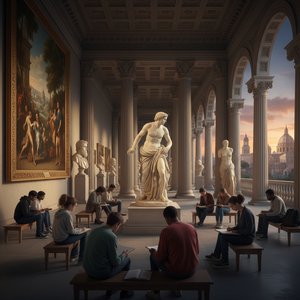
The principles of Neoclassicism found their most enduring expression in the stone and marble of architecture, where the movement’s ideals of symmetry and geometry could be rendered on a monumental scale. Architecture became a medium for articulating Enlightenment ideals, turning buildings into statements of civic permanence. A preeminent example of this is the Altes Museum in Berlin, a masterpiece conceived by King Frederick William III and brought to life through the visionary genius of Karl Friedrich Schinkel. Completed in 1830, the museum stands as a bastion of antiquity on the celebrated Museum Island, embodying the belief that art should be a shared inheritance rather than a private luxury for the elite.
Schinkel’s design is a masterclass in Neoclassical logic. The grandeur of its colonnaded hall, facing the Lustgarten, establishes a deliberate dialogue between the sanctity of the artwork within and the vibrant civic life unfolding outside. Every element, from the precise geometric proportions to the symmetrical layout, reflects a belief in the interconnectedness of art, science, and society. In this architectural landscape, beauty is not an ornament but a functional component of understanding; it is intended to stimulate the intellect and elevate the human spirit. Through such structures, Neoclassicism transformed the urban environment into a classroom of classical virtue, where the order of the built world mirrored the desired order of the civilized mind.
Masters of the Classical Ideal: The Artistry of David, Mengs, and Hamilton
 Anton Raphael Mengs
A Bridge Between Worlds: The Life and Art of Anton Raphael Mengs Anton Raphael Mengs emerged during a fascinating period in European art, a time when the ornate flourishes of the Rococo were beginning to yield to a renewed appreciation for classical ...
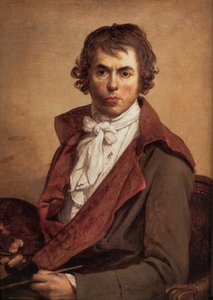
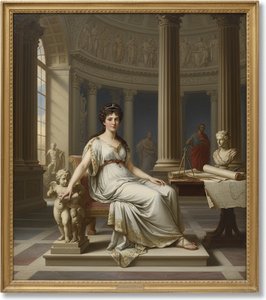
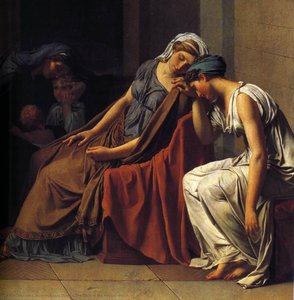
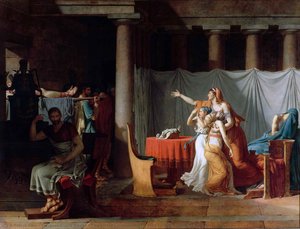
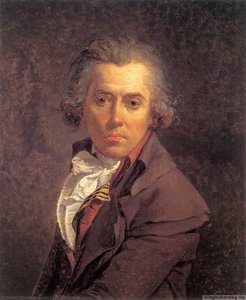
In the realm of painting, the movement found its most powerful voices in artists who could translate historical narratives into scenes of profound moral gravitas. Jacques-Louis David stands as perhaps the most iconic figure of this revolution. Moving away from his early Rococo training, David became the architect of a new French aesthetic, producing works like The Oath of the Emulated that served as manifestos for heroism and sacrifice. His brushwork, characterized by a smooth, almost sculptural clarity, emphasized the drama of Roman history through disciplined composition and intense emotional focus.
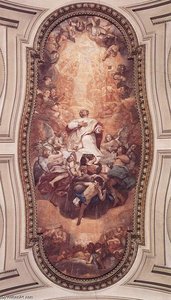
Complementing David’s dramatic intensity were artists like Anton Raphael Mengs and Gavin Hamilton, who bridged the gap between scholarly antiquarianism and fine art. Mengs, a pivotal figure in the transition from Rococo to Neoclassicism, utilized his deep reverence for the works of Raphael and ancient masters to create frescoes that emphasized harmony and elegant figures. Meanwhile, Gavin Hamilton, the "Antiquarian Painter of Rome," brought an unparalleled level of authenticity to his work. His life was a blend of Scottish heritage and Roman scholarship, and his paintings were deeply informed by his direct study of Roman ruins and classical texts. These artists did not merely paint scenes; they interpreted the very essence of antiquity, ensuring that the legends of Homer and the histories of Rome continued to resonate with contemporary audiences through a lens of timeless elegance.
The Enduring Aesthetic: Neoclassicism in Modern Design and Interior Curation
 Neoclassicism Defined: The Timeless Elegance of Order, Grandeur, and the Classical Ideal
The Renaissance of Antiquity: Defining the Neoclassical Aesthetic Neoclassical art | History, Characteristics & Artists - Britannica Neoclassicism in the arts is an aesthetic attitude based on the art of Greece and Rome in antiquity, which invokes ha...
Though the height of the Neoclassical movement has passed, its influence remains an indelible part of our visual heritage. The principles of balance, clarity, and restraint continue to inform modern design, offering a sophisticated alternative to the frenetic energy of contemporary trends. In the curation of fine art for the home, Neoclassical elements provide a sense of stability and historical depth. Whether through the inclusion of a meticulously rendered oil reproduction of a classical landscape or the use of symmetrical architectural motifs in interior styling, the movement’s emphasis on order continues to captivate.
For the modern collector, embracing this aesthetic is an invitation to enter a sanctuary of profound logic and historical reverence. The timelessness of these works lies in their ability to transcend their era, offering a universal beauty that does not rely on the whims of fashion. As we look back at the achievements of the Enlightenment, we find that the Neoclassical ideal—the pursuit of truth through the lens of harmony—remains as relevant today as it was in the eighteenth century. It is an aesthetic that celebrates the enduring strength of human reason and the everlasting allure of the classical spirit.
At ArtsDot.com, we are dedicated to preserving this legacy of human creativity. We specialize in creating museum-quality, hand-painted oil reproductions of the world's most iconic masterpieces. Our master artists, holding degrees from prestigious academies, use traditional techniques on 100% cotton canvas to ensure that every brushstroke captures the soul and texture of the original. Whether you seek a grand multi-panel arrangement for a prominent wall or a custom "period shift" to transform a personal memory into a classical masterpiece, our commitment to academic excellence ensures your collection remains a testament to timeless elegance.