

Introduction
To step into a gallery dedicated to acrylic masterpieces is to witness a revolution captured in pigment. While the slow, luminous depth of oil paint has long commanded our reverence through the centuries, the mid-20th century brought a seismic shift to the canvas. The emergence of acrylic on canvas offered artists an unprecedented vocabulary—one defined by rapid drying times, vibrant saturation, and a versatility that allowed for both razor-sharp precision and explosive, textured layers.
This medium did more than simply provide a new tool; it fundamentally altered the rhythm of artistic creation. It became the heartbeat of movements such as Pop Art and Color Field painting, enabling creators to respond to the frantic, neon energy of a modernizing world with unparalleled immediacy and boldness. These works remain profoundly meaningful today because they capture a specific moment in human history when the heavy boundaries of tradition were being dismantled in favor of pure, unadulterated expression.
As we journey through this curated selection, we will examine ten legendary works that utilized the unique properties of acrylic to redefine the limits of visual storytelling and change the course of art history forever.
Adoration of the Trinity (Landauer Altar) - Albrecht Dürer
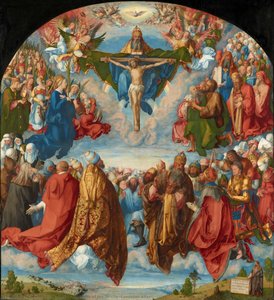 Adoration of the Trinity (Landauer Altar) - Albrecht Dürer
In Albrecht Dürer’s Adoration of the Trinity , the divine is not merely depicted; it is illuminated. The work is defined by an ethereal light that pours through a grand, Venetian-inspired hall, creating a breathtaking interplay of radiance and soft shadow. This masterful command of illumination—a precursor to the dramatic chiaroscuro of later eras—allows Dürer to bridge the gap between the earthly Nuremberg populace and the celestial host. It is this ability to render texture, from the heavy robes of emperors to the humble skin of peasants, through a single, unifying light source that secures its place among the top legendary masterpieces that changed art history.
When brought into a contemporary setting, a faithful reproduction of this monumental work offers more than mere decoration; it introduces a profound sense of architectural depth and historical luxury. The way the light interacts with the surface of a hand-painted oil reproduction adds layers of tactile richness, transforming a modern wall into a window of spiritual and artistic transcendence.
Untitled - Skull, (Broad Collection, LA) - jean michel basquiat
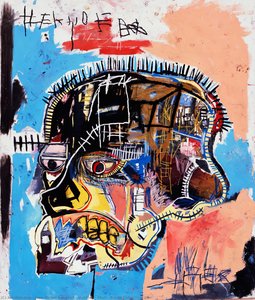 Untitled - Skull, (Broad Collection, LA) - jean michel basquiat
To stand before a canvas that vibrates with the frantic pulse of 1980s New York is to witness the raw edge of human existence. In this visceral encounter, we find Untitled - Skull, (Broad Collection, LA) by Jean-Michel Basquiat , a definitive pillar among the world's most legendary acrylic on canvas masterpieces. Emerging from the vibrant graffiti subculture, Basquiat’s 1981 work shattered the cool detachment of Minimalism, ushering in the era of Neo-Expressionism through a lens of social urgency and identity. The composition is a haunting, deconstructed anatomy of color; intense blues and electric pinks collide with jagged, black lines that dance across a heavily textured surface. Through thick, energetic impasto, the skull becomes more than a symbol of mortality—it is a defiant, living consciousness. This masterpiece does not merely decorate a room; it transforms a space into a profound, emotive dialogue, inviting the viewer to grapple with the beautiful chaos of life itself.
Madonna - Edvard Munch
 Madonna - Edvard Munch
The gaze within Madonna by Edvard Munch does not offer the traditional comfort of religious iconography; instead, it confronts the viewer with a haunting, wide-eyed anguish that pierces through the layers of pigment. As a pivotal inclusion in our exploration of the Top 10 Legendary 'Acrylic On Canvas' Masterpieces That Changed Art Forever , this work serves as a visceral mirror to the complexities of human suffering and the heavy, often shadowed, experience of motherhood. Munch utilizes a swirling vortex of fiery oranges and abyssal blacks to externalize profound psychological turmoil, creating a landscape of existential dread.
Integrating such an emotionally charged masterpiece into your home does more than merely adorn a wall; it transforms a personal sanctuary into a space for profound reflection. The presence of this Expressionist icon invites a contemplative atmosphere, where the raw textures and symbolic depth encourage a deeper connection to the historical weight of human emotion and the enduring power of the artist's vision.
Freedom from want - Norman Rockwell
 Freedom from want - Norman Rockwell
At ArtsDot.com, our mission is to democratize beauty by making the world's most profound historical narratives accessible to all. Few works embody this mission with such heart as Freedom from Want by Norman Rockwell. This masterpiece stands in our top ten not merely for its technical brilliance, but for its enduring emotional power and pivotal role in visual culture. Created in 1942, it serves as a poignant pillar of Roosevelt’s "Four Freedoms," translating the complex ideal of economic security into a relatable, breathtaking scene of domestic abundance.
Rockwell captures a moment of pure gratitude; the warm, diffused light illuminates a bountiful table, where the textures of crisp linen and a glistening roasted turkey evoke a sense of tactile nostalgia. The composition invites us into a sacred circle of family unity that remains as resonant today as it was during the uncertainties of wartime. By choosing one of our high-fidelity, hand-painted oil reproductions, you can bring this transformative presence and the timeless spirit of American resilience into your home, office, or personal gallery.
Suprematist Composition - Kazimir Malevich
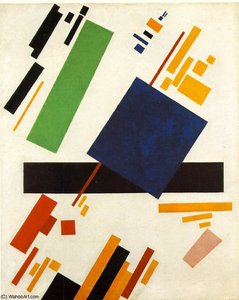 Suprematist Composition - Kazimir Malevich
In Suprematist Composition , Kazimir Malevich eschews traditional chiaroscuro in favor of a radical, internal luminosity. Rather than relying on a singular light source, he utilizes the stark, rhythmic contrast between dark geometric planes and a neutral, expansive void to create a sense of profound visual energy. This mastery of tonal tension is precisely why this work stands as one of the Top 10 Legendary 'Acrylic On Canvas' Masterpieces That Changed Art Forever .
By rejecting representational depth, Malevich invites the viewer into a realm of pure feeling and mathematical precision. When captured in a museum-quality oil reproduction, the sharp delineations and bold, intersecting forms provide an unparalleled architectural elegance. The way these shapes interact with the ambient light of your space adds a sophisticated, avant-garde layer of intellectual depth to your home, transforming any contemporary wall into a curated gallery experience.
Whaam! - Roy Lichtenstein
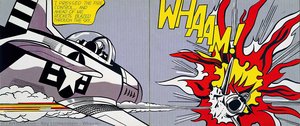 Whaam! - Roy Lichtenstein
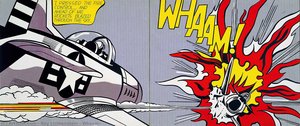
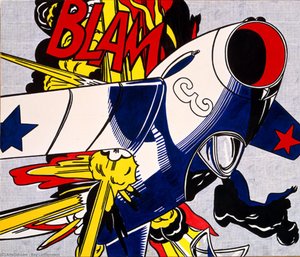
To encounter Whaam! by Roy Lichtenstein is to witness the precise moment high art collided with the pulse of popular culture. As one of the Top 10 Legendary 'Acrylic On Canvas' Masterpieces That Changed Art Forever , this 1963 work serves as a profound exploration of media, detachment, and the aesthetics of violence. Lichtenstein masterfully appropriated the language of comic strips, utilizing the iconic Ben-Day dot system to bridge the gap between commercial printing and fine art. The composition—a dynamic aerial combat scene rendered in striking primary reds, yellows, and blues—uses heavy black outlines to create a sense of graphic immediacy. Beyond its technical brilliance, the painting reflects the clinical, stylized nature of Cold War imagery. For the modern connoisseur, Whaam! is more than a historical artifact; it is a vibrant, commanding statement piece that brings an intellectual edge and a bold, rhythmic energy to any refined contemporary interior.
Three Studies for Figures at the Base of a Crucifixion - Francis Bacon
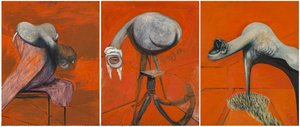 Three Studies for Figures at the Base of a Crucifixion - Francis Bacon
There’s a gaze in "Three Studies for Figures at the Base of a Crucifixion by Francis Bacon" that follows you—not with judgment, but with understanding . This isn’t a portrait; it’s a mirror . Its spot among the Top 10 Legendary 'Acrylic On Canvas' Masterpieces That Changed Art Forever is a testament to its power to make the invisible visible.
Created in 1944, this triptych captures the raw, existential ache of a world in turmoil. Bacon’s figures emerge from a searing, claustrophobic orange void—distorted, fleshy, and hauntingly amorphous. Through thick, gestural brushstrokes and a visceral texture, he translates post-war trauma into a language of pure emotion. The way the light seems to struggle against these writhing forms creates an atmosphere of profound isolation and quiet prestige.
Now, imagine that gaze in your space. Not watching you, but reminding you : you are seen. You are part of the story.
Night Train - Paul Delvaux
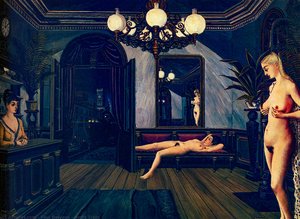 Night Train - Paul Delvaux
To stand before Paul Delvaux’s Night Train is to step directly into the quiet, unsettling theater of the subconscious. There is a profound, haunting stillness in this 1947 masterpiece; the deep indigo shadows and theatrical pools of light evoke that universal, midnight feeling of being suspended between dreams and reality. As one of our Top 10 Legendary 'Acrylic On Canvas' Masterpieces That Changed Art Forever , it earns its place through its unparalleled ability to blend classical academic precision with a surrealist sense of post-war anxiety and longing.
The painting’s power lies in its tension—the way luminous figures emerge from the darkness of a luxurious yet ghostly station. At ArtsDot.com , we believe such evocative history should not be confined to museum walls. Our hand-painted oil reproductions are meticulously crafted to preserve this very atmosphere, using layered brushstrokes and rich pigments to recreate the palpable texture and psychological depth that make Delvaux’s vision so enduringly captivating for any collector.
The Death of Marat - Jacques-Louis David
 The Death of Marat - Jacques-Louis David
There is a profound stillness in The Death of Marat by Jacques-Louis David that follows you—not with judgment, but with understanding . This isn’t merely a portrait of a fallen revolutionary; it is a mirror reflecting the heavy cost of conviction. In this Neoclassical masterpiece, David transforms a brutal assassination into a sacred icon. The somber tones and the stark light falling upon Marat's slumped form evoke the quiet devastation of a martyr. We see the crimson stain spreading across his linens, the discarded dagger, and the simple wooden box that served as his desk—a symbol of revolutionary austerity. By echoing the composition of a Pietà , David elevates a political tragedy to a level of timeless, spiritual significance. Its spot in this collection is a testament to its power to make the invisible weight of history visible. Now, imagine that profound gravity in your space. Not watching you, but reminding you : you are part of the enduring story.
Blue Nude III - Henri Matisse
 Blue Nude III - Henri Matisse
In Blue Nude III by Henri Matisse , we encounter a profound study in geometric equilibrium, where the boundaries between figure and void dissolve into pure form. The composition is anchored by sweeping, fluid lines that trace the contours of the reclining figure, creating a rhythmic balance between the deep, midnight-blue silhouette and the luminous, pale background. This structural harmony—achieved through Matisse’s masterful use of negative space—evokes a sense of timeless perfection that has secured its place among the most legendary masterpieces in art history.
The artwork’s internal stability mirrors the core principles of modern minimalist design; its stripped-back elegance and lack of superfluous detail offer a grounding presence for any contemporary aesthetic. By reducing the human form to its essential, rhythmic elements, Matisse does more than depict a subject; he captures an enduring emotional resonance. This piece stands as a cornerstone of the era, demonstrating how simplified shapes can convey the profound complexity of the human spirit, making it an indispensable entry in our exploration of the works that changed art forever.
Conclusion
As we conclude our journey through these ten transformative works, we are reminded that a masterpiece is never truly finished when it leaves the artist's studio; its life continues in every eye that meets its gaze and every heart it touches. These acrylic marvels, with their unparalleled vibrancy and modern depth, are far more than mere historical artifacts preserved behind velvet ropes. They are living presences, capable of breathing vitality into the quiet corners of our daily lives. To bring such a work into your home is to invite a dialogue between the past and the present, allowing the bold textures and emotive colors of history to shape the very atmosphere of your sanctuary. Whether it is the sudden burst of light in a landscape or the profound stillness of a portrait, these paintings serve as enduring reminders of our capacity for wonder and grace. We invite you to move beyond mere observation and begin a deeper relationship with these legends by exploring our full collection , where the greatness of art history awaits its place within your own story.