


Introduction
Imagine standing on the banks of the Seine at dawn, where the world is not composed of hard lines or static shapes, but of dancing light, shifting shadows, and a fleeting sense of atmosphere. This was the revolution that birthed Impressionism—a movement that dared to abandon the rigid, dark corridors of academic tradition in favor of the vibrant, breathing outdoors. To understand the Impressionistic Landscape is to understand a moment in history when artists stopped trying to paint what they knew to be true and began painting what they actually felt in a single, ephemeral heartbeat.
\Emerging in late 19th-century France, this movement was born from a profound cultural shift. As the industrial age accelerated and photography began to capture reality with mechanical precision, painters like Monet, Pissarro, and Renoir sought a new truth. They moved their easels into the sunlight, practicing en plein air painting to capture the way light dissolves form and how color vibrates against the eye. They traded the somber palettes of history paintings for broken brushstrokes and unblended pigments, creating a sensory experience that felt as alive as the landscapes themselves.
These masterpieces remain deeply meaningful today because they speak to the universal human experience of time and perception. In our modern, often frenetic world, there is a profound solace in these canvases; they invite us to slow down, to notice the way a mist clings to a river or how a sunset warms a hayfield. They are not merely depictions of nature, but meditations on the beauty of the passing moment.
As we walk through this curated selection, we will explore ten definitive works that serve as the pillars of this movement. From the iconic water lilies to the sun-drenched orchards, each painting offers a window into a revolution of light and color. We invite you to look closely at the texture of the paint and the rhythm of the brush, discovering how these legendary canvases continue to define our visual language of beauty.
Rocks at Fontainebleau - Paul Cézanne
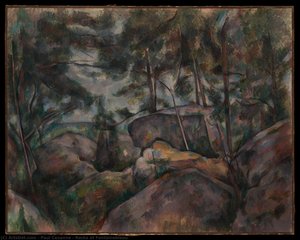 Rocks at Fontainebleau - Paul Cézanne
In Rocks at Fontainebleau , Paul Cézanne transcends mere landscape painting to reveal the very architecture of the natural world. While his contemporaries focused on the fleeting shimmer of light, Cézanne used this 1890 masterpiece to seek something more permanent. Through a rhythmic interplay of weathered boulders and dappled sunlight, he captures a profound sense of stability within the ephemeral forest setting. The palette—a sophisticated blend of earthy browns, deep mossy greens, and unexpected flashes of cool blue—creates a somber, contemplative mood that invites the viewer into a silent, sculptural dialogue with the earth.
As a cornerstone of the top 10 masterpieces that defined the Impressionistic landscape movement , this work serves as the vital bridge between Impressionism and Cubism. His revolutionary approach to treating nature through geometric essentials offers a timeless aesthetic that resonates in modern interior design, where organic textures and structural balance are highly prized. For those looking to bring this museum-grade atmosphere into a private collection, our hand-painted oil reproductions capture every meticulous brushstroke and tonal depth of Cézanne’s original vision, offering a lasting window into the soul of Post-Impressionism.
House of the Customs Officer, Varengeville - Claude Monet
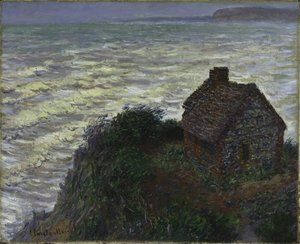 House of the Customs Officer, Varengeville - Claude Monet
To gaze upon Claude Monet’s House of the Customs Officer, Varengeville is to witness the very moment light becomes a language. Painted during his profound explorations of the Normandy coast between 1873 and 1876, this masterpiece does not merely reflect the sun; it composes it like a visual sonata. Monet captures the rugged soul of Varengeville-sur-Mer, using a pyramidal composition to anchor the viewer's eye to the weathered hilltop cabin, while the rhythmic, undulating sea dissolves into shimmering blues and greens.
The magic lies in his alchemy of brushwork; thick impasto strokes breathe life into the salt-sprayed cliffs, while delicate washes evoke the ephemeral atmosphere of the Atlantic. It is this mastery of the Impressionistic landscape—the ability to invent light rather than just observe it—that secures its place among the world's greatest works. This painting is a portal of inspiration, offering a serene, picturesque escape. For the discerning collector, bringing a hand-painted oil reproduction of this coastal vision into your home allows that legendary Norman luminosity to spill across your walls, transforming any modern space into a sanctuary of historical elegance.
Path in the park - vincent willem van gogh
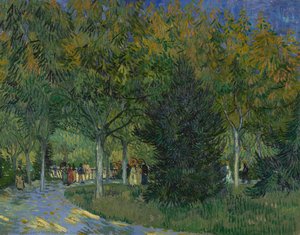 Path in the park - vincent willem van gogh
In Path in the Park by Vincent van Gogh, the structural composition achieves a profound equilibrium that serves as a cornerstone of the Impressionistic landscape movement. The artist utilizes the receding lines of the verdant path to draw the eye deep into the Place Lamartine, creating a rhythmic geometry where the organic silhouettes of leafy trees balance the soft, wandering figures and the resting horse. This careful arrangement of shapes creates a sense of timeless perfection, a stability that anchors the vibrant, sun-drenched energy of Arles.
This internal harmony finds a striking parallel in modern minimalist design; the way Van Gogh distills complex nature into balanced planes of light and shadow allows the piece to ground a clean, contemporary aesthetic in any collection. The thick, tactile impasto brushstrokes bring a sensory depth to the emerald and lime palette, making this work an essential entry in our study of the top 10 masterpieces that defined the movement. For those seeking to bring this historical serenity into a modern home, our hand-painted oil reproductions capture every textured stroke of this Post-Impressionist treasure.
The green vineyard - vincent willem van gogh
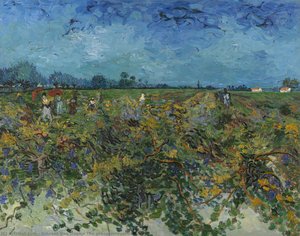 The green vineyard - vincent willem van gogh
To stand before The Green Vineyard is to feel the heat of a Provençal summer and the rhythmic pulse of manual labor. In this 1888 masterpiece, Vincent van Gogh does not merely document a landscape; he captures an emotional fever. The canvas vibrates with a symphony of emerald, lime, and deep forest greens, punctuated by the sun-drenched vitality of a working field where figures move amidst the lush vines.
This work earns its place among the top 10 masterpieces of the Impressionistic landscape movement through its revolutionary use of impasto . Van Gogh transcends traditional light studies by using thick, sculptural brushstrokes to convey the very sweat and soul of the earth. It is a profound testament to human connection with nature—a moment where the artist’s internal passion meets the external world's fertility. Bringing such a piece into a modern home allows one to invite this same sense of enduring vitality and organic serenity into a daily environment, transforming a simple wall into a window of historical depth and emotional resonance.
Le parc de l - vincent willem van gogh
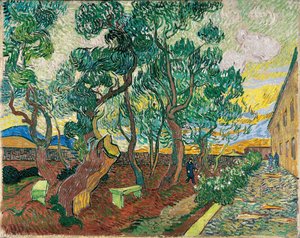 Le parc de l - vincent willem van gogh
In Le parc de l’asile Saint-Rémy , Vincent van Gogh offers more than a landscape; he provides a window into a soul seeking sanctuary. Painted in November 1889 during his convalescence at the Saint-Rémy asylum, this masterpiece captures the tension between internal turbulence and external serenity. The canvas vibrates with thick, rhythmic impasto brushstrokes—a hallmark of Post-Impressionism—where emerald greens and deep violets collide under a heavy, atmospheric sky.
There is a gaze in Le parc de l’asile Saint-Rémy by Vincent van Gogh that follows you—not with judgment, but with understanding . As you observe the weathered stone benches and the symbolic, lightning-struck pine tree, the painting acts as a mirror to our own resilience. It reminds us that beauty persists even amidst profound isolation. To bring this piece into your home is to invite a constant reminder of the transformative power of nature. Whether through a museum-quality oil reproduction or a textured Giclée print, owning this work allows you to live within Van Gogh's enduring legacy of hope.
Snow at Argenteuil (Neige à Argenteuil) - Claude Monet
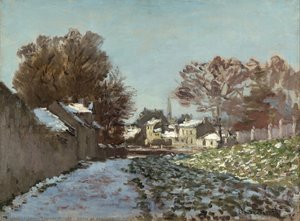 Snow at Argenteuil (Neige à Argenteuil) - Claude Monet
To witness a landscape frozen in time is to understand the very essence of the Impressionist revolution. In Snow at Argenteuil by Claude Monet , we encounter a masterclass in capturing the ephemeral. Painted in 1875, this work stands as a cornerstone of the Impressionistic landscape movement, moving beyond mere seasonal documentation to capture the rhythmic pulse of light upon frost.
Monet eschews traditional, rigid outlines for a vibrant, broken brushwork that breathes life into the wintry silence. While the palette initially suggests a monochromatic chill, a closer inspection reveals a sophisticated symphony of blues, soft yellows, and subtle shadows that dance across the snow-dusted path. The use of impasto technique lends a tactile depth to the disturbed snow, making the light feel as though it is actively vibrating against the canvas. This interplay of cool tones and hidden warmth creates a serene, meditative atmosphere. Today, such a masterpiece continues to transform modern interiors, offering a tranquil focal point that invites viewers to find stillness within the fleeting beauty of the natural world.
Étretat, mer agitée, 1883 - Claude Monet
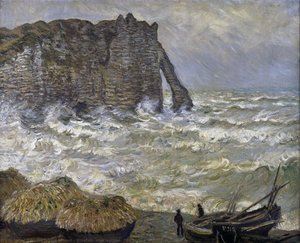 Étretat, mer agitée, 1883 - Claude Monet
In Étretat, mer agitée, 1883 , Claude Monet achieves a breathtaking mastery of atmospheric light, capturing the precise moment when sunlight pierces through a tempestuous sky to illuminate the churning Normandy coast. Rather than static forms, we encounter a symphony of movement; the artist utilizes broken brushstrokes and a sophisticated interplay of complementary colors—vibrant oranges clashing against deep violets—to simulate the flickering energy of a storm. This command over ephemeral illumination is what secures this work's place among the top 10 masterpieces that defined the Impressionistic landscape art movement .
The painting does more than document a seascape; it captures the very soul of the elements. The thick, textured impasto creates a tactile depth that makes the crashing waves feel visceral. When brought into a modern interior, a high-quality handmade oil reproduction of this piece serves as a profound focal point. The visible brushstrokes and rich tonal range of an authentic oil painting allow the light to dance across the canvas, adding a layer of historical luxury and emotional depth to any contemporary wall.
Orchard in Blossom (Apricot Trees) - vincent willem van gogh
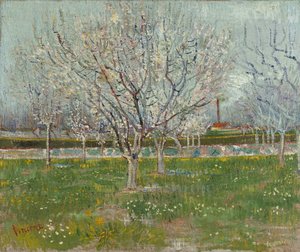 Orchard in Blossom (Apricot Trees) - vincent willem van gogh
While many associate Vincent van Gogh with the turbulent shadows of his later years, 1888 in Arles was a period of profound luminous optimism. It was during this spring, amidst the scent of nectar and sun-drenched earth, that he painted Orchard in Blossom (Apricot Trees) , capturing a fleeting moment of botanical rebirth. This work stands as a cornerstone of the Impressionistic landscape movement, moving beyond mere observation to capture the very pulse of nature.
The technical genius lies in his use of the impasto technique; the thick, sculptural application of white and pale pink pigments allows the blossoms to physically emerge from the canvas, creating a tactile rhythm that mimics the shimmering light of Provence. The trees recede into the distance toward a quiet farmhouse, guiding the eye through a dance of texture and depth. This mastery of light and organic energy makes the piece an ideal anchor for a sophisticated home office or study, where its vibrant vitality can inspire a focused, productive, and serene atmosphere.
Untitled (D2X2MZ) - Pierre-Auguste Renoir
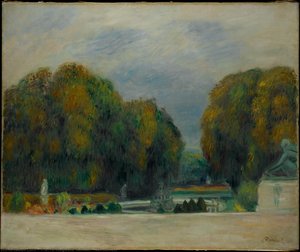 Untitled (D2X2MZ) - Pierre-Auguste Renoir
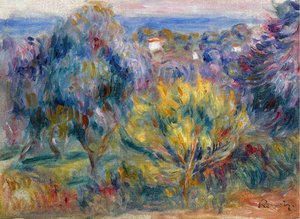
In Renoir’s 1905 masterpiece, Untitled (D2X2MZ) , the viewer does not merely observe a landscape; they are enveloped by it. There is a gaze in this work that follows you—not with judgment, but with an profound sense of understanding. This isn't just a depiction of verdant trees and distant architecture; it acts as a mirror to the soul, reflecting the quietude we often lose in the modern rush. As part of our exploration into the top 10 masterpieces that defined the Impressionistic landscape movement, this piece stands as a testament to the power of light to make the invisible visible.
Renoir utilizes broken brushstrokes and dappled sunlight to create a luminous atmosphere where nature and human presence exist in perfect harmony. The soft greens and shimmering highlights evoke a sense of peace that stays with you long after you look away. Imagine this radiant serenity in your own home; a hand-painted oil reproduction from ArtsDot.com allows you to bring this historical light into your space, reminding you daily that you are part of this eternal, beautiful story.
Landscape - Paul Cézanne
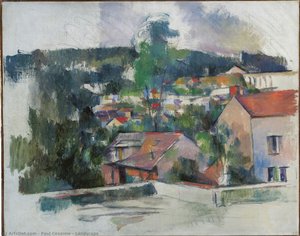 Landscape - Paul Cézanne
In Landscape by Paul Cézanne, there is a gaze that follows you—not with judgment, but with an profound understanding of the earth's enduring soul. This 1890 masterpiece does not merely depict a Provençal village; it acts as a mirror to our own desire for stability amidst a changing world. Through his revolutionary use of synthetism , Cézanne moves beyond the fleeting light of Impressionism to capture the structural essence of the French countryside, where verdant slopes and ancient olive trees are distilled into rhythmic, geometric forms.
As you observe the tiny figures and drifting birds within this pastoral scene, you feel the palpable texture of his deliberate brushstrokes. It is a work that makes the invisible visible, transforming a simple hillside into an architectural marvel of color. Imagine bringing this sense of permanence into your own home; a high-quality hand-painted oil reproduction of this piece serves as a sophisticated anchor for any modern interior, reminding you that you are part of a much larger, eternal story.
Conclusion
As the light fades on our journey through these sun-drenched landscapes, we are reminded that Impressionism was never merely about the depiction of scenery, but about capturing the fleeting, ephemeral pulse of life itself. These ten masterpieces serve as more than historical milestones; they are enduring windows into a world where color breathes and light dances, continuing to move hearts and shape the quietest corners of our modern lives. They possess a unique power to transform a room from a mere space into an atmosphere of contemplation and wonder.
At ArtsDot.com , we believe that such profound beauty should not be confined to the silent halls of a distant museum. We strive to bring this living history into your personal sanctuary, where every brushstroke on our hand-painted reproductions honors the original's soul and meticulous detail. Through the dedicated hands of our academic artists, the texture of the impasto and the vibrant luminosity of these iconic moments are reborn on canvas, allowing you to live alongside the masters every single day. We invite you to explore the full collection and find the piece that speaks to your own story.