


Introduction
To step into the world of the Dutch Golden Age is to enter a period where light itself became a protagonist. During the seventeenth century, while much of Europe remained preoccupied with the grand, sweeping allegories of kings and religious icons, the Dutch Republic underwent a profound cultural metamorphosis. It was an era defined by unprecedented maritime prosperity, scientific curiosity, and the rise of a merchant class that found divinity not in gilded altars, but in the quiet dignity of everyday life—the glint of light on a pewter jug, the texture of a lace collar, or the somber stillness of a domestic interior.
This was a revolution of the gaze. The masters of this age mastered the art of the subtle , capturing a sense of profound realism that feels startlingly intimate even centuries later. They transformed the mundane into the monumental, utilizing techniques like chiaroscuro to pull subjects from the shadows and breathe life into the canvas. Their works do not merely depict scenes; they capture the very atmosphere of an era, inviting us to linger in the soft glow of a candlelit room or to feel the salt spray of a North Sea seascape.
Today, these masterpieces remain deeply resonant because they speak to the universal human experience. They celebrate the beauty found in precision, the weight of solitude, and the quiet splendor of the natural world. Whether through the psychological depth of a portrait or the breathtaking detail of a still life, these paintings offer a window into a soul-searching period of history that continues to shape our visual language.
In the following curation, we shall journey through ten definitive works that embody this unparalleled mastery. From the haunting shadows of Rembrandt to the luminous domesticity of Vermeer, each painting serves as a cornerstone of art history—a testament to a time when the Dutch brush captured the very essence of existence.
The Girl with a Pearl Earring - Johannes Vermeer
 The Girl with a Pearl Earring - Johannes Vermeer
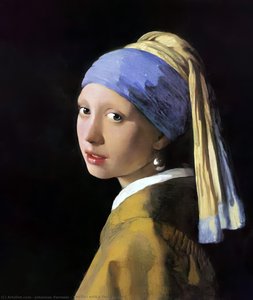
To stand before a masterpiece is to enter a silent dialogue with history. In the quietude of a darkened gallery, one finds themselves captivated by an enigmatic gaze that has pierced through centuries: The Girl with a Pearl Earring by Johannes Vermeer . Created around 1665, this work is not merely a portrait but a profound tronie , a study of character that epitomizes the technical brilliance of the Dutch Golden Age.
Vermeer’s mastery of light is nothing short of miraculous. Through the meticulous application of translucent oil glazes, he captures the soft luminosity of skin and the startling, singular reflection upon the oversized pearl. The palette—a striking harmony of deep ultramarine in her turban and warm, ochre tones—emerges from a void of shadow, pulling the viewer into an intimate, breathless moment. This painting remains a cornerstone of our collection because it transcends its era; its ability to evoke mystery and quiet contemplation allows it to transform any modern space into a sanctuary of classical beauty. Whether through a museum original or a hand-painted oil reproduction, Vermeer’s light continues to illuminate the soul.
A Lady Drinking and a Gentleman and The Glass of Wine - Johannes Vermeer
 A Lady Drinking and a Gentleman and The Glass of Wine - Johannes Vermeer
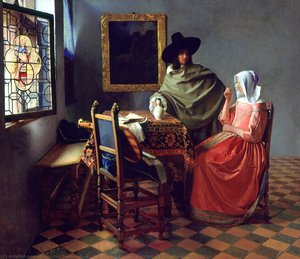
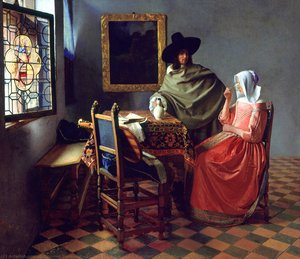
To stand before A Lady Drinking and a Gentleman and The Glass of Wine by Johannes Vermeer is to witness the mastery of light captured through delicate, translucent glazes. In this 1660 masterpiece, Vermeer’s revolutionary technique is evident in the way light filters through the stained glass, illuminating the textures of the woman's vibrant attire and the subtle sheen of the wine glass. His ability to layer thin oils creates a luminous depth that defines the very pinnacle of the Dutch Golden Age , transforming a quiet domestic moment into a profound study of atmosphere and stillness.
At ArtsDot.com, our mission is to preserve this tactile, three-dimensional quality for your private collection. Unlike flat prints, our Handmade Oil Reproductions utilize the same emphasis on visible brushstrokes and rich impasto to recreate the physical soul of Vermeer's work. We bring the museum experience into your home, offering a window into the seventeenth century through meticulously crafted canvases that honor the light, shadow, and historical elegance of this iconic era.
Girl Reading a Letter at an Open Window - Johannes Vermeer
 Girl Reading a Letter at an Open Window - Johannes Vermeer
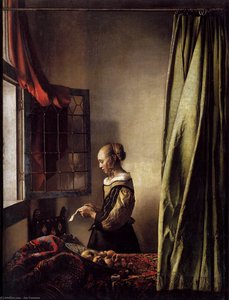
For centuries, the true identity of the creator behind Girl Reading a Letter at an Open Window remained shrouded in mystery; it was not until 1880 that scholars correctly attributed this luminous scene to Johannes Vermeer. This masterpiece of the Dutch Golden Age captures a profound moment of quietude, where the soft, natural light streaming through the window illuminates the subject's face with a celestial glow. Vermeer’s technical genius lies in his ability to manipulate chiaroscuro , using deep shadows and brilliant highlights to render the tactile textures of rumpled bedsheets and heavy drapery.
The composition breathes with a sense of longing, as the open window symbolizes a bridge between the private domestic sphere and the vast world beyond. The subtle presence of fruit and the weight of the letter suggest a narrative of intimacy and unspoken emotion. Such a profound focus on introspection and stillness makes this work an ideal inspiration for a modern study or home office. By bringing a hand-painted reproduction of this Vermeer into your workspace, you invite a sense of scholarly prestige and a tranquil, productive atmosphere that honors the enduring legacy of the Dutch masters.
Winter Scene on a Canal - Hendrick Avercamp
 Winter Scene on a Canal - Hendrick Avercamp
Owning Winter Scene on a Canal by Hendrick Avercamp is not merely an acquisition; it is an inheritance of the Dutch Golden Age spirit. As one of the era's most definitive masterpieces, this work serves as a vibrant window into the 17th-century Netherlands, capturing a frozen moment where community resilience meets seasonal beauty. Avercamp masterfully employs atmospheric perspective, using muted ochres, earthy browns, and soft greys to create a profound sense of depth across the icy expanse.
The canvas breathes with life; through meticulous brushwork, one can almost feel the crisp, biting air and hear the rhythmic scrape of skates upon the canal. Figures bundled in heavy garments engage in a lively tableau of social cohesion, transforming a harsh landscape into a celebration of human warmth. This painting is a lineage of taste, inviting you to bring the quiet prestige of a museum into your own home. At ArtsDot.com, we allow this legacy to live on your walls through our hand-painted oil reproductions , where every visible brushstroke honors the academic excellence of the original master.
Allegory of Faith - Johannes Vermeer
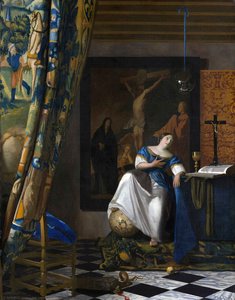 Allegory of Faith - Johannes Vermeer
In Allegory of Faith , Johannes Vermeer transcends mere portraiture to compose a profound meditation on the intersection of the earthly and the divine. As a cornerstone of our selection of the top 10 masterpieces that defined the Dutch Golden Age , this work serves as a masterclass in symbolic storytelling. Vermeer utilizes a dramatic chiaroscuro to illuminate a contemplative woman, whose serene presence is surrounded by a complex language of emblems: a globe beneath her foot signifying the universality of belief, and a crucifix evoking sacrifice.
The painting’s placement among the era's greatest achievements stems from its ability to weave domestic intimacy with grand theological themes. The meticulous textures—from the heavy drapery to the reflective surfaces of the chalice—invite a sensory engagement that remains breathtaking centuries later. This work reminds us that beauty often resides in quiet, introspective moments of truth. For the discerning collector, bringing a hand-painted oil reproduction of this Vermeer into a modern space creates a timeless dialogue, infusing a contemporary interior with the luminous, soulful depth of the 17th-century Dutch tradition.
View of Delft - Johannes Vermeer
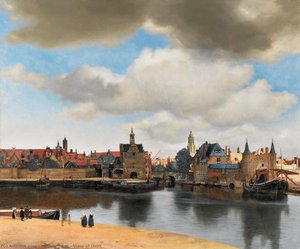 View of Delft - Johannes Vermeer
To stand before Johannes Vermeer’s View of Delft is to witness the Dutch Golden Age caught in a moment of breathless, sun-drenched stillness. The scene opens with a cinematic sweep of the historic harbor, where the cool, reflective blues of the water meet the warm, textured facades of 17th-century architecture. Vermeer, the undisputed master of light, employs a meticulous technique to capture the atmospheric haze of a maritime hub, using subtle gradations of tone to create an immense sense of depth and civic pride.
The painting breathes with life; you can almost sense the gentle movement of clouds and the rhythmic pulse of trade flowing through the canals. The interplay of light on the Nieuwe Kerk spire evokes a profound sense of tranquility and order. This masterpiece does more than document a cityscape; it invites a meditative calm into the modern home. Whether rendered as a large-scale museum-grade oil reproduction or a delicate canvas, its presence transforms a contemporary space into a sanctuary of historical reflection and timeless elegance.
The Large Forest - jacob isaackszoon van ruisdael
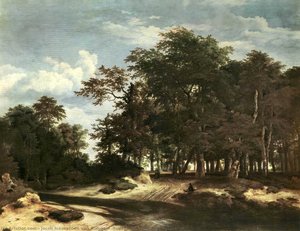 The Large Forest - jacob isaackszoon van ruisdael
In The Large Forest , Jacob van Ruisdael—the preeminent master of the Dutch Golden Age landscape—invites us into a realm of profound natural majesty. This is not merely a depiction of woodland; it is an immersive experience where the air feels heavy with the scent of damp earth and ancient bark. Through masterful layered glazing, Ruisdael captures sunlight filtering through a dense canopy, casting dappled shadows across a winding path that beckons the soul toward quiet contemplation.
The composition utilizes atmospheric perspective to create an immense sense of depth, where the textures of rugged rocks and soft foliage are rendered with tactile realism. A solitary figure amidst the vastness serves as a poignant reminder of humanity's humble connection to the sublime power of nature. To possess such a work is to transform your environment into a gallery of the soul. For those seeking to bring this era of Dutch realism into their own homes, our hand-painted oil reproductions capture every meticulous brushstroke and tonal nuance of Ruisdael’s genius, allowing you to surround yourself with the enduring strength of the Old Masters.
Doctor Nicolaes Tulp's Demonstration of the Anatomy of the Arm - Rembrandt van Rijn
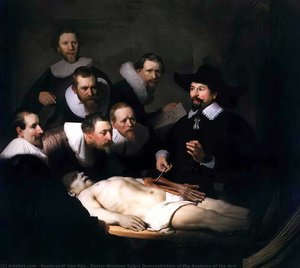 Doctor Nicolaes Tulp's Demonstration of the Anatomy of the Arm - Rembrandt van Rijn
In The Anatomy Lesson of Dr. Nicolaes Tulp , Rembrandt van Rijn transcends the traditional group portrait to deliver a profound meditation on science, mortality, and the dramatic power of light. This masterpiece stands as a pillar of the Dutch Golden Age, captivating viewers through its masterful use of chiaroscuro—the stark contrast between deep, velvety shadows and the luminous, focused light illuminating the cadaver’s arm. Rembrandt does not merely document a medical lecture; he orchestrates a psychological drama where the intense gazes of the surgeons converge upon a single point of anatomical discovery.
The painting's composition, characterized by its intellectual tension and dramatic realism, offers a timeless elegance that resonates in modern interior design, particularly for those seeking to introduce a sense of historical gravity and scholarly prestige to a study or library. For collectors looking to honor this legacy, our hand-painted oil reproductions capture the palpable texture of Rembrandt's brushwork and the somber, academic atmosphere of 17th-century Amsterdam, bringing the profound weight of art history into the contemporary home.
Isaac and Rebecca, known as - Rembrandt van Rijn
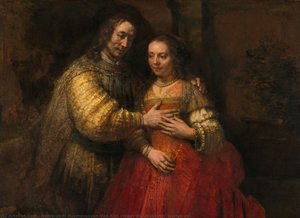 Isaac and Rebecca, known as - Rembrandt van Rijn
In the quietude of 1669, Rembrandt van Rijn captured a breath held in anticipation within Isaac and Rebecca , a masterpiece where light serves as the ultimate narrator of human connection. This work stands as a cornerstone of the Dutch Golden Age, immortalized for its profound psychological depth and its ability to transform a biblical courtship into a universal study of intimacy. Rembrandt employs his legendary chiaroscuro technique to sculpt the figures from the darkness, using a warm, golden glow to illuminate the tender embrace and the delicate textures of Rebecca’s crimson attire against the rugged stone backdrop.
The painting transcends mere historical illustration; it is a sensory experience where the soft flush of youthful emotion meets the heavy, tactile reality of oil on canvas. For the modern collector, such a piece brings an unparalleled sense of sophisticated warmth and narrative gravity to a room. Whether through a museum-grade Handmade Oil Reproduction or a curated print, inviting this era of Dutch Baroque mastery into your home allows the eternal dance of light and shadow to inspire a profound, contemplative calm.
Agatha Bas (1611-58) - Rembrandt van Rijn
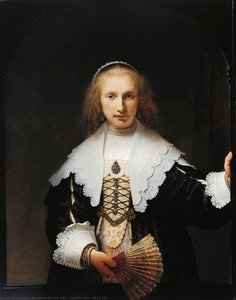 Agatha Bas (1611-58) - Rembrandt van Rijn
In Agatha Bas , the lines of Rembrandt van Rijn are not merely drawn; they are choreographed . This portrait is far more than a static likeness; it is a dance frozen in time, where light and shadow perform a silent, dramatic duet. Painted in 1641, the work utilizes a breathtaking trompe l'oeil technique, creating an ebony frame that seems to break the boundary between the canvas and our reality. As your eyes trace the delicate lace of her collar and the luminous texture of her gown, you feel the spatial ambiguity that defines the Dutch Golden Age.
Rembrandt captures the very essence of presence, using thin glazes to achieve a depth that makes the subject appear to breathe within the room. The meticulous detail—from the fine, incised hairs at her hairline to the symbolic elegance of her attire—invites a profound connection with the past. What if your own living room could hold this same exquisite balance? At ArtsDot.com , we allow your walls to breathe rhythm through our hand-painted oil reproductions, bringing the masterful light of the Baroque era into the modern home.
Conclusion
As the light fades on our journey through the seventeenth century, we are left with more than just a collection of historical facts or technical observations. To stand before these Dutch masterpieces is to realize that the distance between the Golden Age and the present day is far thinner than it appears. The soft glow of a single candle in a Vermeer interior, the profound psychological depth in a Rembrandt portrait, and the quiet dignity of a domestic scene are not merely relics of a bygone era; they are living presulations of the human spirit that continue to breathe within our modern lives.
These works serve as a bridge across centuries, facilitating a silent, timeless conversation between the hands of the master and the eyes of the admirer. Every deliberate brushstroke carries an echo of emotion—a shared sense of wonder, melancholy, or triumph—that transcends the boundaries of time and geography. When we bring these images into our own homes, we do not simply decorate a wall; we invite a profound historical presence to reside with us, allowing the mastery of the past to shape the atmosphere of our contemporary world.
Whether you are moved by the intricate textures of a still life or the soulful gaze of a portrait, we invite you to continue your exploration of this unparalleled era. You may discover more enduring treasures and find the perfect piece to anchor your own space within our full collection . In the end, art remains our most enduring connection to the collective soul of humanity, reminding us that beauty, once captured, never truly fades.




