
Introduction
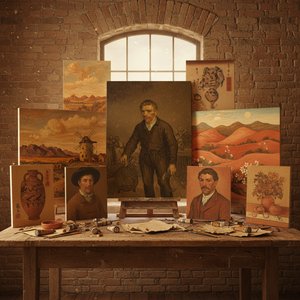
To step into a gallery dominated by earth tones is to return, quite literally, to the very foundations of our existence. There is a profound, grounding resonance in the palette of clay—a spectrum of ochre, burnt sienna, umber, and terracotta that speaks to the primordial connection between humanity and the soil. These are not merely colors; they are the pigments of history, often derived from the very minerals that have shaped our landscapes and sustained our civilizations for millennia.
Throughout the annals of art history, from the shadowed depths of the Renaissance to the textured brilliance of the Baroque and beyond, masters have turned to this earthen vocabulary to evoke stability, warmth, and a sense of timelessness. When an artist leans into these clay-like tones, they are often attempting to capture something eternal. Whether it is the dramatic chiaroscuro that uses deep umbers to sculpt light from darkness, or the sun-drenched landscapes where sienna mimics the heat of a Mediterranean afternoon, these works possess a tactile, organic weight that more vibrant, synthetic palettes often lack.
In our modern, often hyper-saturated digital age, these paintings remain deeply meaningful because they offer an emotional sanctuary. They provide a visual stillness—a way to reconnect with the elemental and the authentic. There is a quiet dignity in a canvas that does not shout with neon, but instead whispers with the richness of the earth.
As we begin our journey through this curated selection, prepare to encounter ten canonical masterpieces that masterfully command the clay palette. We will explore how these artists utilized the warmth of the earth to breathe life into skin, stone, and shadow, creating works that continue to anchor the human spirit even centuries after the final brushstroke dried.
The Elephants, 1948 - Salvador Dalí
 The Elephants, 1948 - Salvador Dalí
While many associate Salvador Dalí with the fluidity of melting clocks, The Elephants (1948) reveals a different kind of tension: the precarious balance between immense weight and impossible fragility. Dalí, deeply immersed in Freudian psychoanalysis during this era, utilized a palette dominated by earthy, clay-like tones to ground his most feverish hallucinations. The composition features two majestic creatures supported by spindly, insect-like legs that seem moments away from buckling under the weight of their stone obelisks.
The technical genius of this piece lies in its ability to marry hyper-realistic rendering with a desolate, scorched landscape. The warm, ochre sands and muted terracotta hues create a sense of ancient, parched stillness, making the surrealist distortion feel disturbingly tangible. This mastery of light and shadow—where heavy shadows meet sun-drenched earth—offers a profound sense of stability amidst chaos. For the discerning collector, hanging a high-quality oil reproduction of this masterpiece in a modern study provides more than just decor; it introduces an atmosphere of intellectual depth and focused, quiet ambition, perfect for inspiring a sophisticated workspace.
Assumption of the Virgin - Titian
 Assumption of the Virgin - Titian
In the presence of Titian’s Assumption of the Virgin , one does not merely observe a painting; one experiences a celestial upheaval. This masterpiece earns its place in our selection of clay-toned wonders through its profound ability to ground divine drama within an earthy, tactile palette. While the heavens erupt in gold and crimson, the base of the composition is anchored by the heavy, somber tones of the apostles, whose robes reflect the deep, muted ochres and clay-like pigments that define the terrestrial realm.
Titian revolutionized the High Renaissance by prioritizing colorito , using these warm, earthen foundations to contrast against the ethereal light of the Virgin’s ascent. This interplay between the weight of the earth and the lightness of the spirit creates a visual tension that has captivated collectors for centuries. At ArtsDot.com, we believe such transformative beauty should not be confined to Venetian basilicas. By commissioning a hand-painted oil reproduction, you can bring this monumental sense of awe and historical gravity into your own home or gallery, allowing the master's dramatic light to illuminate your personal space.
Woman with a Hat - Henri Matisse
 Woman with a Hat - Henri Matisse
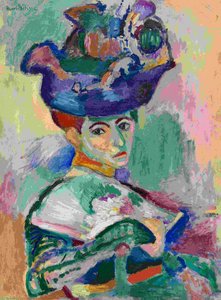
In Woman with a Hat , Henri Matisse orchestrates a sensory revolution that transcends mere portraiture. While the painting is celebrated as the explosive birth of Fauvism, it holds a unique place in our study of earth-toned palettes; beneath the shocking violets and greens, Matisse utilizes deep, grounded clay tones and ochres to provide a structural foundation for his 'wild beast' colors. This portrait of his wife, Amélie, uses these warm, terracotta-like undertones to anchor the composition, preventing the vibrant pigments from losing their physical weight.
The painting’s legacy lies in its ability to balance raw emotion with a sophisticated, earthy stability. For the modern collector, this interplay between radical color and naturalistic warmth offers a timeless aesthetic for contemporary interiors, bridging the gap between avant-garde energy and organic comfort. Whether you are admiring the thick, impasto brushstrokes or seeking a centerpiece that embodies historical significance, a hand-made oil reproduction of this masterpiece brings the profound, textured soul of 1905 into the modern home.
Madonna and Child with an Angel - Sandro Botticelli
 Madonna and Child with an Angel - Sandro Botticelli
In the quietude of 1470, Madonna and Child with an Angel by Sandro Botticelli emerged as a profound meditation on divine tenderness, capturing a moment where heaven and earth softly collide. This masterpiece earns its place among the top paintings dominated by clay tones through its masterful use of an earthy, grounded palette that anchors the celestial figures to the human experience. The composition is a symphony of muted ochres, warm terracottas, and deep, clay-like browns that provide a stable, pyramidal foundation for the Virgin’s luminous presence.
The texture of the painting breathes with life; the subtle use of chiaroscuro allows light to dance across heavy drapery, while the background landscape fades into atmospheric, desaturated tones that evoke a sense of eternal peace. For the modern collector, such a harmonious blend of organic warmth and Renaissance grace offers an unparalleled sense of sophistication and calm. Bringing a hand-painted oil reproduction of this Botticelli into a contemporary home does more than decorate a wall; it introduces a soulful, historical depth that resonates with the timeless beauty of the Florentine Renaissance.
Europe after the Rain II - Max Ernst
 Europe after the Rain II - Max Ernst
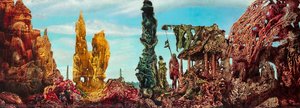
In Europe after the Rain II , Max Ernst orchestrates a profound dialogue between light and decay. The illumination does not merely strike the surface; it seems to emanate from within the very geological strata of the landscape. Through a masterful command of diffuse, ethereal light, Ernst illuminates a world of clay tones —rich ochres, burnt umbers, and deep terracottas—that emerge from the shadows of a post-war psyche. This interplay of light and shadow, or chiaroscuro, transforms rugged, organic formations into something both ancient and alien, securing its place among the most significant surrealist achievements.
The way the soft, atmospheric glow catches the textured impasto creates a sense of immense depth, making the scorched earth feel palpable. When captured in a hand-made oil reproduction , these subtle transitions from warm silt to dark shadow provide a sophisticated focal point for any collection. A faithful reproduction of this work brings a layer of intellectual luxury and historical gravity to a contemporary wall, inviting viewers to contemplate the resilient, sun-drenched beauty found within the wreckage of history.
The fighting téméraire - Joseph Mallord William Turner
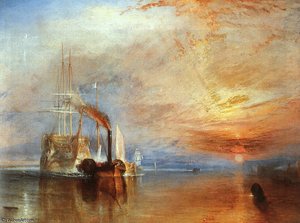 The fighting téméraire - Joseph Mallord William Turner
While many view the sunset in The Fighting Téméraire as a mere spectacle of light, it serves as a profound visual elegy for a dying era. Joseph Mallord William Turner, often called the 'painter of light,' captured the HMS Temeraire—a veteran of Trafalgar—not in her glory, but being towed to her demise by a dark, industrial steam tug. This masterpiece is a cornerstone of our collection of paintings dominated by clay tones and earthy ochres; notice how Turner uses muted, silty pigments and desaturated umbers to ground the ethereal glow of the setting sun.
The technical genius lies in his use of atmospheric perspective, where the heavy, clay-like textures of the water meet a hazy, golden horizon, blurring the line between sea and sky. The composition creates a dialogue between the majestic, spectral white of the sailing ship and the gritty, utilitarian tones of the modern age. Such a powerful meditation on transition and the relentless march of progress provides an intellectually stimulating focal point for a sophisticated study or home office, inviting deep reflection and a sense of historical continuity.
Venus and Mars - Sandro Botticelli
 Venus and Mars - Sandro Botticelli
In Sandro Botticelli’s Venus and Mars , the light does not merely illuminate the scene; it breathes life into a palette of profound earthiness. As you stand before this Renaissance masterpiece, you are enveloped by a sophisticated harmony of clay tones —warm ochres, deep terracottas, and sun-drenched golds that ground the mythological drama in a palpable, tactile reality. Botticelli does not just depict the goddess of love and the god of war; he composes a visual sonata where the heavy, grounded pigments of the landscape contrast beautifully with the luminous, ethereal skin of Venus.
The atmosphere is thick with the scent of a Florentine grove, rendered through meticulous layers of tempera that celebrate the strength of natural, mineral-like hues. This interplay of warm, earthen shadows and soft highlights creates a sense of intimacy and peace, suggesting that even the most formidable forces can be softened by affection. To bring this historical warmth into your own collection, consider a hand-painted oil reproduction . Our artists meticulously recreate these iconic clay tones and visible brushstrokes on cotton canvas, allowing the timeless, tranquil energy of Botticelli’s vision to transform your walls into a portal of classical inspiration.
The Embarkation for Cythera - Jean-Antoine Watteau
 The Embarkation for Cythera - Jean-Antoine Watteau
In The Embarkation for Cythera , Jean-Antoine Watteau achieves a breathtaking structural harmony that anchors this masterpiece within our collection of works dominated by earthy, clay-like tones. The composition is built upon a sophisticated pyramidal arrangement; the central group of aristocrats forms a stable apex, while sweeping organic lines from the winding river and rolling hills guide the eye through a rhythmic, theatrical landscape. This careful balance of movement and stillness creates a sense of timeless perfection, where the soft ochres, deep umbers, and warm sienna hues provide a grounded, tactile depth.
Interestingly, this 18th-century Rococo arrangement mirrors the principles of modern minimalist design. The way Watteau uses atmospheric perspective to simplify distant mountains into muted, clay-colored silhouettes allows the painting to integrate seamlessly into contemporary spaces, providing a sophisticated focal point that does not overwhelm a clean aesthetic. For those looking to bring this historical elegance home, our hand-painted oil reproductions capture every delicate brushstroke and tonal nuance of Watteau’s original vision, offering a window into the era of the fête galante .
Ariadne - John William Waterhouse
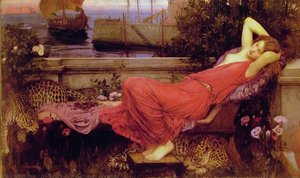 Ariadne - John William Waterhouse
In John William Waterhouse's 1898 masterpiece, Ariadne , the atmosphere is anchored by a profound sense of earthy warmth, where deep, clay-like ochres and terracotta undertones meet the vibrant crimson of the subject's drapery. This palette creates a mood of ancient, sun-drenched opulence, grounding the mythological scene in a tactile, organic reality. Waterhouse masterfully balances these heavy, earthen tones with the lush greenery of the landscape, earning this work a definitive place among the top paintings dominated by clay and warm pigments.
For the discerning collector, integrating such a piece into a modern interior offers a way to curate emotional depth. The painting’s rich, muted shadows and warm highlights can serve as the cornerstone for a dining room or study, providing a sophisticated anchor that complements natural wood textures and soft, ambient lighting. Whether you are drawn to the historical weight of the Pre-Raphaelite style or seeking a centerpiece that evokes timeless tranquility, this work brings a museum-grade elegance to any curated space.
Tuna Fishing, 1967 - Salvador Dalí
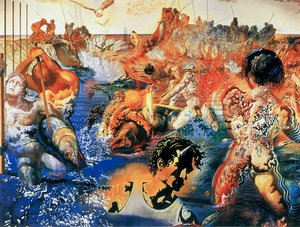 Tuna Fishing, 1967 - Salvador Dalí
In Tuna Fishing (1967), Salvador Dalí transcends mere maritime depiction to present a cosmic struggle, rendered through a feverish palette of earthy ochres, burnt oranges, and deep terracotta. This masterpiece earns its place among the top paintings dominated by clay tones not merely for its warmth, but for how these pigments ground his surrealist chaos. The work serves as a profound homage to the 19th-century painter Meissonier, blending classical battle motifs with a psychedelic, almost visceral energy.
The composition is a dense, swirling sea of nude figures and predatory fish, where the heavy, clay-like hues evoke the raw, primordial nature of life and conflict. As you observe the undulating forms and the intense, sun-drenched textures, one cannot help but reflect on Dalí’s vision of a limited universe reaching its maximum energy. For the discerning collector, bringing a reproduction of this work into a modern space introduces a timeless conversation between historical gravity and avant-garde movement, offering a sophisticated anchor of warmth and intellectual depth to any curated interior.
Conclusion
As the light fades on our journey through these earthen masterpieces, we are reminded that the beauty of clay, ochre, and sienna lies in their profound connection to the very ground upon which we stand. These tones do more than merely decorate a canvas; they anchor the soul, offering a sense of permanence and warmth in an ever-changing world. The works we have explored today are not merely relics of a bygone era held behind museum glass, but living presences that continue to breathe life into our modern spaces, shaping the atmosphere of our homes and stirring the depths of our human connection to history.
To bring such a masterpiece into your own sanctuary is to invite a piece of the eternal into the everyday. At ArtsDot.com , we believe that the profound emotion captured by the masters deserves to be felt tangibly. Every hand-painted reproduction in our care is a labor of reverence, meticulously crafted by skilled artists who honor the original's soul, texture, and delicate tonal range. Through the careful application of oil on canvas, we strive to ensure that the weight of history and the warmth of these clay-toned legends are reborn for your enjoyment, allowing you to live alongside the greatness of the past.
We invite you to continue your exploration and find the piece that speaks to your spirit within our full collection , where every brushstroke serves as a bridge between the timelessness of art history and the intimacy of your home.