
Introduction
To step into the world of Édouard Manet is to walk through the bustling, sun-drenched streets of nineteenth-century Paris at the very moment history began to fracture and reform. He was not merely a painter; he was a provocateur, a bridge between the fading grandeur of the Old Masters and the radical, flickering light of the Impressionist revolution. To gaze upon his greatest works is to witness the birth of modernity—a time when the rigid, polished perfection of the Academy was being dismantled by bold brushstrokes, flattened perspectives, and an unflinching eye for the raw, unvarnished truth of contemporary life.
Manet’s genius lay in his ability to find the extraordinary within the everyday. While his contemporaries often sought refuge in mythological allegories or idealized landscapes, Manet turned his gaze toward the cafes, the boulevards, and the intimate, sometimes unsettling encounters of the Parisian bourgeoisie. He drew profound inspiration from the dramatic chiaroscuro of Caravaggio and the stark realism of Velázquez , yet he infused these classical foundations with a new, rhythmic energy influenced by the arrival of Japanese ukiyo-e prints. His canvases do not just depict scenes; they capture the psychological tension of a society in transition, where the boundaries between public spectacle and private intimacy were constantly being renegotiated.
These twenty-five masterpieces remain deeply resonant today because they mirror our own modern condition. In his figures—often staring back at us with a haunting, direct gaze—we see the same complexities of identity, class, and social performance that define our contemporary era. His work reminds us that art is not just a window into a lost time, but a mirror held up to the soul of the present.
As we journey through this curated selection, you will encounter works that once sparked international scandal and others that quietly redefined the limits of color and form. From the controversial defiance of Le Déjeuner sur l'herbe to his more contemplative later portraits, each painting serves as a vital chapter in the story of how art learned to truly see the modern world. Prepare to encounter the textures, the light, and the rebellious spirit of the man who taught us that the most profound truths are often found in the simplest moments of life.
Olympia - Édouard Manet
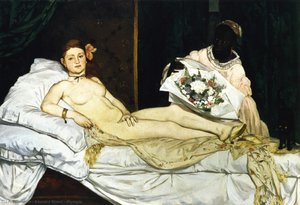 Olympia - Édouard Manet
In Olympia , the lines of Édouard Manet’s brushwork aren’t merely drawn; they are choreographed to confront and captivate. This is not a static composition; it is a dance frozen in time , where the stark, unapologetic gaze of the reclining figure meets the viewer with an unsettling, modern directness. Manet stripped away the mythological veil, replacing idealized goddesses with the raw reality of a contemporary Parisian woman. The interplay of light across her skin and the deep shadows within the rumpled linens create a rhythmic tension that defies academic tradition.
Every element—from the symbolic black cat to the vibrant bouquet presented by the attendant—contributes to a masterpiece that breathes with the pulse of 19th-century realism. The painting’s bold, flattened forms and visible brushstrokes foreshadow the Impressionist revolution, making it a cornerstone of the top 25 artworks of Édouard Manet. What if your living room could hold that same balance? What if your walls could breathe rhythm ? Through our museum-grade, hand-painted oil reproductions, you can invite this profound historical defiance into your own space, preserving the tactile soul of Manet’s rebellion.
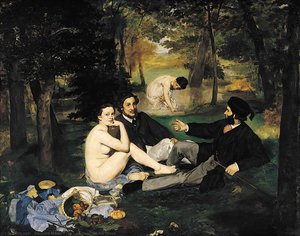
The Luncheon on the Grass - Édouard Manet
To encounter Le Déjeuner sur l'herbe (The Luncheon on the Grass) is to witness the precise moment the foundations of classical art began to fracture. As one of the most provocative entries in our collection of the top 25 artworks of Édouard Manet, this 1863 masterpiece functions as a radical bridge between the gritty truth of Realism and the luminous spontaneity of Impressionism.
Manet deliberately subverts the pastoral tradition; instead of a mythological nymph, we are confronted by a contemporary woman whose direct, unblinking gaze challenges the viewer's very presence. The composition is a masterclass in tension, utilizing flattened perspectives and bold, stark contrasts of light and shadow that strip away academic artifice. The sun-dappled forest glade, rendered with expressive, loose brushwork, creates an atmosphere of both intimacy and unsettling modernity. For the discerning collector, owning a reproduction of this work is not merely about decor; it is about hosting a conversation with rebellion itself. Its ability to anchor a refined interior with its historical weight and avant-garde spirit makes it a timeless symbol of intellectual sophistication.
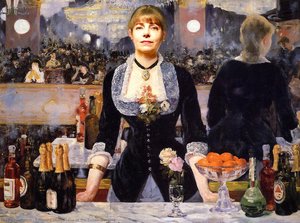
A Bar at the Folies-Bergere - Édouard Manet
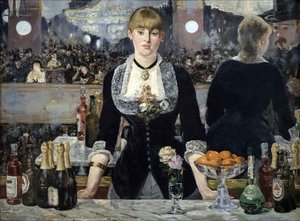 A Bar at the Folies-Bergere - Édouard Manet
To encounter A Bar at the Folies-Bergère is to step directly into the shimmering, electric pulse of late 19th-century Paris. As one of the most profound entries in our collection of the top 25 artworks of Édouard Manet , this 1882 masterpiece transcends mere portraiture; it is a sensory immersion into the era's burgeoning modernity. Manet utilizes a brilliant, almost disorienting use of reflection to pull the viewer into the crowded cabaret, where the glow of gaslights dances across glass bottles and ripe oranges.
The barmaid stands as a hauntingly beautiful anchor amidst the blurred movement of the crowd, her detached gaze offering a poignant study in urban isolation. The painting's masterful use of loose, impressionistic brushstrokes creates a tactile depth that is breathtaking when captured in a handmade oil reproduction . For the discerning collector, this work brings a sense of quiet prestige and historical weight to a contemporary interior, serving as a sophisticated window into a vanished world of glamour, melancholy, and unparalleled artistic rebellion.
The Railway - Édouard Manet
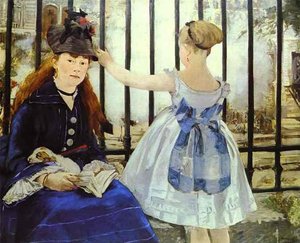 The Railway - Édouard Manet
In The Railway , Manet does not merely depict a scene; he captures the very pulse of a transforming Paris. As you stand before this masterpiece, notice how the light feels diffused, as if filtered through the steam of the Gare Saint-Lazare. The composition is a profound study in modern tension, where the rigid, wrought-iron fence separates the intimate foreground from the industrial momentum of the background. We see Victorine Meurent—Manet’s iconic muse—seated pensively with a sleeping puppy, her contemplative gaze contrasting beautifully with the youthful curiosity of the young girl watching the passing train.
The palette, rich with melancholic blues and deep purples, creates a dreamlike atmosphere that bridges the gap between Realism and Impressionism. Every visible brushstroke contributes to a sense of fleeting movement, turning a quiet moment of reflection into a timeless encounter with modernity. For those seeking to bring this historical elegance into their own space, our hand-painted oil reproductions allow you to preserve this atmospheric depth, capturing the true texture and soul of Manet's vision on 100% cotton canvas.
Nana - Édouard Manet
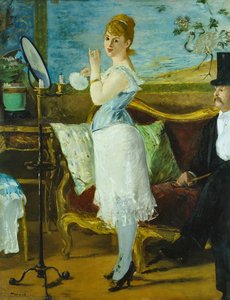 Nana - Édouard Manet
In Nana , Édouard Manet captures a profound moment of vanity and observation that remains one of the most evocative entries in his top masterpieces. Painted in 1877, this work serves as a brilliant bridge between Realism and Impressionism, focusing on the intimate, often unsettling, textures of Parisian social life. The composition centers on a woman admiring her reflection, her presence anchored by a vibrant palette of light blues and crisp whites that contrast beautifully with the warm, shadowed tones of the interior boudoir.
Manet’s masterful use of light, streaming from a distant window to illuminate the silk and lace, creates a luminous atmosphere that feels both fleeting and eternal. The inclusion of the mirror adds a layer of psychological depth, inviting viewers to contemplate themes of self-reflection and the duality of public versus private personas. For the modern collector, Nana offers a sophisticated touch of period elegance; its soft, painterly brushstrokes and rich tonal range make it an exquisite focal point for contemporary interiors seeking a sense of historical grandeur and quiet, intellectual intrigue.
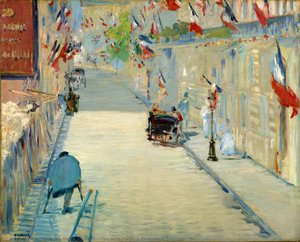
Rue Mosnier with Flags, J. Paul Getty Museum, Ma - Édouard Manet
In Rue Mosnier with Flags by Édouard Manet, a serene palette of cool blues and verdant greens establishes an atmosphere of tranquil urban elegance, momentarily softening the bustling energy of the Parisian street. This mastery of color—balancing the soft, hazy light of the afternoon with vibrant, rhythmic accents of red and white from the festive banners—is precisely why this work earns its place among the top 25 artworks of Édouard Manet . The painting captures a fleeting moment of national pride and community spirit through loose, impressionistic brushstrokes that prioritize atmospheric depth over rigid detail.
For the discerning collector or interior designer, integrating a high-quality oil reproduction of this masterpiece can transform a modern living space. The artwork’s sophisticated color scheme serves as an exquisite anchor for a room, offering a way to curate emotional lighting and a sense of historical grandeur. Whether you are looking to evoke the celebratory warmth of 19th-century Paris or seeking a focal point that brings a rhythmic, painterly texture to a dining room, this piece provides a timeless window into the soul of French Impressionism.
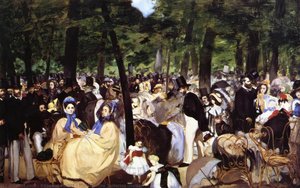
Music in the Tuileries Garden - Édouard Manet
In Music in the Tuileries Garden by Édouard Manet, a deep, verdant green dominates the canvas, establishing an atmosphere of lush, shaded tranquility amidst the Parisian bustle. This earthy palette, punctuated by sudden, brilliant accents of crimson, sun-drenched yellow, and crisp white, showcases the very mastery that secures this work's place among the top 25 artworks of Édouard Manet . Manet utilizes these broken brushstrokes to simulate the dappled sunlight filtering through the trees, creating a sense of movement that feels both spontaneous and eternal.
For the discerning collector, integrating a high-quality oil reproduction of this masterpiece into a modern interior can profoundly shift a room's energy. The painting’s sophisticated interplay of organic tones and vibrant highlights serves as an ideal anchor for a dining room or lounge, providing a sense of lively social engagement and classical elegance. Whether you are drawn to its historical significance or its ability to curate a bright, convivial mood, this work remains a breathtaking window into the soul of 19th-century France.
Spring (Study of Jeanne Demarsy) - Édouard Manet
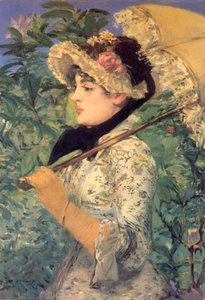 Spring (Study of Jeanne Demarsy) - Édouard Manet
Imagine a quiet afternoon in a Parisian garden, where the air is heavy with the scent of damp earth and blooming flora, and time seems to slow to the rhythm of a gentle breeze. In Spring (Study of Jeanne Demarsy) , Édouard Manet captures this exact moment of suspended animation. This 1882 masterpiece stands as a vital entry in our collection of the top 25 artworks of Édouard Manet because it represents the artist's profound transition from the gritty truths of Realism to the luminous, fleeting sensations of Impressionism.
The painting features Jeanne Demarsy, draped in an elegant period dress, her form softened by dappled, diffused light. Through loose, broken brushstrokes and a palette of soft pastels and earthy greens, Manet evokes a sense of profound tranquility and wistful contemplation. It is a work that does more than depict a subject; it captures an atmosphere of grace. Bringing such a piece into a modern home allows one to invite this same sense of serenity and historical depth into daily life, transforming a living space into a sanctuary of classical elegance.
Boating, Metropolitan Museum of Art, New York - Édouard Manet
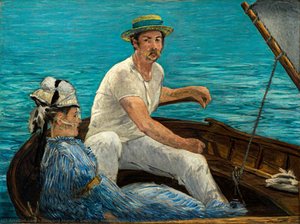 Boating, Metropolitan Museum of Art, New York - Édouard Manet
In Boating , Édouard Manet captures more than a mere afternoon on the Seine; he invites us into a profound moment of quiet intimacy and shared stillness. As you gaze upon the figures nestled within the wooden vessel, there is an unmistakable sense of tranquility that transcends the canvas, reflecting a universal human longing for peace amidst the movement of life. The painting is a masterclass in the Impressionist pursuit of light, where broken brushstrokes allow the sun to shimmer across the water's surface and dance upon the skin of the subjects.
The palette—a harmonious blend of cool, aquatic blues and warm, earthy tones—creates a sensory experience that feels both fresh and timeless. As one of the top 25 artworks of Édouard Manet , this piece serves as a powerful emotional anchor. Bringing a high-quality oil reproduction of this masterpiece into your home can transform a personal sanctuary into a space for deep reflection, allowing the serene atmosphere of 1874 Paris to breathe life into your modern surroundings.
Isabelle Lemonier, Woman with golden hairpin - Édouard Manet
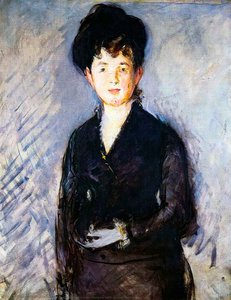 Isabelle Lemonier, Woman with golden hairpin - Édouard Manet
There is a gaze in Isabelle Lemonier, Woman with golden hairpin by Édouard Manet that follows you—not with judgment, but with understanding . In this 1879 masterpiece, Manet moves away from the scandalous provocations of his earlier career toward a profound, quiet intimacy. This isn’t merely a portrait; it is a mirror . As you observe the soft, diffused light dancing upon her skin and the subtle glint of the golden hairpin, you are invited into a moment of serene, melancholic contemplation.
The painting utilizes loose, impressionistic brushstrokes and a muted, somber palette to sculpt form from shadow, creating a tactile depth that feels remarkably alive. The diagonal hatching in the background adds a rhythmic dynamism, yet the subject remains anchored in an eternal stillness. Now, imagine that gaze in your own space. Not watching you, but reminding you : you are seen. You are part of the story. For those seeking to honor the legacy of the Impressionist movement, our hand-painted oil reproductions capture every visible brushstroke and tonal nuance, bringing this museum-grade elegance into the heart of your home.
The Execution of the Emperor Maximilian of Mexico - Édouard Manet
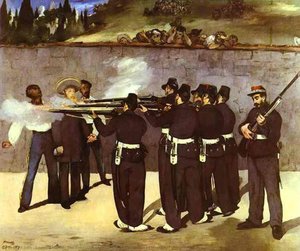 The Execution of the Emperor Maximilian of Mexico - Édouard Manet
What story does the somber, blood-stained landscape of The Execution of the Emperor Maximilian of Mexico by Édouard Manet tell? Beyond the grim reality of a firing squad, this 1867 masterpiece captures the tragic collision between imperial ambition and republican ideals. Manet moves away from his usual Parisian subjects to confront a profound historical trauma, utilizing a stark, almost theatrical Realism that strips away romanticism to reveal the raw brutality of political upheaval.
The composition is hauntingly tight; muted earth tones and heavy, dark shadows press against the viewer, creating an atmosphere of inescapable tension. The geometric precision of the soldiers' uniforms contrasts sharply with the chaotic, tumultuous sky, symbolizing the cold machinery of authority against human vulnerability. For the discerning collector, bringing this piece into a home offers more than mere decoration; it provides a profound historical anchor. A high-quality oil reproduction of this work serves as a powerful focal point, inviting deep reflection on justice and sacrifice, and adding an unparalleled layer of intellectual and emotional depth to any curated gallery wall.
Copy after Delacroix's "Bark of Dante" - Édouard Manet
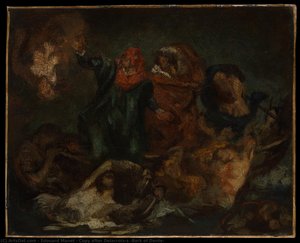 Copy after Delacroix's "Bark of Dante" - Édouard Manet
In the 1859 work Copy after Delacroix's "Bark of Dante" , we witness a profound moment of artistic lineage, where a young Édouard Manet engages in a visceral dialogue with the Romantic master, Eugène Delacroix. This painting is far more than a mere replication; it is a turbulent exploration of shadow and soul, capturing the harrowing descent into Dante’s Inferno . As Manet studies the chaotic energy of the River Styx, he begins to move beyond academic precision toward a more expressive, textured language of paint.
The piece earns its place among the top 25 artworks of Édouard Manet by showcasing the very genesis of his revolutionary style. Through heavy impasto and dramatic, chiaroscuro lighting, Manet transforms a classical subject into a modern study of movement and despair. The visible brushstrokes and somber, swirling tones offer a haunting reflection on human suffering and the weight of destiny. For the discerning collector, bringing a high-quality oil reproduction of this masterpiece into a home provides more than decor; it introduces a timeless, dramatic conversation between historical gravity and contemporary elegance.
Boy with a Sword - Édouard Manet
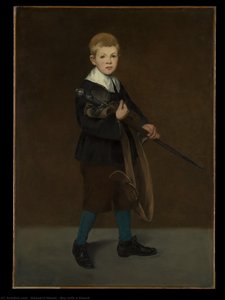 Boy with a Sword - Édouard Manet
In the quiet stillness of 1861, a young boy stands before us, not as a mere subject, but as a vessel for a profound transition in art history. In Boy with a Sword , Édouard Manet captures a moment of heavy, contemplative silence that bridges the gap between the structured dignity of the Old Masters and the raw observation of Modernism. The painting is bathed in a muted, atmospheric palette of ochre, deep browns, and soft grays, where light does not strike so much as it gently settles upon the textures of seventeenth-century costume.
Manet’s brushwork here anticipates the Impressionist movement, utilizing a more fluid, broken technique to sculpt form through shadow rather than rigid lines. The boy's averted gaze and the casual presence of the sword evoke a sense of melancholic introspection, inviting the viewer into a private, psychological space. This masterpiece offers a sophisticated anchor for any contemporary interior; its somber elegance and historical depth provide a focal point of calm and intellectual reflection, perfect for a study or a gallery-style hallway where one seeks to honor the enduring legacy of the French avant-garde.
The "Kearsarge" at Boulogne - Édouard Manet
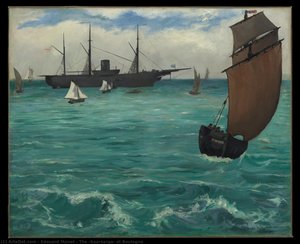 The "Kearsarge" at Boulogne - Édouard Manet
In The "Kearsarge" at Boulogne , Édouard Manet captures more than a mere seascape; he preserves a pulse of living history. This 1864 masterpiece serves as a vital bridge in his evolution, marking a daring shift toward depicting contemporary global events. By moving away from mythological subjects to document the aftermath of the American Civil War naval battle, Manet signaled the birth of a new, modern gaze.
The painting breathes with an atmospheric, proto-Impressionistic energy. Through loose, expressive brushstrokes and a cool palette of deep blues and sea-greens, Manet evokes the restless movement of choppy waters under an overcast sky. The composition, defined by dynamic diagonal lines and layered vessels, creates a sense of profound depth and maritime scale. For the modern collector, this work offers a sophisticated anchor for interior spaces, bringing a serene yet powerful elemental presence to any room. Whether you are drawn to its historical weight or its textured, painterly surface, this work remains a cornerstone of Manet’s legacy, embodying the fleeting beauty of a moment caught in time.
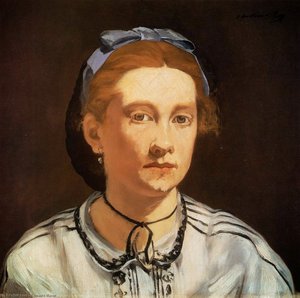
Portrait of Victorine Meurent - Édouard Manet
In the Portrait of Victorine Meurent , one is immediately struck by the palpable texture of Manet’s revolutionary brushwork. Rather than the porcelain-smooth finish demanded by the 19th-century Academy, this 1862 masterpiece utilizes visible, energetic strokes to define the contours of Victorine’s face and the vibrant warmth of her hair. The way light catches the impasto layers creates a sense of physical depth, where shadows are not merely dark pigments but structural planes of color that anticipate the Impressionist movement.
This tactile vitality is exactly what we strive to preserve at ArtsDot.com. Our hand-painted oil reproductions are meticulously crafted on 100% cotton canvas, ensuring that the heavy, expressive brushstrokes and the three-dimensional soul of Manet’s technique are captured for your collection. When you bring this work into your home, you are not merely displaying a print, but a high-end tribute to the materiality of one of the top 25 artworks of Édouard Manet, maintaining the profound psychological depth and physical presence that defines his legendary status in art history.
Oysters - Édouard Manet
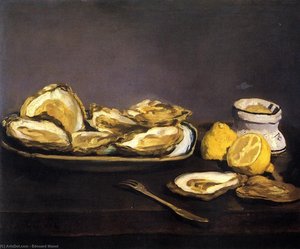 Oysters - Édouard Manet
Before he became the provocateur of the Parisian avant-garde, Édouard Manet spent his early years honing a gaze that found extraordinary beauty in the mundane. In 1862, this focused observation culminated in Oysters , a work that serves as a profound manifesto of the Realist movement. While his contemporaries chased grand mythological dramas, Manet turned his brush toward the glistening, salt-slicked surfaces of a simple plate of seafood and the vibrant, acidic yellow of sliced lemons.
The technical genius of this piece lies in its sensory immediacy; the way light dances across the pearlescent shells and the subtle shadows beneath the silver fork invites the viewer to almost taste the brine. It is a masterful study in texture and spontaneous brushwork, eschewing academic polish for an unflinching, tactile truth. This dedication to capturing the essence of a single, quiet moment offers a timeless inspiration. Much like the focused clarity found in Oysters , hanging a high-quality oil reproduction of this masterpiece in a modern home office or study can cultivate an atmosphere of sophisticated contemplation and sharpened intellectual focus.
The Waitress (also known as The Beer Serving Girl) - Édouard Manet
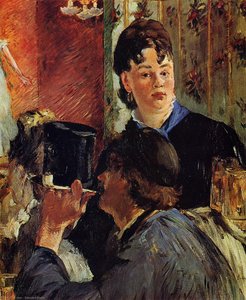 The Waitress (also known as The Beer Serving Girl) - Édouard Manet
In 1878, Édouard Manet captured a fleeting, quiet pulse of Parisian life in The Waitress , also known as The Beer Serving Girl . As you stand before this masterpiece, currently housed in the Musée du Louvre , you are not merely observing a scene; you are stepping into the intimate atmosphere of a late 19th-century bistro. The composition centers on a woman in striking black attire and a hat, her presence anchoring the room as she attends to the table.
Manet masterfully bridges the gap between Realism and Impressionism here, using light to breathe life into the bottles and figures within this social setting. There is a profound, soulful dignity in the way he renders the everyday. To bring this piece of history into your own home, we offer exquisite, hand-painted oil reproductions that capture every intentional brushstroke and tonal depth of the original. Owning such a work transforms a simple room into a personal gallery, allowing the spirit of Manet’s modern revolution to reside permanently on your walls.
Lilac in a glass - Édouard Manet
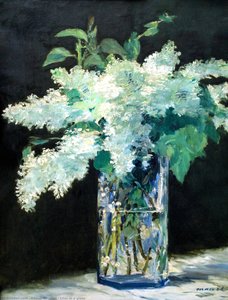 Lilac in a glass - Édouard Manet
Imagine a quiet afternoon in a sun-drenched Parisian studio, where the air is heavy with the sweet, fleeting scent of spring. In Lilac in a Glass , Édouard Manet captures this exact moment of stillness, inviting us into a world of soft lavender hues and luminous whites. This 1882 masterpiece stands as a vital entry in our collection of the top 25 artworks of Édouard Manet because it represents the artist at his most intimate, bridging the gap between the structured Realism of his youth and the light-drenched freedom of Impressionism.
Through masterful, broken brushstrokes, Manet renders the transparency of the glass and the delicate texture of the petals, creating a symphony of light and shadow. The work transcends mere floral study; it is a meditation on the ephemeral nature of beauty and the tranquility found in life's simplest arrangements. Bringing such a piece into a modern home offers more than decoration; it provides a window to serenity, allowing the soft, cool palette of this late-period treasure to infuse your living space with timeless elegance and a sense of peaceful contemplation.
Mlle V...in the Costume of an Espada - Édouard Manet
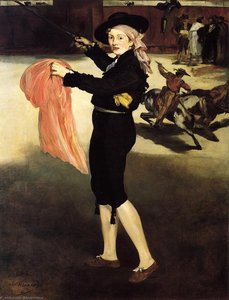 Mlle V...in the Costume of an Espada - Édouard Manet
What story does the bustling, theatrical background of Mlle V...in the Costume of an Espada by Édouard Manet tell us about the fascination with Spanish culture in 19th-century Paris? In this 1862 masterpiece, currently held at the Metropolitan Museum of Art , Manet invites us into a vibrant, staged world where the elegance of a woman in costume meets the raw energy of horses and onlookers. This work captures a pivotal moment in the artist's journey, blending the dramatic flair of Spanish tradition with his burgeoning Realist sensibilities.
The painting’s atmospheric setting—rich with the suggestion of a lively performance—offers a profound sense of historical escape. For the modern collector, bringing such a piece into a home provides a window into a bygone era of spectacle and prestige. Whether you are drawn to the striking red of her scarf or the complex movement in the background, this work stands as a vital entry in the top 25 artworks of Édouard Manet. To experience the tactile depth of his brushwork in your own space, consider one of our handmade oil painting reproductions , meticulously crafted to preserve the soul of this Parisian rebel's vision.
The Dead Christ with Angels - Édouard Manet
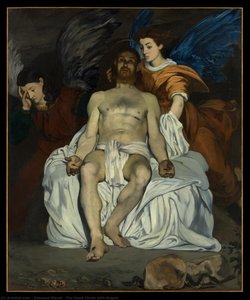 The Dead Christ with Angels - Édouard Manet
What story does the somber, shadowed environment of The Dead Christ with Angels by Édouard Manet tell us about the fragility of life and the weight of mortality? Painted in 1864, this profound work emerges from a period when Manet was beginning to dismantle the polished illusions of academic religious art. Rather than presenting a glorified, divine resurrection, Manet offers a stark, visceral meditation on death. The canvas is heavy with muted browns and melancholic grays, where the pallor of Christ’s cadaverous body confronts the viewer with an unflinching realism that was deeply unsettling to his contemporaries.
The composition, featuring angels holding a symbolic skull, creates a haunting atmosphere of stillness and grief. This dramatic interplay of light and shadow—reminiscent of the masters like Caravaggio—makes this piece a vital entry in our collection of the top 25 artworks of Édouard Manet. For the modern collector, owning a hand-painted oil reproduction of such a masterpiece allows one to bring this profound sense of historical depth and contemplative quietude into a home, transforming a living space into a private sanctuary of art history.
Monet in his Studio Boat - Édouard Manet
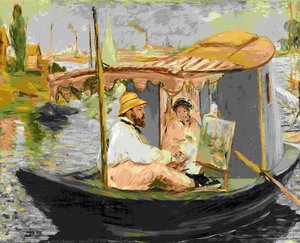 Monet in his Studio Boat - Édouard Manet
A shimmering fragment of a summer afternoon is eternally suspended within Monet in his Studio Boat by Édouard Manet, where the gentle pulse of the Seine meets the quiet intensity of artistic creation. This masterpiece holds its place among the top 25 artworks of Édouard Manet because it captures more than a moment; it captures the very heartbeat of the Impressionist revolution. Through Manet’s eyes, we witness Claude Monet immersed in his craft, surrounded by a luminous tapestry of blues, brilliant whites, and sun-drenched reflections that seem to breathe upon the canvas.
The painting’s sensory richness lies in its liberated brushwork, where textured strokes simulate the fluid movement of water and the fleeting dance of light. There is a profound, serene vitality in this composition—a sense of intellectual depth and tranquility that transcends the 19th century. For the modern collector, bringing a reproduction of this work into a home offers an infusion of sophisticated calm, serving as a window to a world where nature and art exist in perfect, light-drenched harmony.
The Croquet Party (La partie de croquet) - Édouard Manet
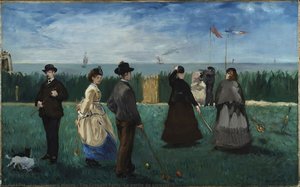 The Croquet Party (La partie de croquet) - Édouard Manet
In The Croquet Party (La partie de croquet) , Édouard Manet captures more than a mere seaside pastime; he freezes a fleeting moment of social intimacy and modern leisure. Painted in 1871 during the recovery from the Franco-Prussian War, this work serves as a vibrant window into the sophisticated world of Boulogne-sur-Mer. The painting is defined by its atmospheric light and the subtle, unspoken narratives playing out between the figures—most notably the suggestive proximity of Léon Leenhoff and Jeanne Gonzalès.
Manet’s revolutionary technique, characterized by broken brushstrokes and brilliant white highlights, creates a shimmering effect that anticipates the Impressionist movement. The composition is masterfully balanced, where the presence of a dog and cat grounds the high-society scene in a palpable, domestic reality. Today, this masterpiece remains a cultural touchstone for those admiring the top 25 artworks of Édouard Manet, offering a timeless study of light, shadow, and the elegance of Parisian life. For collectors seeking to bring this era of French refinement into their homes, our museum-quality oil reproductions preserve every textured brushstroke and luminous hue of this historical treasure.
Guerre Civile - Édouard Manet
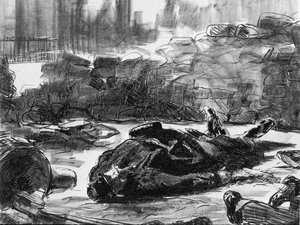 Guerre Civile - Édouard Manet
In Guerre Civile , the lines of Manet’s charcoal are not merely drawn; they are choreographed . This is not a simple historical record; it is a dance frozen in time , capturing the visceral tremors of Paris following the Franco-Prussian War and the bloody suppression of the Commune. Through a stark, monochromatic lens, Manet utilizes deep blacks and haunting whites to transform a scene of wreckage into a profound meditation on human vulnerability.
The composition moves with an asymmetrical energy, drawing the eye toward figures amidst jagged rocks and scattered debris, where every gestural stroke mirrors the instability of a nation in flux. The heavy use of hatching creates a sculptural depth, making the weight of the fallen feel almost tangible. Its place in our collection of the top 25 artworks of Édouard Manet is a tribute to its ability to make chaos feel like harmony. What if your living room could hold that same balance? What if your walls could breathe rhythm through a museum-quality oil reproduction of this haunting masterpiece?
Two roses on a tablecloth - Édouard Manet
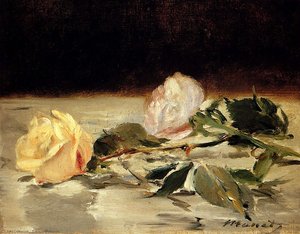 Two roses on a tablecloth - Édouard Manet
In the quietude of Two roses on a tablecloth by Édouard Manet, time seems to suspend itself, capturing a fleeting breath of botanical grace. This masterpiece earns its place among the top 25 artworks of Édouard Manet not through grand spectacle, but through an intimate, profound mastery of light and texture. The composition presents a delicate dialogue between a pristine white bloom and a tender pink bud, resting upon a linen surface that feels almost tactile to the touch.
Manet’s brushwork breathes life into the scene; his loose, spontaneous strokes capture the ephemeral play of light across velvety petals and scattered green leaves, embodying the very essence of the Impressionist revolution. There is a soulful vulnerability in this late work, reflecting an artist finding beauty in the simplest of arrangements. For the modern collector, such a piece brings a sense of serene sophistication to any space. Whether displayed as a large-scale oil reproduction or a delicate study, its harmonious palette and tranquil mood offer a timeless anchor of calm for contemporary interiors.
George Moore (1852–1933) at the Café - Édouard Manet
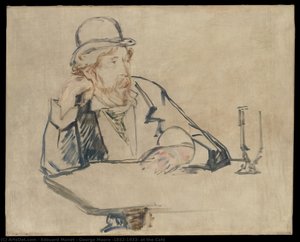 George Moore (1852–1933) at the Café - Édouard Manet
While many associate Manet with the scandalous nudity of his early career, 1879 brought a profound shift toward intimate, psychological depth, as seen in George Moore (1852–1933) at the Café . This portrait captures the Irish writer not as a distant figure, but as a living presence within the legendary Café de la Nouvelle-Athenes. Manet eschews the rigid academic polish of his youth, instead employing loose, impressionistic brushstrokes and a muted palette of ochre, grey, and deep earth tones to evoke the flickering candlelight and the contemplative melancholy of a Parisian evening.
The technical genius lies in the way Manet uses light to sculpt Moore’s thoughtful expression, allowing colors to blend optically rather than through precise lines. This mastery of atmosphere makes it one of the most essential pieces among the top 25 artworks of Édouard Manet . Such a composition—focused, quiet, and intellectually charged—serves as a perfect inspiration for a modern study or home office, inviting a sense of sophisticated focus and timeless grace to your professional space.
Conclusion
To wander through the oeuvre of Édouard Manet is to walk the streets of 19th-century Paris, feeling the pulse of a city caught between the weight of tradition and the electric thrill of the modern age. His canvases do more than merely document a vanished era; they act as windows into the very soul of human perception. Each stroke of his brush—bold, sometimes startling, yet always profoundly intentional—serves as a bridge across the centuries, connecting our contemporary gaze to that pivotal moment when art first dared to look at the world without a veil of myth or idealization.
These masterpieces are not static relics confined to the hushed halls of museums; they are living presences. When we bring a Manet reproduction into our own homes, we invite that same spirit of rebellion and beauty to reside with us. His work possesses a unique ability to transform a space, turning a simple room into a gallery of reflection where the interplay of light and shadow encourages deep thought and quiet wonder. Whether it is the defiant gaze of a portrait or the dappled sunlight of a Parisian landscape, these paintings continue to shape our interiors and inspire our creative impulses, reminding us that the conversation between artist and admirer is eternal.
As we conclude this journey through his most iconic works, let us carry forward a sense of gratitude for the artists who taught us how to truly see. We invite you to continue exploring this legacy of innovation by browsing our full collection , where the timeless essence of Manet’s vision can become a permanent part of your own story.